

Copyright © 2023 the Contributors to the URL Fragment Text Directives Specification, published by the Web Platform Incubator Community Group under the W3C Community Contributor License Agreement (CLA). A human-readable summary is available.
URL Fragment Text Directives
Copyright © 2023 the Contributors to the URL Fragment Text Directives Specification, published by the Web Platform Incubator Community Group under the W3C Community Contributor License Agreement (CLA). A human-readable summary is available.
Declare and resolve website links for at:// URIs. A demo of the me.byjp.atproto.deeplink lexicons.
FragmentDirective - Web APIs | MDN
The FragmentDirective interface is an object exposed to allow code to check whether or not a browser supports text fragments.

Vision for W3C
Copyright © 2025 World Wide Web Consortium. W3C® liability, trademark and permissive document license rules apply.
Margin - Write in the margins of the web
Margin - Write in the margins of the web. Comment on any URL with AT Protocol.
Margin - Write in the margins of the web
Margin - Write in the margins of the web. Comment on any URL with AT Protocol.
HTTP Semantics
The Hypertext Transfer Protocol (HTTP) is a stateless application-level protocol for distributed, collaborative, hypertext information systems. This document describes the overall architecture of HTTP, establishes common terminology, and defines aspects of the protocol that are shared by all versions. In this definition are core protocol elements, extensibility mechanisms, and the "http" and "https" Uniform Resource Identifier (URI) schemes. This document updates RFC 3864 and obsoletes RFCs 2818, 7231, 7232, 7233, 7235, 7538, 7615, 7694, and portions of 7230.
The Subversive Hyperlink
Writing about the big beautiful mess that is making things for the world wide web.
README
This is a browser extension that provides “wormhole” navigation between different AT Protocol/Bluesky services inspired by Dame’s Shortcut. The extension transforms URLs and identifiers from one service to equivalent URLs on other services.
Jared Goering on Twitter / X
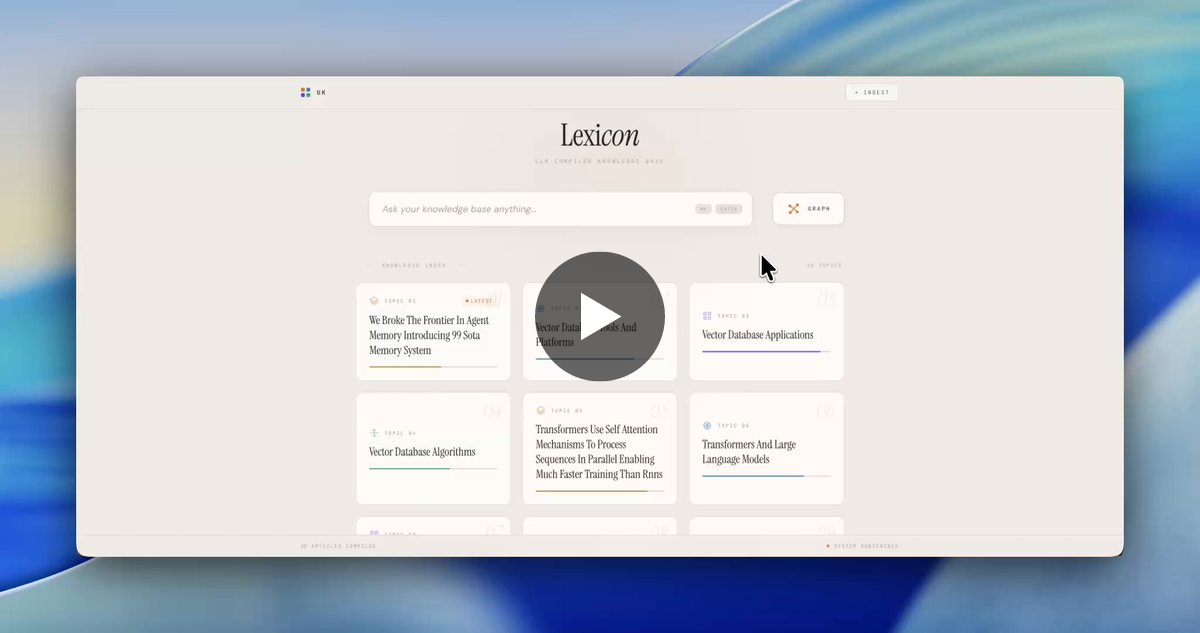
Saw this and immediately built it. Open-sourced the whole thing:Ingest URLs, PDFs, tweets, images → LLM compiles a linked markdown wiki → Q&A with citations, knowledge graph, contradiction linting, auto-research, export to HTML/PDF/slides.Been using it nonstop as a personal… https://t.co/ypaXlEA7pn pic.twitter.com/8Z2DLAyQjH— Jared Goering (@jaredgoering) April 4, 2026
Hey #atprotodev; should we make a convention for annotating HTML elements with the AT uris they’re built with? (So that, say, a browser extension could offer links to @pds.ls) Something like this? <li typeof="schema:Thing" resource="at://did:web:example.com/org.example.lexicon/rkey">
If you're an #atprotodev I'd love your thoughts on this short proposal. I think we'd all benefit from a way to tag our HTML to reference the at:// uris they're derived from! @popfeed.social, @bookhive.buzz, @sifa.id, @leaflet.pub, @pckt.blog, @offprint.app and many more — penny for your thoughts?

Atproto markup for HTML
byjp.leaflet.pubI think this breaking change for standard.site needs to become an ecosystem-wide conversation and convention. Any web page that represents a corresponding AT record needs to include a meta tag that includes that record. <meta name=“at:uri” content=“at://…” \>

rich harris
atproto/@standard.site friends: any thoughts on this issue? This... <link rel="site.standard.publication" href="at://..."> ...is invalid HTML, per html.spec.whatwg.org/multipage/semantics.html#the-…, because DIDs aren't hostnames. This causes problems with some tools. Issue here: github.com/sveltejs/kit/issues/15935
This generated some discussion so I want to expand on it a bit The context is that standard.site doesn't currently have any lexicons for the actual content. The idea is that the document content is covered by leaflet, offprint, pckt, or other lexicons. But...

P(aul) Frazee
You shouldn’t use lexicons that don’t actually exist
What are you’re thoughts on making this breaking change more inclusive to any AT URI? Like for @semble.so it would be very useful to have this mapping or any webpage that has a corresponding AT record (e.g. microblogging, standard.site, steamplace videos)
social hypertext

http gave us hypertext. atproto gives us social hypertext.

A new app, HyperTexting, turns the open web into a scrollable social media-like feed | TechCrunch

marking off AI slop / seo spam pages experimenting with collective action on the whole internet
HTTP gave us hypertext, atproto gives us "social hypertext"

Building on some of @chrisshank.com's work, what if we had browsers that were atproto-native? orange link = in your PDS green link = in the…

