In order to boot Arch Linux, a Linux-capable boot loader must be set up. The boot loader is responsible for loading the kernel and initramfs before initiating the boot process. The procedure is quite different for BIOS and UEFI systems.
GRUB/EFI examples - ArchWiki
It is well known that different motherboard manufactures implement UEFI differently. The purpose of this page is to show hardware-specific methods known to work when installing/restoring GRUB in EFI mode.
Installation guide - ArchWiki
This document is a guide for installing Arch Linux using the live system booted from an installation medium made from an official installation image. The installation medium provides accessibility features which are described on the page Install Arch Linux with accessibility options. For alternative means of installation, see Category:Installation process.
Arch Linux
You've reached the website for Arch Linux, a lightweight and flexible Linux® distribution that tries to Keep It Simple.
[SOLVED]Cannot get UEFI/grub to work with MSI motherboard / Installation / Arch Linux Forums
I have secure boot turned off in my UEFI setup in the firmware. If I copy Ubuntu's EFI partition to the disk I am trying to set up for ArchLinux, that drive shows up in the UEFI boot list.
🔎 msi mag mortar b760 II arch linux uefi - Google Search
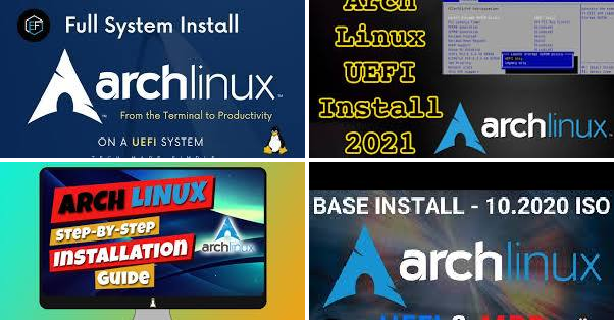
GRUB - ArchWiki
GRUB (GRand Unified Bootloader) is a boot loader. The current GRUB is also referred to as GRUB 2. The original GRUB, or GRUB Legacy, corresponds to versions 0.9x. This page exclusively describes GRUB 2.
Dualboot MSI Motherboard Bootable Entry Missing/Resets / Newbie Corner / Arch Linux Forums
Hi all, happy to be here, it's been forever since I've really posted in a forum though. Hopefully this is all up to rules and everything.
From bootloader to kernel
If you've read my earlier posts about assembly language for Linux x86_64, you might see that I started to get interested in low-level programming. I've written a set of articles on assembly programming for x86_64 Linux and, in parallel, began exploring the Linux kernel source ...
Arch linux support for installer script by govi218 · Pull Request #223 · bluesky-social/pds
Something for us Arch nerds (#161) to get started quickly!
[SOLVED]How to auto login in arch / Newbie Corner / Arch Linux Forums
HelloI was a Ubuntu user and it automatically logged me in to the desktop I don't want to enter my password every time I boot into the system Is it possible to do the same in arch? If so how?
The Linux kernel is just a program
Most books and courses introduce Linux through shell commands, leaving the kernel as a mysterious black box doing magic behind the scenes. In this post, we will run some experiments to demystify it: the Linux kernel is just a binary that you can build and run.
I Want to Love Linux. It Doesn’t Love Me Back: Post 4 – Wayland Is Growing Up. And Now We Don’t Have a Choice — fireborn
This post wasn’t supposed to exist — not yet. I meant to talk about bootloaders. About inaccessible USB installs. About the deafening silence between pressing the power button and hearing a screen reader. That post is still coming.
Firmware Boot and Recovery
Talos Linux - The Kubernetes Operating System
Talos Linux is a secure, immutable, and minimal operating system for Kubernetes. API-managed, declarative configuration, and fast deployments.
We rebuilt the Linux microVM stack on Apple Silicon
Firecracker needs KVM and therefore a Linux host, and the image tooling around it needs loop mounts and Linux userland. We rebuilt the stack on Apple's Virtualization.framework to boot the same OCI images as microVMs on macOS and on Linux.