


Learning new vocabulary doesn’t have to be difficult. Mnemonic techniques make it easier by associating words with vivid images, sounds, and stories. Today,
Better to Be Alone than in Bad Company: Cognate Synonyms Impair Word Learning
The effects of cognate synonymy in L2 word learning are explored. Participants learned the names of well-known concrete concepts in a new fictional language following a picture-word association paradigm. Half of the concepts (set A) had two possible translations in the new language (i.e., both words were synonyms): one was a cognate in participants’ L1 and the other one was not. The other half of the concepts (set B) had only one possible translation in the new language, a non-cognate word. After learning the new words, participants’ memory was tested in a picture-word matching task and a translation recognition task. In line with previous findings, our results clearly indicate that cognates are much easier to learn, as we found that the cognate translation was remembered much better than both its non-cognate synonym and the non-cognate from set B. Our results also seem to suggest that non-cognates without cognate synonyms (set B) are better learned than non-cognates with cognate synonyms (set A). This suggests that, at early stages of L2 acquisition, learning a cognate would produce a poorer acquisition of its non-cognate synonym, as compared to a solely learned non-cognate. These results are discussed in the light of different theories and models of bilingual mental lexicon.

What's the best way to digest and memorize thousands of words such as these? (Prepping for an Exam due next year)
18 votes, 24 comments. 91K subscribers in the vocabulary community. A subreddit to discuss words and help increase your vocabulary. **Due to the…
Linkword
Linkword is a mnemonic system promoted by Michael Gruneberg since at least the early 1980s for learning languages based on the similarity of the sounds of words. The process involves creating an easily visualized scene that will link the words together. One example is the Russian word for cow : think and visualize "I ran my car over a cow."

WordHippo!
Thesaurus and word tools for your creative needs. Find the word you're looking for!
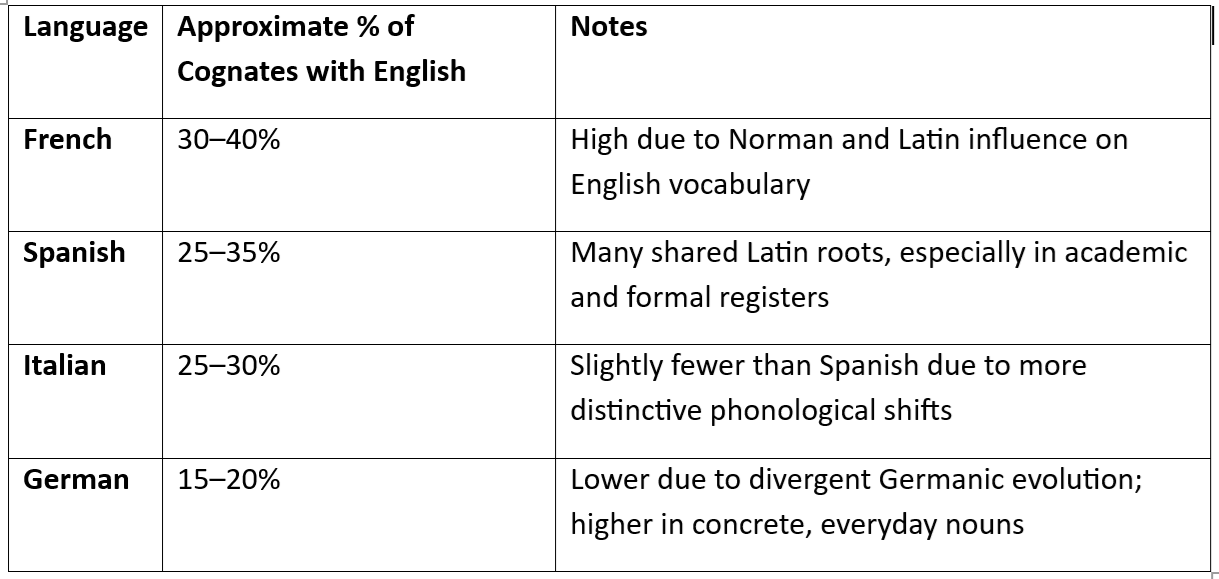
Cognates: their Power, Pitfalls and Untapped Potential and implications for the classroom
Introduction Let’s face it: in the chaotic symphony of vocabulary lists, verb drills, and assessment pressure, cognates are the low-hanging fruit we often forget to pick. And yet, they’re the close…
Anki - powerful, intelligent flashcards
Anki - a program which makes remembering things easy.
Agentics: Memorizing Session Transcripts Isn't Useful
Keep track of artifacts, not scratch. Alt title: Claude, please stop trying to memorize random crap

Titans + MIRAS: Helping AI have long-term memory
Ali Behrouz, Student Researcher, Meisam Razaviyayn, Staff Researcher, and Vahab Mirrokni, VP and Google Fellow, Google Research

How to improve your memory: 10 easy, enjoyable expert tips – from reading a book to getting more sleep
Relying on technology can make us forgetful, but there are some simple ways to sharpen your recall. Memory experts describe the tricks and habits that can help

"Attention", "Transformers", in Neural Network "Large Language Models"
I find this literature irritating and opaque. This is at least somewhat because I do not yet understand it well, and there's too much of it. But clearly I need to wrap my head around it, before I become technically obsolete. My scare quotes in the title of these notes thus derive in part from jealousy and fear. But only in part: the names here seem like proof positive that McDermott's critique of "wishful mnemonics" needs to be re-introduced into the basic curriculum of AI.
What does good AI memory feel like? - Cameron
Thoughts about co-3, my thinking partner
Wiki Memory
Memory for agents is still early, with little to no standards. “Memory” means something different to everyone. But one common pattern is emerging: wiki memory.
Meet Pebble Index 01 - External Memory For Your Brain
Catch your best ideas before they slip through your fingers Do you ever have flashes of insight or an idea worth remembering? This happens to me 5 10 times e...

Wordle - A daily word game
Guess the hidden word in 6 tries. A new puzzle is available each day.

MemOS: An Operating System for Memory-Augmented Generation (MAG) in Large Language Models
Large Language Models (LLMs) have emerged as foundational infrastructure in the pursuit of Artificial General Intelligence (AGI). Despite their remarkable capabilities in language perception and generation, current LLMs fundamentally lack a unified and structured architecture for handling memory. They primarily rely on parametric memory (knowledge encoded in model weights) and ephemeral activation memory (context-limited runtime states). While emerging methods like Retrieval-Augmented Generation (RAG) incorporate plaintext memory, they lack lifecycle management and multi-modal integration, limiting their capacity for long-term knowledge evolution. To address this, we introduce MemOS, a memory operating system designed for LLMs that, for the first time, elevates memory to a first-class operational resource. It builds unified mechanisms for representation, organization, and governance across three core memory types: parametric, activation, and plaintext. At its core is the MemCube, a standardized memory abstraction that enables tracking, fusion, and migration of heterogeneous memory, while offering structured, traceable access across tasks and contexts. MemOS establishes a memory-centric execution framework with strong controllability, adaptability, and evolvability. It fills a critical gap in current LLM infrastructure and lays the groundwork for continual adaptation, personalized intelligence, and cross-platform coordination in next-generation intelligent systems.

Familect
Familects often gain vocabulary through the words young children create as they learn to talk, when these words are adopted by the family.[1][2] Familects also gain vocabulary through slips of the tongue and word invention.[3]