


We needed the insight and confidentiality to protect our users, but now that anyone can get the same results from LLM?
Dan Shipper 📧 on Twitter / X
this is true and is a big reason why you don’t need to be a highly technical researcher to use LLMs in surprising and novel ways https://t.co/TuxNzXzToU— Dan Shipper 📧 (@danshipper) July 27, 2025
Guardian Angels: LLM Personalization for Productivity and Security
I propose an approach for highly personalized LLMs, for near-future productivity gains and personal info/cybersecurity against increasingly powerful LLMs: they should, in the spirit of uploading, try to emulate the user’s values and preferences in order to amplify the principal—not replace them. I discuss a package of techniques and proposals to accomplish such ‘guardian angels’; dynamic evaluation of LLMs combined with active learning and elicitation and heavy inner-monologue search/data-augmentation.

Mitigating LLM-based p-Hacking by Preregistering for the Next LLM
Large language models (LLMs) are increasingly used to generate, classify, and annotate data whose outputs feed downstream hypothesis tests. However, LLM-based research is easy to p-hack: a researcher can tune the prompts, decoding parameters, or output format until a desired result is reached. We propose a protocol to mitigate p-hacking in LLM-based research: preregistering the experiment and eligible models, and then running it on the first eligible LLM that is released after the preregistration. The researcher finalizes the procedure on current models, preregisters the analysis plan together with a set of eligible future models, and runs the confirmatory analysis on the first eligible model released afterward. Because this model does not exist at commitment time, it cannot be hacked against; furthermore, configurations that hack one model frequently do not transfer to the next. We evaluate the protocol on two tasks whose true values are known. Across 20 models from four providers and 11 LLM-analysis configurations, the protocol would have blocked successful transfer of the p-hack in 73.9% and 72.7% of cases in the two tasks. Additional analyses reveal that mitigation remains substantial under several stress tests. Finally, putting money where our mouth is, we followed our own protocol and preregistered our experiment. The preregistered experiment confirmed the protocol's effectiveness: out of the 7 configurations that hacked the prior model, the hacking failed to carry over in 6 configurations on the first eligible model released afterward.

There's Something Fundamentally Wrong With LLMs
LLMs aren't trained on the "vast majority of speech," experts warn, a major blind spot that could have sweeping consequences.

Histomat of F/OSS: We should reclaim LLMs, not reject them
A few days ago, I came across a blog post titled On FLOSS and training LLMs that articulates a growing frustration within the free and open source software…
New AI Flaw Reporting System Fills Crucial Security Gap | CMU Software Engineering Institute
Flaw Reporting for AI (FLARE-AI) allows developers and security researchers to submit artificial intelligence flaws for formal, coordinated disclosure.

Nicholas Carlini - Black-hat LLMs | [un]prompted 2026
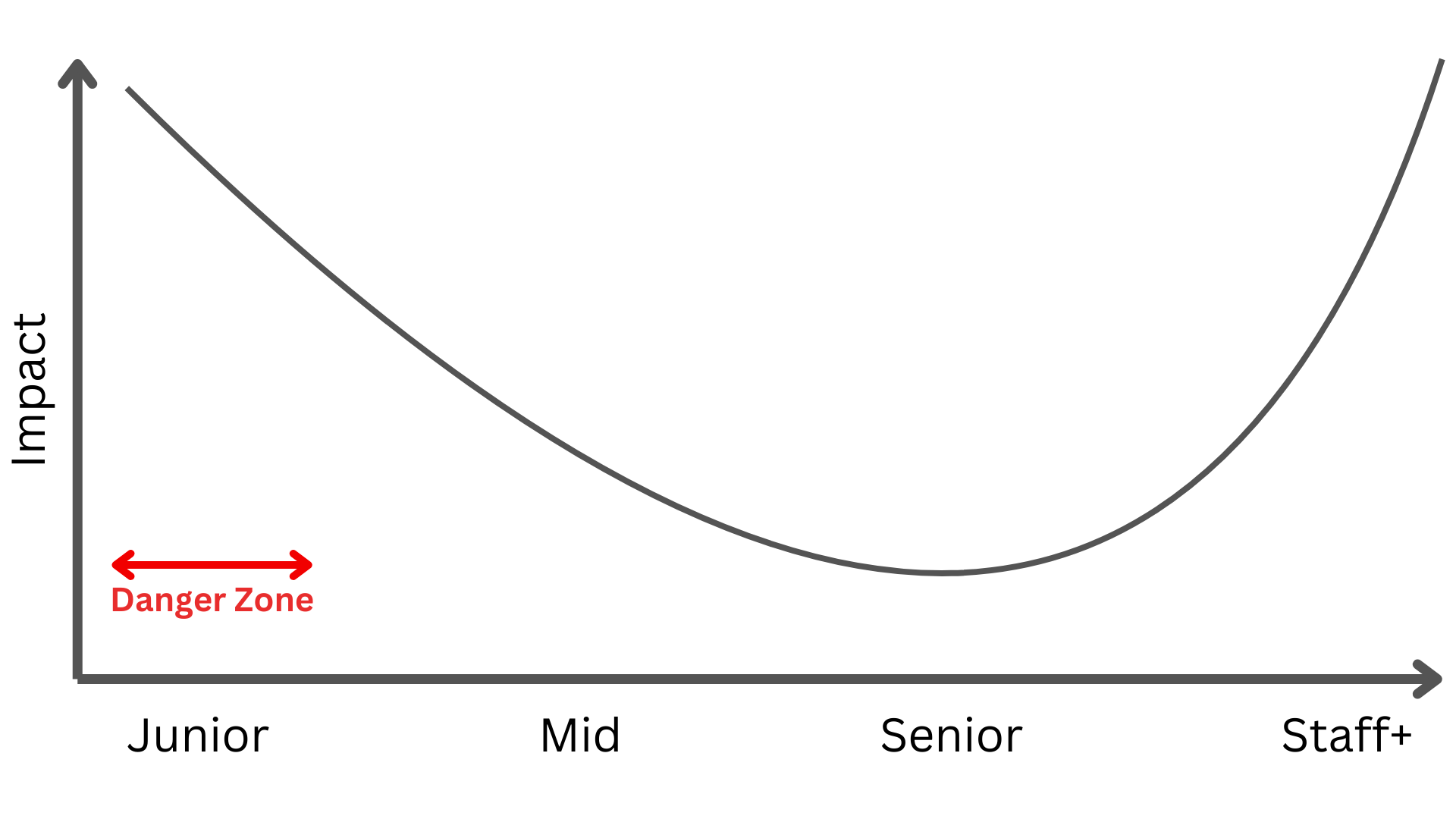
The LLM Curve of Impact on Software Engineers
In this article, I share my personal mental model of how LLMs affect software engineers at different levels, and why this leads to both excitement and scepticism.
Auto-grading decade-old Hacker News discussions with hindsight
A vibe coding thought exercise on what it might look like for LLMs to scour human historical data at scale and in retrospect.


AI CVE Slop: The Crisis Drowning Open Source Security
The proliferation of AI-generated vulnerability reports — commonly termed “AI slop” — has emerged as one of the most significant…
Just a rumour of a bug is enough to find a security exploit these days
Thinking through how the conventional OSS security embargoes no longer buy us time, and what open source maintainers might do instead to respond
Front page · Saturday, June 6, 2026
On ThinkStack: Linux kernel adopts no-embargo policy as LLMs flood maintainers with CVEs · Evan You ships Vite Plus to unify Rollup, Oxlint, Oxformat, and Vitest into one Rust/Go toolchain · 88% of firms use AI coding tools but only 5.5% see business impact, PlatformCon study fin
A good thread of questions — not small ones…— about what remains murky with W's vulnerability. @anna.wsocial.eu: we've both been privacy professionals, so you know exactly how serious this is. What's the plan?

Public Disclosure
W Identity (widentity.eu) asks people to hand over passport scans, a biometric selfie and their date of birth to prove who they are. The reflected XSS vulnerability let attacker-controlled JavaScript run on your site's own origin. For an identity provider, your response is way too relaxed.
Sensitive data + tool use + LLMs + app-centric security model = danger. LLMs turn any text into potentially executable instructions, exploding the attack surface of traditional security models.

Simon Willison
Just blogged my hunch that the Apple intelligence Siri delay is because of security concerns around prompt injection here simonwillison.net/2025/Mar/8/delaying-personali…

