

Create interactive, explorable decks that truly deliver


SOFTER
SOFTER invites creative technologists and curious makers to join a new residency to design, build and demystify cyberdecks.
Agents on the Canvas in tldraw — Steve Ruiz, tldraw
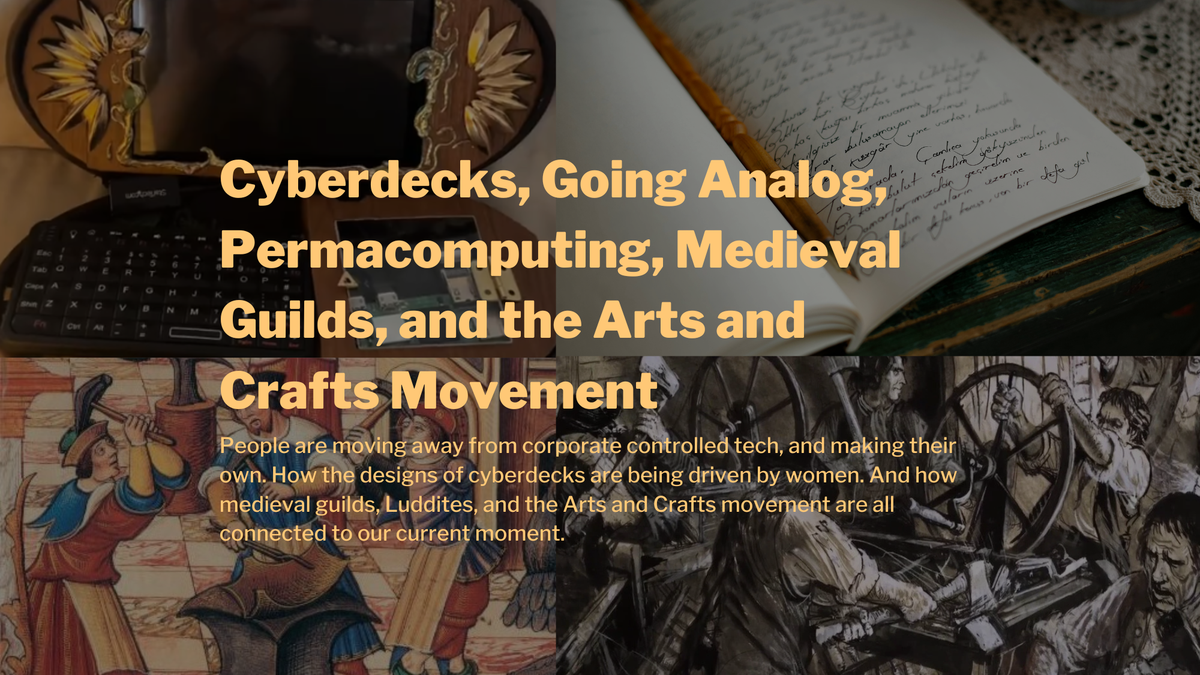
Cyberdecks, Going Analog, Permacomputing, Medieval Guilds, and the Arts and Crafts Movement
People are moving away from corporate controlled tech, and making their own. How the designs of cyberdecks are being driven by women. And how medieval guilds, Luddites, and the Arts and Crafts movement are all connected to our current moment.
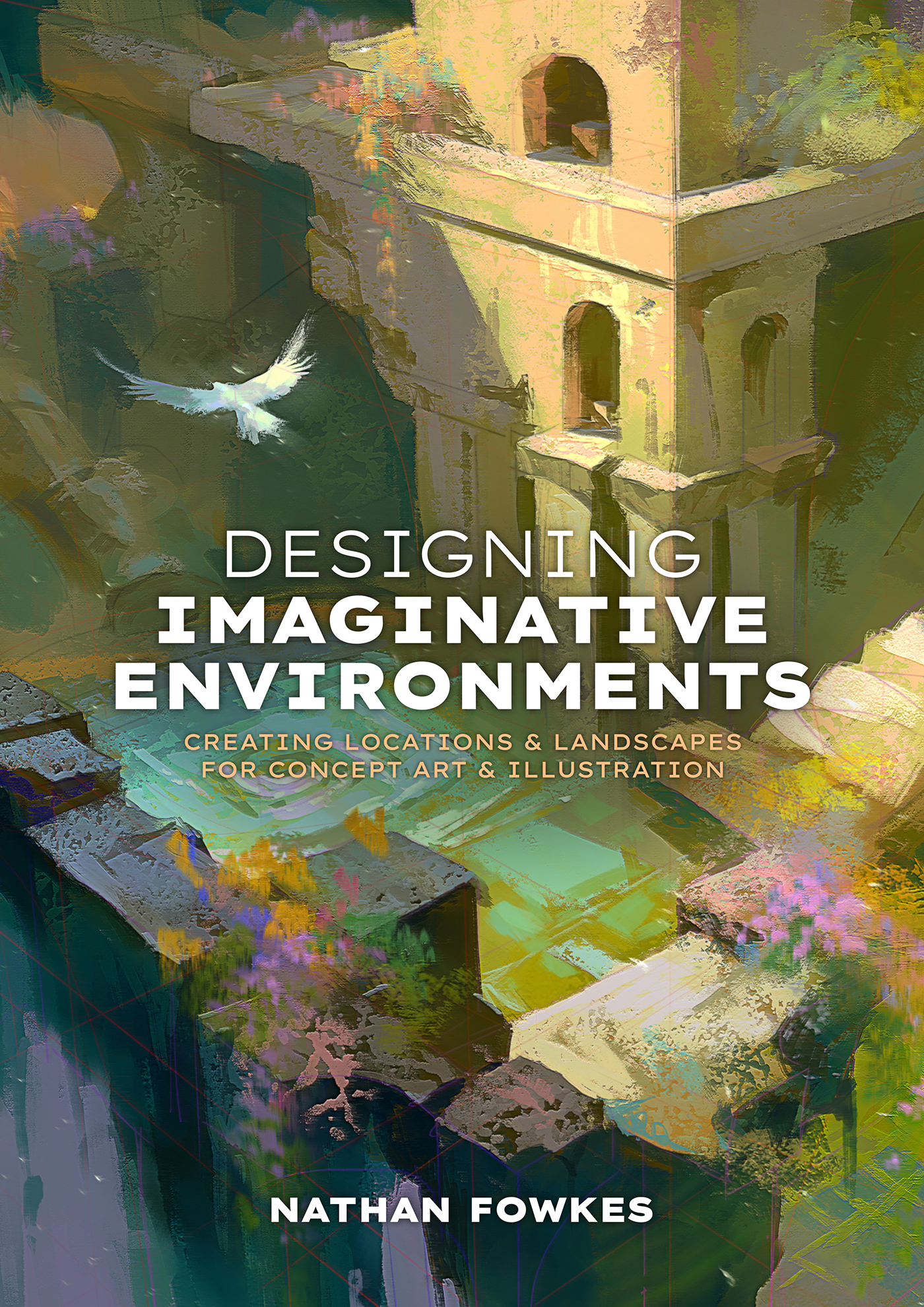
Designing Imaginative Environments by Nathan Fowkes
Join industry veteran Nathan Fowkes on a deep dive into the hows and whys of designing environments for entertainment. From creating mood with color and light, to exploring different biomes and weather, to crafting architecture and props, he will teach you how to design amazing environments that make your work stand out from the crowd.
Generative Agents: Interactive Simulacra of Human Behavior
Believable proxies of human behavior can empower interactive applications ranging from immersive environments to rehearsal spaces for interpersonal communication to prototyping tools. In this paper, we introduce generative agents--computational software agents that simulate believable human behavior. Generative agents wake up, cook breakfast, and head to work; artists paint, while authors write; they form opinions, notice each other, and initiate conversations; they remember and reflect on days past as they plan the next day. To enable generative agents, we describe an architecture that extends a large language model to store a complete record of the agent's experiences using natural language, synthesize those memories over time into higher-level reflections, and retrieve them dynamically to plan behavior. We instantiate generative agents to populate an interactive sandbox environment inspired by The Sims, where end users can interact with a small town of twenty five agents using natural language. In an evaluation, these generative agents produce believable individual and emergent social behaviors: for example, starting with only a single user-specified notion that one agent wants to throw a Valentine's Day party, the agents autonomously spread invitations to the party over the next two days, make new acquaintances, ask each other out on dates to the party, and coordinate to show up for the party together at the right time. We demonstrate through ablation that the components of our agent architecture--observation, planning, and reflection--each contribute critically to the believability of agent behavior. By fusing large language models with computational, interactive agents, this work introduces architectural and interaction patterns for enabling believable simulations of human behavior.

Creative Computing Group by @tgoerke.bsky.social — Grain
Let's start a group at CODIP to explore creative computing. Let's not start by defining creativity nor computing. It would be a trap. Let's collect artifacts instead. Images, text, thoughts,...
Procedurally Generating Boss Encounters - Kristin Siu [PROCJAM 2017]
Peopleware: productive projects and teams
Demarco and Lister demonstrate that the major issues of…

WRKSHP.tools | Job Map Canvas
Thinking about what your customer is trying to achieve as a way to define your value proposition just makes a lot of sense, instinctively. But how do you actually define that elusive Job to be Done? The Job Map Canvas can help!
Thrilled to be sharing my latest work at #CogSci2026! Many of the spaces we move through, from kitchens to airports, were designed with specific uses in mind. How do people create such environments, and how do users figure out what they were designed for? 📃 osf.io/preprints/psyarxiv/hd6px_v1
