

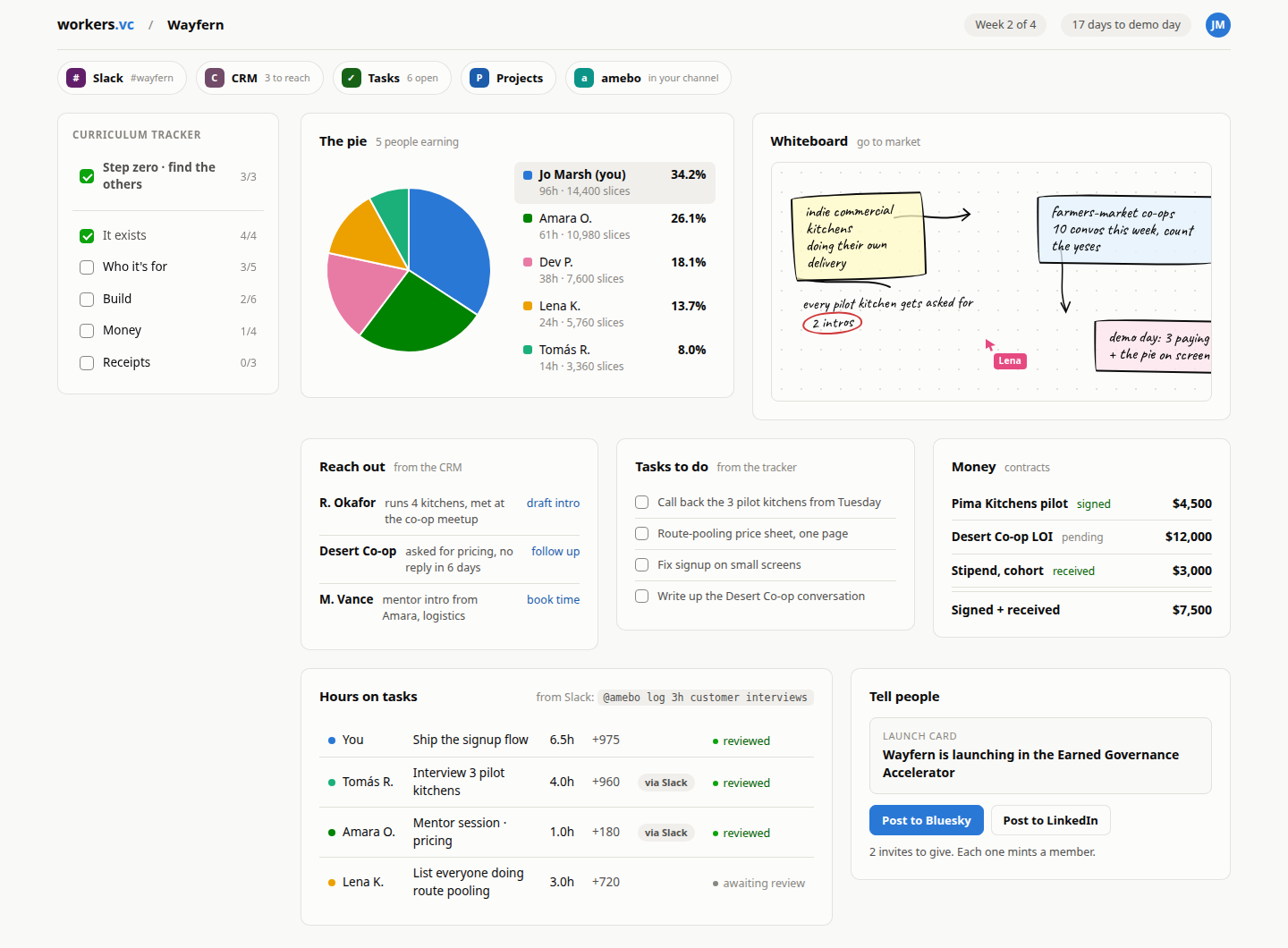
A 4-week alpha cohort where teams put hours on tasks and the work becomes verifiable equity and voting weight.
WAO - The Workers' Algorithm Observatory
The WAO researches and audits work algorithms to empower workers. Companies increasingly rely on opaque, black-box algorithms to determine pay, scheduling, and access to work, while the data needed to understand and challenge these systems remains out of reach for workers and organizers. To address this gap, the WAO develops technology-enabled research tools, data infrastructure, and academic–organizer partnerships that support existing labor and worker organizations. By building meaningful relationships with worker organizers, crowdsourcing data, conducting transparent and policy-relevant research, and thinking deeply about the data workers need both now and in the next 5-20 years, the WAO aims to increase worker power, inform policymaking, and improve conditions for workers today and in the future.
in progress works
lightweight accountability community and journal for your side projects
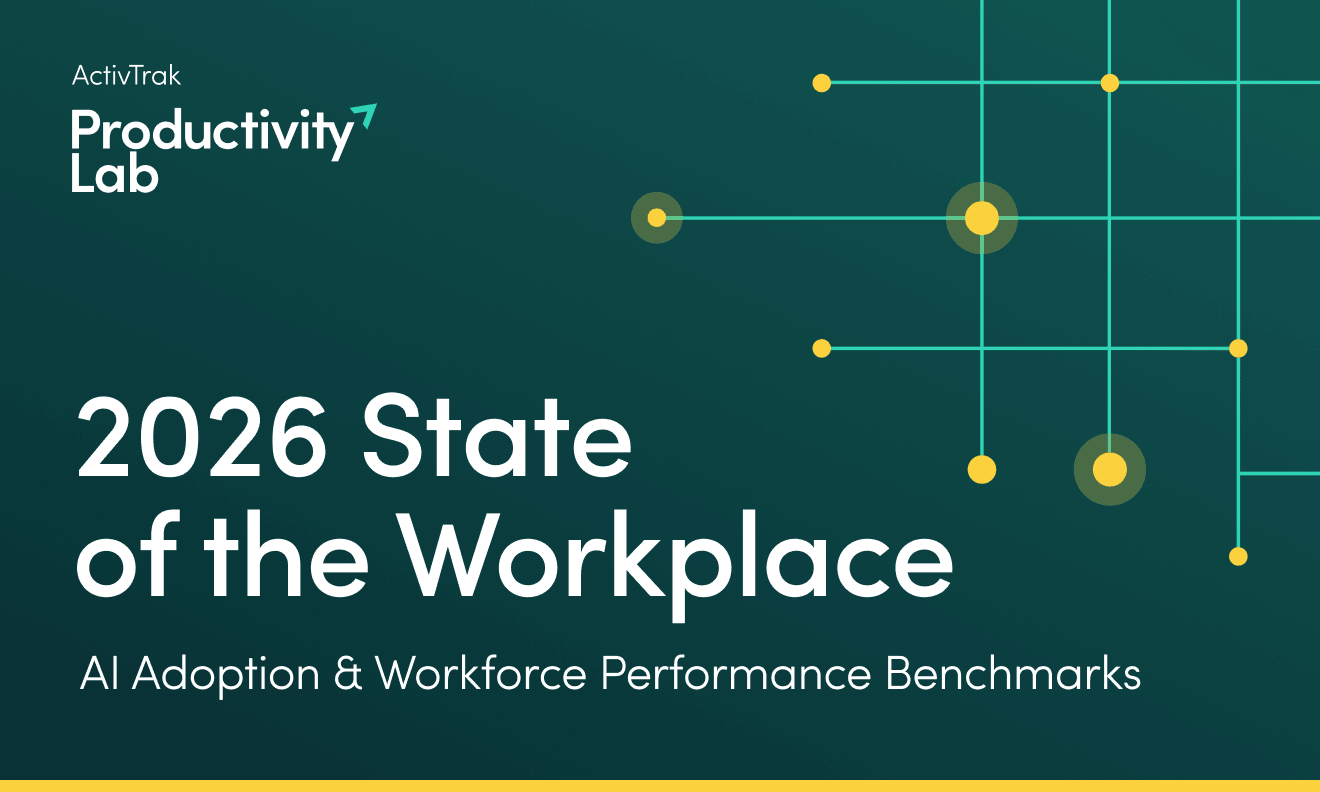
2026 State of the Workplace
Get the latest insights from state of the workplace report spanning more than 443 million hours of work activity across 1,111 organizations and 163,638 employees over three years.
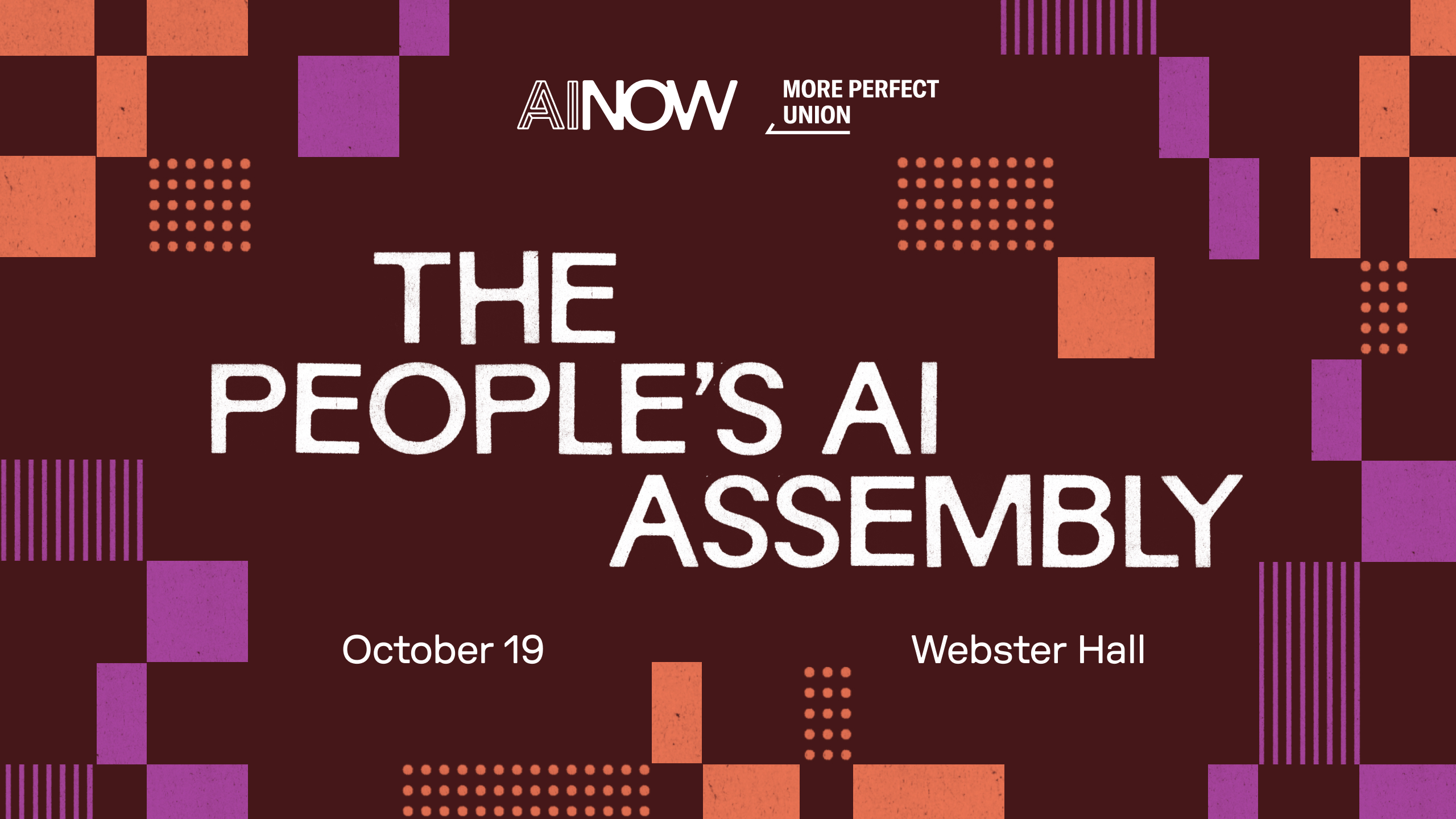
Assembly - AI Now Institute
Register October 19 at 7pm About Lineup Program Artificial Power Get Involved Co-hosts It’s time to build a tech movement that empowers working people, enriches our communities, and enhances our collective well-being. Join the AI Now Institute and More Perfect Union for the People’s AI Assembly, an evening bringing together leading organizers, cultural figures, and […]
Interledger Foundation | Meet the 2026 Open Payments Accelerator Cohort
Meet the four teams in the 2026 Open Payments Accelerator, testing how open standards can connect payments across borders, networks, and communities.
Properly Valuing Contributions
A major part of our mission as a company is to empower people. So naturally, at Qbix, we give a lot of thought to the best ways of doing that. This post describes a compensation model that we have designed, which clearly rewards people for their contributions, and actually drives everyone to compete

Building pro-worker AI | Brookings
Daron Acemoglu, David Autor, and Simon Johnson ask: What is pro-worker AI, and how can we build it?

Why the '996' schedule is capturing the interest of Silicon Valley leadership
The "996" schedule is 12-hour shifts, 6 days a week and it's captivated Silicon Valley tech leaders. NPR's Ayesha Rascoe speaks with academic Margaret O'Mara about this workplace trend.

When Does Worker Ownership Work? ESOPs, Law Firms, Codetermination, and Economic Democracy
Guild statement on more layoffs at the L.A. Times — L.A. Times Guild - Los Angeles Times Guild
We still believe in the Los Angeles Times and the important role it plays in our community. It is difficult to carry out our mission when our staff has been cut year after year. But we will continue to report and we will continue to fight — for our members, our readers, our subscribers and our city.

modular research multi-agent slack-like environment demo
a demo of a slack-like workspace with multiple collaborating agents with access to a lab discourse graph and modular science and open social infrastructure.
GitHub - calcom/cal.com: Scheduling infrastructure for absolutely everyone.
Scheduling infrastructure for absolutely everyone. - calcom/cal.com
A Polycentric Governance Lens on Data Infrastructures
Computer Supported Cooperative Work (CSCW) - Funding policies for data infrastructure promote open data sharing to drive positive social impact. However, concerns regarding the long-term management...

AI-Generated “Workslop” Is Destroying Productivity
Despite a surge in generative AI use across workplaces, most companies are seeing little measurable ROI. One possible reason is because AI tools are being used to produce “workslop”—content that appears polished but lacks real substance, offloading cognitive labor onto coworkers. Research from BetterUp Labs and Stanford found that 41% of workers have encountered such AI-generated output, costing nearly two hours of rework per instance and creating downstream productivity, trust, and collaboration issues. Leaders need to consider how they may be encouraging indiscriminate organizational mandates and offering too little guidance on quality standards. To counteract workslop, leaders should model purposeful AI use, establish clear norms, and encourage a “pilot mindset” that combines high agency with optimism—promoting AI as a collaborative tool, not a shortcut.

Guilded AI | Better data starts with aligned incentives
Guilded AI aligns the incentives of AI developers and human experts who produce training data and evaluations.
Making 20% Time Work | begriffs.com
Following Google’s lead many companies have instituted “20% time” for their employees. This is one day per week in which employees can work on projects of their own choosing. The practice keeps developers motivated and sharp, produces tools to solve company problems, and in the best case creates open source which builds prestige and helps recruitment.