


Western housing shortages drive inequality, climate change, low productivity growth, obesity, and even falling fertility rates.
The Housing Shortage Is a Major Driver of Poverty
Housing costs are usually the largest item in a household’s budget and can determine a family’s financial stability.

America’s housing was built for a world we no longer live in
The United States is turning 250. Everything we want for the next 50 years starts with fixing housing.

Why the Future of Work Is at Home
Even a cursory look at the social, environmental, and economic impacts of working from home indicates that even more people could and should be.

Why is everyone so busy?
Time poverty is a problem partly of perception and partly of distribution

The Folk Economics of Housing
Why is housing supply so severely restricted in US cities and suburbs? Urban economists offer two primary hypotheses: homeowner self-interest and political fragmentation. Homeowners, who outnumber and have organizational advantages over renters, are said to lobby against development to protect their property values. The fragmentation hypothesis emphasizes that development's negative externalities are borne locally while most of the benefits accrue regionally or nationally, leading localities to block housing. This paper offers another explanation: ordinary people simply do not believe that adding more housing to the regional stock would reduce housing prices. Across three original surveys of urban and suburban residents, only a minority of respondents say that a large, positive, regional housing supply shock would reduce prices or rents. These beliefs are weakly held and unstable (suggesting people have given the issue little thought), but respondents do have stable views about who is to blame for high housing prices: developers and landlords. Large, bipartisan supermajorities support price controls, demand subsidies, and restrictions on putative bad actors, policies which they believe would be more effective than supply liberalization for widespread affordability. We discuss the implications of these findings for efforts to expand the supply of housing.
More Housing is Possible: a National Town Hall · Burhan for State Senate
Join Vice Mayor Burhan Azeem and the people behind the Montana Miracle, California’s SB79, and the ROAD to Housing Act to discuss recent wins and what comes next for the housing movement. Speakers will dig into the policy that's moving the needle, the campaigns and organizing that got us here, and how local leadership can turn big ideas into more homes. Expect sharp takes, lively panels, and the collective brainpower of the country's most effective housing advocates in one (virtual) room.

The Artist Loft: Affordable Housing (for White People)
Do these tax-subsidized apartments perpetuate segregation by excluding some low-income households?

Housing ladder spillovers
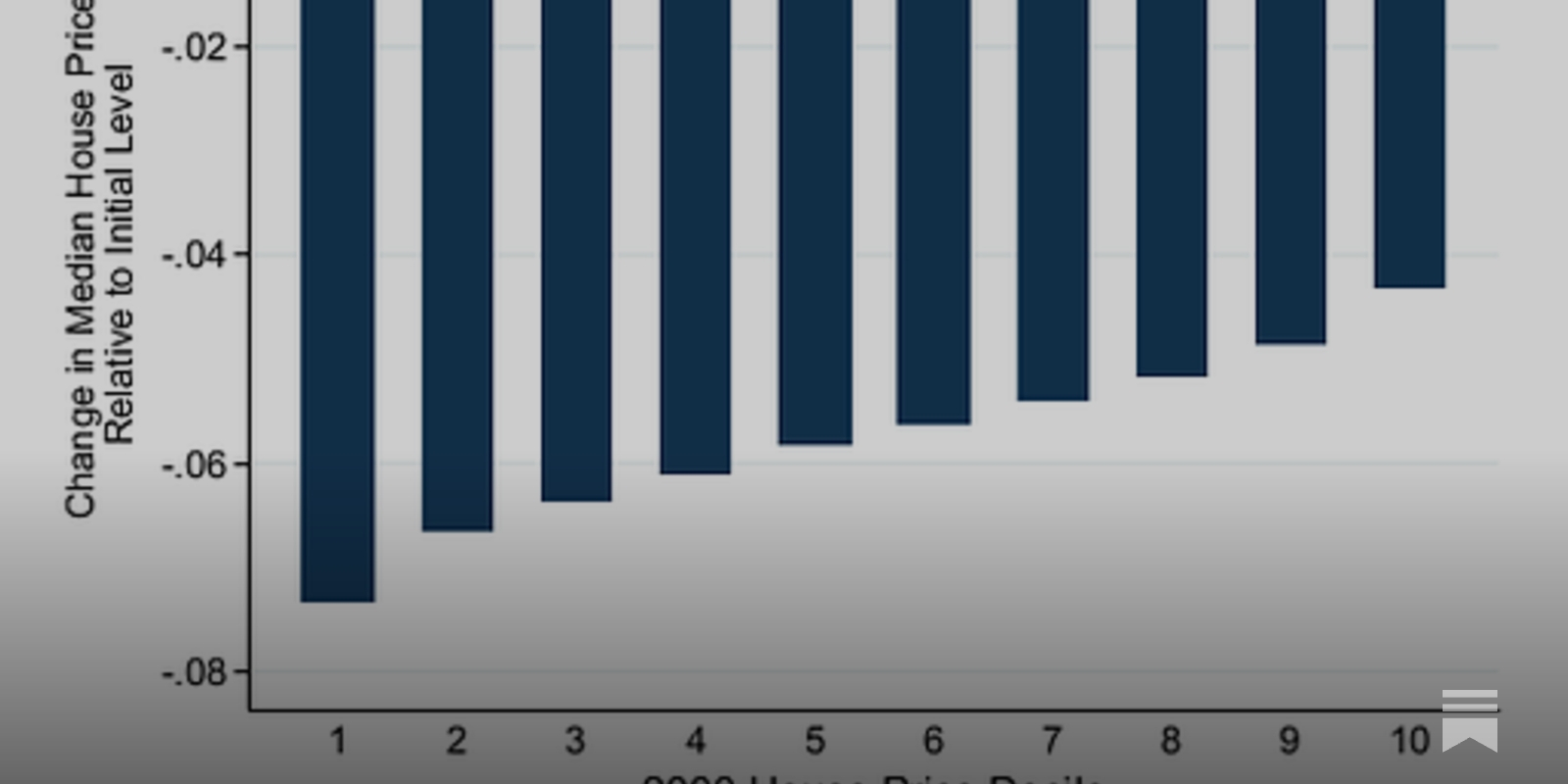
Rich newcomers can raise low-end rents, and adding high-end homes can lower them
Green Social Housing: Lessons from Vienna - Climate and Community Institute
Vienna is the global capital of social housing. Over 40 percent of the city’s housing units are social housing, providing homes for the majority of the …

Communities Across the Nation Want to Add Housing. Which Metropolitan Areas Are Adding the Most?
Between 2020 and 2025, four Texas metropolitan areas—Austin, Dallas, Houston, and San Antonio—accounted for 13.3 percent of total US housing supply growth.

What if jobs are not the solution but the problem? | Aeon Essays
Economists believe in full employment. Americans think that work builds character. But what if jobs aren’t working anymore?

What if jobs are not the solution but the problem? | Aeon Essays
Economists believe in full employment. Americans think that work builds character. But what if jobs aren’t working anymore?
What the Future of Working at Home May Look Like
Innovative home designs find ways to combine living and work spaces

One condo, hundreds of homes: UHERO study reveals housing ripple effect | University of Hawaiʻi System News
Housing filtering is a process in which new construction sets off a chain of moves that frees up existing homes across the market.
The solution to (nearly) everything: working less | Rutger Bregman
Excessive work and pressure are status symbols. But overtime is deadly. If we worked less we’d make fewer errors, address inequality and have a better life

World-systems theory
World-systems theory is a multidisciplinary approach to world history and social change which emphasizes the world-system as the primary unit of social analysis. World-systems theorists argue that their theory explains the rise and fall of states, income inequality, social unrest, and imperialism.
