

In Debt: The First 5,000 Years, anthropologist David Graeber explores the fascinating history of debt and economies. It starts out by debunking the common myth that prior to coinage, everyone were trapped in this inefficient mode of barter. If you had a chicken to give and wanted sugar from Gandalf, but Gandalf was a vegetarian, you ha...
Debt: the First 5000 Years
I recently read Debt: the First 5000 Years by David Graeber, and it has stuck on my mind for a while. It’s one of those “Everybody is wrong about X, here is what you’ve missed in plain sight” -type…

AI is Accelerating our Social Debt — Development Seed
Open source communities need to pay down social debt with the same urgency we give technical debt.

Research Debt
Science is a human activity. When we fail to distill and explain research, we accumulate a kind of debt...

Debt Traps? Market Vendors and Moneylender Debt in India and the Philippines
A debt trap occurs when someone takes on a high-interest-rate loan and is barely able to pay back the interest, and thus perpetually finds themselves in debt (often by refinancing). Studying such practices is important for understanding financial decision-making of households in dire circumstances, and also for setting appropriate consumer protection policies. We conduct a simple experiment in three sites in which we paid off high-interest moneylender debt of individuals. Most borrowers returned to debt within six weeks. One to two years after intervention, treatment individuals were borrowing at the same rate as control households.
The Moral Economy of the Shire
Who paid for this? There’s a certain meme that I see making the rounds on Facebook every so often about the bucolic nature of life in the Shire, from Tolkien’s The Hobbit and The Lord o…

Ceptr & Holochain - Currencies of Social Coherence. Holography and Distributed Hash Tables vs. Consensus Bottlenecks in Monolithic Blockchains.
“Perhaps the first thing that comes to mind when thinking about science fiction and money is the different kinds of currencies that are imagined for future worlds: the poscreds of Philip K. Dick’s Ubik, a currency required for every minute transaction such that the door becomes not an item you own but, rather, a provider of services for which you must continually pay, leaving protagonist Joe Chip trapped in his own apartment until someone pays his door to open; the bars of gold-pressed latinum used by the avaricious Ferengi on Star Trek, the only thing that cannot be replicated in this post-scarcity world, useless other than as an atavistic marker of wealth; the reputation- based currency of whuffie in Cory Doctorow’s Down and Out in the Magic Kingdom, used to replace the social role money plays in creating a hierarchy in another post-scarcity world.
Moral Incentives in Credit Card Debt Repayment: Evidence from a Field Experiment
We study the role of morality in debt repayment, using an experiment with the credit card customers of a large Islamic bank in Indonesia. In our main treatment, clients receive a text message stating that “non-repayment of debts by someone who is able to repay is an injustice.” This moral appeal decreases delinquency by 4.4 percentage points from a baseline of 66 percent and reduces default among customers with the highest ex ante credit risk. Additional treatments help benchmark the effects against direct financial incentives and rule out competing explanations, such as reminder effects, priming religion, and provision of new information.

Craigslist, Wikipedia, and the Abundance Economy
You’ve heard it before. Maybe you’ve even said it. “There’s no such thing as a free lunch.” “You can’t get something for nothing.” “Somebody has to pay.” People recite these sayings with confidence, as though they were quoting Newton’s Laws of Motion...

What is Money, Anyway?
Editor’s Note: This topic is now comprehensively covered in my book, Broken Money. Money is a surprisingly complex subject. People spend their lives seeking money, and in some ways it seems so straightforward, and yet what humanity has defined as money has changed significantly over the centuries. How could something so simple and so universal, […]

Economics for the future – Beyond the superorganism
Our environment and economy are at a crossroads. This paper attempts a cohesive narrative on how human evolved behavior, money, energy, economy and th…
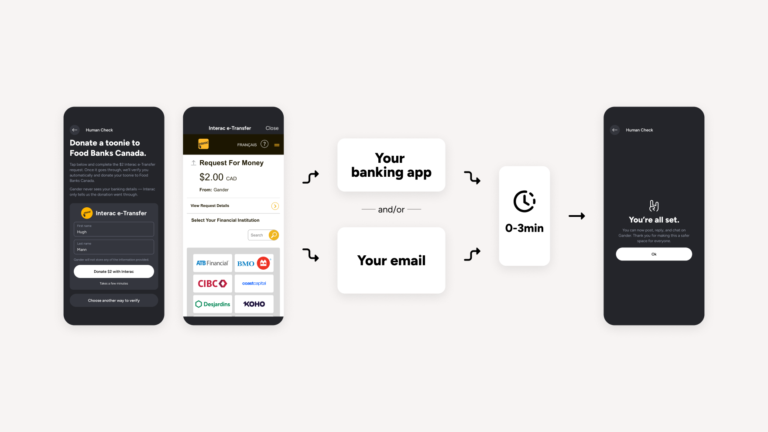
A Toonie to Confirm You’re Human - Gander
There's a new way to complete Human Check on Gander, and it's even going to help put food on the table for Canadians who need it. TL;DR Gander now lets you complete Human Check through a $2 Interac Money Request initiated on Gander. You pay through your own online banking, and the full $2 goes
David Graeber: "Spotlight on the financial sector did make apparent just how bizarrely skewed our economy is in terms of who gets rewarded"
David Graeber explains why the more your job helps others, the less you get paid

When Motivation is against Debtors' Best Interest: The Illusion of Goal Progress in Credit Card Debt Repayment
The authors explore the illusion of goal progress by consumers who own multiple credit cards and pay off their debt balances to facilitate the achievement of their subgoal rather than the superordinate goal of being debt-free. The first experiment shows that debtors use their savings toward the credit card debt they can pay off entirely or substantially, even if it is associated with the smallest balance and the lowest annual percentage rate rather than toward the debt with the highest annual percentage rate. The second experiment reveals that when the income available to pay down the debt is in the form of effortless money (i.e., windfall or reward money) as opposed to hard-earned savings, the tendency to allocate money toward the smallest credit card debt is exacerbated. However, people tend to pay their debt more rationally when the number of debt accounts increases. Finally, the third experiment shows that credit card debt repayment decisions depend on the nature of the debt (hedonic vs. utilitarian) and the timing of consumption benefits (past vs. future). The article concludes with a discussion of managerial and public policy implications.

The Debt Payment Puzzle: An Experimental Investigation
Why do borrowing individuals fail to repay their debt optimally? We design a diagnostic laboratory experiment where we rule out selection into debt and other co

The Red and the Black: Mental Accounting of Savings and Debt
In the standard economic account of consumer behavior the cost of a purchase takes the form of a reduction in future utility when expenditures that otherwise could have been made are forgone. The reality of consumer hedonics is different. When people make purchases, they often experience an immediate pain of paying, which can undermine the pleasure derived from consumption. The ticking of the taxi meter, for example, reduces one's pleasure from the ride. We propose a “double-entry” mental accounting theory that describes the nature of these reciprocal interactions between the pleasure of consumption and the pain of paying and draws out their implications for consumer behavior and hedonics. A central assumption of the model, which we call prospective accounting, is that consumption that has already been paid for can be enjoyed as if it were free and that the pain associated with payments made prior to consumption (but not after) is buffered by thoughts of the benefits that the payments will finance. Another important concept is coupling, which refers to the degree to which consumption calls to mind thoughts of payment, and vice versa. Some financing methods, such as credit cards, tend to weaken coupling, whereas others, such as cash payment, produce tight coupling. Our model makes a variety of predictions that are at variance with economic formulations. Contrary to the standard prediction that people will finance purchases to minimize the present value of payments, our model predicts strong debt aversion—that they should prefer to prepay for consumption or to get paid for work after it is performed. Such pay-before sequences confer hedonic benefits because consumption can be enjoyed without thinking about the need to pay for it in the future. Likewise, when paying beforehand, the pain of paying is mitigated by thoughts of future consumption benefits. Contrary to the economic prediction that consumers should prefer to pay, at the margin, for what they consume, our model predicts that consumers will find it less painful to pay for, and hence will prefer, flat-rate pricing schemes such as unlimited Internet access at a fixed monthly price, even if it involves paying more for the same usage. Other predictions concern spending patterns with cash, charge, or credit cards, and preferences for the earmarking of purchases. We test these predictions in a series of surveys and in a conjoint-like analysis that pitted our double-entry mental accounting model against a standard discounting formulation and another benchmark that did not incorporate hedonic interactions between consumption and payments. Our model provides a better fit of the data for 60% of the subjects; the discounting formulation provides a better fit for only 29% of the subjects (even when allowing for positive and negative discount rates). The pain of paying, we argue, plays an important role in consumer self-regulation, but is hedonically costly. From a hedonic perspective the ideal situation is one in which payments are tightly coupled to consumption (so that paying evokes thoughts about the benefits being financed) but consumption is decoupled from payments (so that consumption does not evoke thoughts about payment). From an efficiency perspective, however, it is important for consumers to be aware of what they are paying for consumption. This creates a tension between hedonic efficiency and what we call decision efficiency. Various institutional arrangements, such as financing of public parks through taxes or usage fees, play into this tradeoff. A producer developing a pricing structure for their product or service should be aware of these two conflicting objectives, and should try to devise a structure that reconciles them.

Can Money Serve Life? How to Fund Communities Doing the Real Work with Matthew Monahan