It is frequently practiced by creative writers and scriptwriters, providing the context and backdrop for stories that take place in future, fantasy or alternative realities. Worldbuilding is a tool that can help us explore possible futures for our own world. It helps us better understand what sorts of worlds we may find more or less desirable, and how we might get to there. World builds don’t always have to be grounded in reality, but for our worldbuilding contest we asked contestants to make their imagined worlds plausible and aspirational. To better understand the constraints and ground rules that were used for this contest, visit the Rules page prior to exploring the worlds.
Weaving Narratives into Procedural Worlds
Examining the value, characteristics, and methods of integrating static narratives into otherwise procedurally generated environments.
Worlding Raga: 4 - Who Worlds?
So far we’ve been discussing Worlding as an art . One that an individual creator can engage in on their own. As Venkat suggested , we are already living in an…
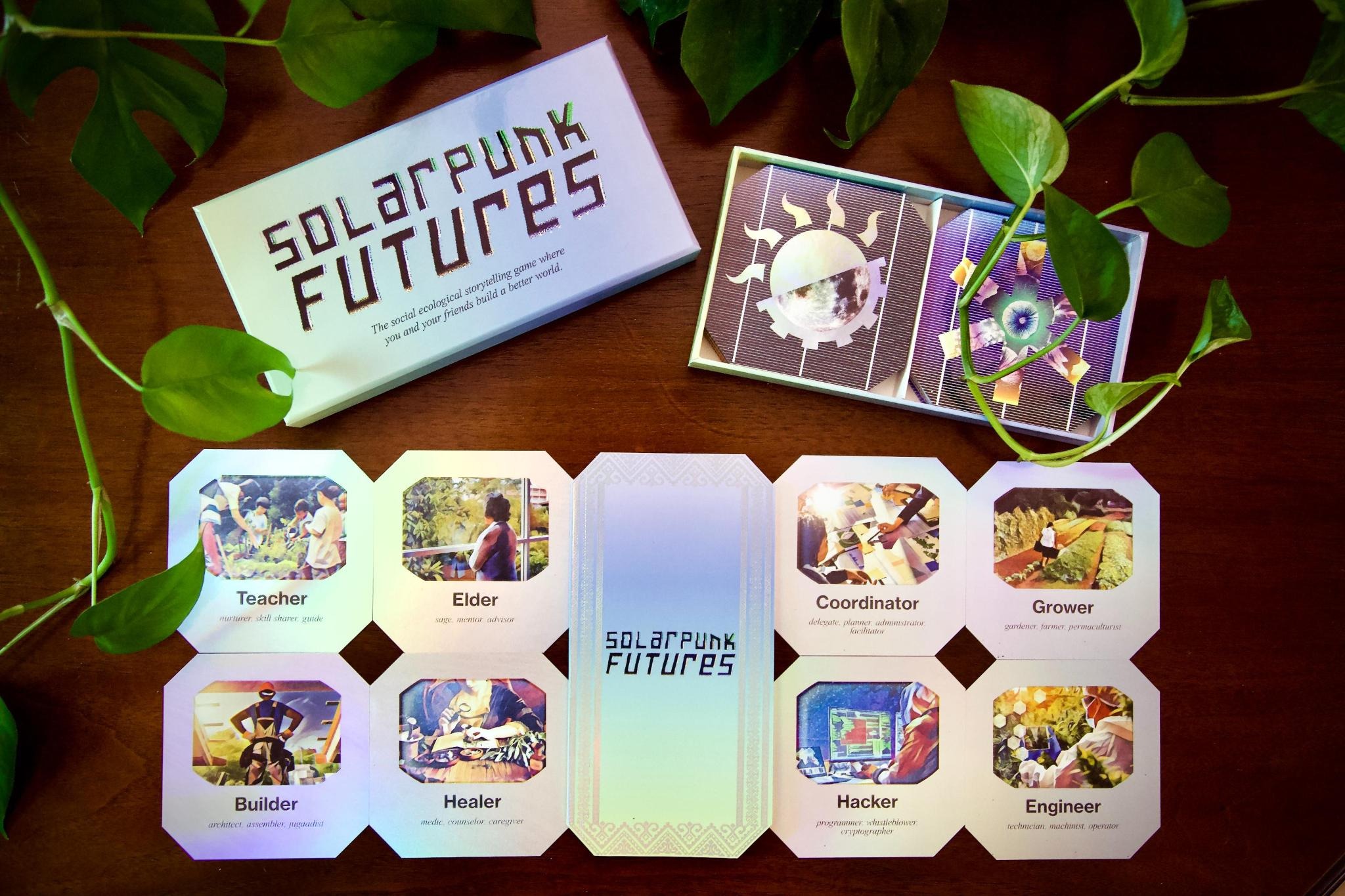
Solarpunk Futures
The social ecological storytelling game where you and your friends build a better world.
Critiques of World Models
Specifically, a World Model (WM) is a generative model that simulates the possibilities in diverse scenarios (e.g., physical world, mental world, social world, and evolutionary world). Operationally, a WM takes previous world state s𝑠sitalic_s and action a𝑎aitalic_a, and predicts or simulates the next world state s′superscript𝑠′s^{\prime}italic_s start_POSTSUPERSCRIPT ′ end_POSTSUPERSCRIPT through a transformation function, such as a conditional probability distribution:
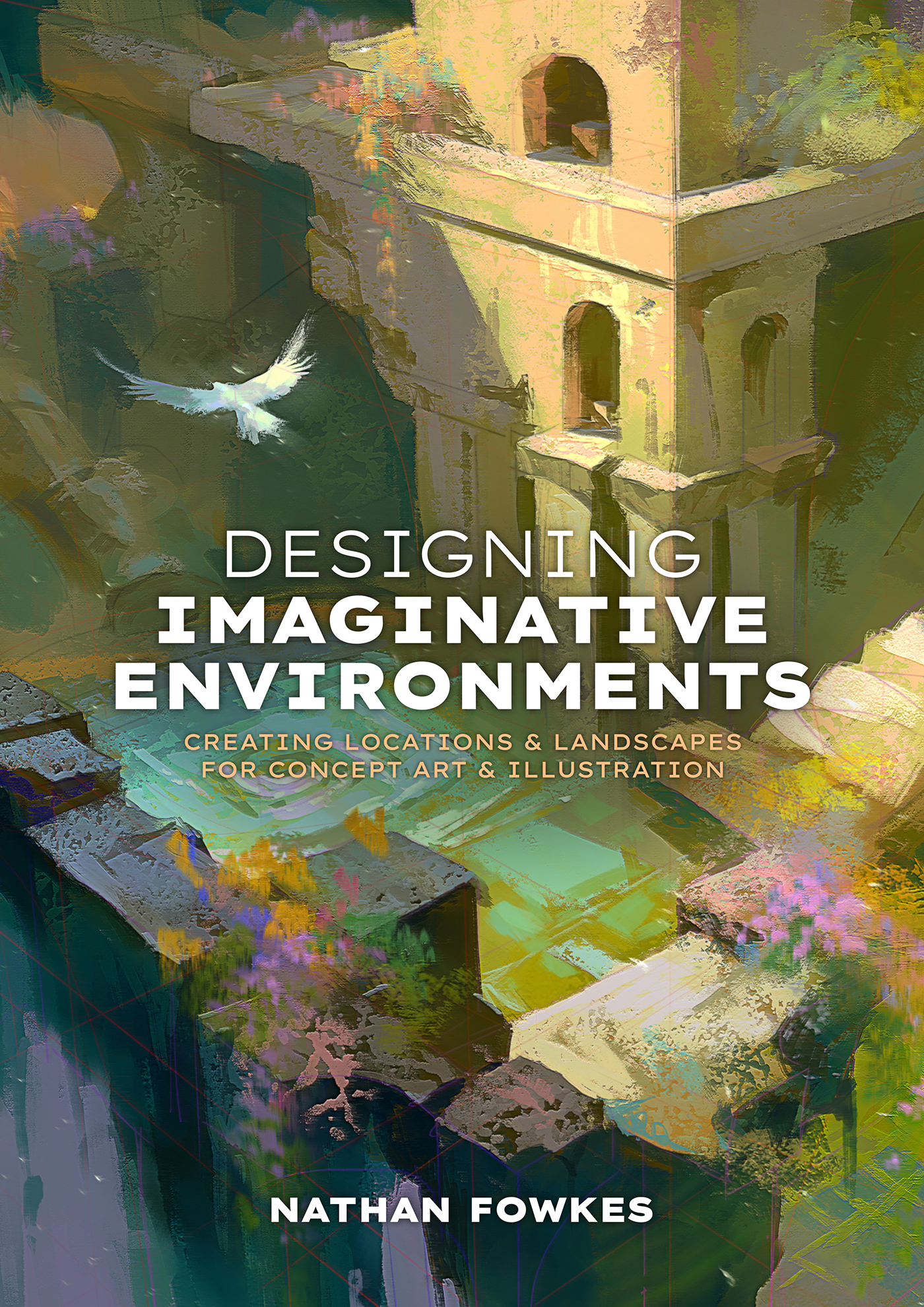
Designing Imaginative Environments by Nathan Fowkes
Join industry veteran Nathan Fowkes on a deep dive into the hows and whys of designing environments for entertainment. From creating mood with color and light, to exploring different biomes and weather, to crafting architecture and props, he will teach you how to design amazing environments that make your work stand out from the crowd.
How Nintendo Solved Zelda's Open World Problem
The Protopian Prize | The Fiction Contest
The Protopian Prize is a fiction contest inviting you to share your vision of people working toward liberatory futures, meeting obstacles, and making real change. “Protopian”—a word coined by Kevin Kelly, one of our contest's judges—means an achievable, optimistic future characterized by continuous, incremental progress rather than revolutionary leaps or a static, perfect state. Protopian stories imagine a future that is neither flawless nor catastrophic, but instead workably better than today. It’s about plausible progress rather than perfection or collapse.

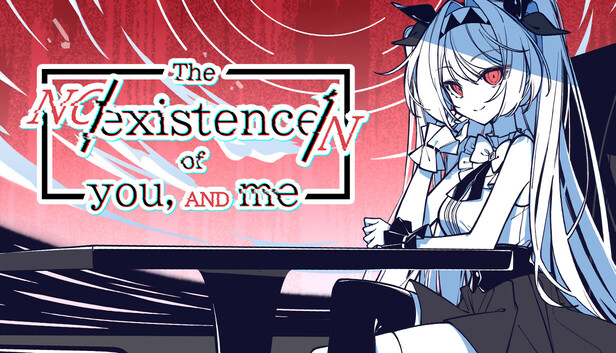
The NOexistenceN of you AND me
Use "game" as a medium to showcase the world of "you/girl". Explore the truth of "you/girl/world" through the form of a "visual novel".
Designs for the pluriverse: radical interdependence, autonomy, and the making of worlds
"Arturo Escobar presents a new vision of design theory by arguing for the creation of what he calls 'autonomous design'--a design practice aimed at channeling design's world-making capacity toward ways of being and doing that are deeply attuned to justice and the Earth"--Publisher description

Resonite
A novel digital universe with infinite possibilities. Whether you resonate with people around the world in a casual conversation, playing games and socializing. Or you riff off each other when creating anything from art to programming complex games, you'll find your place here.
"What's my model inside of?": Exploring the role of environments for grounded natural language understanding
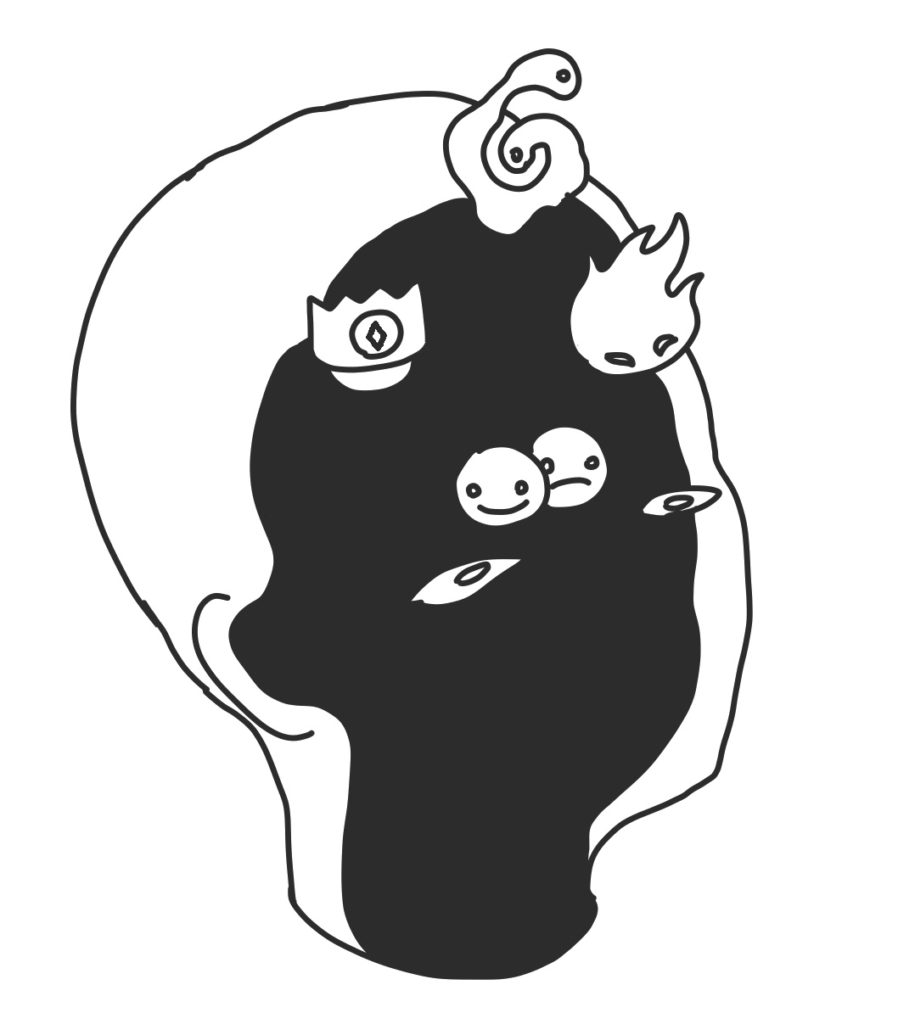
In contrast to classical cognitive science which studied brains in isolation, ecological approaches focused on the role of the body and environment in shaping cognition. Similarly, in this thesis we adopt an ecological approach to grounded natural language understanding (NLU) research. Grounded language understanding studies language understanding systems situated in the context of events, actions and precepts in naturalistic/simulated virtual environments. Where classic research tends to focus on designing new models and optimization methods while treating environments as given, we explore the potential of environment design for improving data collection and model development. We developed novel training and annotation approaches for procedural text understanding based on text-based game environments. We also drew upon embodied cognitive linguistics literature to propose a roadmap for grounded NLP research, and to inform the development of a new benchmark for measuring the progress of large language models on challenging commonsense reasoning tasks. We leveraged the richer supervision provided by text-based game environments to develop Breakpoint Transformers, a novel approach to modeling intermediate semantic information in long narrative or procedural texts. Finally, we integrated theories on the role of environments in collective human intelligence to propose a design for AI-augmented "social thinking environments" for knowledge workers like scientists.

Home - Participant
A pioneer of socially conscious storytelling, Participant drives real-world impact and awareness around today's most vital issues.
The Evolution of Creativity
Writing about the big beautiful mess that is making things for the world wide web.
Wildland: Why, What and How?
We are excited to present the paper outlining the project’s high-level rationale, as well as some nuts and bolts of this initiative.
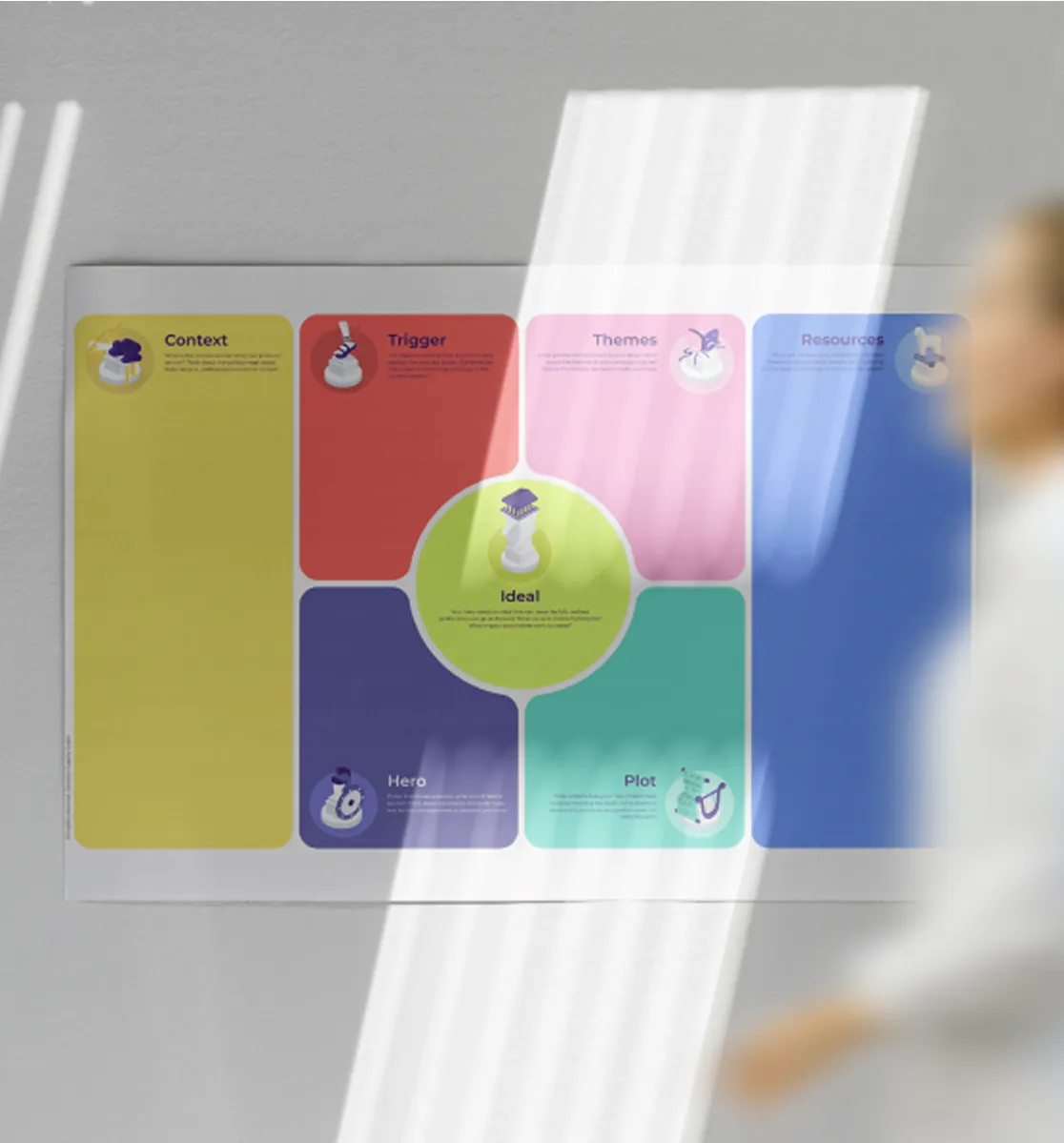
The Brand Story Canvas — Strategic Tool for Storytelling
Craft powerful brand stories with our Brand Story Canvas. Trusted by HEC Paris, EPFL & ESSEC, it guides you through 7 steps to an engaging, authentic narrative.
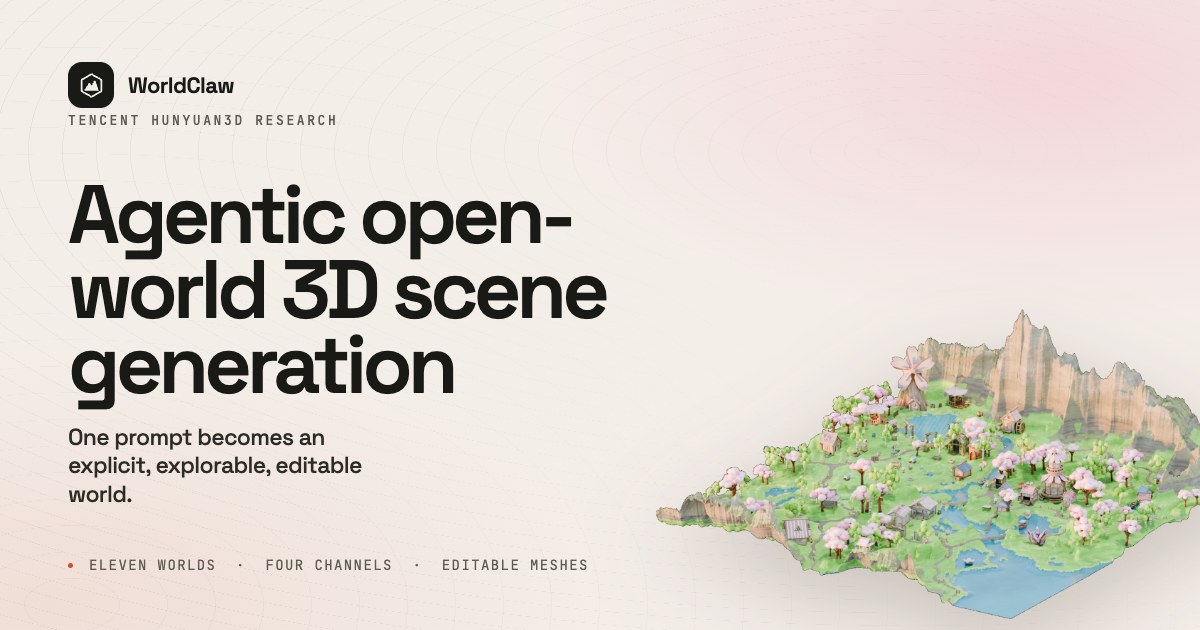
WorldClaw: Agentic 3D Open-World Generation at Scale
From one open-ended prompt to an explicit, explorable, and editable 3D world.