Permission to copy without fee all or part of this material is granted provided that the copies are not made or distributed for direct commercial advantage, the ACM copyright notice and the title of the publication and its date appear, and notice is given that copying is by permission of the Association for Computing Machinery. To copy otherwise, or to republish, requires a fee and/or specific permission. HOPL-II/4/93/MA, USA © 1993 ACM 0-89791-571-2/93/0004/0069...$1.50
Smalltalk
Smalltalk is a purely object-oriented programming language that was originally created in the 1970s for educational use, specifically for constructionist learning, but later found use in business. It was created at Xerox PARC by Learning Research Group (LRG) scientists, including Alan Kay, Dan Ingalls, Adele Goldberg, Ted Kaehler, Diana Merry, and Scott Wallace.

Toward Copyleft Equality for All
I would not have imagined even two years ago that expansion of copyleft would become such an issue of interest in software freedom licensing. Historically and for good reason, addition of new forms of copyleft clauses has moved at a steady pace. The early 2000s brought network services clauses (such as that in the Affero GPL), which hinged primarily on requiring provision of source to network-remote users. Affero GPL implemented this via copyright-controlled permission of modification. These licenses began as experiments, and were not approved by some license certification authorities until many years later.
Copyrightability of LLM-generated code: Can we license “vibe code” into Free Software? - FSFE
The use of large language models (“LLMs”) has exploded in recent years, including in the generation of source code. But even as their usage gains popularit...

Customer Commons
We are planning to release more agreements as we approach the finalization of the IEEE P7012 Standard for Machine Readable Personal Privacy Terms . This initiative is currently has a demo #NoStalking, and we encourage your participation and feedback to help shape its development.

The Surprising History of Copyright and The Promise of a Post-Copyright World – Question Copyright
(See also other available formats for the English, such as EPUB, Daisy, PDF, etc.)
Platforms, Protocols, and Permissibility - writing.drewmca.net
A comparison of communication technologies across permission types
The state of the copyleft license
In this post, I want to go a little deeper into one important type of license: those that require sharing of modifications under certain conditions, often called “copyleft” or “reciprocal” licenses

GNU Affero General Public License - GNU Project - Free Software Foundation
Copyright © 2007 Free Software Foundation, Inc. <https://fsf.org/> Everyone is permitted to copy and distribute verbatim copies of this license document, but changing it is not allowed.
Decentralized Information and the Future of Software - Draft
This work is licensed under a Creative Commons Attribution-NonCommercial-ShareAlike 4.0 International License.
History of free and open-source software
The history of free and open-source software begins at the advent of computer software in the early half of the 20th century. In the 1950s and 1960s, computer operating software and compilers were delivered as a part of hardware purchases without separate fees. At the time, source code—the human-readable form of software—was generally distributed with the software, providing the ability to fix bugs or add new functions. Universities were early adopters of computing technology. Many of the modifications developed by universities were openly shared, in keeping with the academic principles of sharing knowledge, and organizations sprung up to facilitate sharing.

Unorthodocs: Abandon your DVCS and Return to Sanity - bitquabit
I’ve pretty much always been a DVCS apologist. I know quite a few people who’ve been using DVCSes since Mercurial and Git, and a few who go back to BitKeeper, but I can totally out-hipster you. I was there for Monotone. I actually remember struggling to grok tla, and being happy that someone took the time to write baz. I remember the promise and the failure that was Darcs. I remember thinking that even Darcs was comically primitive, because it was nothing but a poor imitation of Smalltalk DVCSes like Monticello, themselves mere iterative improvements on classic Smalltalk changesets.[1]
CONTU Final Report
The National Commission on New Technological Uses of Copyrighted Works (CONTU) was established by Congress, and operated between 1975 and 1978 to determine how the Copyright Act of 1976 should address computers and copy machines. On July 31, 1978, it issued its Final Report, which is frequently cited, but not readily available.
Seeking Comment: Copyright Notice Recommendation
first stab at a pragmatic best-practice guide
Tiny Little Office: the link is the document
A tiny office suite where the link is the document. No accounts. Nothing is saved anywhere unless you choose to keep it on this device.
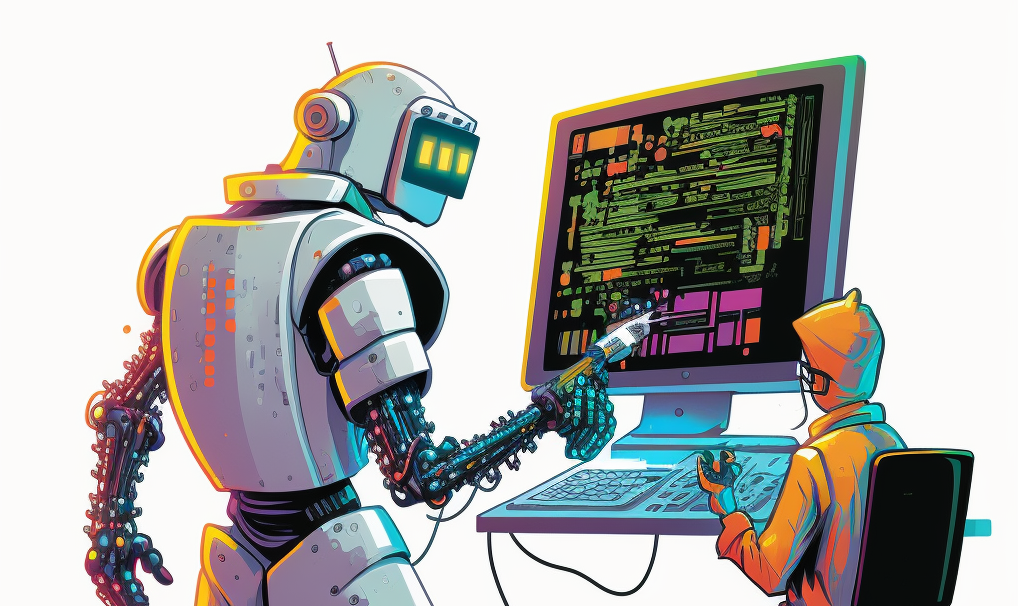
Malleable software in the age of LLMs
All computer users may soon have the ability to author small bits of code. What structural changes does this imply for the production and distribution of software?