


open source’s narrow focus further empowers those with other ways to exclude
Open Source Explained — Open Indie
Musings on the concept of ‘open source’, in the broadest possible definition of the term. Also an invitation to become a participant in ...

Open Source is Broken
The Open Source movement, as championed by the OSI, prizes absolute openness above all other concerns...
Open Source Software and Corporate Influence — Andrew Lilley Brinker
Open source software projects are frequently enmeshed with the interests of corporations. We should update mental models of who works on open source accordingly, and build or modify power structures to be more resilient to corporate capture.
It’s time to rethink Open Source
Why developers give away valuable work for free — and what can be done to take that money back.

The Few, the Tired, the Open Source Coders
The open source movement runs on the heroic efforts of not enough people doing too much work. They need help.

Some startups are going ‘fair source’ to avoid the pitfalls of open source licensing | TechCrunch
New alternative category to 'closed source' could help companies monetize software in the open -- without going all-in on open source.

Open Source Resistance
A direct-action manifesto for maintainers keeping open source alive on company time.
Open Source, Incentives, and Why 'Monetize Later' Often Backfires
How misaligned incentives undermine open source projects — and why 'monetize later' often leads to the very restrictions open source was meant to avoid.

Sorting out the Ethical Licensing Mess
Software developers who give the world, for free, usage rights to the code they write often use open source licenses to make this gift legally explicit. These free usage rights (and then some) are …

The Arguments Against Open Source AI are Very Bad | Tom Bedor's Blog
The release of Kimi K3 has opened a fresh round of angst and confused discourse. There's a loud cohort of journalists, business leaders, and politicians arguing that open source AI is a dangerous threat. OpenAI's Dean Ball:

The Paradox of Open
Numerous organisations and initiatives have been launched with a belief in openness and free knowledge. Their proponents placed their bets on the combined power of networked information services and new governance models for the production and sharing of content and data. We – as members of this broad movement – were among those who believed it possible to leverage this combination of power and opportunity to build a more democratic society, unleashing the power of the internet to create universal access to knowledge and culture. For us, such openness meant not only freedom, but also presented a path to justice and equality.
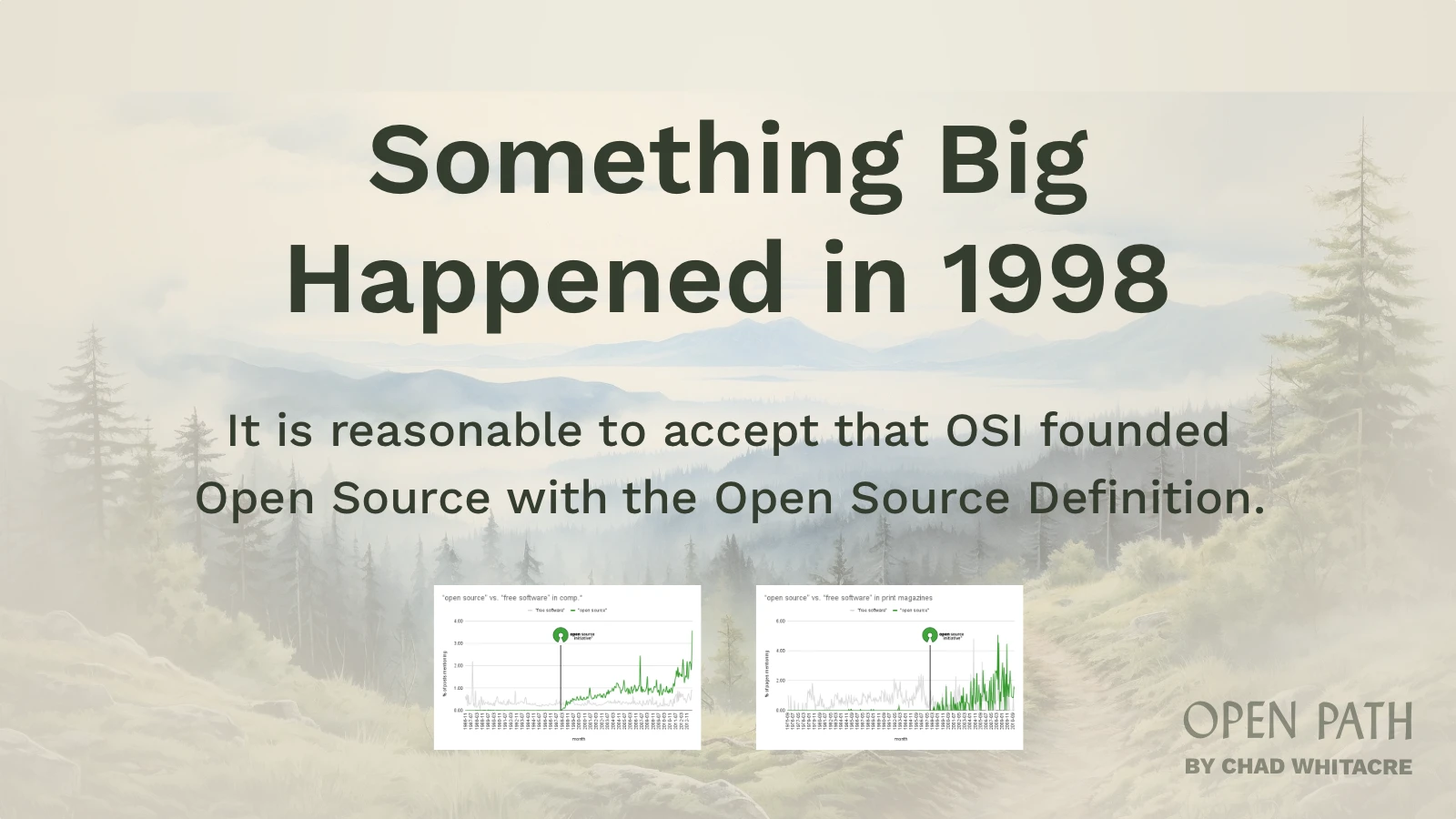
Something Big Happened in 1998
It is reasonable to accept that OSI founded Open Source with the Open Source Definition.
Open Source is a cost-allocation system
Because the right to use the software is not tied to payment, the license does not connect the people who benefit, the people who decide, and the people who bear the costs. Projects have to build those connections deliberately through governance.

I can see a whole lot of people agreeing with this. Kinda the same with open source in general, but few open source projects are social protocols seeking widespread adoption. It's a particular flavor of narrative disconnection from reality we have to bridge out of to get out of our own way.

⠁⠀⠀⠀⠠
Every @proto developer sounds like this to me:
