

text and quick thoughts
The Hippocratic License: Hippocratic License 3.0
Version 3.0 of the Hippocratic License, an ethical open source license created by the Organization for Ethical Source.


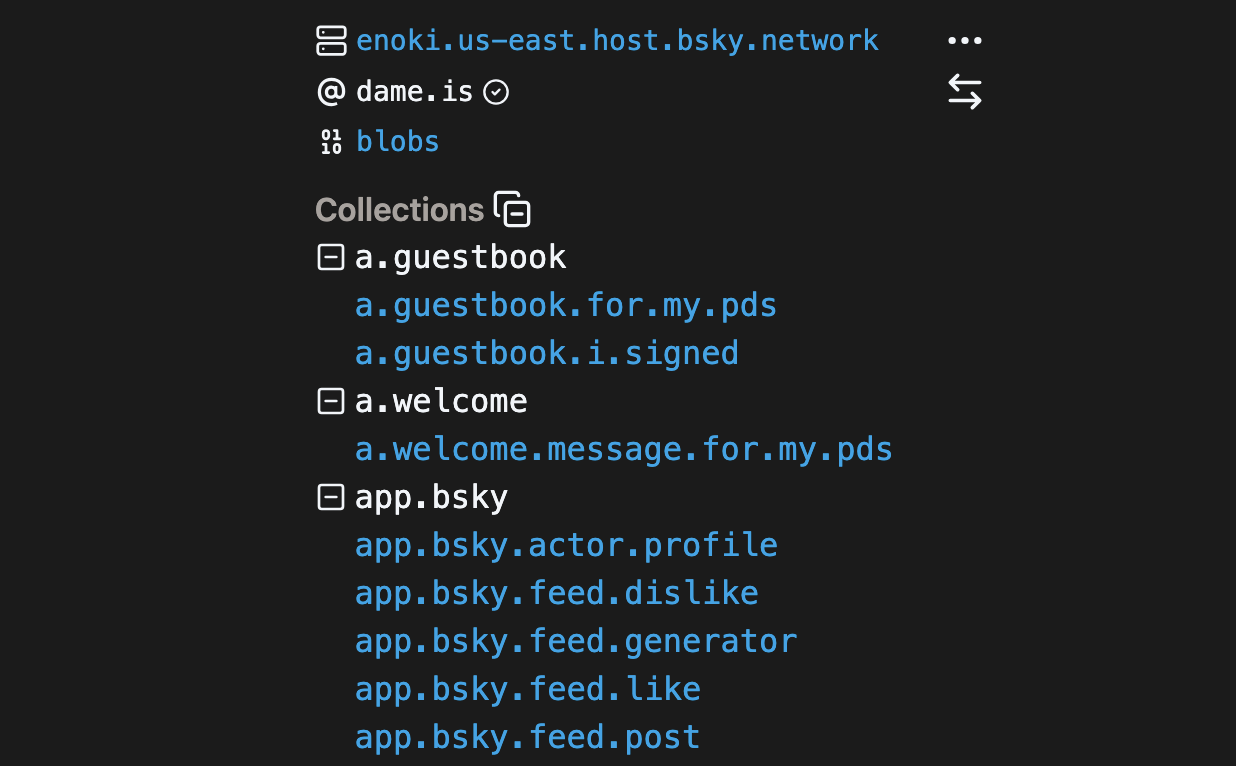
A guestbook and welcome message for my atproto PDS - dame.is
We all know by now that I believe in the lexicon black market and an enjoy illegal atproto records. It's not my fault that Bluesky PBC allowed for such shenanigans! If the good lord had intended for us to walk, she wouldn't have invented roller skates.
Why I used to prefer permissive licenses and now favor copyleft
Sorting out the Ethical Licensing Mess
Software developers who give the world, for free, usage rights to the code they write often use open source licenses to make this gift legally explicit. These free usage rights (and then some) are …


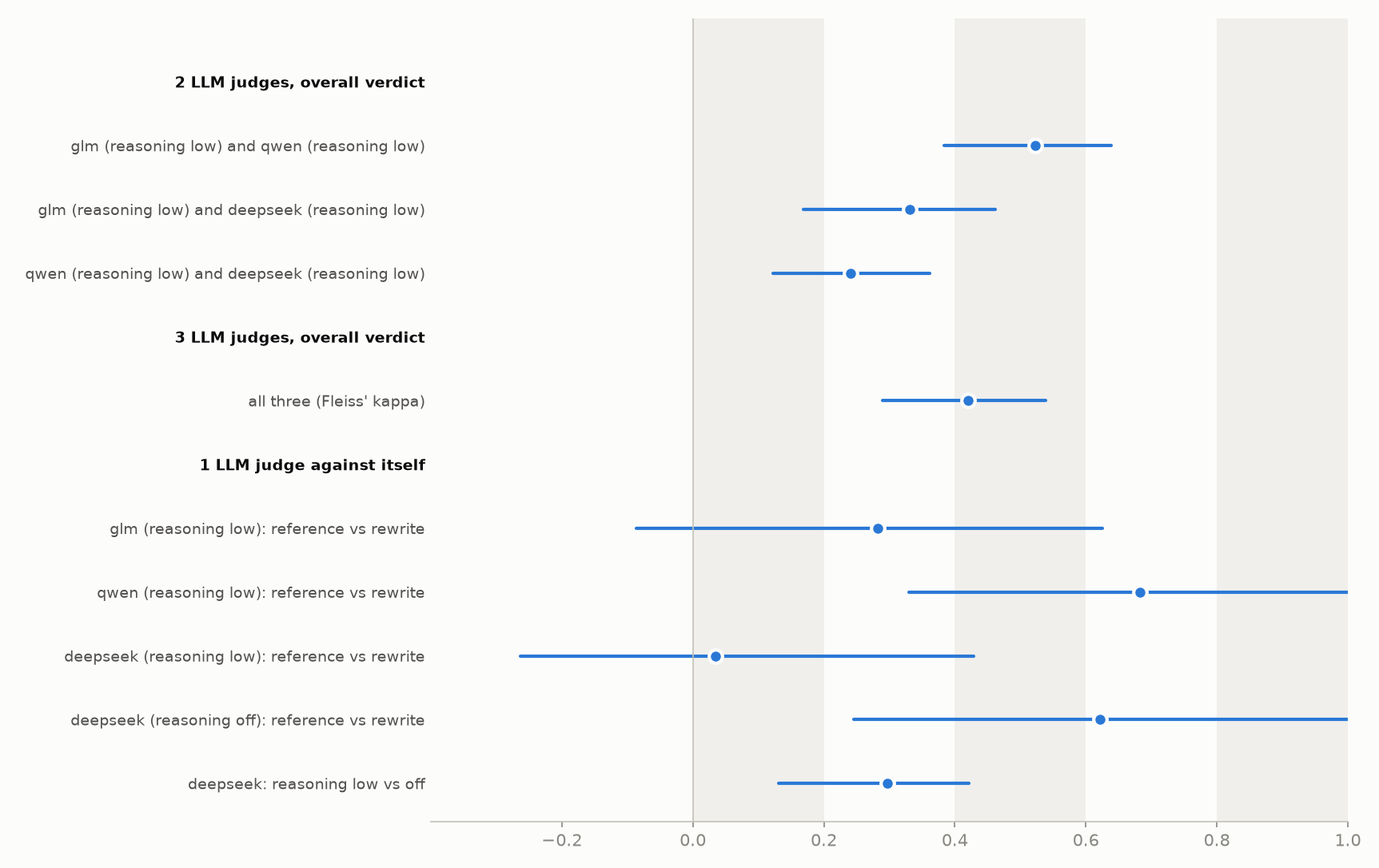
Permissive-Washing in the Open AI Supply Chain: A Large-Scale Audit of License Integrity
Permissive licenses like MIT, Apache-2.0, and BSD-3-Clause dominate open-source AI, signaling that artifacts like models, datasets, and code can be freely used, modified, and redistributed. However, these licenses carry mandatory requirements: include the full license text, provide a copyright notice, and preserve upstream attribution, that remain unverified at scale. Failure to meet these conditions can place reuse outside the scope of the license, effectively leaving AI artifacts under default copyright for those uses and exposing downstream users to litigation. We call this phenomenon ``permissive washing'': labeling AI artifacts as free to use, while omitting the legal documentation required to make that label actionable. To assess how widespread permissive washing is in the AI supply chain, we empirically audit 124,278 dataset $\rightarrow$ model $\rightarrow$ application supply chains, spanning 3,338 datasets, 6,664 models, and 28,516 applications across Hugging Face and GitHub. We find that an astonishing 96.5\% of datasets and 95.8\% of models lack the required license text, only 2.3\% of datasets and 3.2\% of models satisfy both license text and copyright requirements, and even when upstream artifacts provide complete licensing evidence, attribution rarely propagates downstream: only 27.59\% of models preserve compliant dataset notices and only 5.75\% of applications preserve compliant model notices (with just 6.38\% preserving any linked upstream notice). Practitioners cannot assume permissive labels confer the rights they claim: license files and notices, not metadata, are the source of legal truth. To support future research, we release our full audit dataset and reproducible pipeline.


Perspective Chapter: Fit for Purpose? Creative Commons Licensing for Research Data in the Age of Artificial Intelligence
Licensing is an important component of the re-usability of research data, itself part of the FAIR principles: without clear, machine-readable licensing, datasets risk becoming technically...

Mx. Aria Stewart (@aredridel@kolektiva.social)
I knew it was this way but it's really hitting me today how much the Open Source movement and copyright maximalism supplanted the idea of free software, and again how much the Free Software movement turned from a close ideological cousin of the remix and open culture movement into a culture of legalism. At the same time, copyright law itself has been extended to be near-immortal copyrights rather than brief monopolies to spur creation by enabling profit from creating works.

Legislation as Code | Version: 2

Governing Digital Legal Systems: Insights on Artificial Intelligence and Rules as Code · MIT Computational Law Report
Hamish Fraser