

Last week, Dan Blanchard, the maintainer of chardet—a Python library for detecting text encodings used by roughly 130 million projects a month— released a new…
Relicensing with AI-assisted rewrite
Exploring the chardet v7.0.0 controversy: Can an AI rewrite legally 'launder' a library from LGPL to MIT?
Testing of detection tools for AI-generated text
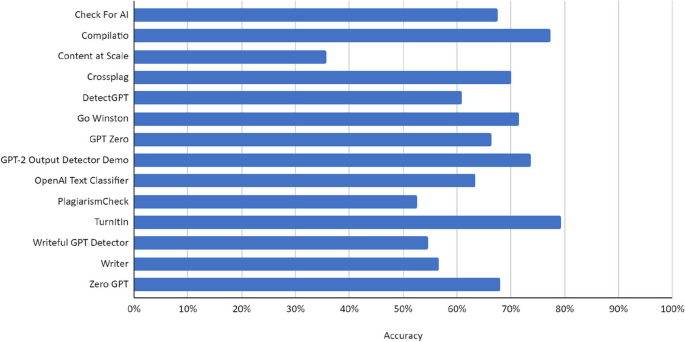
Recent advances in generative pre-trained transformer large language models have emphasised the potential risks of unfair use of artificial intelligence (AI) generated content in an academic environment and intensified efforts in searching for solutions to detect such content. The paper examines the general functionality of detection tools for AI-generated text and evaluates them based on accuracy and error type analysis. Specifically, the study seeks to answer research questions about whether existing detection tools can reliably differentiate between human-written text and ChatGPT-generated text, and whether machine translation and content obfuscation techniques affect the detection of AI-generated text. The research covers 12 publicly available tools and two commercial systems (Turnitin and PlagiarismCheck) that are widely used in the academic setting. The researchers conclude that the available detection tools are neither accurate nor reliable and have a main bias towards classifying the output as human-written rather than detecting AI-generated text. Furthermore, content obfuscation techniques significantly worsen the performance of tools. The study makes several significant contributions. First, it summarises up-to-date similar scientific and non-scientific efforts in the field. Second, it presents the result of one of the most comprehensive tests conducted so far, based on a rigorous research methodology, an original document set, and a broad coverage of tools. Third, it discusses the implications and drawbacks of using detection tools for AI-generated text in academic settings.
Testing of detection tools for AI-generated text
Recent advances in generative pre-trained transformer large language models have emphasised the potential risks of unfair use of artificial intelligence (AI) generated content in an academic environment and intensified efforts in searching for solutions to detect such content. The paper examines the general functionality of detection tools for AI-generated text and evaluates them based on accuracy and error type analysis. Specifically, the study seeks to answer research questions about whether existing detection tools can reliably differentiate between human-written text and ChatGPT-generated text, and whether machine translation and content obfuscation techniques affect the detection of AI-generated text. The research covers 12 publicly available tools and two commercial systems (Turnitin and PlagiarismCheck) that are widely used in the academic setting. The researchers conclude that the available detection tools are neither accurate nor reliable and have a main bias towards classifying the output as human-written rather than detecting AI-generated text. Furthermore, content obfuscation techniques significantly worsen the performance of tools. The study makes several significant contributions. First, it summarises up-to-date similar scientific and non-scientific efforts in the field. Second, it presents the result of one of the most comprehensive tests conducted so far, based on a rigorous research methodology, an original document set, and a broad coverage of tools. Third, it discusses the implications and drawbacks of using detection tools for AI-generated text in academic settings.
A large-scale audit of dataset licensing and attribution in AI
The race to train language models on vast, diverse and inconsistently documented datasets raises pressing legal and ethical concerns. To improve data transparency and understanding, we convene a multi-disciplinary effort between legal and machine learning experts to systematically audit and trace more than 1,800 text datasets. We develop tools and standards to trace the lineage of these datasets, including their source, creators, licences and subsequent use. Our landscape analysis highlights sharp divides in the composition and focus of data licenced for commercial use. Important categories including low-resource languages, creative tasks and new synthetic data all tend to be restrictively licenced. We observe frequent miscategorization of licences on popular dataset hosting sites, with licence omission rates of more than 70% and error rates of more than 50%. This highlights a crisis in misattribution and informed use of popular datasets driving many recent breakthroughs. Our analysis of data sources also explains the application of copyright law and fair use to finetuning data. As a contribution to continuing improvements in dataset transparency and responsible use, we release our audit, with an interactive user interface, the Data Provenance Explorer, to enable practitioners to trace and filter on data provenance for the most popular finetuning data collections: www.dataprovenance.org.

Can AI Detectors Be Trusted?
Society has always trusted editors, teachers, peer reviewers, and readers to set acceptable standards for writing. In the past, the biggest challenge was detecting plagiarism and cracking down on other forms of cheating. Now, AI detectors are rewriting the script: they assign a score based on the likelihood that the text was created by a human or a large language model (LLM).

Hallucination-Free? Assessing the Reliability of Leading AI Legal Research Tools
Legal practice has witnessed a sharp rise in products incorporating artificial intelligence (AI). Such tools are designed to assist with a wide range of core legal tasks, from search and summarization of caselaw to document drafting. But the large language models used in these tools are prone to "hallucinate," or make up false information, making their use risky in high-stakes domains. Recently, certain legal research providers have touted methods such as retrieval-augmented generation (RAG) as "eliminating" (Casetext, 2023) or "avoid[ing]" hallucinations (Thomson Reuters, 2023), or guaranteeing "hallucination-free" legal citations (LexisNexis, 2023). Because of the closed nature of these systems, systematically assessing these claims is challenging. In this article, we design and report on the first preregistered empirical evaluation of AI-driven legal research tools. We demonstrate that the providers' claims are overstated. While hallucinations are reduced relative to general-purpose chatbots (GPT-4), we find that the AI research tools made by LexisNexis (Lexis+ AI) and Thomson Reuters (Westlaw AI-Assisted Research and Ask Practical Law AI) each hallucinate between 17% and 33% of the time. We also document substantial differences between systems in responsiveness and accuracy. Our article makes four key contributions. It is the first to assess and report the performance of RAG-based proprietary legal AI tools. Second, it introduces a comprehensive, preregistered dataset for identifying and understanding vulnerabilities in these systems. Third, it proposes a clear typology for differentiating between hallucinations and accurate legal responses. Last, it provides evidence to inform the responsibilities of legal professionals in supervising and verifying AI outputs, which remains a central open question for the responsible integration of AI into law.

‘Impossible’ to create AI tools like ChatGPT without copyrighted material, OpenAI says
Pressure grows on artificial intelligence firms over the content used to train their products
Book publishers sue Meta over AI’s ‘word-for-word’ copying
Meta is accused of ripping copyrighted works from piracy websites.

Can Agentic AI Coding Tools Finally End Copyright For Software While Re-Inventing Open Source?
Most of the discussions about the impact of the latest generative AI systems on copyright have centered on text, images and video. That’s no surprise, since writers, artists and film-makers feel ve…

The Consent Layer: Using ligatures to make web text expensive to scrape without asking
ShieldFont is an open-source creative technology project that offers a practical opt-out from unauthorized AI training and disrupts what is collected when that choice is ignored. It swaps 45.8% of content words (around 24.4% of all words) in a page's source code for other (partially) random words, while the font restores the original text on screen. Readers see the work as intended; mass scrapers collect an altered version. In testing, shielding caused over 90% of pages that would otherwise pass the quality filter to be rejected, keeping them out of the training pipeline. Of those that still passed, 19.4% of all words conveyed false meaning, adding noise to unauthorized AI training datasets. This paper's goal is to walk newcomers through the whole process, in plain language and in order: the project's rationale, how it was built, the results, how to deploy it, and where to contribute.

AI and the Destruction of the Creative Commons
The balance of software copyright protection and openness has always been fraught with minutiae and detail that bores all but the most nerdy of pedants. Yet, through much effort and 40 years of debate we had reached an equilibrium. Now AI has thrown that out the window.
Unlawful by design: Exposing the human rights costs of generative AI - Amnesty International
This briefing examines how standalone generative AI systems, based on unlawful web scraping, are in conflict with international human rights law (IHRL) and standards through their design, development and deployment. While these technologies promise sophisticated automation and efficiency, they rely on data collection and model training practices that abuse privacy rights, enable discrimination, and threaten […]

The fight over downloadable AI is not really about a ban - Sensemaker
Companies want access, Anthropic wants testing, and Washington and Beijing are arguing over alleged copying.
Meta Secretly Trained Its AI on a Notorious Piracy Database, Newly Unredacted Court Docs Reveal
One of the most important AI copyright legal battles just took a major turn.
AI*-generated copyright infringement

* I’m neither “pro-AI” nor “anti-AI.” I’ve been blocked for being perceived as both. —Actually, I’m honestly more anti-AI than pro-AI thus far, aside from specialized models and specific use cases, but I’m willing to consider information that’s new to me
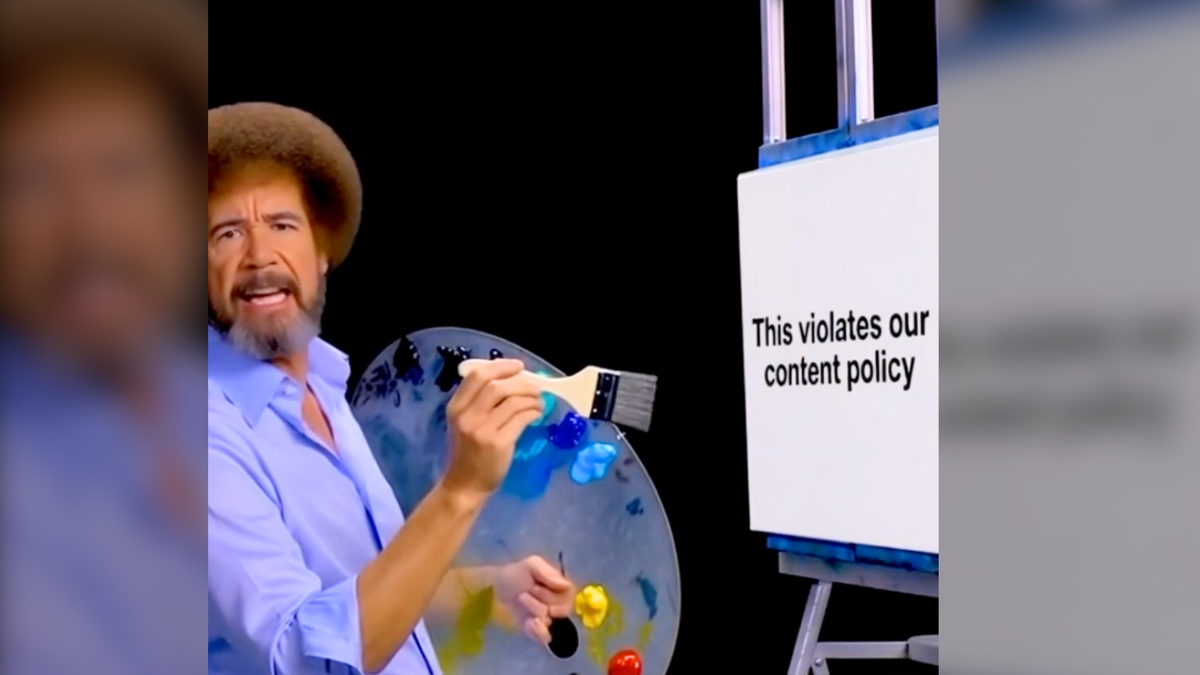
People Are Crashing Out Over Sora 2’s New Guardrails

Bing Is Generating Images of SpongeBob Doing 9/11
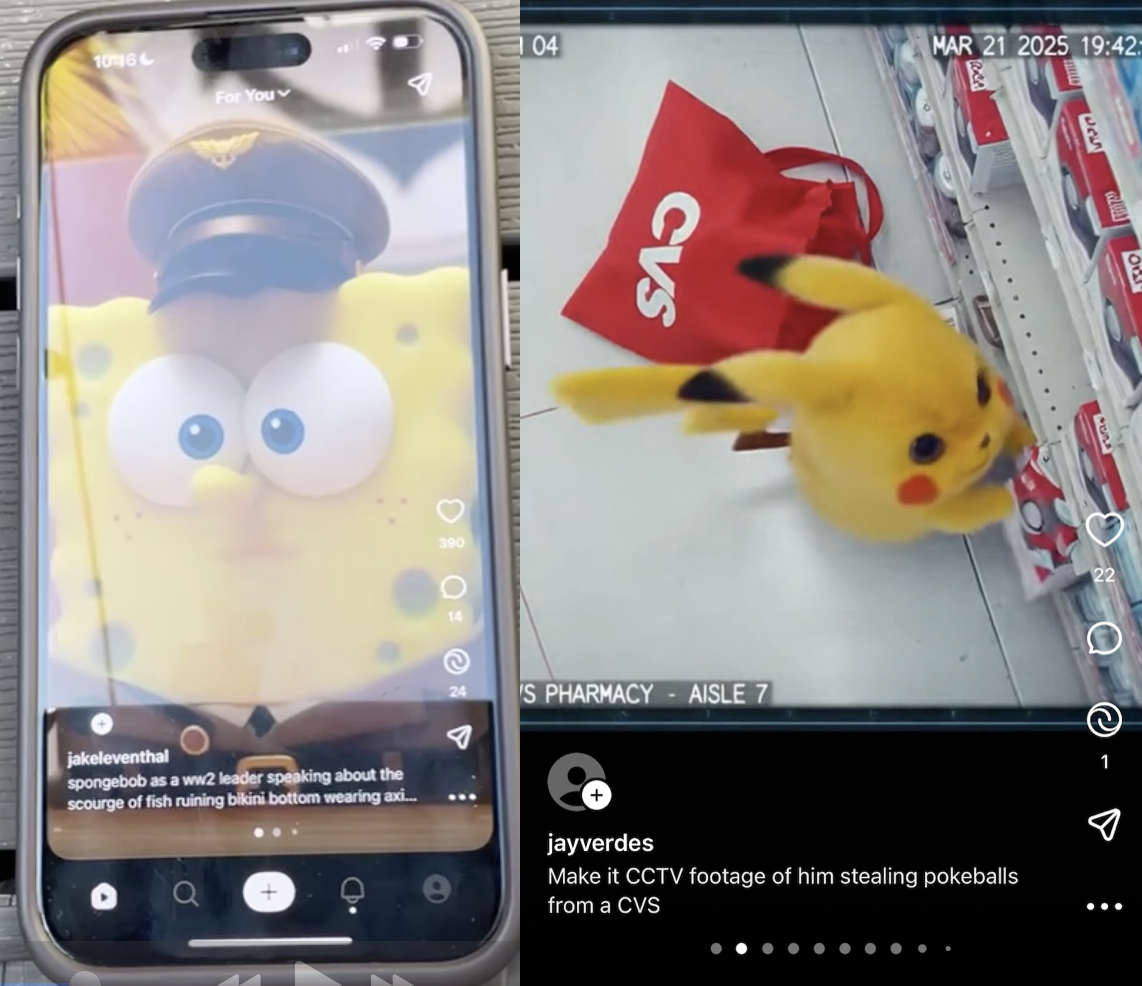
OpenAI’s Sora 2 Copyright Infringement Machine Features Nazi SpongeBobs and Criminal Pikachus

OpenAI Can’t Fix Sora’s Copyright Infringement Problem Because It Was Built With Stolen Content