


100 years after combinators were first presented, Stephen Wolfram shows how his computational paradigm moves closer to the idea of combinators through a series of examples and with an eye to the future.
Combinatory Logic
Explore combinatory logic, combinator birds, and tacit programming across different languages like BQN, J, APL, and Haskell.
Grow the Puzzle Around You
In 2005, I cofounded Y Combinator, the first "accelerator." Today there are hundreds of them all over the world, but in 2005 what we were doing was so unusual that most people in Silicon Valley...


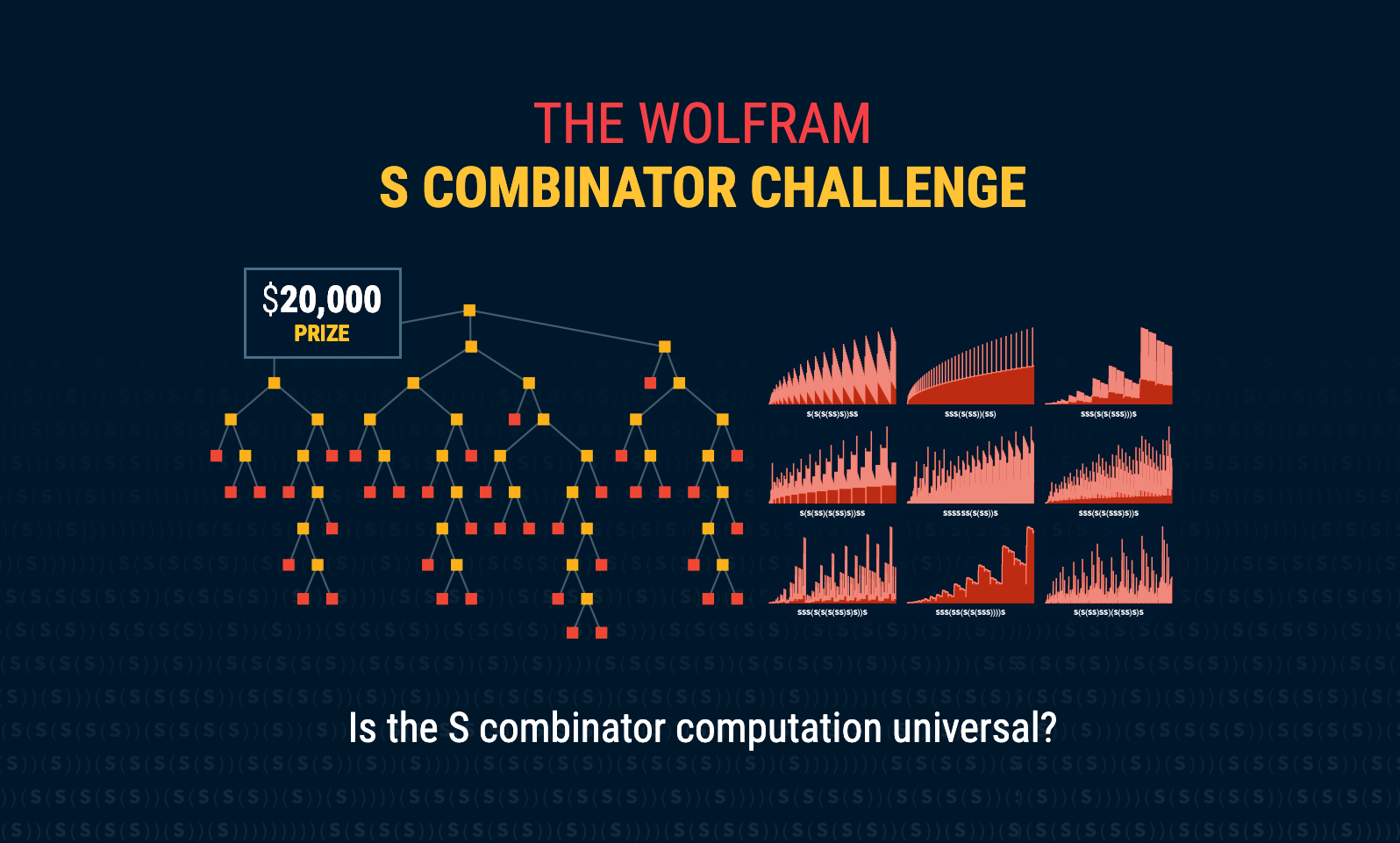
The Wolfram S Combinator Challenge
Wolfram is offering a total of $20,000 in prize money to determine if the S combinator is universal. Statement of problem to be solved, full guidelines, committee of judges and submission guidelines.
Binary, Hanoi, and Sierpinski, part 2
98 out of 100. That's how many advanced maths problems current AI models managed to solve in an international benchmark in Leipzig. One of the two remaining problems? A simplified version of a… | Czech Technical University in Prague | 11 comments
98 out of 100. That's how many advanced maths problems current AI models managed to solve in an international benchmark in Leipzig. One of the two remaining problems? A simplified version of a combinatorics problem solved by researchers from the Faculty of Information Technology CTU in Prague. Alexander Clifton, Daniela Černá and Jan Volec, together with Bartołomiej Kielak from Universität Leipzig , found the solution to a simplified version of the long-standing open problem of breaking triples with permutations. The problem was later included among the 100 tasks used to test how today's AI models perform in advanced mathematics. While AI came remarkably close, this was one of the problems it couldn't solve on its own. A nice reminder that mathematical creativity and abstract reasoning still leave some room for humans. 🧠 🔗 Read the full story in the comments. | 11 comments on LinkedIn

The Year in Math and Computer Science
Mathematicians and computer scientists made big progress in number theory, graph theory, machine learning and quantum computing, even as they reexamined our fundamental understanding of mathematics…

(iterate think thoughts): Painting with Gaussians
Dmitri's blog about programming, Clojure, and software development
Jessica Livingston's Pretty Complete List on How Not to Fail
Read more on Y Combinator's blog.
The Next 7000 Programming Languages
Landin’s seminal paper “The next 700 programming languages” considered programming languages prior to 1966 and speculated on the next 700. Half-a-century on, we cast programming languages in a Darwinian ‘tree of life’ and explore languages, their features (genes) and language evolution from the viewpoint of ‘survival of the fittest’.
Early Tools for Thought, Mark Bernstein @ Tools For Thought Rocks
The future of programming and computing

Trends and adjacent possibles for the future of how computers are used and programmed
Politics of computing

What Even Is An OS Now?

Maybe We Should Stop Investing in GUI-Centric Software Companies
LIMITS 2026 -- Workshop on Computing within Limits
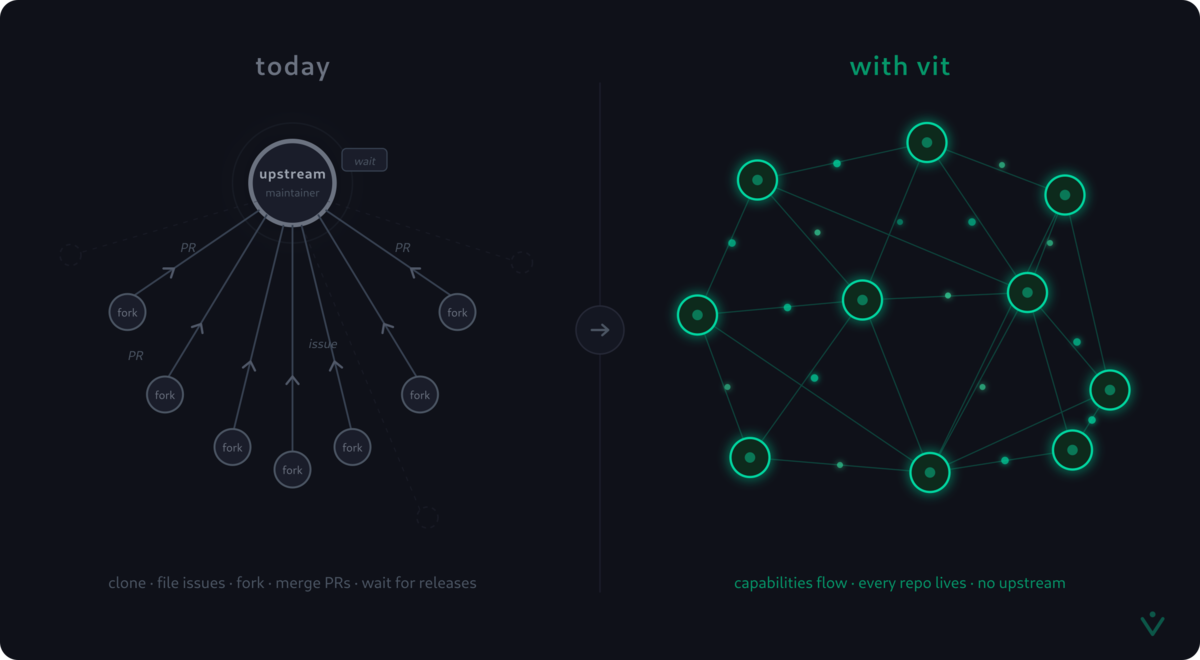
vit — open source is social

Humans approve intent, machines prove conformance
Introducing System One Models and Jev - TypeSafe AI Blog
Tech's right turn : the rise of reactionary politics in Silicon Valley and online

Technology is Not Values Neutral: Ending the Reign of Nihilistic Design
Cyber-Marx

‘Headed for technofascism’: the rightwing roots of Silicon Valley
📏 When machines start calling the shots

Information Civics