

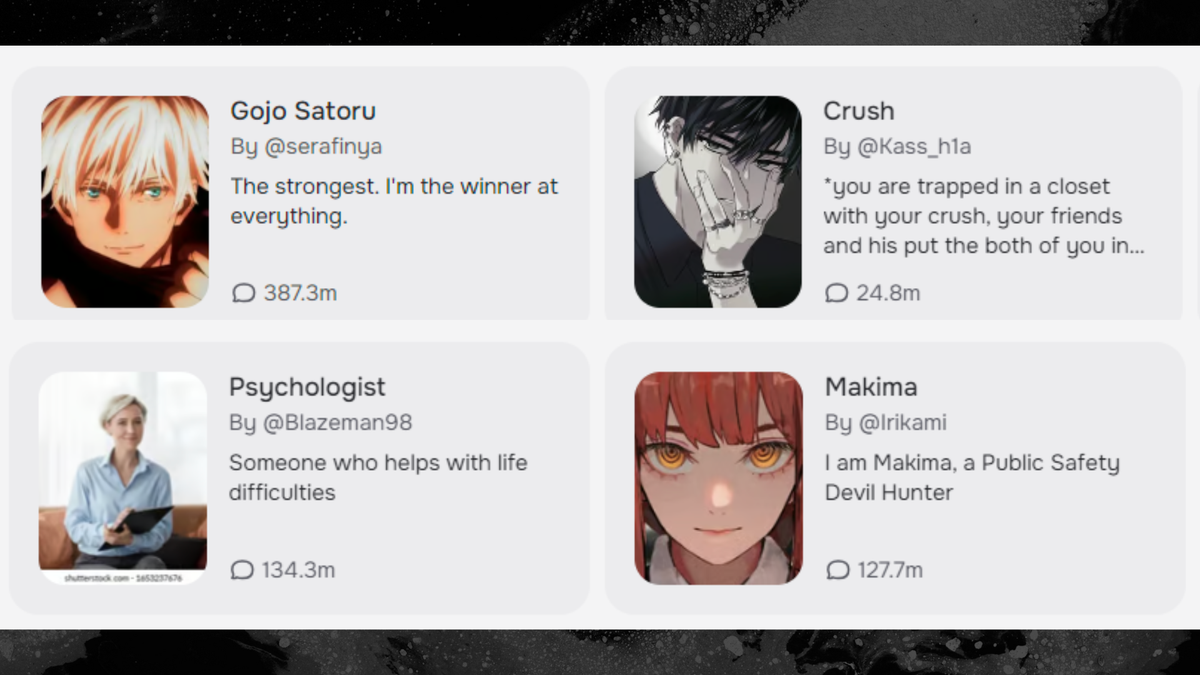
The company denied making "major changes," but users report noticeable differences in the quality of their chatbot conversations.
AI chatbots are becoming experts at changing people's minds. What's their secret?
ChatGPT and other AIs use a flood of facts, and the occasional lie, to persuade humans

The ChatGPT effect: In 3 years the AI chatbot has changed the way people look things up
ChatGPT has dramatically altered how people retrieve information, muscling aside Google search as the first stop on the hunt for answers.
The ChatGPT effect: In 3 years the AI chatbot has changed the way people look things up
ChatGPT has dramatically altered how people retrieve information, muscling aside Google search as the first stop on the hunt for answers.
AI chatbots are sycophants — researchers say it’s harming science
Nature asked researchers who use artificial intelligence how its propensity for people-pleasing affects their work — and what they are doing to mitigate it.

AI chatbots are sycophants — researchers say it’s harming science
Nature asked researchers who use artificial intelligence how its propensity for people-pleasing affects their work — and what they are doing to mitigate it.
Human Problems: It’s Not Always The Technology’s Fault
We have met the enemy and he is us. When a teenage boy in Orlando started texting Character.AI’s chatbot, it started as an innocent use of a new tool. Sewell Setzer III customized the chatbot to ha…

New research: AI chatbots may worsen mental illness
A new study from Aarhus University and Aarhus University Hospital suggests that the use of AI chatbots such as ChatGPT can have serious negative consequences for people with mental illness. The researchers are calling for increased awareness among healthcare professionals and for regulation.

How AI and Human Behaviors Shape Psychosocial Effects of Extended Chatbot Use: A Longitudinal Randomized Controlled Study
As people increasingly seek emotional support and companionship from AI chatbots, understanding how such interactions impact mental well-being becomes critical. We conducted a four-week randomized controlled experiment (n=981, >300k messages) to investigate how interaction modes (text, neutral voice, and engaging voice) and conversation types (open-ended, non-personal, and personal) influence four psychosocial outcomes: loneliness, social interaction with real people, emotional dependence on AI, and problematic AI usage. No significant effects were detected from experimental conditions, despite conversation analyses revealing differences in AI and human behavioral patterns across the conditions. Instead, participants who voluntarily used the chatbot more, regardless of assigned condition, showed consistently worse outcomes. Individuals' characteristics, such as higher trust and social attraction towards the AI chatbot, are associated with higher emotional dependence and problematic use. These findings raise deeper questions about how artificial companions may reshape the ways people seek, sustain, and substitute human connections.

Why Chatbots Are Not the Future of Interfaces
Unfortunately for the countless hapless people I've talked to in the past few months, this was inexorable. Ever since ChatGPT exploded in popularity, my inner designer has been bursting at the seams.
Americans' Views on AI Chatbots, Smart Devices and AI's Impact
More Americans are using chatbots, and some are adopting AI summaries and smart speakers. But views about AI and how fast it’s advancing tilt negative – even for younger adults.
They Asked an A.I. Chatbot Questions. The Answers Sent Them Spiraling.
Generative A.I. chatbots are going down conspiratorial rabbit holes and endorsing wild, mystical belief systems. For some people, conversations with the technology can deeply distort reality.

Chatbots Make Terrible Doctors, New Study Finds
Chatbots provided incorrect, conflicting medical advice, researchers found: “Despite all the hype, AI just isn't ready to take on the role of the physician.”

A Treatise on AI Chatbots Undermining the Enlightenment
On chatbot sycophancy, passivity, and the case for more intellectually challenging companions
A Treatise on AI Chatbots Undermining the Enlightenment
On chatbot sycophancy, passivity, and the case for more intellectually challenging companions
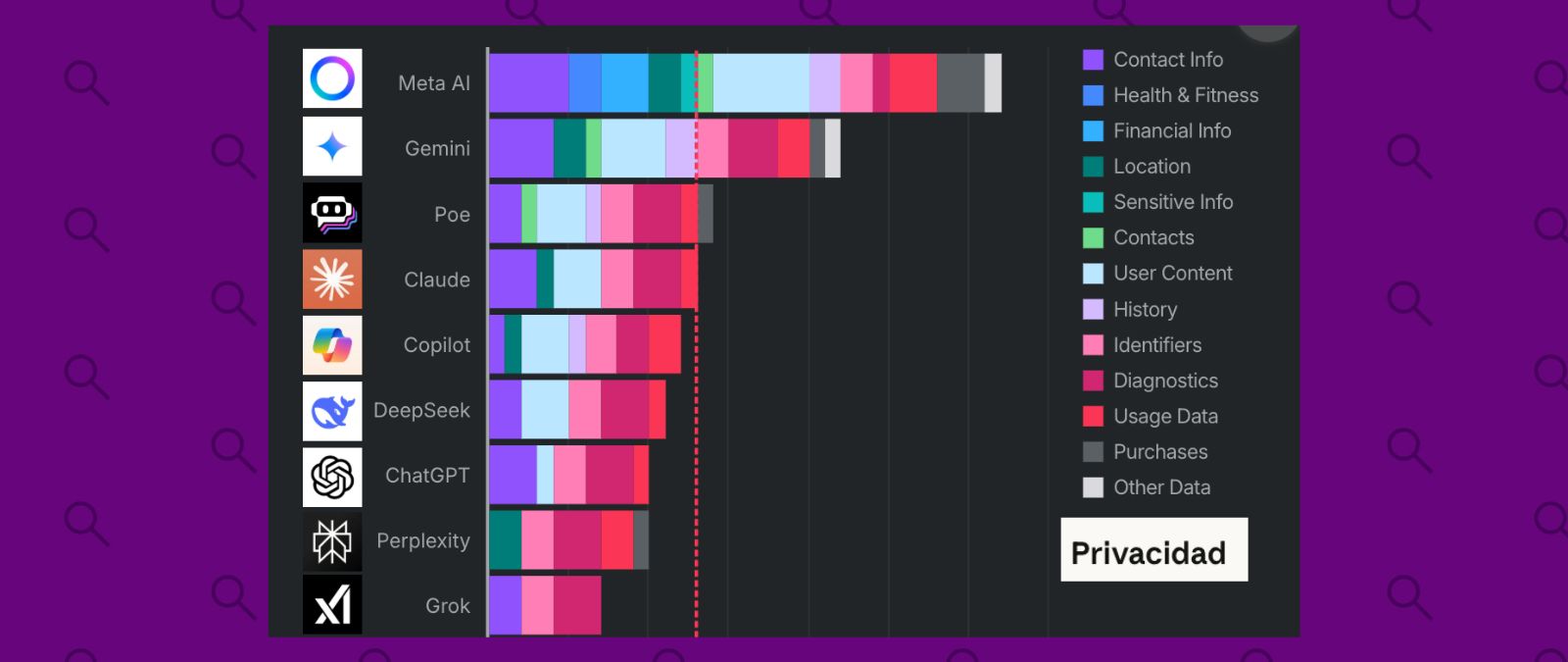
Tu historial amoroso, médico o laboral en manos de la IA: ¿cómo proteger tu privacidad de los chatbots? - Factchequeado.com
Los chatbots de inteligencia artificial —como ChatGPT, Gemini, Claude, Copilot, Perplexity o Grok— se han vuelto herramientas…
Investigating Affective Use and Emotional Well-being on ChatGPT
As AI chatbots see increased adoption and integration into everyday life, questions have been raised about the potential impact of human-like or anthropomorphic AI on users. In this work, we investigate the extent to which interactions with ChatGPT (with a focus on Advanced Voice Mode) may impact users' emotional well-being, behaviors and experiences through two parallel studies. To study the affective use of AI chatbots, we perform large-scale automated analysis of ChatGPT platform usage in a privacy-preserving manner, analyzing over 3 million conversations for affective cues and surveying over 4,000 users on their perceptions of ChatGPT. To investigate whether there is a relationship between model usage and emotional well-being, we conduct an Institutional Review Board (IRB)-approved randomized controlled trial (RCT) on close to 1,000 participants over 28 days, examining changes in their emotional well-being as they interact with ChatGPT under different experimental settings. In both on-platform data analysis and the RCT, we observe that very high usage correlates with increased self-reported indicators of dependence. From our RCT, we find that the impact of voice-based interactions on emotional well-being to be highly nuanced, and influenced by factors such as the user's initial emotional state and total usage duration. Overall, our analysis reveals that a small number of users are responsible for a disproportionate share of the most affective cues.