


Research Gold's team of human methodologists are either AI generated or using the identity of real people without their permission
Company Offering ‘100% Human-Written, Never AI’ Medical Research Is Entirely AI
Research Gold's team of human methodologists are either AI generated or using the identity of real people without their permission
Is AI Flooding Medical Journals With 'Meaningless' Research?
'It's not fraudulent, and it's not really slop,' one expert says

No humans allowed: scientific AI agents get their own social network
Autonomous agents aren’t just creating their own research — on the Reddit-style website Agent4Science, they’re chatting about it, too.
AI Use in The Scholarly Kitchen - The Scholarly Kitchen
Some thoughts on the reader response the Scholarly Kitchen has seen regarding AI use by authors, a recent Nature News article on the efficacy of AI detection tools, and why it's important to keep experimenting to figure out what's ethically acceptable.
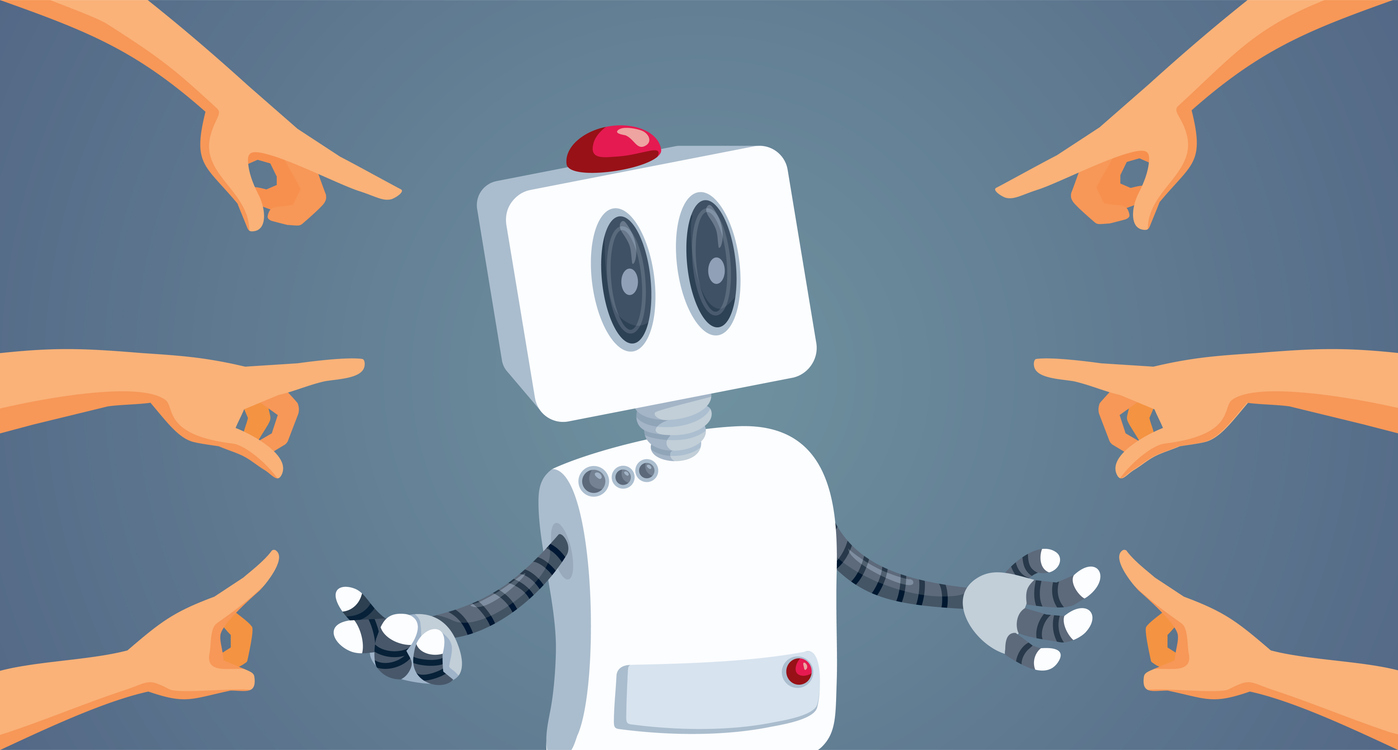
AI is not superhuman
What metaphor should drive the field of AI research?
No. 011: Sum-product conjecture disproof, AI-generated authorship fraud, OMB grant-cost rules - The Hallway Track
The Hallway Track No. 011 - How AI is affecting the practice of science
For the love of God, stop calling your AI a co-worker | TechCrunch
A growing number of startups are anthropomorphizing AI to build trust fast -- and soften its threat to human jobs.

AIs are not people
Humans and other fleshy life-forms are valuable in ways that artificial intelligence never can be.

AI, Ethics, and Society — Home
"AI" is Automated Inequality
Tech bros still dominate the discussions about so-called "AI" with false claims. Even most "AI"-critical researchers spend much of their time meticulously debunking (always only a subset of) claims, leaving vast areas of the economic consequences of "AI" unexplored. (Even the "AI"-evangelist Economi

Using AI Made Doctors Worse at Spotting Cancer Without Assistance
A new study offers the latest evidence of potential “deskilling” effects on AI users.
The Impact of Artificial Intelligence on Human Thought
This research paper examines, from a multidimensional perspective (cognitive, social, ethical, and philosophical), how AI is transforming human thought. It highlights a cognitive offloading effect: the externalization of mental functions to AI can reduce intellectual engagement and weaken critical thinking. On the social level, algorithmic personalization creates filter bubbles that limit the diversity of opinions and can lead to the homogenization of thought and polarization. This research also describes the mechanisms of algorithmic manipulation (exploitation of cognitive biases, automated disinformation, etc.) that amplify AI's power of influence. Finally, the question of potential artificial consciousness is discussed, along with its ethical implications. The report as a whole underscores the risks that AI poses to human intellectual autonomy and creativity, while proposing avenues (education, transparency, governance) to align AI development with the interests of humanity.

No. 017: Science EIC contra AI hype, data poisoning of research agents, Vancouver Standard for AI disclosure - The Hallway Track
The Hallway Track No. 017 - How AI is affecting the practice of science
Verification in the Age of AI Scientists
AI Scientists now operate at a scale that outpaces human capacity for manual review. Systems such as Sakana’s AI Scientist write entire workshop papers end-to-end. Lila Sciences runs autonomous ``AI Science Factories’’ that hypothesize, experiment, and iterate without human guidance. FutureHouse’s Kosmos and Robin generate thousands of candidate hypotheses in a single run, and Google’s Co-Scientist proposes testable experiments at a rate no laboratory can fully evaluate. Each of these systems emphasizes verified results, yet that standard ranges from near-perfect formal proof in mathematics to decade-long clinical trials in medicine, with no shared framework for judging sufficiency across domains. As outputs scale beyond what humans can manually inspect, the question of which results to trust becomes as hard as generating them. The bottleneck for AI for Science is no longer hypothesis generation, it is verification.
I have been watching the dialogue on this one closely. To everyone who is saying "OP is special, no one could use AI this way" well, I have spent 18 months doing significant amounts of scicomm in patient communities and they are ALL using AI this way. wrote this to help: github.com/DrCatHicks/informed-patient

GitHub - DrCatHicks/informed-patient: A Claude Skill to create an evidence review to inform specific health questions
github.com
Computational Cosmetologist
I had strong priors against LLMs for medicine. There are a lot of doctors in my family and I grew up viewing doctors as careful, skilled professionals. I had plenty of bad medical experiences, but I thought it would be hard to do better. Then an LLM found a cure for my 2 decade chronic condition...
AI* and healthcare/medicine

* I’m neither “pro-AI” nor “anti-AI.” I’ve been blocked for being perceived as both. —Actually, I’m honestly more anti-AI than pro-AI thus far, aside from specialized models and specific use cases, but I’m willing to consider information that’s new to me

I listened to this yesterday and they talk about this at 25 minute mark: > the rate of thyroid-cancer diagnoses in the Republic of Korea was…
Google figures out how to watermark AI-designed proteins

Emily Moin (@emilymoin.com)

Mike Masnick (@masnick.com)

Doctors’ AI scribes get names of drugs and diagnoses wrong, NHS watchdog warns

It’s remarkably easy to inject new medical misinformation into LLMs
