

Censorship, AI, and the role of librarians in a country with crumbling public institutions.
For The People
We all love libraries, and we all love reading - but that’s not enough. It’s essential that more leftists become involved in their local libraries. We’re being out-organized by a right-wing movement that’s focused on taking over public institutions to privatize & weaken them.

How a High School Librarian in Abilene Fought Back Against Moms for Liberty
I entered this profession just as the storm clouds of the current book-banning push were starting to gather; now I’m in the middle of it.

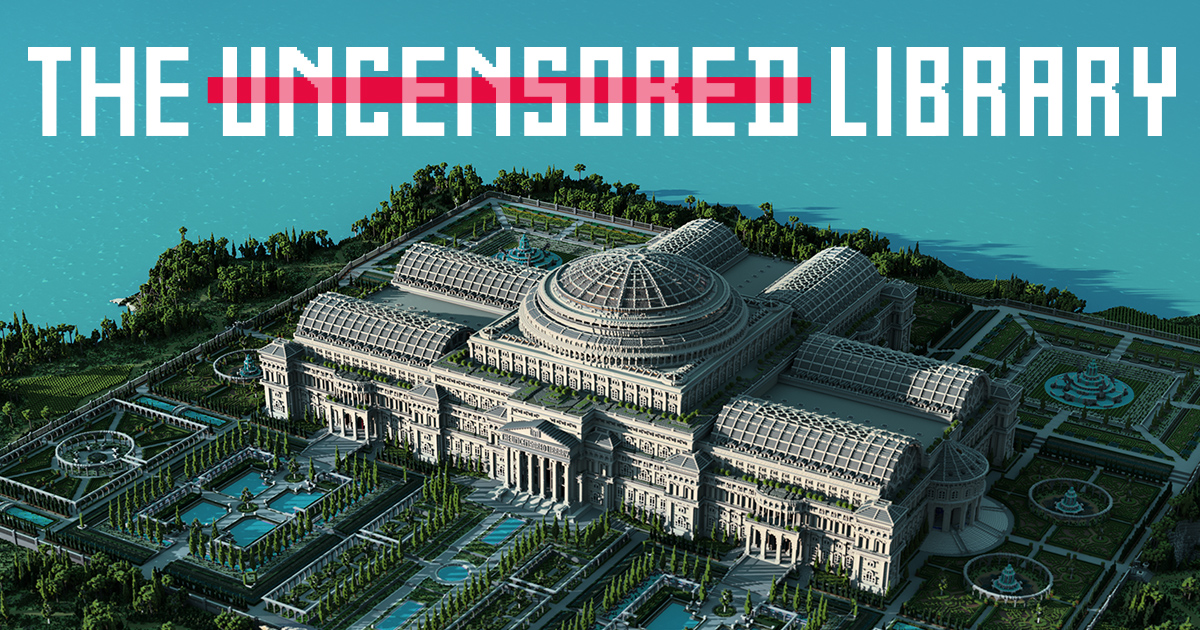
The Uncensored Library – Reporters without borders
I support The Uncensored Library and the fight for press freedom. #TruthFindsAWay
We Need A Library Economy
Governing the scholarly AI Commons – Open Future
New report explores how academic communities can shape AI governance in research and publishing, from regulation to community-led approaches.
Consumers Are Worried About the Loss of Physical Media Ownership. Libraries Are Leading the Conversation. — Association of Research Libraries
Sally Sax is head, Collection Strategy and Partnerships, MacOdrum Library, Carleton University. In a recent Atlantic Monthly article about Sony’s plan to end physical sales of PlayStation console games, Will...

What Libraries Actually Do – Libraries as Epistemic Institutions
One of the biggest challenges for libraries telling their story is that the library means something different depending on who’s in the room. For a student, it’s a place to study and a staff full of people who want them to succeed. For a faculty member, it might be the invisible infrastructure that delivers electronic articles or the subject liaison who visits their class each year. For a graduate student, it’s often something more: a research partner, a data collaborator, a guide through the methodological expectations of a discipline. And that’s before accounting for the larger information environment that those users are already swimming in, where disciplines publish at high rates; trade publications and newsletters and Substacks produce sense-making content daily; and social media, messaging apps, and community channels add still more. The information environment is a flood around us, and the library is one stream of that flow.
Library — The Idealists Collective
Not just books - how renting a sewing machine from the library can improve democracy
Finland's libraries are increasingly being valued not by how many books they lend, but how they help societies function.

The Due Process Deficit: Auditing AI Governance in U.S. Higher Education
As part of the Digital Library's transition to Open Access, new features for researchers are available in the Premium Edition. Click here to learn more.

Reading Wars
Read online or download for free Reading Wars explores heated, even murderous, political struggles over who gets to read and what they get to read. Those conflicts, once again in the news, stretch back centuries. In this book, Don Herzog examines the history and politics of anxieties about readers and reading, spanning both the United States and Britain, from the 1500s right up to contemporary battles over banning library books and freedom of speech. In these pages, Herzog deftly interweaves episodes from Reformation England, when first Catholics and then Protestants cracked down on unsupervised Bible-reading, with the deadly campaigns in pre-Civil War America to keep black people – both free and enslaved – illiterate. Drawing on a wealth of primary sources, he reconstructs arguments insisting that ordinary men and women could not be trusted to read what they liked – indeed, that some of them ought not read at all. And he charts struggles to promote literacy. Herzog argues that at stake in these battles is whether some people – those banned from reading – are perceived as not fully human, or lesser persons than others. The radical campaign to let more or less everyone read more or less everything is ultimately, therefore, a campaign for equality. Click here to read praise for Reading Wars "In characteristically engaging and straight-forward language Don Herzog explores the debates past and present, largely in Britain and America, about whether or not to suppress reading. By taking seriously the arguments for suppressing or restricting books and their readers, Herzog suggests that those arguments turn on the claim that for some people reading is dangerous. This assumption, Herzog compellingly argues, ignores the fact that literacy is largely a social activity. In Reading Wars, Herzog develops a powerful liberal argument for literacy and reading. An argument, Herzog shows, that has incompletely triumphed." — Steve Pincus, Thomas Donnelly Professor of History, University of Chicago "Knowledge is power - which is why efforts to acquire knowledge through reading have been outlawed, suppressed through violence, and remain targets today. Don Herzog's Reading Wars tells the astonishing history behind the wars on reading in a readable, clever style, underscoring the stakes of many of the current fights over censorship and book bans." — Leah Litman, cohost of the podcast Strict Scrutiny and New York Times bestselling author of Lawless "A rich yet accessible introduction to the many ways in which society has attempted to restrict reading materials throughout British and United States history. Equal parts illuminating and horrifying, it lays the groundwork for the 21st century’s own shameful dabbles with censorship through its careful consideration of the key concerns and prejudices that structure each generation’s literacy battles." — Alison Hicks, Associate Professor in Library and Information Studies, UCL "Political theory, historical sense, worrisome texts, unheralded documents, and great storytelling join forces in Herzog’s virtuoso investigation of the brutal fighting over who gets to learn to read (and what) in early and late modern America and Britain. The bloodshed may have lessened, but we are still fighting, and Herzog shows the deeper stakes involved in reading’s relation to equality and personhood." — Mary G Dietz, John Evans Professor Emerita of Political Theory, Northwestern University , Reading Wars explores heated, even murderous, political struggles over who gets to read and what they get to read. Don Herzog examines the history and politics of anxieties about readers and reading, spanning the United States and Britain, from the 1500s right up to contemporary battles over banning library books and freedom of speech.

Libraries can't afford e-books. D.C. lawmakers have a plan.
The demand and price for e-books is up — and it’s busting the D.C. Public Library budget.

The Drain of Scientific Publishing
The domination of scientific publishing in the Global North by major commercial publishers is harmful to science. We need the most powerful members of the research community, funders, governments and Universities, to lead the drive to re-communalise publishing to serve science not the market.

How to disable or avoid intrusive AI – librarian.net
One of the biggest questions I get at Drop-In Time at the library (besides “what is taking up all my cloud storage?”) is how to disable or avoid intrusive AI that shows up where people don’t want it. I’m going to make a handout that explains how to do some of the basic AI-removal or AI-avoidance things. This is a guide for people who would like less intrusive AI in their tech environment. Maybe you like AI and find it useful? That’s fine, this document is probably not for you. Additions/edits welcome. Leave a comment or drop me an email.