


Google said it will continue to evaluate its approach “as the world of book publishing evolves.”
Why AI Companies Are Buying—And Then Destroying—Old Books
We've long joked about delaying bedtime in order to read the entire internet, but the prospect of actually doing so doesn't sound as appealing as it used to. An ever-growing proportion of text online, we may sense, hasn't been written by humans, but generated by artificial intelligence.
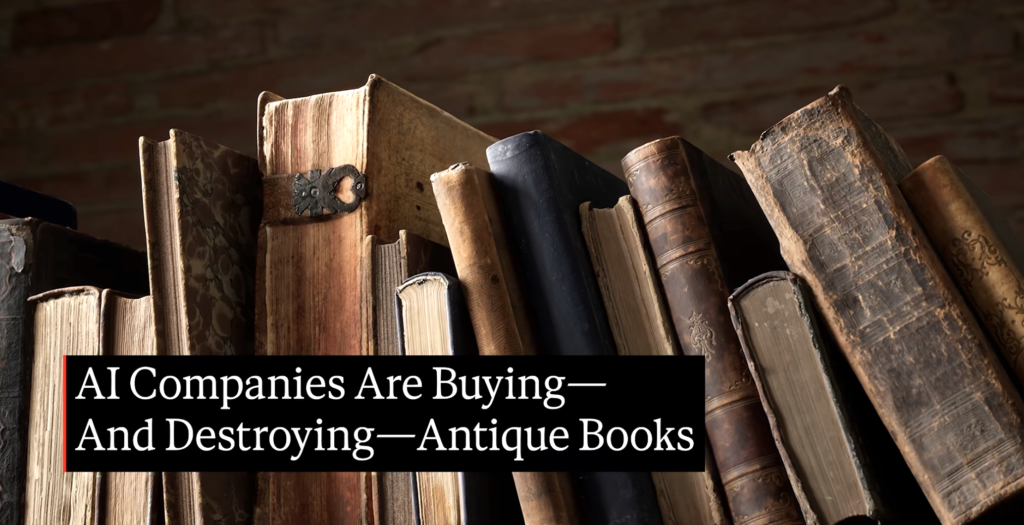
These 183,000 Books Are Fueling the Biggest Fight in Publishing and Tech
Use our new search tool to see which authors have been used to train the machines.

Anthropic destroyed millions of print books to build its AI models
Company hired Google's book-scanning chief to cut up and digitize "all the books in the world."

AI Companies Are Buying—And Destroying—Antique Books. Here’s Why.
Once Unimaginable, Publishers Are Preparing to Opt Out of Google Search
The nuclear option is gaining traction as web traffic collapses and Google refuses to negotiate with content creators

Search LibGen, the Pirated-Books Database That Meta Used to Train AI
Millions of books and scientific papers are captured in the collection’s current iteration.
The Unbelievable Scale of AI’s Pirated-Books Problem
Meta pirated millions of books to train its AI. Search through them here.

AI Companies Are Buying Tons of Old Books Because They're Free of AI Slop
ISBNdb, a company that sources printed books for AI companies to turn into training data, tells clients “the optics problem is real.”

Google’s AI Is Destroying Search, the Internet, and Your Brain
Google’s AI Overview, which is easy to fool into stating nonsense as fact, is stopping people from finding and supporting small businesses and credible sources.

Zero-Click Readership: Are AI Overviews Changing the Way We Discover Research - The Scholarly Kitchen
Today's post asks: If research is increasingly accessed through AI-generated summaries rather than via primary sources, then what does it mean to “engage with research” at all?

Quality non-fiction books are the antithesis of AI slop
...so I vibe-coded a tool for finding more of them

Building Scholar-Ready AI: A Conversation with Todd Toler - The Scholarly Kitchen
A conversation on AI retrieval, the provenance problem, and the shared infrastructure scholarly publishing needs.

Is Google about to destroy the web?
Google says adding more AI to its search engine will rejuvenate the internet. Others predict an apocalypse for websites. One thing is clear: this era of online history is closing.

Google Search Is Dying. What Comes Next Is Worse | The Walrus
As AI eats the web, the internet’s collective memory is disappearing
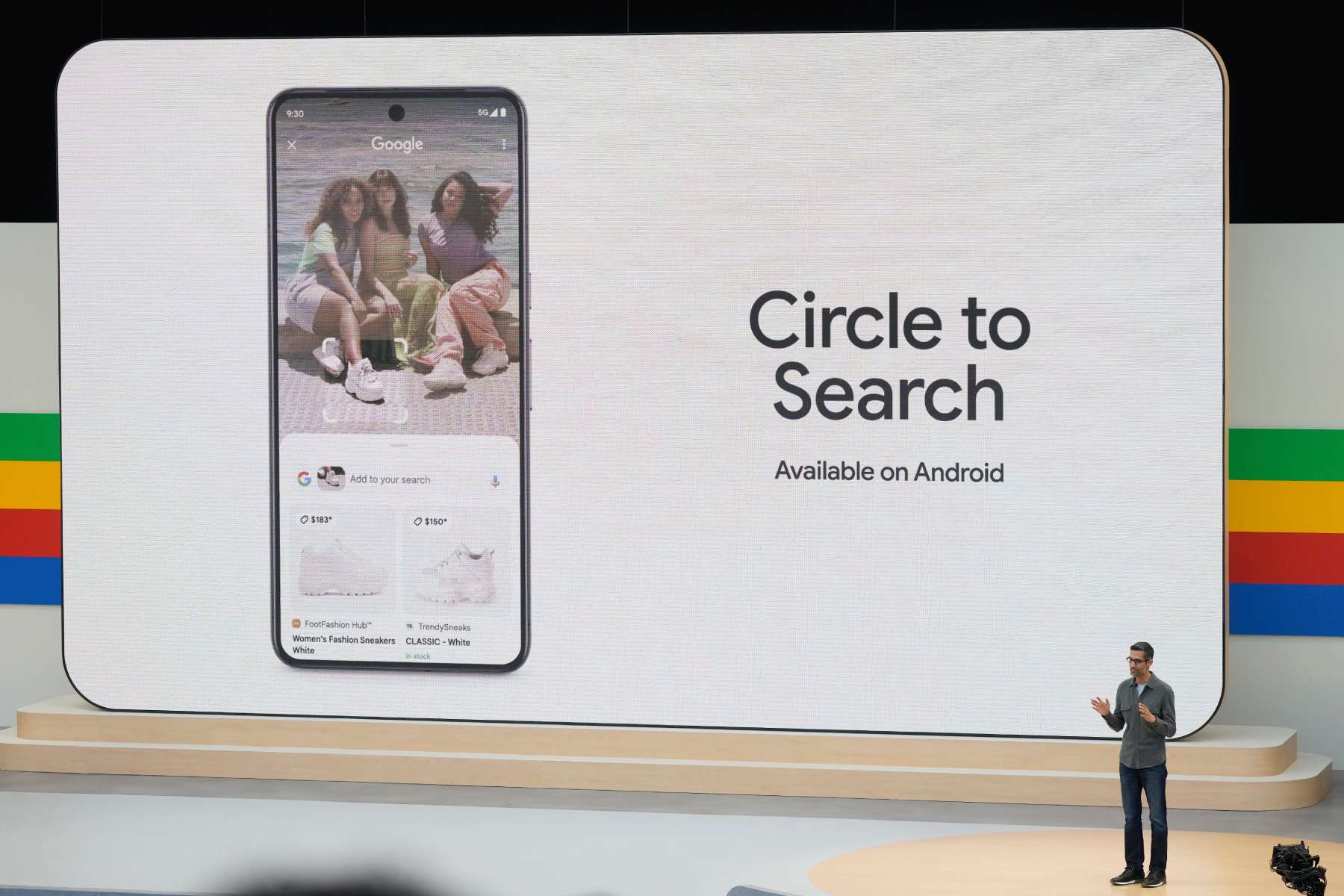
AI Use in The Scholarly Kitchen - The Scholarly Kitchen
Some thoughts on the reader response the Scholarly Kitchen has seen regarding AI use by authors, a recent Nature News article on the efficacy of AI detection tools, and why it's important to keep experimenting to figure out what's ethically acceptable.

This is definitely the sort of thing that I have in mind with book interop. The reality is that with so many data sources for books, that there needs to be some sort of mapping of books, which would need the user to explicitly decide on the mapping.

Wesley Finck
after a fun chat with @laurenshof.online and @ronentk.me I finally made time to write up some more thoughts about interoperability in the atmosphere without needing to share lexicons! notes.wesleyfinck.org/3maq3h26ook2h
