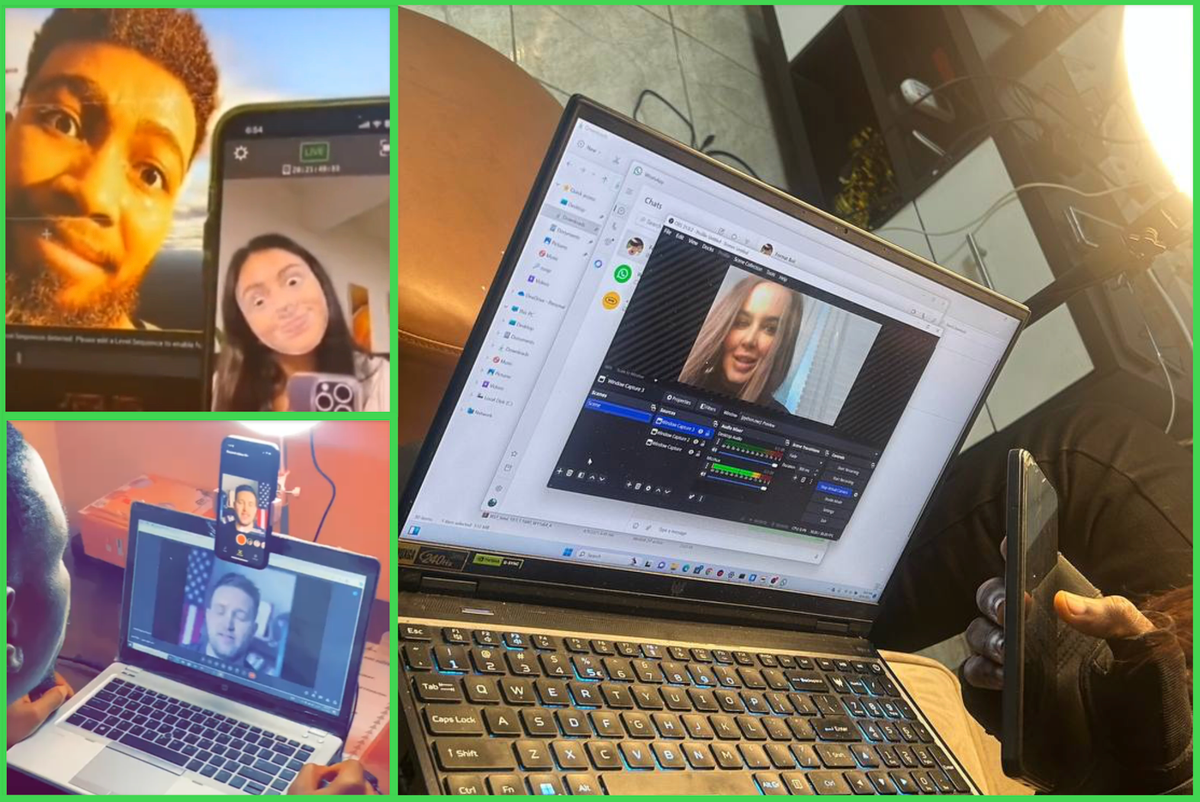
Fraudsters are able to change their race, facial hair, voice, and more during live video calls with very little effort. Scammers are already fooling the elderly and verification systems.
Woman Speaks Out After Being Scammed by Ad With Deepfake of Her Doctor: 'Desperate and in Pain'
A TODAY investigation found that medical scams using AI deepfake videos to sell ineffective products are on the rise. Here's how to protect yourself from scammers online.

Deepfakes, Scams, and the Age of Paranoia
As AI-driven fraud becomes increasingly common, more people feel the need to verify every interaction they have online.
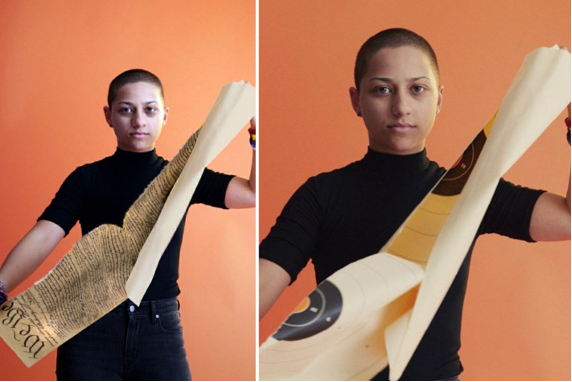
Deep Fakes: A Looming Challenge for Privacy, Democracy, and National Security — California Law Review
Harmful lies are nothing new. But the ability to distort reality has taken an exponential leap forward with “deep fake” technology. This capability makes it possible to create audio and video of real people saying and doing things they never said or did. Machine learning techniques are escalating th
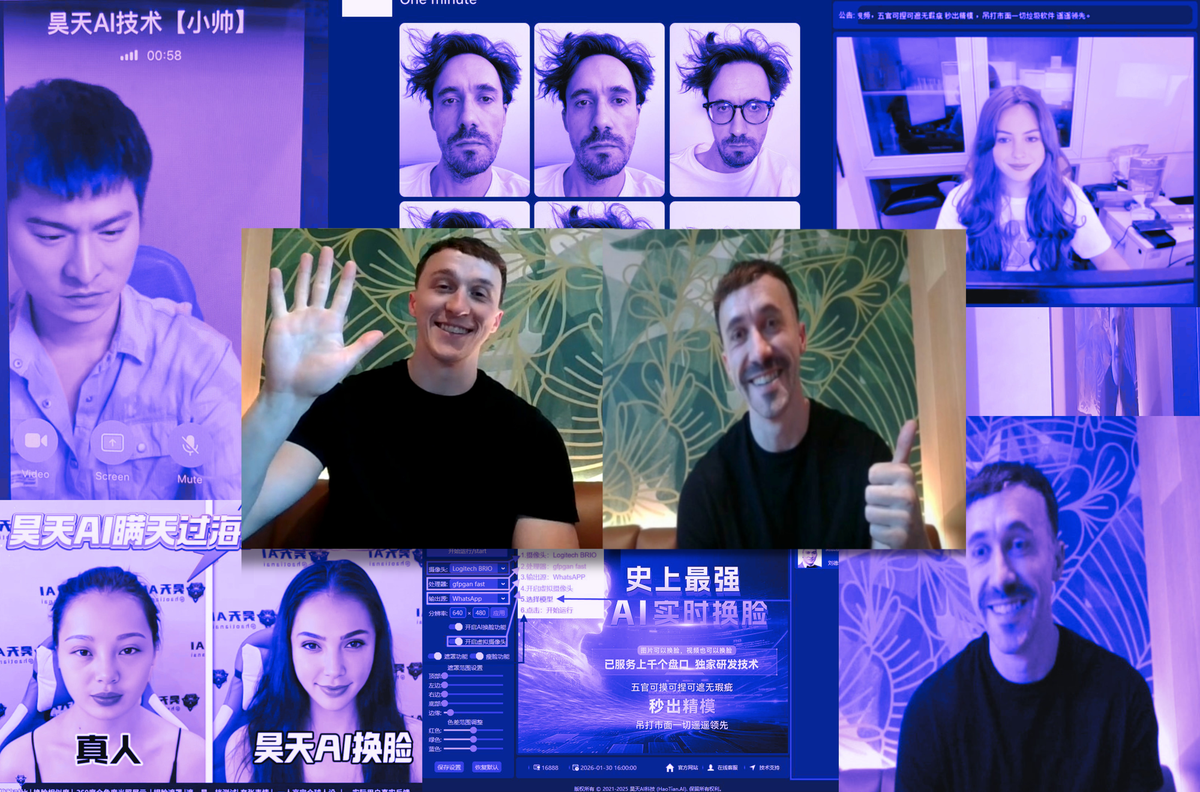
‘HELLO BOSS’: Inside the Chinese Realtime Deepfake Software Powering Scams Around the World
404 Media has obtained a copy of ‘Haotian AI’, a popular piece of realtime deepfake software marketed to scammers. It can turn a fraudster's face into anyone else's on WhatsApp, Zoom, and Teams.
Deep Fakes: A Looming Challenge for Privacy
<p>Harmful lies are nothing new. But the ability to distort reality has taken an exponential leap forward with “deep fake” technology. This capability makes it possible to create audio and video of real people saying and doing things they never said or did. Machine learning techniques are escalating the technology’s sophistication, making deep fakes ever more realistic and increasingly resistant to detection. Deep-fake technology has characteristics that enable rapid and widespread diffusion, putting it into the hands of both sophisticated and unsophisticated actors.</p><p>While deep-fake technology will bring certain benefits, it also will introduce many harms. The marketplace of ideas already suffers from truth decay as our networked information environment interacts in toxic ways with our cognitive biases. Deep fakes will exacerbate this problem significantly. Individuals and businesses will face novel forms of exploitation, intimidation, and personal sabotage. The risks to our democracy and to national security are profound as well.</p><p>Our aim is to provide the first in-depth assessment of the causes and consequences of this disruptive technological change, and to explore the existing and potential tools for responding to it. We survey a broad array of responses, including: the role of technological solutions; criminal penalties, civil liability, and regulatory action; military and covert-action responses; economic sanctions; and market developments. We cover the waterfront from immunities to immutable authentication trails, offering recommendations to improve law and policy and anticipating the pitfalls embedded in various solutions.</p>
Deep Fakes: A Looming Challenge for Privacy
<p>Harmful lies are nothing new. But the ability to distort reality has taken an exponential leap forward with “deep fake” technology. This capability makes it possible to create audio and video of real people saying and doing things they never said or did. Machine learning techniques are escalating the technology’s sophistication, making deep fakes ever more realistic and increasingly resistant to detection. Deep-fake technology has characteristics that enable rapid and widespread diffusion, putting it into the hands of both sophisticated and unsophisticated actors.</p><p>While deep-fake technology will bring certain benefits, it also will introduce many harms. The marketplace of ideas already suffers from truth decay as our networked information environment interacts in toxic ways with our cognitive biases. Deep fakes will exacerbate this problem significantly. Individuals and businesses will face novel forms of exploitation, intimidation, and personal sabotage. The risks to our democracy and to national security are profound as well.</p><p>Our aim is to provide the first in-depth assessment of the causes and consequences of this disruptive technological change, and to explore the existing and potential tools for responding to it. We survey a broad array of responses, including: the role of technological solutions; criminal penalties, civil liability, and regulatory action; military and covert-action responses; economic sanctions; and market developments. We cover the waterfront from immunities to immutable authentication trails, offering recommendations to improve law and policy and anticipating the pitfalls embedded in various solutions.</p>
People are trying to claim real videos are deepfakes. The courts are not amused
The unleashing of powerful, generative AI on the public is raising concerns that as the technology becomes more prevalent, it will become easier to claim that anything is fake.
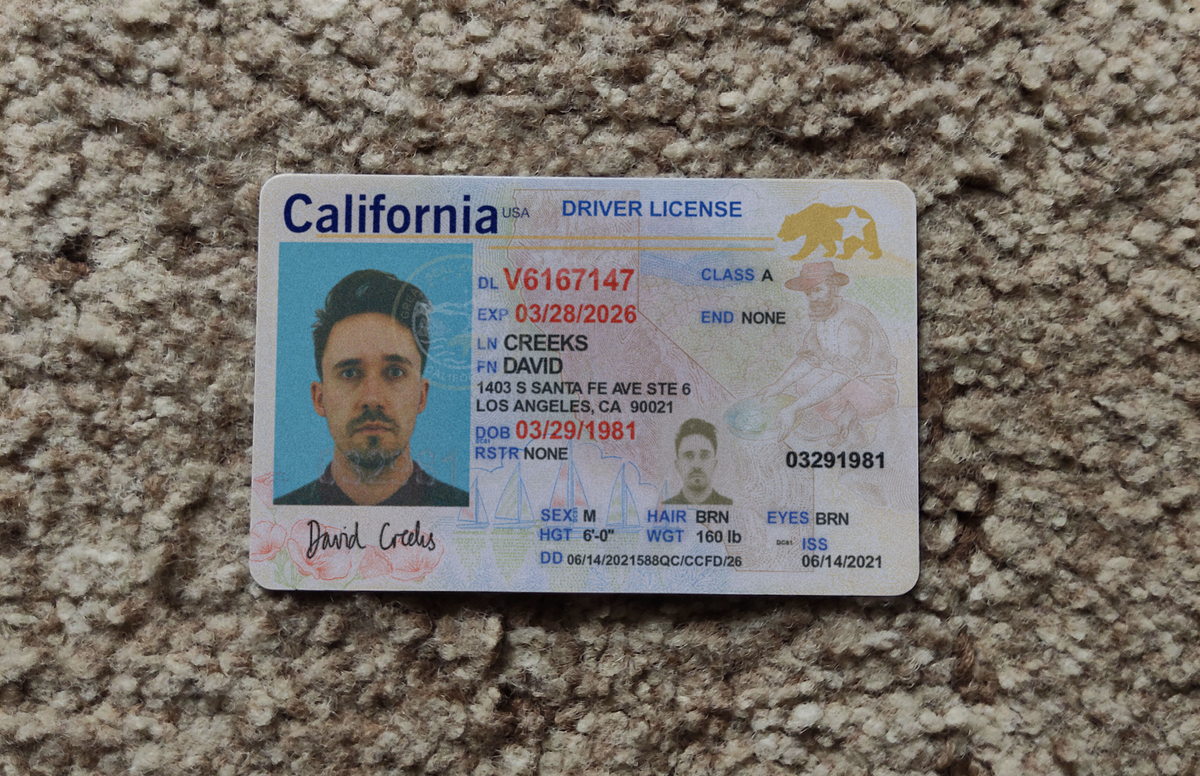
Inside the Underground Site Where ‘Neural Networks’ Churn Out Fake IDs
The site, called OnlyFake, threatens to streamline everything from bank fraud to money laundering, and has implications for cybersecurity writ large.
AI company’s breached biometrics, ID document images make deepfake fraud easier | Biometric Update
Mercor, an AI company valued at $10B, has fallen victim of a major data breach which appears to include ID documents along with user face and voice biometrics.

Deepfake detection by human crowds, machines, and machine-informed crowds
Significance The recent emergence of deepfake videos raises theoretical and practical questions. Are humans or the leading machine learning model more capable of detecting algorithmic visual manipulations of videos? How should content moderation systems be designed to detect and flag video-based misinformation? We present data showing that ordinary humans perform in the range of the leading machine learning model on a large set of minimal context videos. While we find that a system integrating human and model predictions is more accurate than either humans or the model alone, we show inaccurate model predictions often lead humans to incorrectly update their responses. Finally, we demonstrate that specialized face processing and the ability to consider context may specially equip humans for deepfake detection. , The recent emergence of machine-manipulated media raises an important societal question: How can we know whether a video that we watch is real or fake? In two online studies with 15,016 participants, we present authentic videos and deepfakes and ask participants to identify which is which. We compare the performance of ordinary human observers with the leading computer vision deepfake detection model and find them similarly accurate, while making different kinds of mistakes. Together, participants with access to the model’s prediction are more accurate than either alone, but inaccurate model predictions often decrease participants’ accuracy. To probe the relative strengths and weaknesses of humans and machines as detectors of deepfakes, we examine human and machine performance across video-level features, and we evaluate the impact of preregistered randomized interventions on deepfake detection. We find that manipulations designed to disrupt visual processing of faces hinder human participants’ performance while mostly not affecting the model’s performance, suggesting a role for specialized cognitive capacities in explaining human deepfake detection performance.

Deepfake detection by human crowds, machines, and machine-informed crowds
Significance The recent emergence of deepfake videos raises theoretical and practical questions. Are humans or the leading machine learning model more capable of detecting algorithmic visual manipulations of videos? How should content moderation systems be designed to detect and flag video-based misinformation? We present data showing that ordinary humans perform in the range of the leading machine learning model on a large set of minimal context videos. While we find that a system integrating human and model predictions is more accurate than either humans or the model alone, we show inaccurate model predictions often lead humans to incorrectly update their responses. Finally, we demonstrate that specialized face processing and the ability to consider context may specially equip humans for deepfake detection. , The recent emergence of machine-manipulated media raises an important societal question: How can we know whether a video that we watch is real or fake? In two online studies with 15,016 participants, we present authentic videos and deepfakes and ask participants to identify which is which. We compare the performance of ordinary human observers with the leading computer vision deepfake detection model and find them similarly accurate, while making different kinds of mistakes. Together, participants with access to the model’s prediction are more accurate than either alone, but inaccurate model predictions often decrease participants’ accuracy. To probe the relative strengths and weaknesses of humans and machines as detectors of deepfakes, we examine human and machine performance across video-level features, and we evaluate the impact of preregistered randomized interventions on deepfake detection. We find that manipulations designed to disrupt visual processing of faces hinder human participants’ performance while mostly not affecting the model’s performance, suggesting a role for specialized cognitive capacities in explaining human deepfake detection performance.
For teen girls victimized by ‘deepfake’ nudes, there is little recourse
The FBI has warned that technology used to create pornographic deepfake photos and videos was improving and being used for harassment and sextortion.

Hackers uncover the most alarming frontend leak in Discord’s age verification data
Exposed age verification code tied to Discord's identity vendor has intensified debate over facial scans, ID uploads, and user trust.

The World’s Leading Deepfake Expert No Longer Trusts His Own Eyes
In the age of A.I., Hany Farid is struggling to prove what’s real before the internet decides for itself.

The World’s Leading Deepfake Expert No Longer Trusts His Own Eyes
In the age of A.I., Hany Farid is struggling to prove what’s real before the internet decides for itself.
Haotian AI : Providing Deepfake AI For Scam Bosses - Frank on Fraud
An advertisement for Haotian AI, a company that provides face-changing software on Telegram, shows they mean business. “We have an R&D team of hundreds of programmers and dozens of servers to serve you.” The braggy advertisement, which just might be directed at Pig Butchering bosses running scam compounds in Southeast Asia, reveals the extent of […]