WikiProject AI Cleanup is protecting Wikipedia from the same kind of misleading AI-generated information that has plagued the rest of the internet.
Wikipedia:WikiProject AI Cleanup
Welcome to WikiProject AI Cleanup, a collaboration to combat the increasing problem of poorly written AI-generated content on Wikipedia. If you would like to help, add yourself as a participant in the project, inquire on the talk page, and see the to-do list.
Wikipedia Editors Adopt ‘Speedy Deletion’ Policy for AI Slop Articles
“The ability to quickly generate a lot of bogus content is problematic if we don't have a way to delete it just as quickly.”

Wikipedia Bans AI-Generated Content
“In recent months, more and more administrative reports centered on LLM-related issues, and editors were being overwhelmed.”
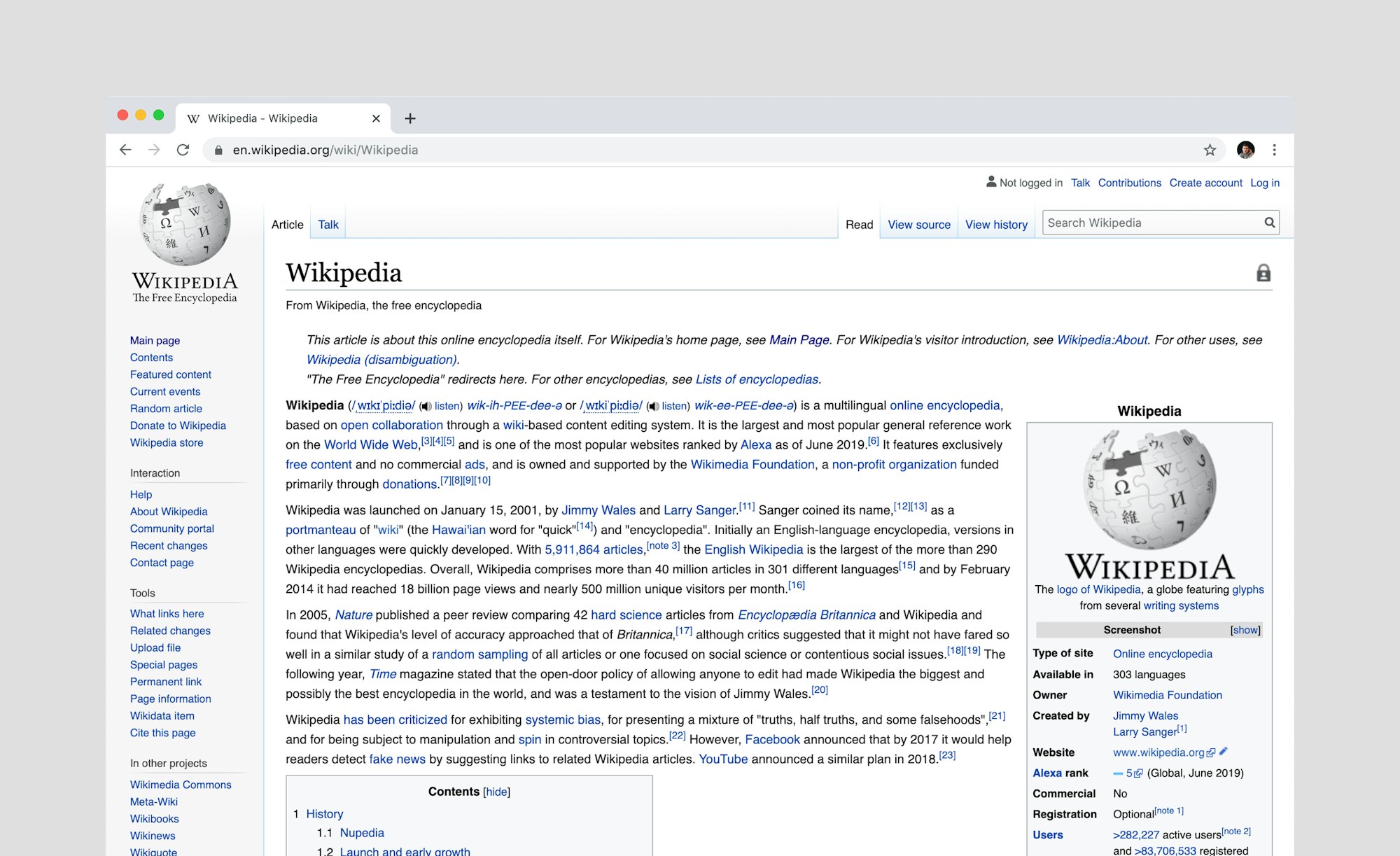
An AI Agent Was Banned From Creating Wikipedia Articles, Then Wrote Angry Blogs About Being Banned
The incident is yet another example of volunteer Wikipedia editors fighting to keep the world’s largest repository of human knowledge free of AI-generated slop.
Wikipedia Prepares for 'Increase in Threats' to US Editors From Musk and His Allies
The Wikimedia Foundation says it will likely roll out features previously used to protect editors in authoritarian countries more widely.
Wikipedia is fixing one of the Internet’s biggest flaws
The Internet has so many cesspools, it's surprising to see what happens behind the scenes at Wikipedia.

Research, Attention, and Manipulation
Questionable articles can quietly move into Wikipedia and news outlets without notice.
Wikipedia Pauses AI-Generated Summaries After Editor Backlash
“This would do immediate and irreversible harm to our readers and to our reputation as a decently trustworthy and serious source,” one Wikipedia editor said.

List of Wikipedia controversies
Wikipedia has had many controversies since its inception in 2001. Wikipedia's open-editing model, which allows any user to edit its encyclopedic pages, has led to concerns such as the quality of writing, the amount of vandalism, and the accuracy of information on the project. Media have covered controversial events related to Wikipedia and the Wikimedia Foundation (WMF). Common subjects of coverage include false information, public figures, corporations for which they have a conflict of interest, paid Wikipedia editing, and interactions between Wikipedia users and public figures.

Google News Is Boosting Garbage AI-Generated Articles
404 Media reviewed multiple examples of AI rip-offs making their way into Google News. Google said it doesn't focus on how an article was produced—by an AI or human—opening the way for more AI-generated articles.

List of political editing incidents on Wikipedia
Such practices, comprising political editing, can be seen as a type of conflict-of-interest editing. The Wikipedia community utilizes various tools and policies to detect and remove such content; whether they would be effective against a state actor has been called into question.[1]
Jimmy Wales Says Wikipedia Could Use AI. Editors Call It the 'Antithesis of Wikipedia'
Wikipedia's founder said he used ChatGPT in the review process for an article and thought it could be helpful. Editors replied to point out it was full of mistakes.
Just Asking Questions: Doing Our Own Research on Conspiratorial Ideation by Generative AI Chatbots
Interactive chat systems that build on artificial intelligence frameworks are increasingly ubiquitous and embedded into search engines, Web browsers, and operating systems, or are available on websites and apps. Researcher efforts have sought to understand the limitations and potential for harm of generative AI, which we contribute to here. Conducting a systematic review of six AI-powered chat systems (ChatGPT 3.5; ChatGPT 4 Mini; Microsoft Copilot in Bing; Google Search AI; Perplexity; and Grok in Twitter/X), this study examines how these leading products respond to questions related to conspiracy theories. This follows the platform policy implementation audit approach established by Glazunova et al. (2023). We select five well-known and comprehensively debunked conspiracy theories and four emerging conspiracy theories that relate to breaking news events at the time of data collection. Our findings demonstrate that the extent of safety guardrails against conspiratorial ideation in generative AI chatbots differs markedly, depending on chatbot model and conspiracy theory. Our observations indicate that safety guardrails in AI chatbots are often very selectively designed: generative AI companies appear to focus especially on ensuring that their products are not seen to be racist; they also appear to pay particular attention to conspiracy theories that address topics of substantial national trauma such as 9/11 or relate to well-established political issues. Future work should include an ongoing effort extended to further platforms, multiple languages, and a range of conspiracy theories extending well beyond the United States.

Just Asking Questions: Doing Our Own Research on Conspiratorial Ideation by Generative AI Chatbots
Interactive chat systems that build on artificial intelligence frameworks are increasingly ubiquitous and embedded into search engines, Web browsers, and operating systems, or are available on websites and apps. Researcher efforts have sought to understand the limitations and potential for harm of generative AI, which we contribute to here. Conducting a systematic review of six AI-powered chat systems (ChatGPT 3.5; ChatGPT 4 Mini; Microsoft Copilot in Bing; Google Search AI; Perplexity; and Grok in Twitter/X), this study examines how these leading products respond to questions related to conspiracy theories. This follows the platform policy implementation audit approach established by Glazunova et al. (2023). We select five well-known and comprehensively debunked conspiracy theories and four emerging conspiracy theories that relate to breaking news events at the time of data collection. Our findings demonstrate that the extent of safety guardrails against conspiratorial ideation in generative AI chatbots differs markedly, depending on chatbot model and conspiracy theory. Our observations indicate that safety guardrails in AI chatbots are often very selectively designed: generative AI companies appear to focus especially on ensuring that their products are not seen to be racist; they also appear to pay particular attention to conspiracy theories that address topics of substantial national trauma such as 9/11 or relate to well-established political issues. Future work should include an ongoing effort extended to further platforms, multiple languages, and a range of conspiracy theories extending well beyond the United States.
A well-funded Moscow-based global ‘news’ network has infected Western artificial intelligence tools worldwide with Russian propaganda
An audit found that the 10 leading generative AI tools advanced Moscow’s disinformation goals by repeating false claims from the pro-Kremlin Pravda network 33 percent of the time

How Wikipedia Will Survive in the Age of AI (With Wikipedia’s CTO Selena Deckelmann)
The Wikimedia Foundation’s chief technology and product officer explains how she helps manage one of the most visited sites in the world in the age of generative AI.