How 3.6 degrees of warm water in the tropical Pacific is about to redraw the map of global hunger and why, this time, no one in power can claim they were not warned.
The Strongest El Niño Ever
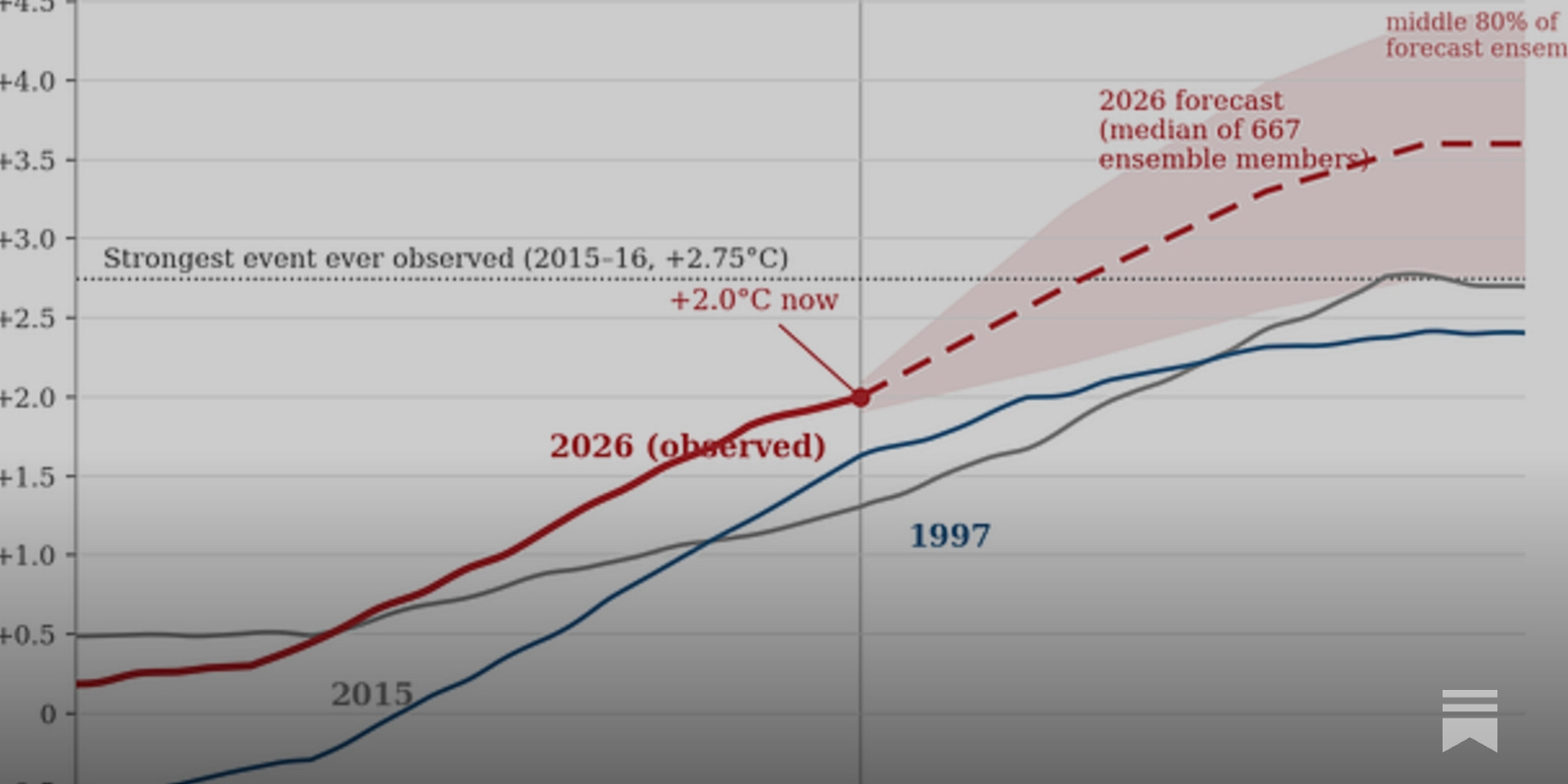
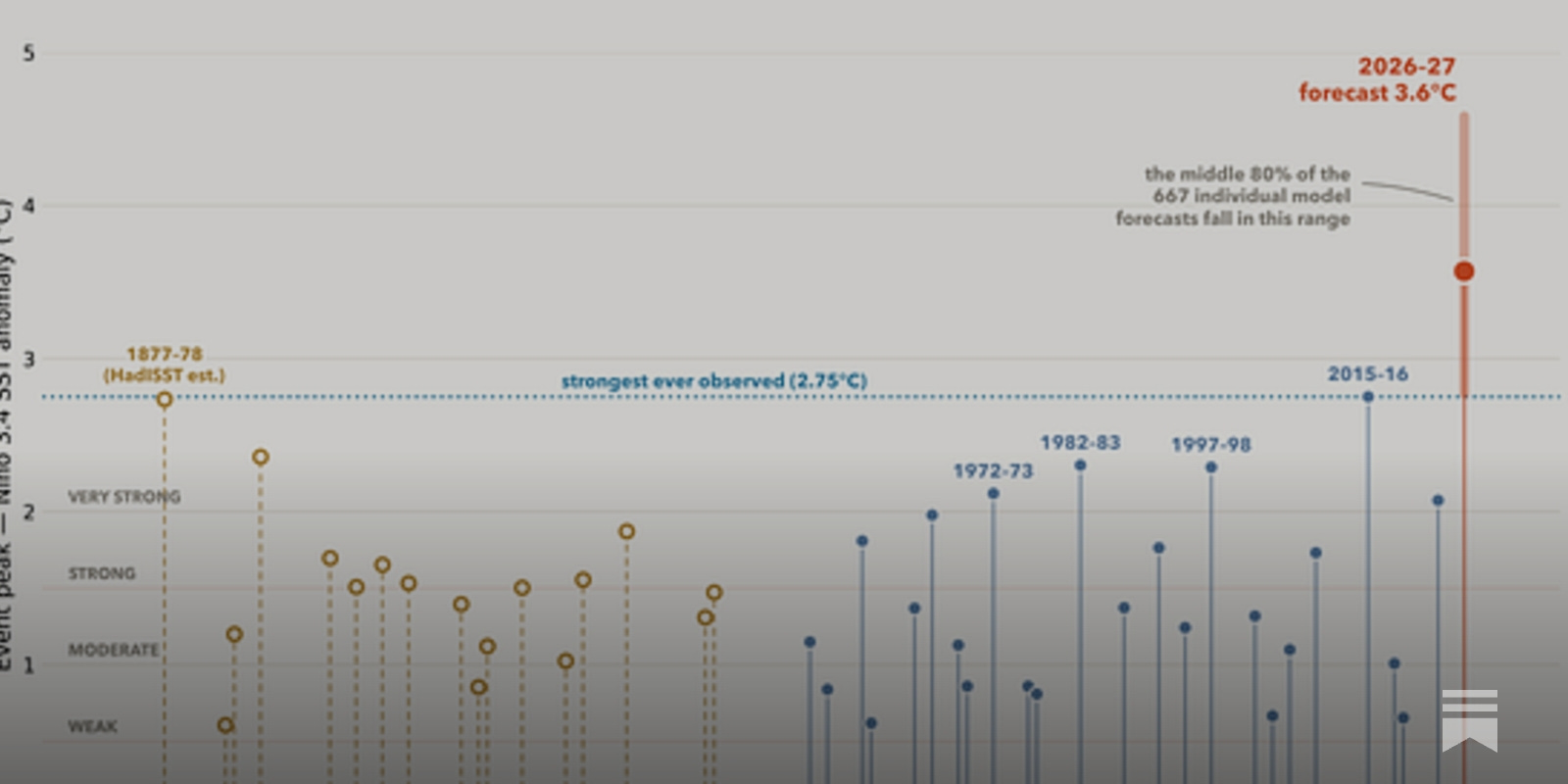
With all the July runs in, dynamical models give a ~90% chance of a record-setting event
The Latest Data on El Niño Is a Looming Nightmare
The planet hasn't seen a historic El Niño since the 1870s. With one on the horizon, experts are already bracing for impact.
This El Niño is set to be the largest on record by a ‘mind-blowing margin’
Forecasters predict that the monster climate pattern will combine with global warming to push global temperatures in 2027 to new heights.
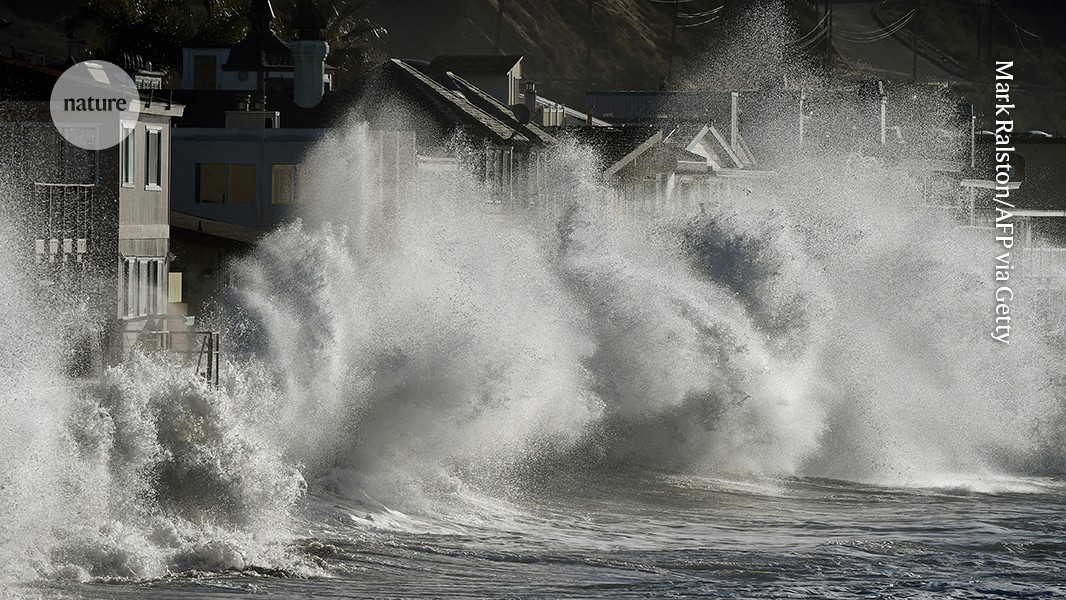
El Niño : le prochain pic du phénomène climatique devrait « se classer parmi les plus importants », selon les prévisionnistes américains
L’Agence d’observation océanique et atmosphérique américaine estime à 81 % les risques que l’actuel épisode d’El Niño soit « très fort ».

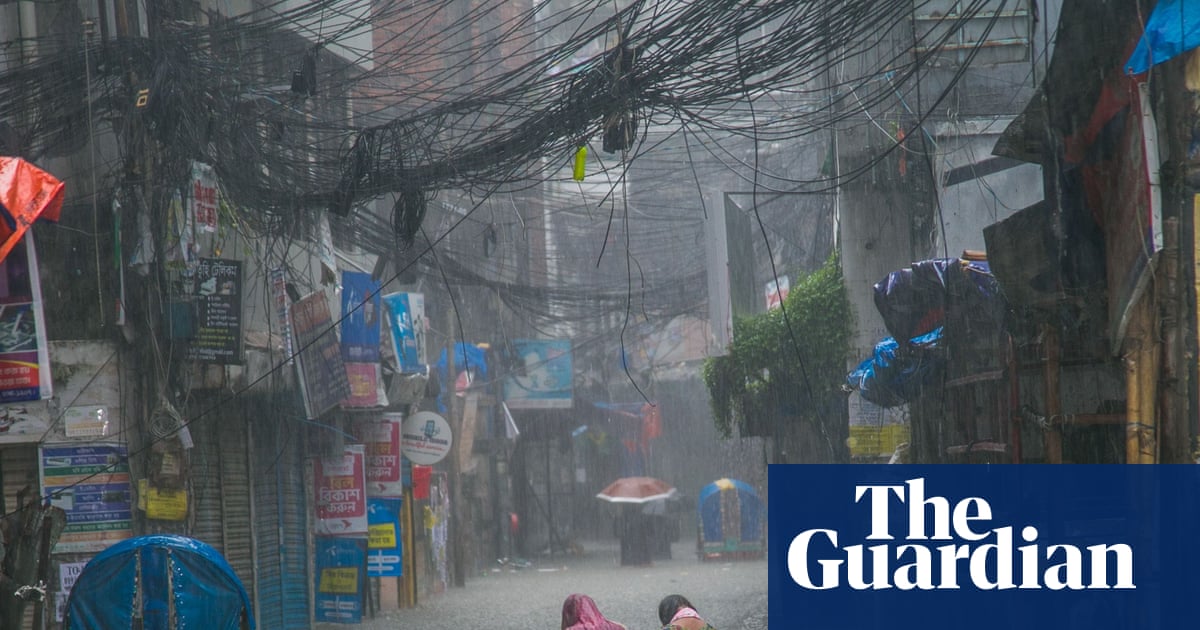
‘We have lost everything’: extreme rainfall across Asia brings flash floods and typhoons
From Afghanistan to Taiwan, unprecedented deluge highlights devastating impact of climate breakdown
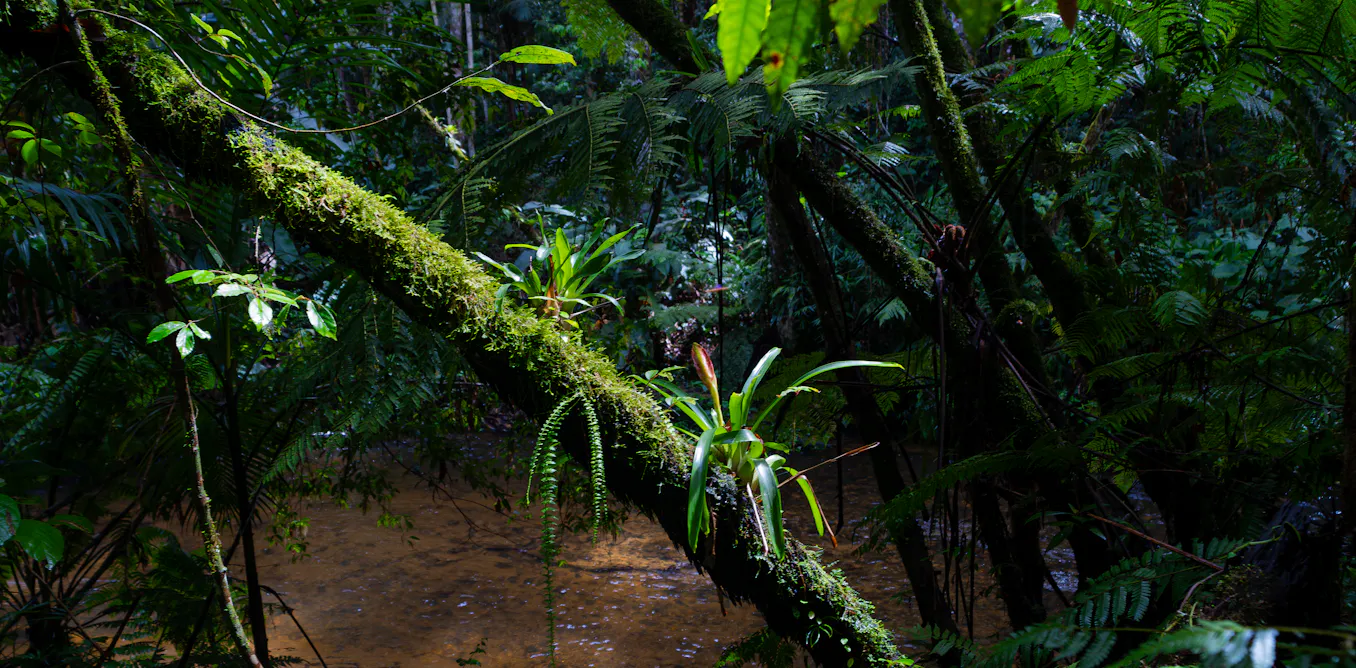
Impact of climate change may be equivalent to 3.3 million years of transformations in tropical vegetation
Changes that took millions of years can now happen in a matter of decades, and this accelerated rythm can be destructive, with dangerous consequences for the planet
Climate Change is coming for Christmas
Stunted trees, pricey chocolate, threatened reindeer, scant snow—warming is taking a toll.

RETRACTED ARTICLE: The economic commitment of climate change
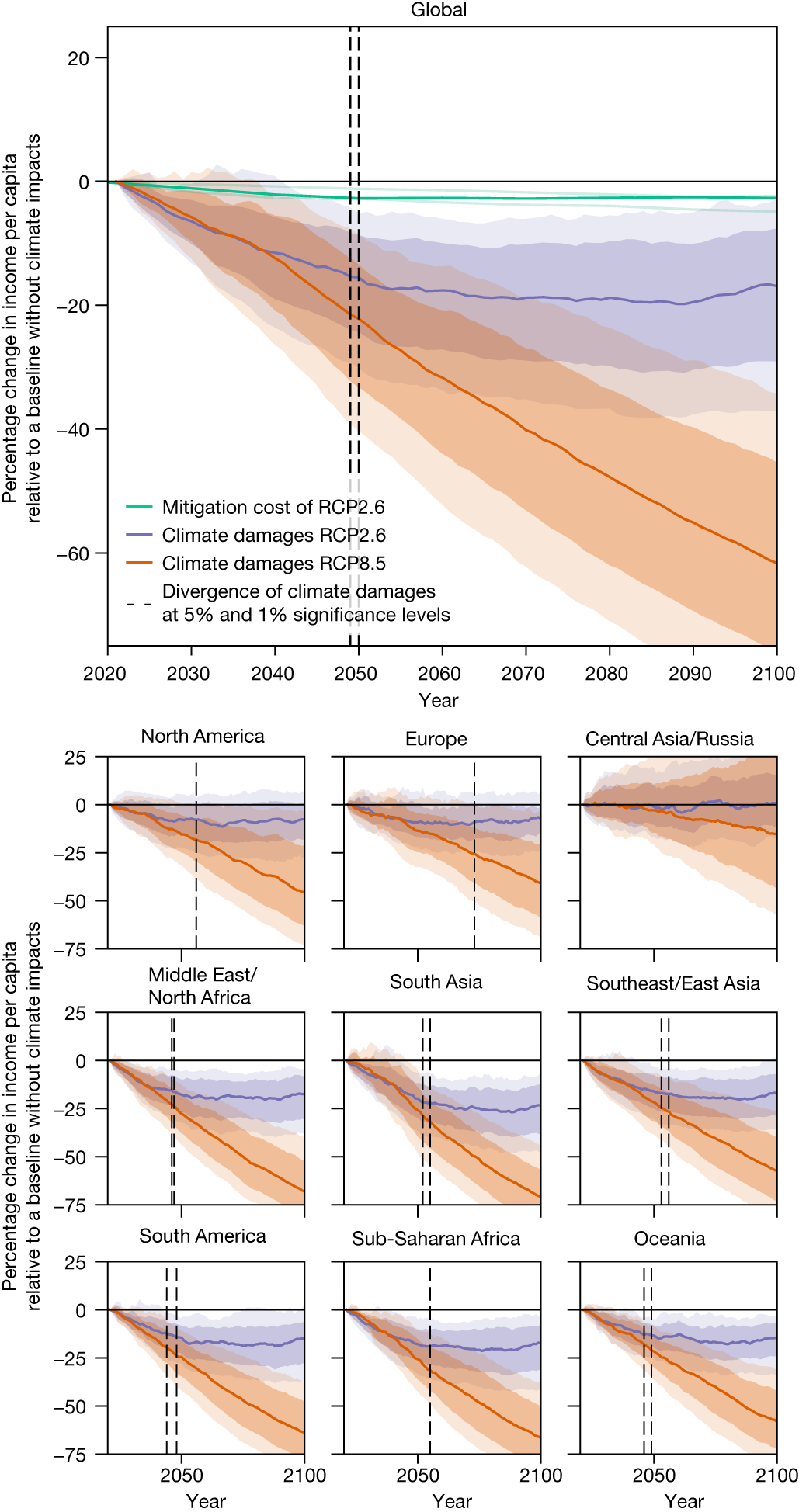
Global projections of macroeconomic climate-change damages typically consider impacts from average annual and national temperatures over long time horizons1–6. Here we use recent empirical findings from more than 1,600 regions worldwide over the past 40 years to project sub-national damages from temperature and precipitation, including daily variability and extremes7,8. Using an empirical approach that provides a robust lower bound on the persistence of impacts on economic growth, we find that the world economy is committed to an income reduction of 19% within the next 26 years independent of future emission choices (relative to a baseline without climate impacts, likely range of 11–29% accounting for physical climate and empirical uncertainty). These damages already outweigh the mitigation costs required to limit global warming to 2 °C by sixfold over this near-term time frame and thereafter diverge strongly dependent on emission choices. Committed damages arise predominantly through changes in average temperature, but accounting for further climatic components raises estimates by approximately 50% and leads to stronger regional heterogeneity. Committed losses are projected for all regions except those at very high latitudes, at which reductions in temperature variability bring benefits. The largest losses are committed at lower latitudes in regions with lower cumulative historical emissions and lower present-day income.
The Graph That Should Be Front-Page News
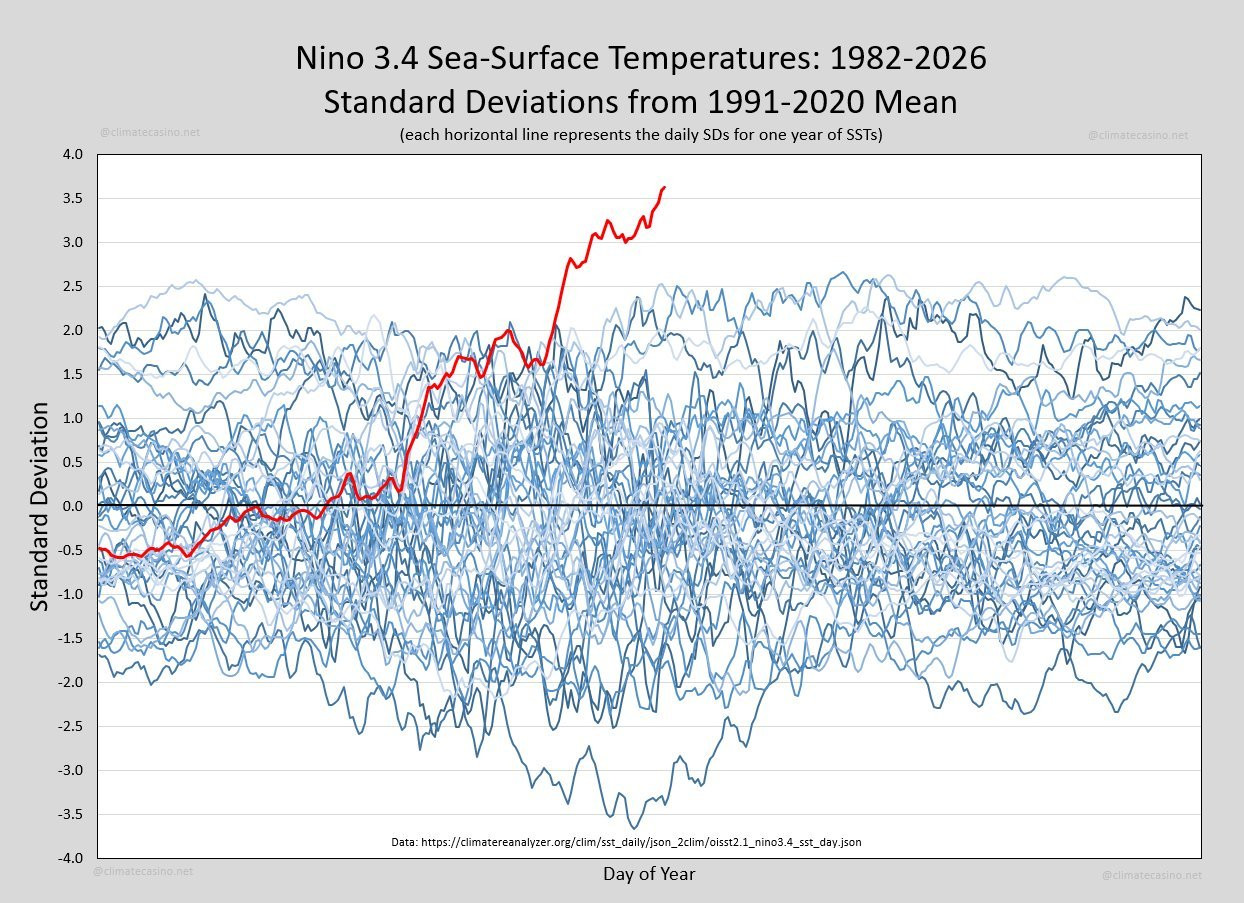
Every so often the Earth produces a signal that is impossible to ignore. This graph is one of them. It shows sea-surface temperatures in the Niño 3.4 region of the equatorial Pacific, one of the most important parts of the Earth's climate system. Each blue line represents a different year since 1982. The red line is this year. It doesn't just set a new record. It has departed entirely from the range of previous observations.If this graph represented stock market prices, a new Olympic record or a
Cold Climate Syntropic Agriculture — Propagate
Syntropic farming has taken hold in Brazil and the tropics, but today we ask: How can we apply these concepts to cold climates?

The climate crisis: a war on the world
The climate crisis is a self-destructive war, with aggressors and victims

World’s seas have hit hottest temperature on record for July, say scientists
Average sea surface temperature outside polar regions was highest on record for July, beating previous high in 2023

Summer’s new normal is a hazard that’s testing Europe’s climate resilience
As people across Europe are having to acclimatise to an unprecedented heatwave, coordinated responses for tackling extreme heat need to come from the top, and there’s no time to lose.

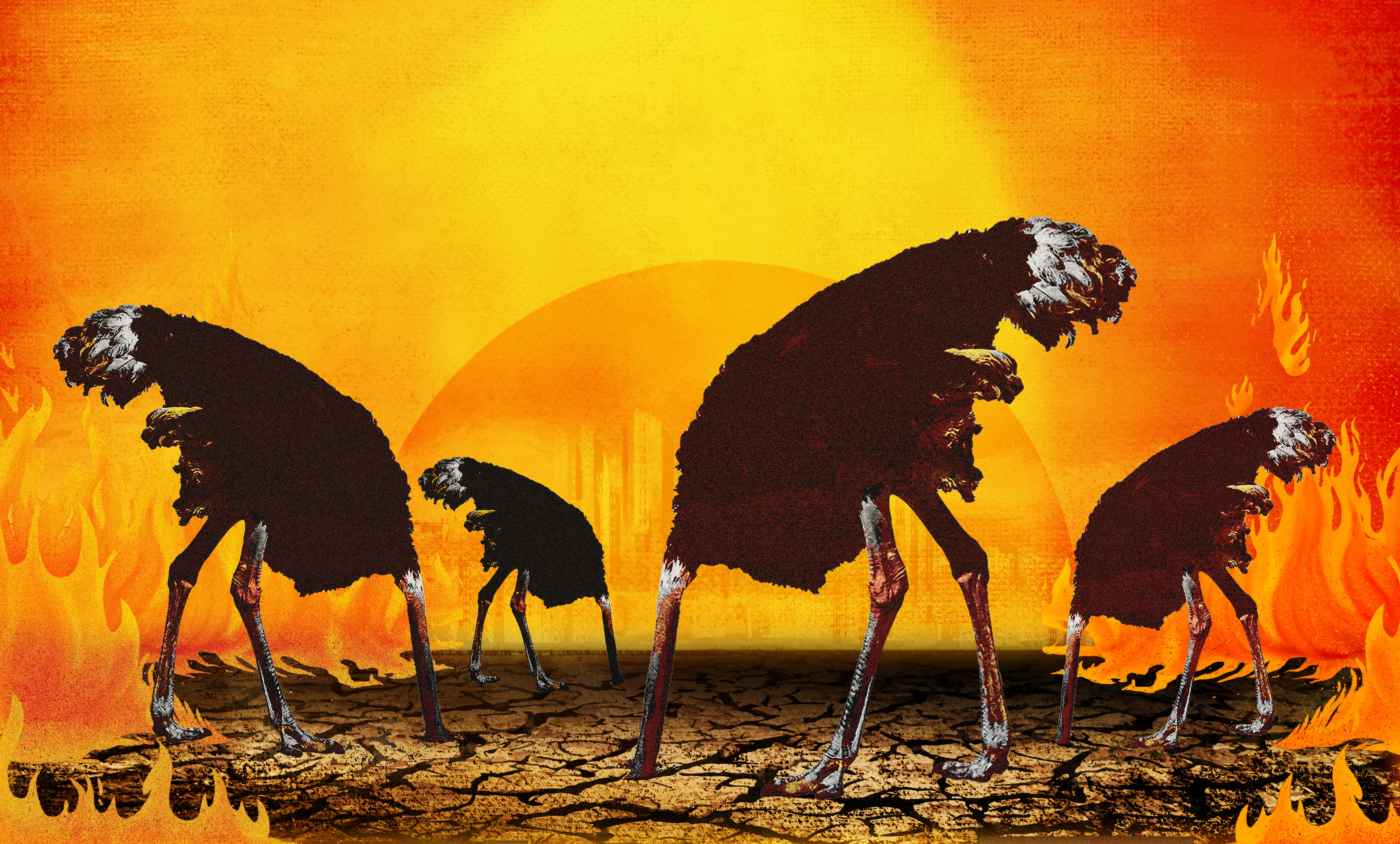
Natasha Walter: We’ve gone from climate denial to something worse – climate fatalism
The message in the western media, as global heating becomes undeniable, seems now to be that nothing can be done. That is unacceptable – especially for those in developing countries who are suffering so greatly from the crisis we created
We asked our climate reporters to highlight one idea for positive change. We got a chronicle of global transformation
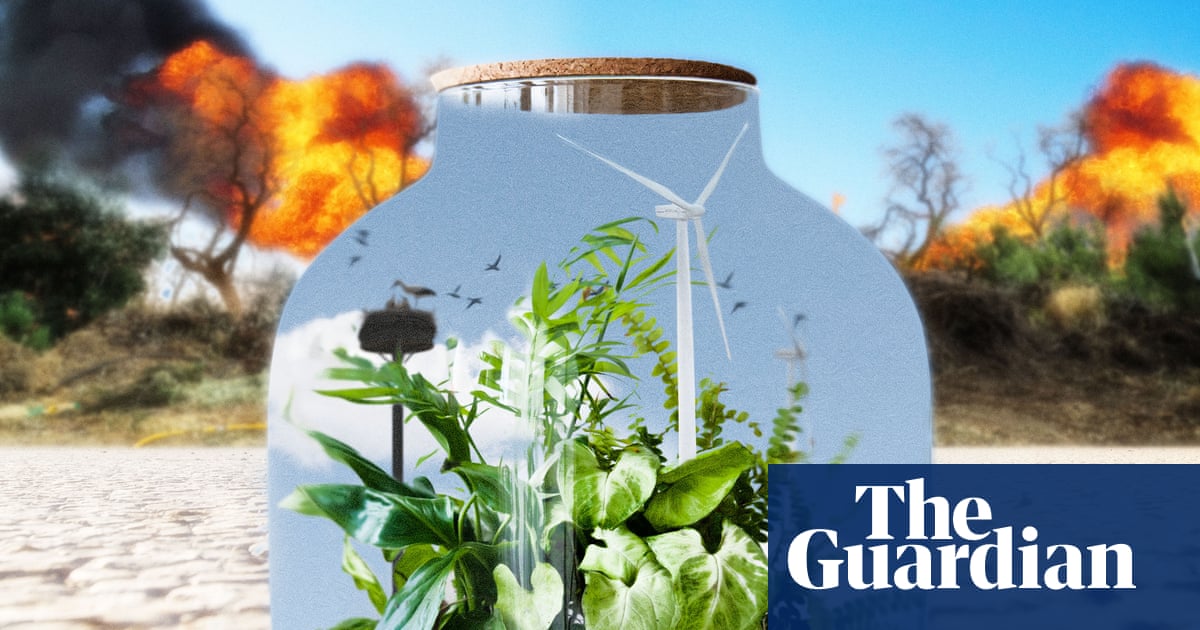
There are countless initiatives around the world that can inspire people and spur them into action. Amid the devastation of the climate crisis, our journalists strive to highlight these stories of hope
It’s 90 degrees in the Arctic right now
The Arctic is heating faster than the rest of the planet. New data illustrate how dire that is