


While Netanyahu’s bloc adds more extremists to its ranks, his opponents are impeding their own path to power by refusing to work with Arab parties.
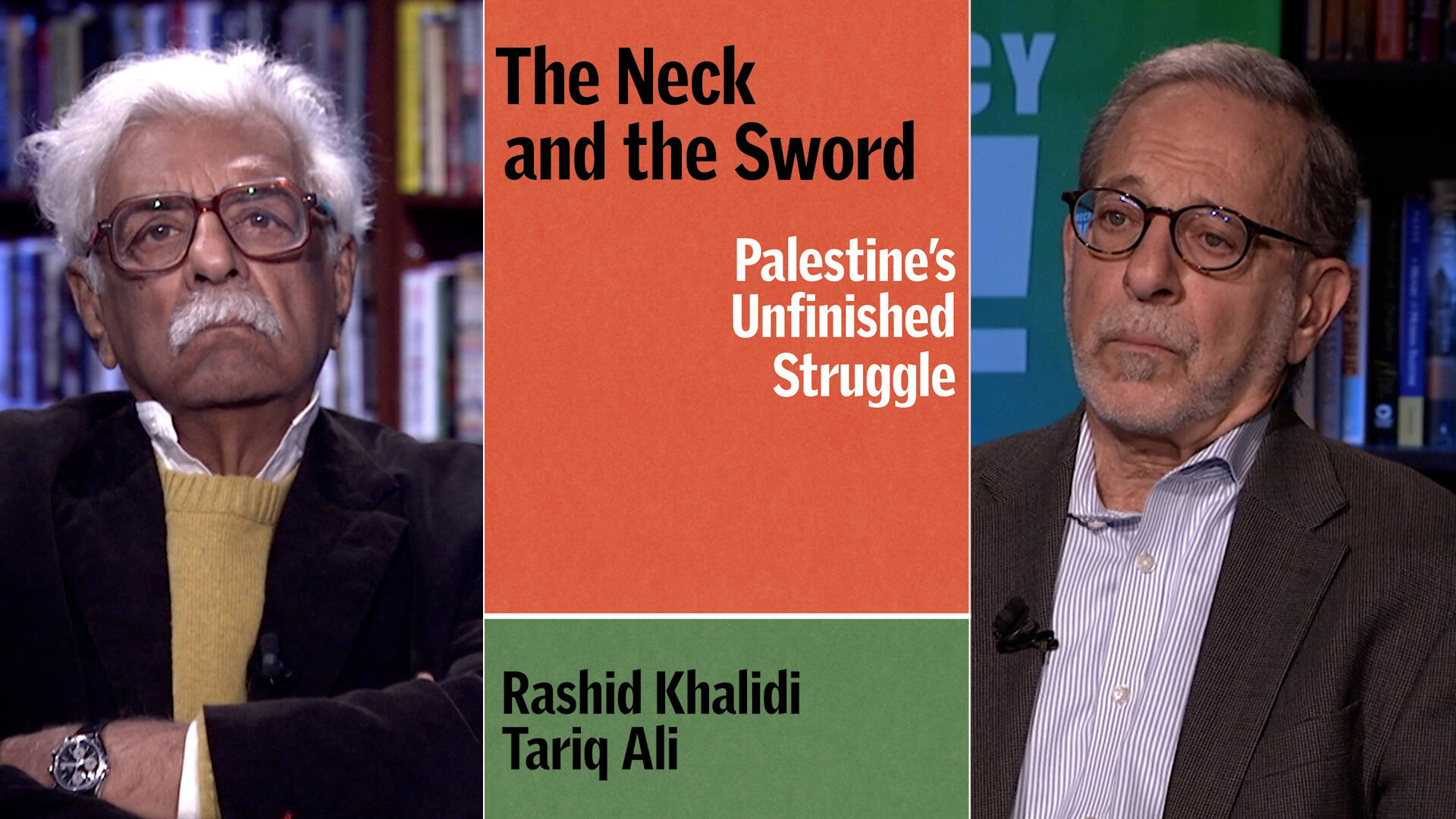
Israeli Elections to Global Movements: Tariq Ali, Rashid Khalidi on New Book “The Neck and the Sword”
We get analysis of the Israeli elections, the upcoming U.S. midterms, the pro-Palestine movement and more from Palestinian American scholar Rashid Khalidi and Pakistani British writer Tariq Ali. They are co-authors of the new book The Neck and the Sword: Palestine’s Unfinished Struggle. The book, an extended conversation between Khalidi and Ali over two years, offers an overview of Palestinian intellectual and political history, drawing its title from a famous phrase used by the renowned Palestinian writer Ghassan Kanafani to describe the futility of “peace talks” between occupier and occupied, saying it was akin to a “conversation between the sword and the neck.” Kanafani was assassinated by Israel in 1972, “murdered simply because his words were too dangerous for Israel to tolerate,” says Khalidi. Public opinion about Israel has grown increasingly negative in the United States and across much of the world in the wake of the genocide in Gaza, and it’s “not going to shift back,” says Khalidi. “People have seen something that cannot be unseen. They’ve seen genocide. They’ve seen slaughter. And Israel has no defense.” “Even in countries with no history of a Palestine solidarity movement, suddenly the Palestine flag emerges,” says Ali. “Why? Because their governments are trying to stop dissent on this issue, so they are defying their governments.”
It’s Not Polarization; It’s the Radicalization of the Political Right
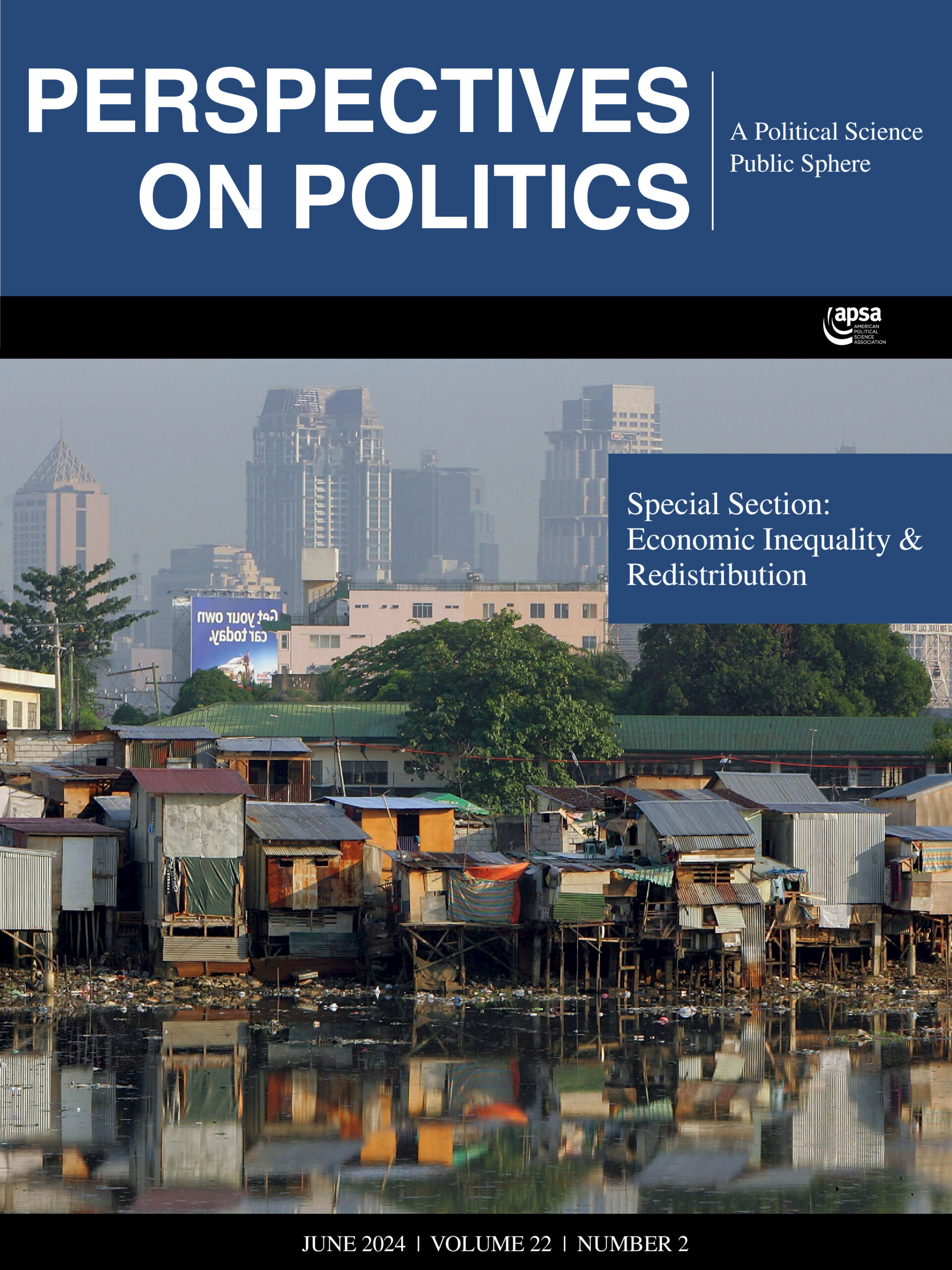
Polarization has become the master concept for diagnosing contemporary democratic crises. The notion denotes three features: symmetry between parties, politics as an opinion space where positions diverge, and mutual repulsion between opposing camps. Yet none of these capture current realities. Across democracies, the central dynamic is not two poles drifting apart but the transformation of the political right into authoritarianism, norm breaking, and openness to political violence. Social democratic and center-right parties tend to respond in the opposite way from what “polarization” implies: by accommodating rightward. Attempts to salvage the polarization frame with modifiers (“asymmetric,” “affective,” “sectarian,” “pernicious”) concede these realities but risk hollowing out the concept’s definitional core. These limitations reveal a deeper misdiagnosis: when one party turns antidemocratic and illiberal, incivility and conflict are inevitable—but they are symptoms, not the root problem. Misdiagnosing them as the central issue leads to viewing civility and compromise as remedies, thereby risking the legitimation of authoritarian actors. This article proposes an alternative lens: the radicalization of the political right. Developed in the study of extremism, the radicalization framework better captures asymmetric change, identity-driven politics, and the mainstreaming of illiberalism. It foregrounds identity fusion, threat narratives, elite entrepreneurship, and escalation. Concepts are never politically innocent and persisting with “polarization” risks both misdiagnosing and normalizing authoritarian threats.
It’s Not Polarization; It’s the Radicalization of the Political Right
Polarization has become the master concept for diagnosing contemporary democratic crises. The notion denotes three features: symmetry between parties, politics as an opinion space where positions diverge, and mutual repulsion between opposing camps. Yet none of these capture current realities. Across democracies, the central dynamic is not two poles drifting apart but the transformation of the political right into authoritarianism, norm breaking, and openness to political violence. Social democratic and center-right parties tend to respond in the opposite way from what “polarization” implies: by accommodating rightward. Attempts to salvage the polarization frame with modifiers (“asymmetric,” “affective,” “sectarian,” “pernicious”) concede these realities but risk hollowing out the concept’s definitional core. These limitations reveal a deeper misdiagnosis: when one party turns antidemocratic and illiberal, incivility and conflict are inevitable—but they are symptoms, not the root problem. Misdiagnosing them as the central issue leads to viewing civility and compromise as remedies, thereby risking the legitimation of authoritarian actors. This article proposes an alternative lens: the radicalization of the political right. Developed in the study of extremism, the radicalization framework better captures asymmetric change, identity-driven politics, and the mainstreaming of illiberalism. It foregrounds identity fusion, threat narratives, elite entrepreneurship, and escalation. Concepts are never politically innocent and persisting with “polarization” risks both misdiagnosing and normalizing authoritarian threats.
Left & Right: The Psychological Significance of a Political Distinction
This book brings together for the first time an updated, revised collection of influential essays and articles that capture some of the most exciting scientific and scholarly contributions to the topic ...

The Left Has a Hyperpolitics Problem
While the left is often able to excite large numbers to protest, it fails to harness that energy to build lasting political power.

‘It’s frightening’: How far right is infiltrating everyday culture
Extremist messaging now woven into music and YouTube videos, with one expert saying: ‘You can be radicalised sitting on your couch’

Alex Karp Goes to War
Palantir’s CEO is good with ICE and says he defends human rights. But will Israel and Trump ever go too far for him?

Hasan Piker Threatens the Establishment. That’s Why They Want to Destroy Him.
Critics are leveling baseless charges of antisemitism and bigotry at the mega-streamer. But they’re really scared of the challenge he poses to their power.

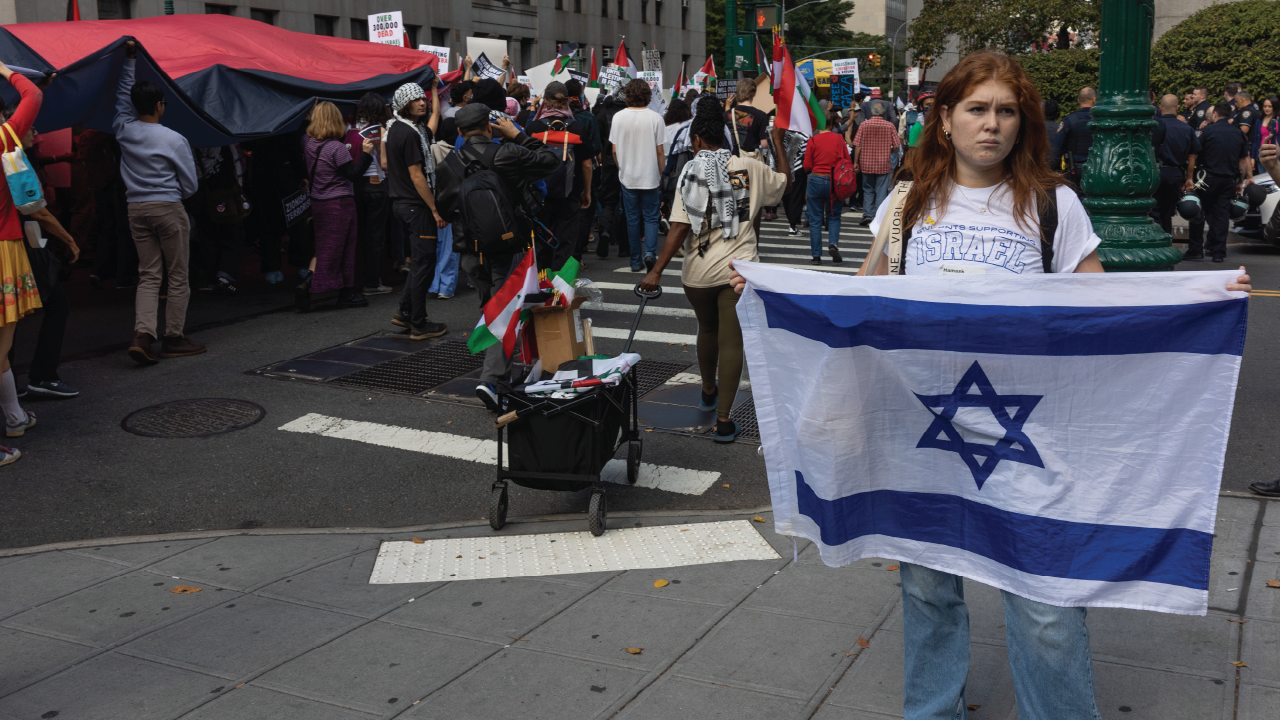
Negative views of Israel, low confidence in Netanyahu across 36 countries
Majorities in most of the countries we surveyed express an unfavorable view of Israel and little or no confidence in Prime Minister Benjamin Netanyahu.
Nassim Nicholas Taleb on Twitter / X
History will show that no one did more to promote left-wing ideas than Donald Trump, and no one did more to advance the Palestinian cause than Benjamin Netanyahu.— Nassim Nicholas Taleb (@nntaleb) November 4, 2026
It Can Be Lonely to Have a Middle-of-the Road Opinion on the Middle East (Published 2024)
Some college students and faculty members are seeking space for nuanced perspectives on the Israel-Hamas war on deeply divided campuses.

Book and Journals Publisher – 2025 - Lawrence Wishart
Lawrence Wishart have been publishing critical left ideas on politics and culture since 1936. Through books, journals and events, we foster a space where people can think together, challenge political ‘common sense’ and explore new possibilities.
Joe Kent’s Resignation Was Brave. His Analysis Is Faulty.
The former counterterrorism official’s assertion that Israel was responsible for US wars in Iraq and Syria is false, and evidence of a dangerously…


Left-Wing Governments and Far-Right Success
In recent decades, support for the far right has surged in many countries. One common explanation for this is that far-right support is a backlash against left-wing governments and their policies. We investigate the causal effect of the partisan make-up of governments on the electoral results of far-right parties. Evidence from over-time comparative data and a quasi-experimental analysis based on a regression discontinuity design in Spain indicates that far-right parties benefit electorally when the current government is on the left. In further analyses, we employ a novel regression discontinuity design (RDD)-based sampling strategy to examine original individual-level survey data from Spanish municipalities close to the discontinuity cutoff. These data show that the likely mechanism underlying the backlash effect is an ideological shift to the right among the electorate when left-wing parties govern. Overall, the far right benefits more when the mainstream left governs than when the mainstream right does.
‘Polarization’ has become the master concept for diagnosing our current democratic crisis. But this is not polarization. It is the radicalization of the political right. By misdiagnosing it, we risk becoming complicit in the crisis. 🧵 Just out in Perspectives on Politics doi.org/10.1017/S1537592726105246
