

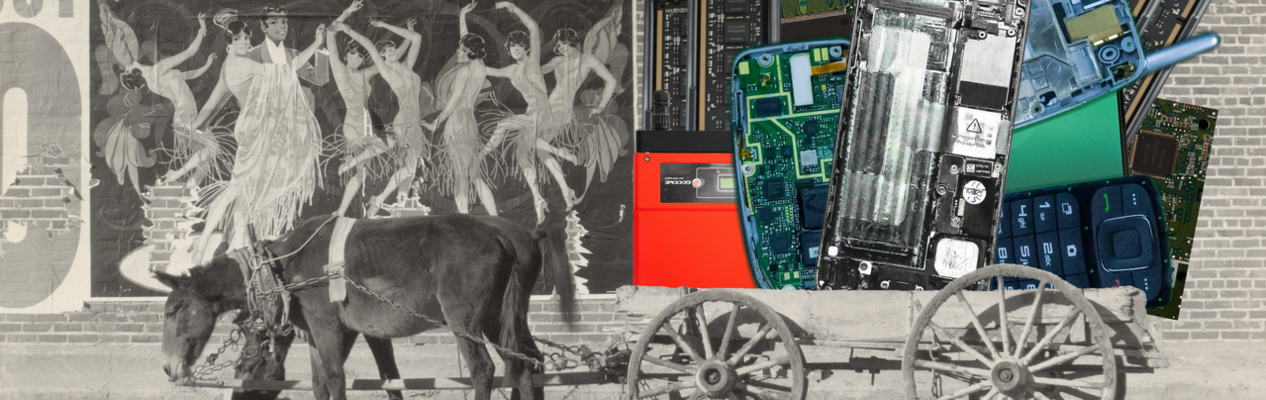
This forum begins from the idea that refusal is, among other things, a rejection of one’s current relationship to technology (as an individual and/or as part of a collective) and a simultaneous commitment to another way of being in the world. The ‘no’ is accompanied by a ‘yes’ to another path. In this sense, refusal demands a careful articulation of what needs to change as well as a vision for a future that can (and should) be worked towards.
On technological optimism and technological pragmatism
"There are no guarantees that things are going to turn out very well for anyone.”

Technopoly: The Surrender of Culture to Technology
A witty, often terrifying that chronicles our transform…

Lambda Land | Book Review: Technopoly
In Technopoly: The Surrender of Culture to Technology, Neil Postman argues that our infatuation with technology has insidiously eroded our culture. We gain much through technology, but it comes at a price; all too often we are blind to that price. This book seeks to call attention to the costs of a technology-focused society. I felt this poignantly because I, as a technology worker, know what that infatuation feels like.
Technology is Not Values Neutral: Ending the Reign of Nihilistic Design
We fail to take tech seriously when we do not grasp its full impact on humans

Technoableism
Technoableism is a belief in the power of technology that considers the elimination of disability a good thing, something we should strive for. It’s a classic form of ableism—bias against disabled people, bias in favor of nondisabled ways of life. Technoableism is the use of technologies to reassert those biases, often under the guise of empowerment.

other futures: tech, resistance & imagining otherwise
big tech wants to control our future, but there are other paths we can choose instead. on "other futures" we bring together leading tech researchers, organizers, critics, and storytellers to help us imagine what more liberatory and human-centered tech futures could look like—and how we can build them together. brought to you by DAIR and the All Tomorrows Institute.

What technology takes from us – and how to take it back | Rebecca Solnit
The long read: Decisions outsourced, chatbots for friends, the natural world an afterthought: Silicon Valley is giving us life void of connection. There is a way out – but it’s going to take collective effort

The Digital Life Collective
The Digital Life Collective is an enabler. If you think we should be doing something we're not currently doing, we're here to help you and your project make the change you want to see in the world.
Technological Metamodernism (Sep 2024)
Technological Metamodernism A four-week course with Stephen Reid and special guests Telegram group: https://t.me/+4CC9lfZMBN04ZTdk Substack post announcing the open-sourcing of the notes: https://stephenreid.substack.com/p/technological-metamodernism-course This work is licensed under Cre...

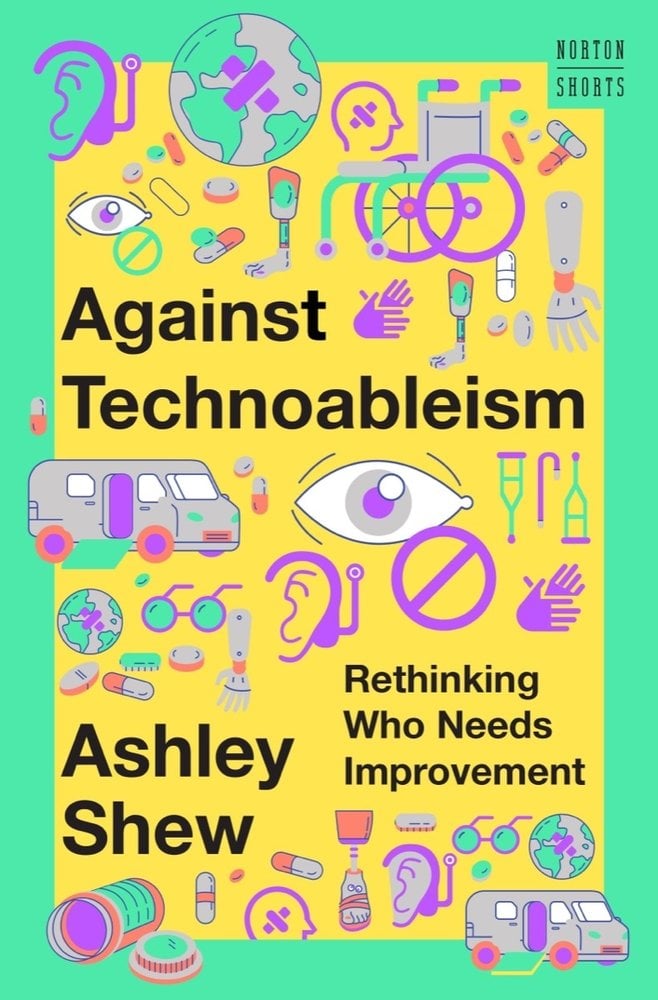
Against Technoableism
When bioethicist and professor Ashley Shew became a self-described "hard-of-hearing chemobrained amputee with Crohn's disease and tinnitus," there was no returning to "normal." Suddenly well-meaning people called her an "inspiration" while grocery shopping or viewed her as a needy recipient of technological wizardry. Most disabled people don't want what the abled assume they want--nor are they generally asked. Almost everyone will experience disability at some point in their lives, yet the abled persistently frame disability as an individual's problem rather than a social one. In a warm, feisty voice and vibrant prose, Shew shows how we can create better narratives and more accessible futures by drawing from the insights of the cross-disability community. To forge a more equitable world, Shew argues that we must eliminate "technoableism"--the harmful belief that technology is a "solution" for disability; that the disabled simply await being "fixed" by technological wizardry; that making society more accessible and equitable is somehow a lesser priority. This badly needed introduction to disability expertise considers mobility devices, medical infrastructure, neurodivergence, and the crucial relationship between disability and race. The future, Shew points out, is surely disabled--whether through changing climate, new diseases, or even through space travel. It's time we looked closely at how we all think about disability technologies and learn to envision disabilities not as liabilities, but as skill sets enabling all of us to navigate a challenging world.
The Whale and the Reactor: A Search for Limits in an Age of High Technology, Second Edition
“In an age in which the inexhaustible power of scientific technology makes all things possible, it remains to be seen where we will draw the line, where we will be able to say, here are possibilities that wisdom suggest we avoid.” First published to great acclaim in 1988, Langdon Winner’s groundbreaking exploration of the political, social, and philosophical implications of technology is timelier than ever. He demonstrates that choices about the kinds of technical systems we build and use are actually choices about who we want to be and what kind of world we want to create—technical decisions are political decisions, and they involve profound choices about power, liberty, order, and justice. A seminal text in the history and philosophy of science, this new edition includes a new chapter, preface, and postscript by the author.

What if technology didn’t feel so… hollow? Some friends and I just released a manifesto about a world where tech leaves us feeling nourished (along with an evolving list of theses about how we can build it) resonantcomputing.org

The Resonant Computing Manifesto
resonantcomputing.org"Refusal is not just some impotent act of nostalgia, and the extent to which we think so is a measure of our contempt for the prospect of taking democratic politics seriously." This, by @edwardongwesojr.com, is a wonderfully good and urgent piece of writing. thetechbubble.info/p/the-future-is-not-tech-forw…

The Future Is Not Tech-Forward
www.thetechbubble.info
