

The practices that make your life better are the same ones that sustain a free society. It's time liberalism took that seriously.
Capitalism, Democracy, and Du Bois’s <em>Two</em> Proletariats
[epq-quote align="align-right"]"What can be more radical or liberating than freedom and justice for all?"[/epq-quote] As an ideal, liberal democracy has great appeal. What can be more radical or liberating than...
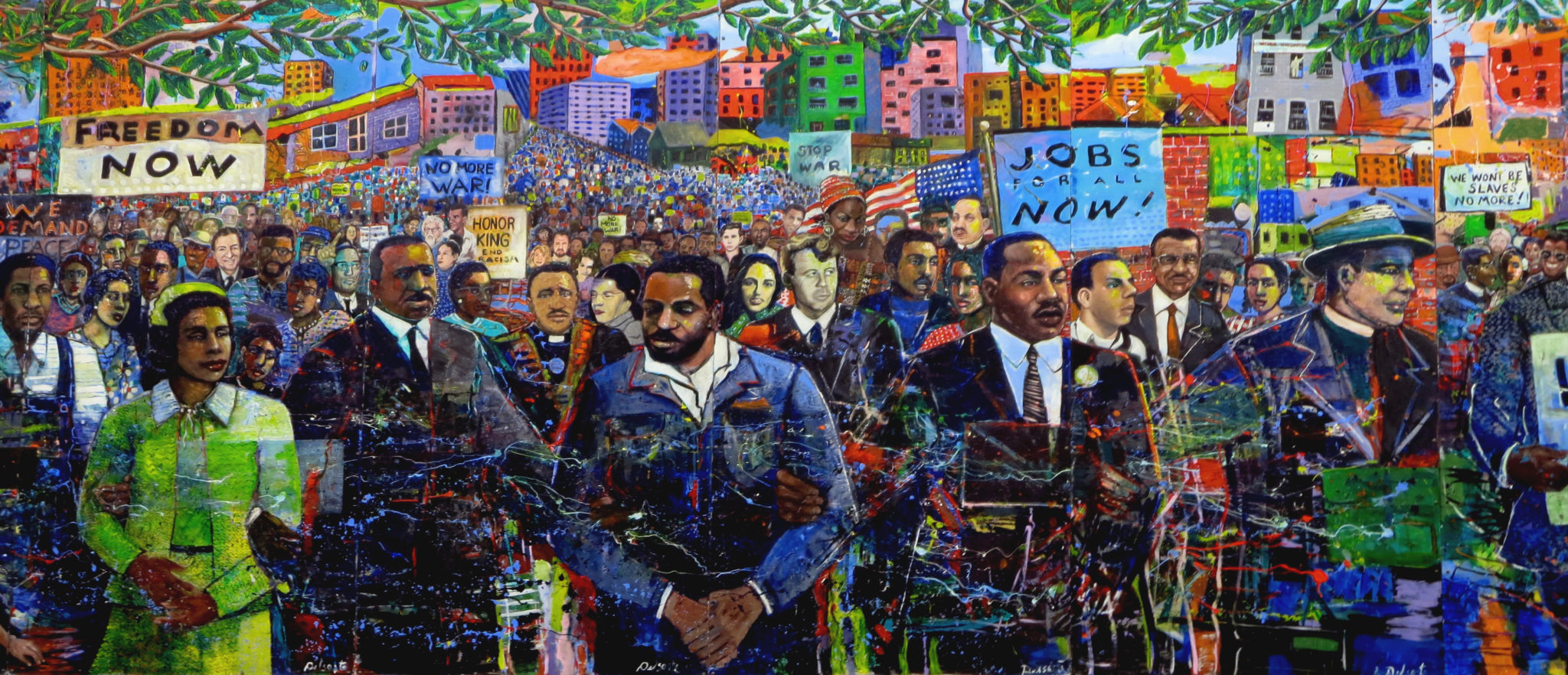
Radical Liberalism, Pragmatism, and Me - Aricie's thoughts
On liberty
Introductory -- Of the liberty of thought and discussion -- Of individuality, as one of the elements of well-being -- Of the limits to the authority of society over the individual -- Applications; Book, leather; Explanatory note by H.E. Barker attached; 18

Solitude and Leadership - The American Scholar
If you want others to follow, learn to be alone with your thoughts

Freedom Now | Polity: Vol 52, No 3
Left-wing politics is resurgent. Self-proclaimed socialists are unexpectedly popular. Proposals like universal health care are a commonplace of Democratic campaigns. But there is not yet a clear, unifying idea behind this political shift. We propose that that idea is freedom. While the left once understood freedom as emancipation from the economy, the right spent the twentieth century neutralizing and appropriating the idea of freedom by reinventing the economy as the true site of freedom. To reclaim freedom as a value of the left, we have to begin with the daily experience of most people: the unfreedom of the workplace. The authoritarian organization of work is not just an offense against freedom; it also helps us understand how freedom requires emancipation both from the economy and within the economy, and why that emancipation requires mass struggle.

Social Media and Anti-Social Pluralism - Aaron Ross Powell
Communities are different online and off, and pluralism that thrives in the real world can turn toxic in the digital world.
A revolution in our sense of self | Nick Chater
Psychologists have tried to plumb the depths of human motivation to make sense of our behaviour. But our inner mental world is a fiction, sustained by constant improvisation
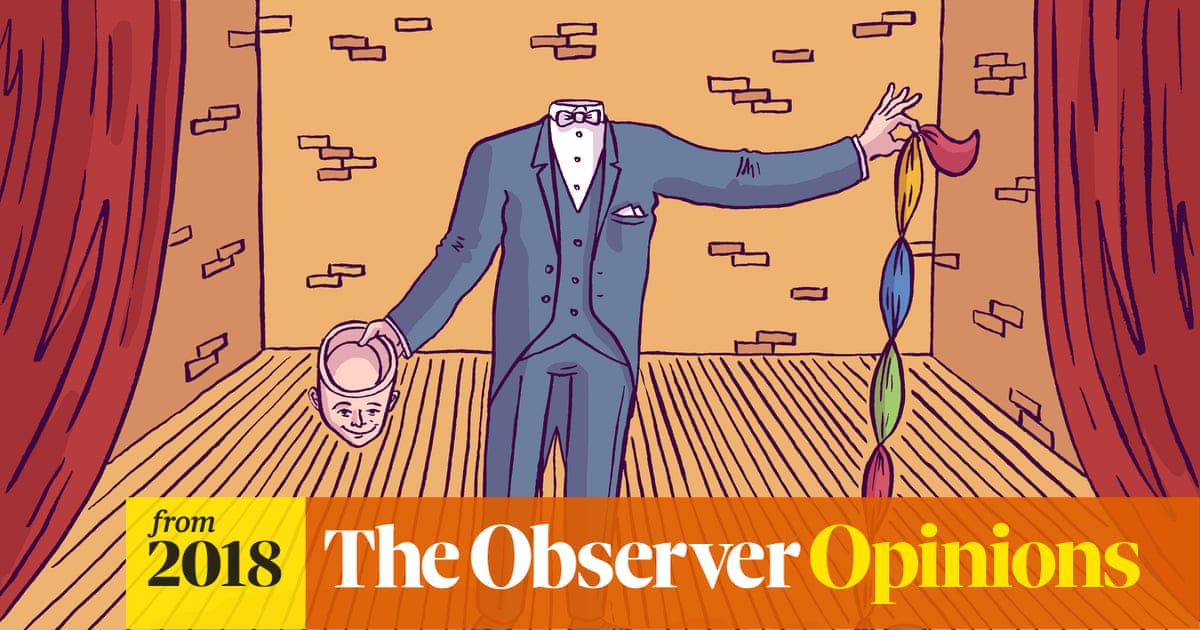
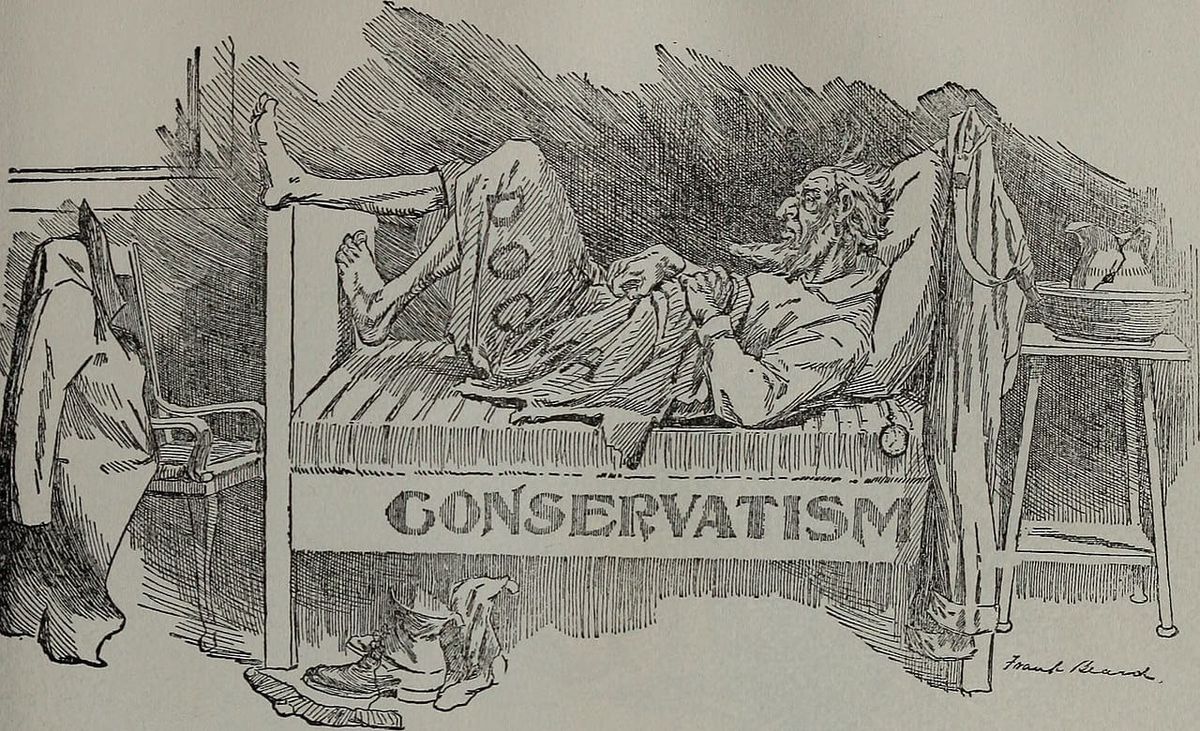
Liberalism Did Not Fail, Conservatism Did
We are moving from an ideologically multipolar world, to a bipolar one.
W Social is a textbook case for everything wrong with digital sovereignty
Insanity is doing the same thing over and over again, but expecting different results. This saying is attributed to the famous socialist (and theoretical physicist) Albert Einstein but actually traces back to novelist Rita Mae Brown. I have been thinking about this saying a lot lately. The reason is

Field Notes: The Architecture of Rationalization - Aaron Ross Powell
Marginalia on the internet turning bad, platform extraction, and existential restlessness.
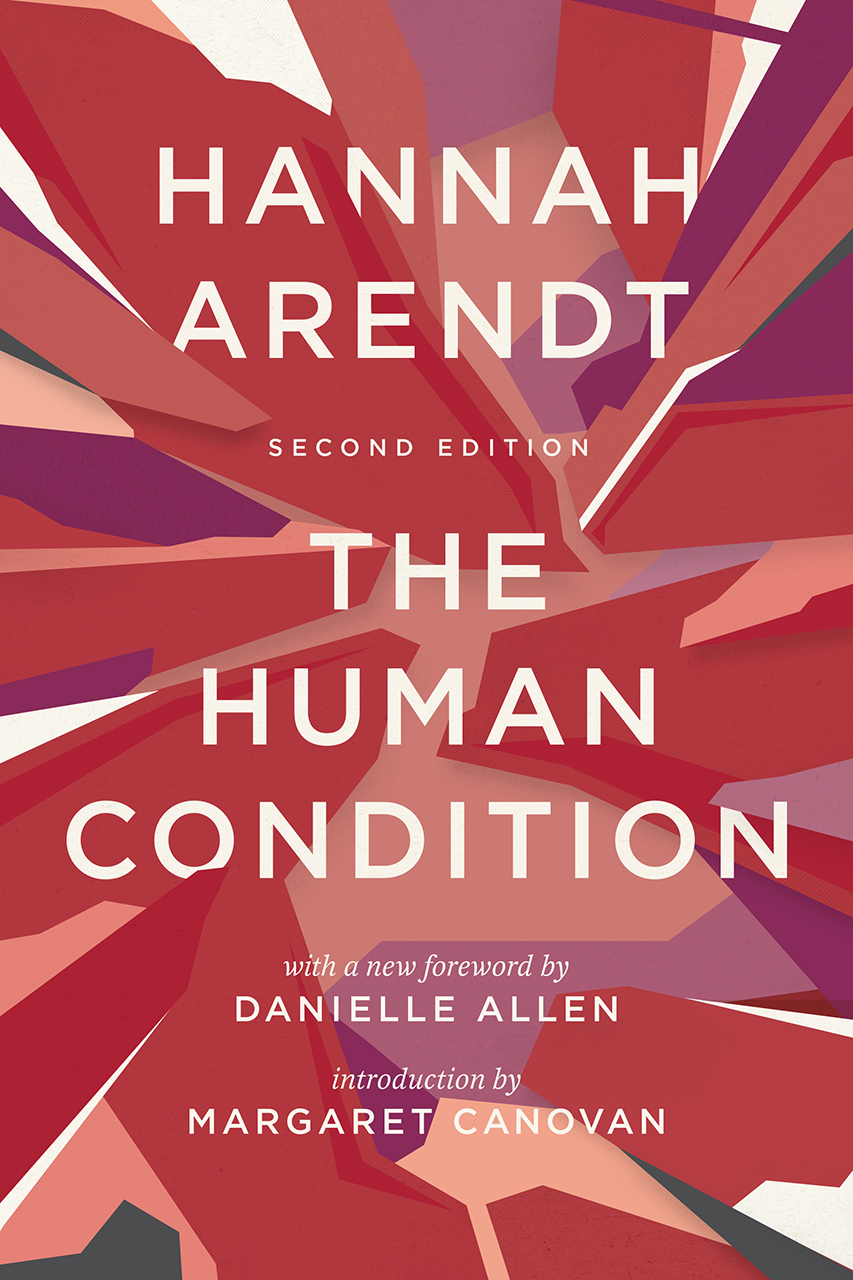
The Human Condition: Second Edition
A classic work of political thought, more relevant today than ever The twenty-first century has seen a resurgence of interest in the political thinker Hannah Arendt, “the theorist of beginnings,” whose work probes the logics underlying unexpected transformations—from totalitarianism to revolution. A work of striking originality, The Human Condition is in many respects more relevant now than when it first appeared in 1958. In her study of the state of modern humanity, Hannah Arendt considers humankind from the perspective of the actions of which it is capable. The problems Arendt identified then—diminishing human agency and political freedom, the paradox that as human powers increase through technological and humanistic inquiry, we are less equipped to control the consequences of our actions—continue to confront us today. This new edition, published to coincide with the sixtieth anniversary of its original publication, contains Margaret Canovan’s 1998 introduction and a new foreword by Danielle Allen. A classic in political and social theory, The Human Condition is a work that has proved both timeless and perpetually timely.
Liberal Universalism | The Paper Pilot
The Paper Pilot's digital garden of thoughts on philosophy, politics, and sociology

Radical expectations: how the New Left changed economics
In the 1970s radical economists campaigned to reform their discipline and their universities. They became journalists and activists, moving beyond academia, to forge new models of public engagement and collaborative knowledge in economic life. Radical Expectations tells the story of how these economists set out to make economics more democratic. It traces their campaign to bring protest movements to the campuses, triggering the emergence of an alternative understanding of expertise directed at validating and empowering the perspectives and voices of women, Black Americans, labor activists, and the urban poor. It shows how a radical identity formed and how radicals helped reform disciplinary institutions. Furthermore, it argues that the radical economics' legacy was the development of a language and models of expert-lay collaboration that empowers direct action in economic affairs. The book is about the community of radical economists who championed the promise of change and what came of it

Ecocivilization: making a world that works for all
""One of the greatest thinkers of our age" (The Guardian) presents a new way of living-one modeled on nature's design instead of capitalism's-for fans of Guns, Germs, and Steel and Doughnut Economics It has often been said that it is easier to imagine the end of the world than it is to imagine the end of capitalism-and yet that is what the historical moment urgently calls for. Climate change has reached an emergency state, inequality continues to grow, and, for many, the future has never seemed more bleak. Incremental policy improvements are no longer enough-we need a deep transformation of our current civilization to continue to survive. In Ecocivilization, leading thinker Jeremy Lent reimagines the basis of our civilization, and argues for a new global system of living, one based on life-affirming principles modeled after nature's own design. What enfolds is a robust framework incorporating Lent's own expertise, and the lived experiences of those on the ground already putting ecological civilization's core tenants into practice-justice, mutuality, diversity, and symbiosis. From the global economy to universal housing and income, from infrastructure to agriculture, every major aspect of our society could be redesigned to work together as a coherent whole, setting the conditions for all people to flourish. Ecocivilization shows how this future on a regenerated Earth is not only desirable, but entirely feasible"--

🧵 @jburnmurdoch.ft.com is spot on about the conditions in his FT piece. Liberal democracy held it together thanks to growth, good demographics, and the promise of a better future. Those days are gone, and that’s the "why" behind the erosion. However...

Chris Bertram
Democratic politicians have, though, pursued growth in GDP at the expense of other values. One response to @jburnmurdoch.ft.com pessimistic scenario is refocus on those values, combined with egalitarianism, sufficiency and quality of life. Not "it's the economy, stupid" but "it's the the society"
