

The internet once encouraged us to build entire identities around our weirdest, deepest fascinations. Then metrics and distribution flattened those obsessions into fungible content.
How social media is fueling an intense form of romantic obsession
The digital world is primed to fuel episodes of profound infatuation known as limerence.
This Is How Your Fear and Outrage Are Being Sold for Profit
The story of how one metric has changed the way you see the world

Field Notes: The Architecture of Rationalization - Aaron Ross Powell
Marginalia on the internet turning bad, platform extraction, and existential restlessness.
Social Media and Anti-Social Pluralism - Aaron Ross Powell
Communities are different online and off, and pluralism that thrives in the real world can turn toxic in the digital world.
How Social Media Tricks our Brains — and Destroys our Politics - Aaron Ross Powell's Blog
Bias, Skew, and Search Engines Are Sufficient to Explain Online Toxicity
U.S. political discourse seems to have fissioned into discrete bubbles, each reflecting its own distorted image of the world. Many blame machine-learning algorithms that purportedly maximize “engagement”—serving up content that keeps YouTube or Facebook users watching videos or scrolling through their feeds—for radicalizing users or strengthening their partisanship. Sociologist Shoshana Zuboff15 even argues that “surveillance capitalism” uses optimized algorithmic feedback for “automated behavioral modification” at scale, writing the “music” that users then “dance” to.
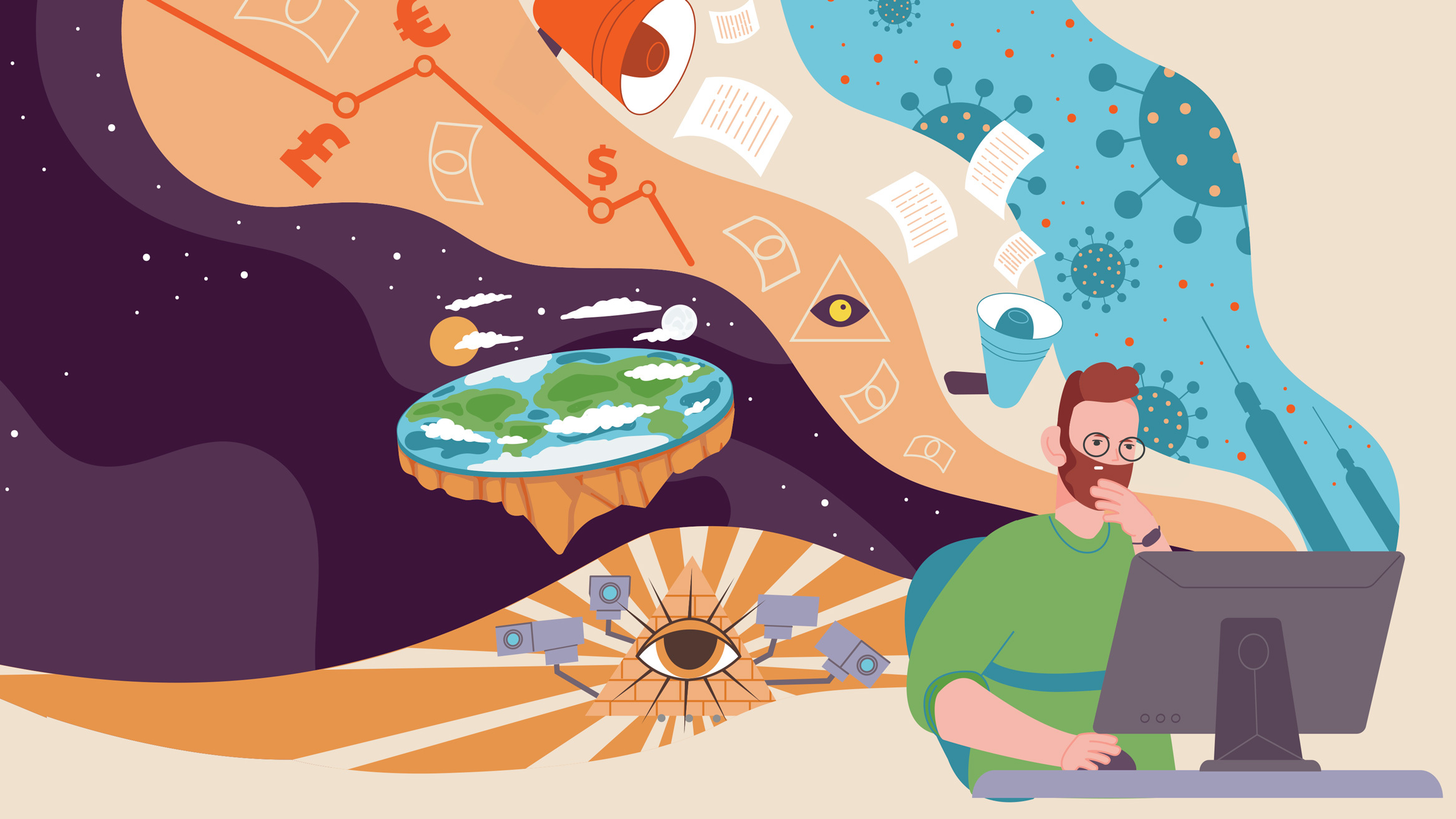
Bias, Skew, and Search Engines Are Sufficient to Explain Online Toxicity
U.S. political discourse seems to have fissioned into discrete bubbles, each reflecting its own distorted image of the world. Many blame machine-learning algorithms that purportedly maximize “engagement”—serving up content that keeps YouTube or Facebook users watching videos or scrolling through their feeds—for radicalizing users or strengthening their partisanship. Sociologist Shoshana Zuboff15 even argues that “surveillance capitalism” uses optimized algorithmic feedback for “automated behavioral modification” at scale, writing the “music” that users then “dance” to.
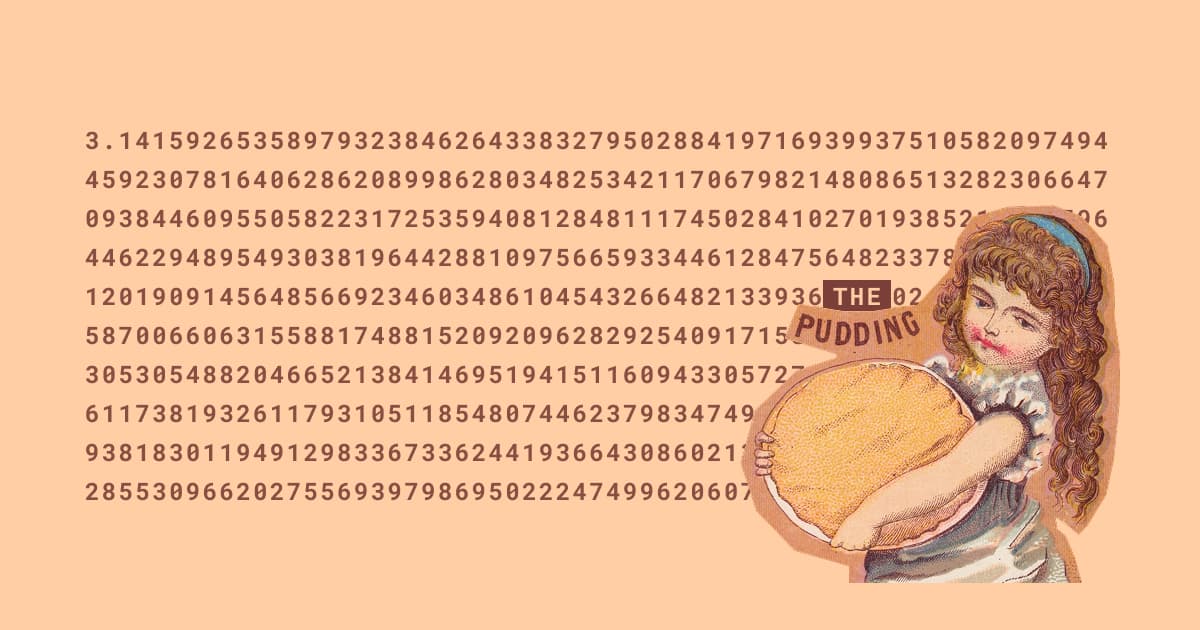
kill the metrics in your head
Get in, loser, we’re doing an old-fashioned conversation-by-blog-post. Dan Sinker wrote recently about the Who Cares Era: The writer didn’t care. The supplement’s editors didn’t care. The biz people on both sides of the sale of the supplement didn’t care. The production people didn’t care. And, the fact that it took two days for anyone to discover this epic fuckup in print means that, ultimately, the reader didn’t care either. It’s so emblematic of the moment we’re in, the Who Cares Era, where completely disposable things are shoddily produced for people to mostly ignore. Then Les Orchard wrote in response that Only the Metrics Care: The user isn’t the customer. And they’re not the product either. The real product is behavioral optimization—metrics on a dashboard. The paying customer is somewhere else entirely, and the “content” is just a means to nudge behavior and juice KPIs. … The point isn’t to communicate. It’s to simulate relevance in order to optimize growth. It’s all goal-tracking, A/B tests, fake doors, and dark patterns. Both of those posts are great and you should read them, but reading them is not a prerequisite to reading this one. I just wanted to place this post in context of the conversation I’m dropping into.
How Liminalism Became the Defining Aesthetic of Our Time
This crowd-curated digital movement is one of the most pertinent and explicit reactions to our particular slice of dystopian late capitalism.

Rewire: Digital Cosmopolitans in the Age of Connection
A rousing call to action for those who would be citizens of the world―online and off. We live in an age of connection, one that is accelerated by the Internet. This increasingly ubiquitous, immensely powerful technology often leads us to assume that as the number of people online grows, it inevitably leads to a smaller, more cosmopolitan world. We’ll understand more, we think. We’ll know more. We’ll engage more and share more with people from other cultures. In reality, it is easier to ship bottles of water from Fiji to Atlanta than it is to get news from Tokyo to New York. In Rewire, media scholar and activist Ethan Zuckerman explains why the technological ability to communicate with someone does not inevitably lead to increased human connection. At the most basic level, our human tendency to “flock together” means that most of our interactions, online or off, are with a small set of people with whom we have much in common. In examining this fundamental tendency, Zuckerman draws on his own work as well as the latest research in psychology and sociology to consider technology’s role in disconnecting ourselves from the rest of the world.For those who seek a wider picture―a picture now critical for survival in an age of global economic crises and pandemics―Zuckerman highlights the challenges, and the headway already made, in truly connecting people across cultures. From voracious xenophiles eager to explore other countries to bridge figures who are able to connect one culture to another, people are at the center of his vision for a true kind of cosmopolitanism. And it is people who will shape a new approach to existing technologies, and perhaps invent some new ones, that embrace translation, cross-cultural inspiration, and the search for new, serendipitous experiences.Rich with Zuckerman’s personal experience and wisdom, Rewire offers a map of the social, technical, and policy innovations needed to more tightly connect the world.

Elena Rossini 🌈 (@_elena@mastodon.social)
SCOOP: #WSocial is doctoring metrics on its homepage, inflating the number of comments on posts by prominent people on its network. I suppose a more accurate tagline for them should be "Trust your feed?" My article about it: "W Social, Fictional Metrics and the Beauty of Open Data" 🔗 : https://blog.elenarossini.com/w-social-fictional-metrics-and-the-beauty-of-open-data/ #blog #BigTech #EUBigTech #TEP #TrustedEuropeanPlatforms #TrustYourFeed
We Needn't Have a One True Platform - Aaron Ross Powell
On Bluesky, user numbers, and the silliness of endless growth.
The Everything Account - augment
I’ve been thinking a lot about our accounts lately. We all have an ever-growing pile of digital identities scattered across the web, many forgotten after a b…
When it comes to our digital lives, too many people care about bigness and an imagined potential to achieve their own bigness, and too few care about connections and the potential to achieve meaningful connections.

Your Internet Doesn't Need to Be Big
www.aaronrosspowell.comThe Internet, and how we've developed with it

Not "doomscrolling has killed our lives". But how, looking back, our enjoyment of the internet has shaped our experience of life.

We can have a different web

My journey to the heart of the forgotten internet

VC&G | » My memories of what life was like before the Internet

Habbo Hotel Memories - Sneer Campaign
blogs.loc.gov

My old SoundCloud page is a time capsule
