The Department of Primary Industries and Regional Development has been ordered to improve the quality of Gouldian finch breeding habitat.
Protect our Living Legends - Woodland Trust
Many of our oldest and most special trees are not legally protected. Urge Government to change the law and prevent further tragedy.

Bird Flu Is Raging on a Mink Farm. It Could Spark a Human Pandemic, Experts Say, but Officials Won’t Act. — ProPublica
Federal officials brushed off the issue as Utah prioritized the fur industry’s interests. Little has been done to stop the spread of the virus and ensure it can’t spread to humans, a failure that experts called “irresponsible” and “astounding.”

EPA suspends enforcement of environmental laws amid coronavirus
The Environmental Protection Agency (EPA) issued a sweeping suspension of its enforcement of environmental laws Thursday, telling companies they would not need to meet environmental standards durin…

B.C. salmon farmers react to Washington state ban | CBC News
B.C. Salmon Farmers Association's executive director weighs in on the recent ban of Atlantic fish farms by the Washington State senate.

Birds of Berkeley [Paperback] by Oliver James
Now in paperback! This charming, full-color field guide to 25 birds easily found in Berkeley proves that even the city’s avian residents are a little

Pants on Fire
Benedict Evans: Whenever anyone proposes new rules or regulations, the people affected always have reasons why this is a terrible idea that will cause huge damage. This applies to bankers, doctors, farmers, lawyers, academics… and indeed software engineers. They always say ‘no’ and policy-makers can’t take that at face value: they discount it by some […]

Carney government passes law allowing authorization of banned pesticides | CBC News
The federal government has brought in major changes to how pesticides are regulated in Canada, granting cabinet the power to authorize the use of pesticides — even ones that Health Canada has deemed unsafe.

Birds Are Vanishing From North America (Published 2019)
The number of birds in the United States and Canada has declined by 3 billion, or 29 percent, over the past half-century, scientists find.

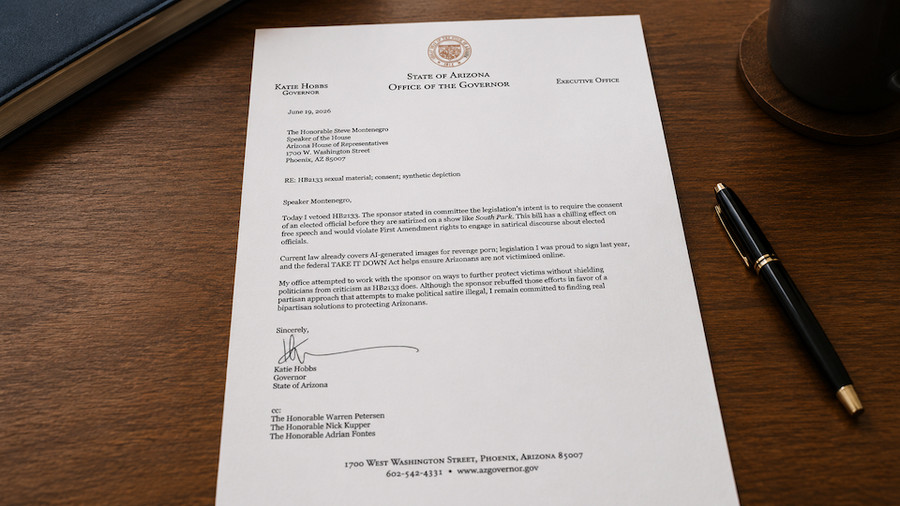
Arizona Governor Vetoes 'Protect Act' With New Consent Provisions
Arizona Governor Kate Hobbs on Friday vetoed HB 2133, the “Protect Act,” which would have imposed new requirements for adult content uploaded online.
Opinion | The Government’s Addiction to ‘Secret Law’ (Published 2016)
Fewer and fewer of the rules and regulations coming out of Washington are made public.

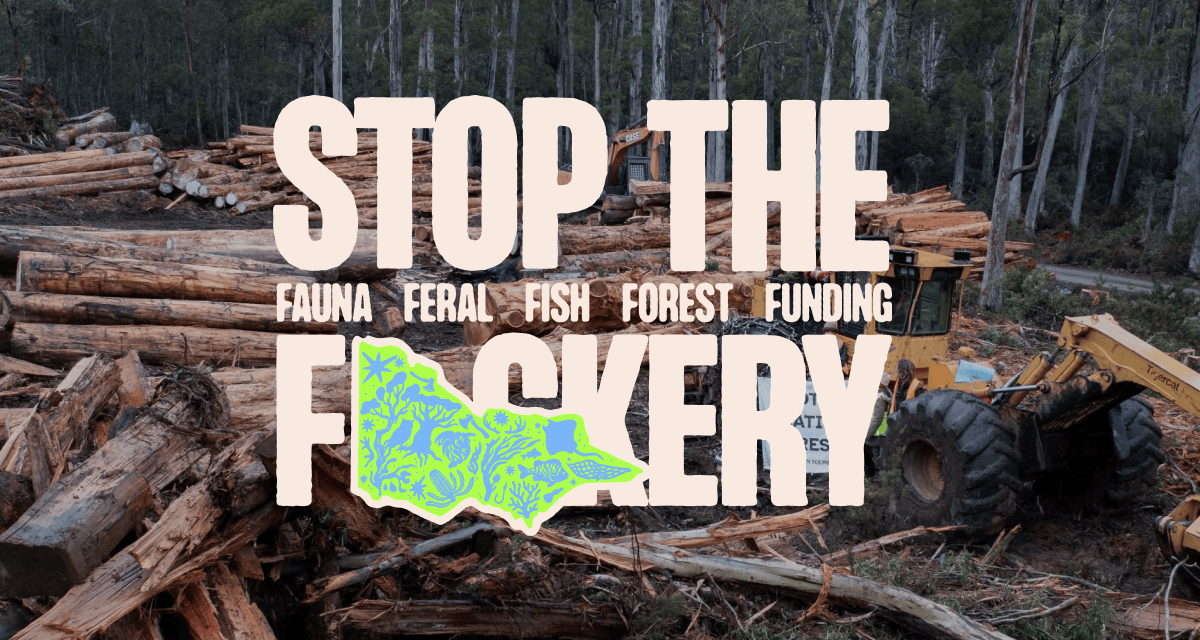
Our Allies | Stop The Fuckery
Victorians for Nature exists to hold governments and corporations to account for the systematic destruction of nature in Victoria. And to demand better.
AI Companies Should Report Pre- and Post-Mitigation Safety Evaluations
The rapid advancement of AI systems has raised widespread concerns about potential harms of frontier AI systems and the need for responsible evaluation and oversight. In this position paper, we argue that frontier AI companies should report both pre- and post-mitigation safety evaluations to enable informed policy decisions. Evaluating models at both stages provides policymakers with essential evidence to regulate deployment, access, and safety standards. We show that relying on either in isolation can create a misleading picture of model safety. Our analysis of AI safety disclosures from leading frontier labs identifies three critical gaps: (1) companies rarely evaluate both pre- and post-mitigation versions, (2) evaluation methods lack standardization, and (3) reported results are often too vague to inform policy. To address these issues, we recommend mandatory disclosure of pre- and post- mitigation capabilities to approved government bodies, standardized evaluation methods, and minimum transparency requirements for public safety reporting. These ensure that policymakers and regulators can craft targeted safety measures, assess deployment risks, and scrutinize companies’ safety claims effectively.
Governing The Commons: The Evolution of Institutions for Collective Action
The governance of natural resources used by many individuals in common is an issue of increasing concern to policy analysts. Both state control and privatization of resources have been advocated, but neither the state nor the market has been uniformly successful in solving common-pool resource problems. After critiquing the foundations of pol icy analysis as applied to natural resources, Elinor Ostrom here provides a unique body of empirical data to explore the conditions under which common-pool resource problems have been satisfactorily or unsatisfactorily solved. Dr. Ostrom first describes three models most frequently used as the foundation for recommending state or market solutions. She then outlines theoretical and empirical alternatives to these models in order to illustrate the diversity of possible solutions. In the following chapters she uses institutional analysis to examine different ways - both successful and unsuccessful - of governing the commons. In contrast to the propositions of the " tragedy of the commons" argument. common-pool problems sometimes are solved by voluntary organizations rather than by a coercive state. Among the cases considered are communal tenure in meadows and forest, irrigation communities and other water rights. and fisheries. Governing the Commons makes a major contribution to the analytical literature on institutions and to our understanding of human cooperation. Elinor Ostrom is co-director of the Workshop in Political Theory and Policy Analysis and professor of political science at Indiana University.

Open, Closed, and Privacy
Just as encryption is only viable on closed systems, so it is that increased privacy regulations will only entrench walled gardens. That should affect thinking on regulation.

Pacing the Frontier | Gillian K. Hadfield
The Pacing the Frontier letter calls on the US government to support an international effort to build the technical and governance tools needed to protect our option to pace AI development. I and others have been working on the problem of how to build such infrastructure for ten years, including participating in dialogues on AI safety with Chinese academic colleagues during the past three. Here are my suggestions: 1. Don’t rely on off-the-shelf models like FINRA and the FDA which were built for 20th Century single-domain government expertise. They’re not fit for purpose. 2. Don’t act like no-one’s thought about the AI governance problem before. We’ve spent two years refining a regulatory markets design into working legislative language, for example, and it’s now in AI governance bills in five states and in Congress. 3. Don’t try to write an exhaustive set of rules for AGI first. 4. Pick a domain that can achieve widespread global consensus to start. Mine would be recursive self-improvement: models should not build models. Build the technology that verifies that. 5. Focus relentlessly on building flexible verification infrastructure that is able to enforce whatever rules we can ultimately agree on. 6. Don’t assume we already know how to do this and governments can just write tests into law. Technology needs to be built and by the private sector. 7. Don’t wait for the infrastructure to emerge first. The components and people are there and the ecosystem can scale fast with the right incentives. 8. Incentivize large-scale investment in verification technology by building a governance structure and industry funding that creates a market for private verification organizations. 9. Use licensing and public oversight to ensure verifiers are independent of the frontier labs. 10. Protect sovereignty by enabling each government to license its own verifiers from a global market of verifiers recognized by other countries. 11. Leverage the incentive of global trade for models and model services by requiring verification for market access. 12. Just start. Sources in comments.

Alliance of Native Seedkeepers
Discover unique heirloom and non-GMO seeds at Alliance of Native Seedkeepers. As a Native American-led store, we specialize in over 1,500 varieties, preserving the rich heritage and biodiversity of indigenous agriculture. Shop now to contribute to sustainable, community-focused farming practices.