

A parametric shape grammar that generates the ground plans of Palladio's villas is developed as a definition of the Palladian style. The grammar is applied to generate the plan for the Villa Malcontenta.
Categorial grammar
Categorial grammar is a family of formalisms in natural language syntax that share the central assumption that syntactic constituents combine as functions and arguments. Categorial grammar posits a close relationship between the syntax and semantic composition, since it typically treats syntactic categories as corresponding to semantic types. Categorial grammars were developed in the 1930s by Kazimierz Ajdukiewicz and in the 1950s by Yehoshua Bar-Hillel and Joachim Lambek. It saw a surge of interest in the 1970s following the work of Richard Montague, whose Montague grammar assumed a similar view of syntax. It continues to be a major paradigm, particularly within formal semantics.
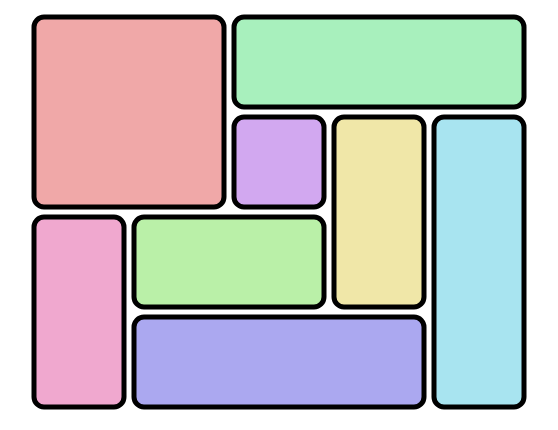
Exploring Rectangle Subdivisions
Last week, I saw a talk on Vuntra City, a procedurally generated city with a fully explorable city. Developer Larissa Davidova explained that she settled on using Recursive Subdivision for the city…
Islands Architecture - JASON Format
I’ve struggled to find references to this online, but heard the name used multiple times this year when describing the approach outlined here. To the best of my knowledge, the "Component Islands" pattern was coined by Etsy's frontend architect Katie Sylor-Miller during a meeting we had in 2019.
The Lambek Calculus
There is a noticeable revival of categorial grammar these days, as a vehicle for linguistic description. The systems used differ somewhat from the original calculus of Ajdukiewicz and Bar-Hillel, however. In particular, there is a component of rules for ‘type change’ of expressions, making for greater flexibility and elegance. One fundamental system of this kind is the so-called ‘Lambek Calculus’, whose type-change rules show a close analogy with the inference rules of constructive propositional logic. In this paper, we present one calculus of this kind, and survey its theoretical properties as a device in linguistic semantics. Our two main new contributions are a new and complete semantics for this calculus, as well as a modest study of its language-accepting capacity. In this way, we hope to provide a better understanding of the background theory of flexible categorial grammar, in tandem with its descriptive uses.

Herbert Wolverson - Procedural Map Generation Techniques
Probabilistic dynamic semantics
We introduce the framework of Probabilistic Dynamic Semantics (PDS), which we use to seamlessly integrate dynamic semantic analyses of lexical and discourse phenomena in the Montagovian tradition with
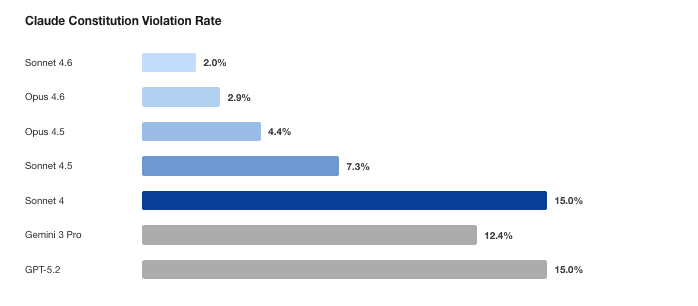
How well do models follow their constitutions? — LessWrong
This work was conducted during the MATS 9.0 program under Neel Nanda and Senthooran Rajamanoharan. …
La Singularidad Reflexiva: Derivas Identitarias en la Topología Probabilística de Modelos Generativos
Introspección asistida por entropía

How to Make a PDS - Part 2 - Zicklag's Leaflets
So you want to make a PDS? Or maybe you want to watch some poor fool try? In this series I might make a PDS, or not.
Structured CoT: Shorter Reasoning with a Grammar File
Constrain only the think block with a tiny grammar. On Qwen3.6 coding evals, explicit reasoning gets 22x-43x shorter without losing pass@1 in these runs.
How to Make a PDS - Part 1 - Zicklag's Leaflets
So you want to make a PDS? Or maybe you want to watch some poor fool try? In this series I might make a PDS, or not.
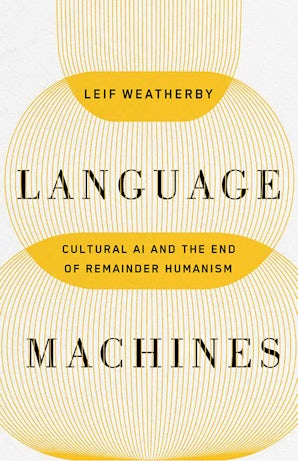
Language Machines
How generative AI systems capture a core function of language Looking at the emergence of generative AI, Language Machines presents a new theory of meaning i...
Rauno Freiberg
Make it fast. Make it beautiful. Make it consistent. Make it carefully. Make it timeless. Make it soulful. Make it.

How Clay's UI Layout Algorithm Works
How Clay's UI Layout Algorithm Works