

>What’s wrong with radicalization? >What's at Stake? > What's The Proper Role For Law Enforcement? > What's The Bottom Line? WHAT'S WRONG WITH “RADICALIZATION”? The word “radicalization” is commonly used in public and policy discourse, but what people mean by it varies and there’s no single agreed-upon definition. The problem is that government policies and programs are based on a theory of “radicalization” that assumes a process through which people turn to violence because of radical or extreme beliefs. This theory is unscientific and discredited — and government programs based on it result in monitoring or suppression of First Amendment-protected beliefs and ideas. For example, this dangerous radicalization theory is being applied to American Muslim communities, most recently in the form of “countering violent extremism ” programs. According to this theory, the adoption or expression of “extreme” or “radical” religious ideas or practices places individuals on a path toward terrorism or violence, and there are observable “indicators” that can identify those who are “vulnerable” to “radicalization.” This is false. The ACLU has repeatedly provided statements to Congress — in 2009, 2010, 2011, and 2012 — to explain the factual and methodological flaws in reports that promote this radicalization theory. Our allies have also written reports debunking the theory. As we and others have explained, despite years of study and experience in the United States and elsewhere, researchers have not identified criteria or behavioral indicators that can be used to reliably predict who will commit an act of terrorism or political violence. Simply put, religious beliefs and practices do not correlate with a propensity toward violence. Instead, the freedom to engage in these activities goes to the core of what it means to be an American. Cloaking American Muslims — or any other belief communities — with suspicion puts at risk the freedom of religion, gives the appearance of official endorsement of one set of religious beliefs over another, and threatens to chill free association and free speech. WHAT'S AT STAKE? The radicalization myth threatens the fundamental freedoms of American Muslims and all Americans. Government efforts to inquire whether American Muslims — or anyone else — holds “radical” or “extreme” beliefs, however those are defined, stigmatize entire communities and promote a climate of fear and self-censorship. Our values are undermined when people forsake religious exercise, political discussions, and intellectual debate to avoid being branded as extreme or at risk of “radicalization.” Probing people’s thoughts and beliefs also engenders distrust of the government and undermines the relationship between communities and law enforcement. For example, it can cripple government efforts to demonstrate to Muslims at home and abroad that the United States seeks to live up to its ideals in its equal treatment of all Americans, including Muslims, and is not engaged in a “war against Islam.” More broadly, our nation’s founders recognized that radical beliefs that challenge social and political orthodoxies are valuable and necessary for a vibrant society and democracy. That is why First Amendment, which protects the freedoms of belief, religion, speech, and association, occupies a special place in our history and in the Constitution. Unfortunately, though, government suspicion of beliefs and unsupported theories of “radicalization” are nothing new, and our nation’s history shows they are often used to target minorities or those who dissent. For example, during World War I, Congress banned anti-war speech and the FBI conducted investigations of Americans’ political beliefs to identify purported radicals and opponents. Erroneous theories of eugenics supported racist immigration policies and Jim Crow anti-miscegenation laws for decades. Misguided “red” scares and racism drove abominable policies like blacklists, McCarthyism, and Japanese internment. And the FBI infamously spied on civil rights movement leaders in the name of national security during the J. Edgar Hoover era. WHAT'S THE PROPER ROLE FOR LAW ENFORCEMENT? The protections built into the Constitution help ensure that law enforcement officers focus their investigative resources where there is evidence of wrongdoing or criminal activity. The police can conduct an investigation when they have reasonable suspicion to believe that a crime has been, or is being, committed. But the standard for initiating or widening an investigation must be rigorous enough to focus security resources on criminal activity and prevent abuse. One form of such abuse occurs when officers investigate or monitor people based on their religious beliefs or practices. Former Attorney General Eric Holder rightly stated that “law enforcement has an obligation to ensure that members of every religious community enjoy the ability to worship and to practice their faith in peace, free from intimidation, violence or suspicion. That is the right of all Americans. And it must be a reality for every citizen. In this nation, our many faiths, origins, and appearances must bind us together, not break us apart.” Too often, though, law enforcement and intelligence have targeted religious, racial, ethnic, or national origin communities for monitoring and suspicion. In the case of American Muslims, “countering violent extremism” initiatives may task communities with reporting to law enforcement about individuals’ radical or extreme beliefs. Although warning law enforcement of threats is indeed a shared civic and social responsibility, it would be illegal, unfair, and impractical for law enforcement officials to require any religious or belief community to prove its loyalty to this country by monitoring or “informing” on its members. To the contrary, American Muslims, like the rest of this country's citizens, have the right to protest illegal, overzealous or abusive government security measures and to vigorously exercise, and encourage others to exercise, rights guaranteed in the Constitution. Some in American Muslim communities have also expressed legitimate concerns about whether those who volunteer information to law enforcement will find themselves threatened with legal jeopardy. Individuals should speak to lawyers before talking to law enforcement — and know that refusing to talk to law enforcement without a lawyer is a constitutional right. WHAT'S THE BOTTOM LINE? The government’s “radicalization” theory has become a euphemism for religious and ideological profiling. It leads to discrimination and stigmatization, and is fundamentally un-American. Casting suspicion on American faith or belief communities is wrong and does nothing to make us safer.
The Trump administration’s global campaign against ‘radical left terrorism’ is built on a national security memo without congressional approval
Almost a year after President Trump authorized preemptive law enforcement measures based on political or ideological beliefs, a wave of terrorism prosecutions against left-wing protesters has begun.
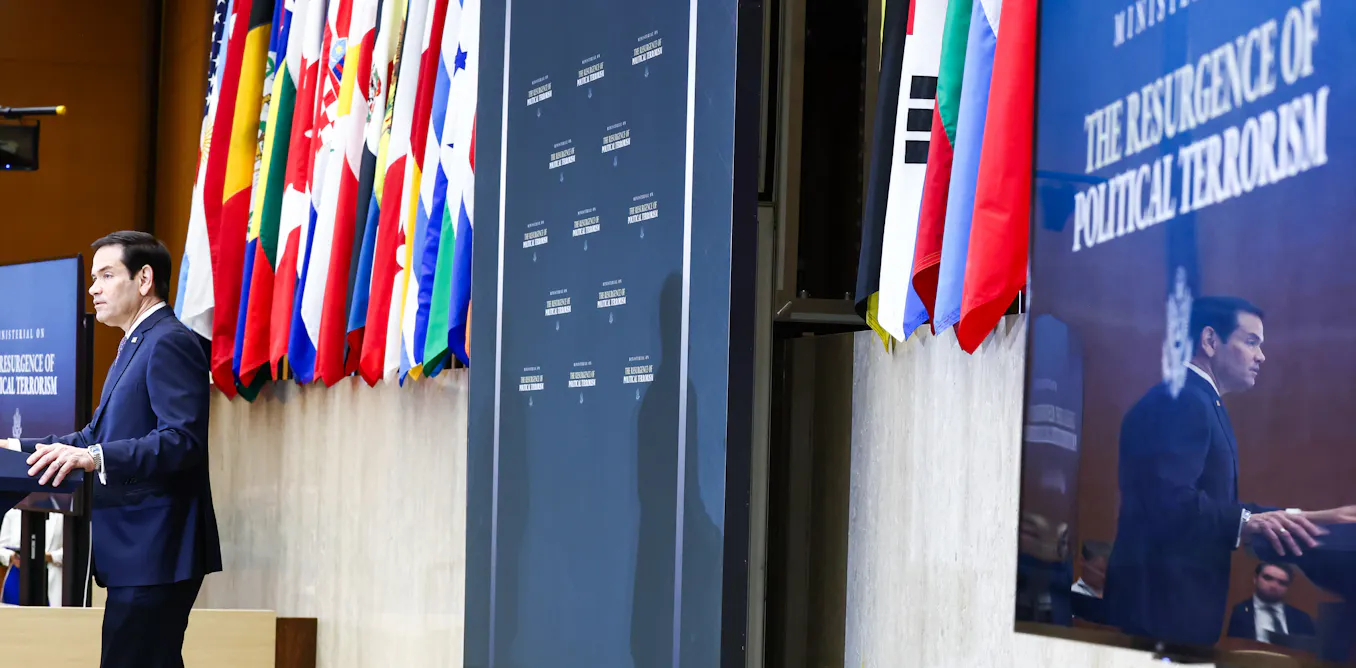
The Trump administration’s global campaign against ‘radical left terrorism’ is built on a national security memo without congressional approval
Almost a year after President Trump authorized preemptive law enforcement measures based on political or ideological beliefs, a wave of terrorism prosecutions against left-wing protesters has begun.
The thinking style that makes people vulnerable to extremism | Psyche Ideas
The people most drawn to ideological thinking and authoritarianism aren’t aware of what makes them so susceptible
25 years after 9/11, our definition of terrorism continues to expand : Code Switch
In the 25 years since 9/11, we've seen the definition of terrorism expand. The Trump administration has called more and more groups “terrorists,” from “narco-terrorists” in Ecuador to people who protest ICE to the entire Democratic party. This week, our conversation with Saher Selod, an expert on the surveillance of Muslims, about the effects of the war on terror after 9/11, and historian Alex Lubin about how the word “terrorist” has been used to enact violence and surveillance.Support public media with NPR+ and enjoy perks for over 25 podcasts like this one. This show’s perks include sponsor-free listening. Learn more at plus.npr.org.
CFP: Religion, Politics, and Cognitive Warfare | The Journal for Cultural and Religious Theory | JCRT
This call for papers invites work on religion, politics, and cognitive warfare, exploring how belief, media, conspiracy, identity, and power shape struggles over reality, interpretation, and life in an age of disinformat

Remotely Coerced Violence: 764, The Com Network, and the Hybridization of Threats - Combating Terrorism Center at West Point
Abstract: This article examines 764 and the wider Com Network as a case study in remotely coerced violence and the hybridization of contemporary terrorist and violent extremist threats. It argues that nihilistic violent extremism is best understood as a victim-driven, youth-centered online ecosystem in which status, belonging, and identity are earned through the production, circulation, … Continued
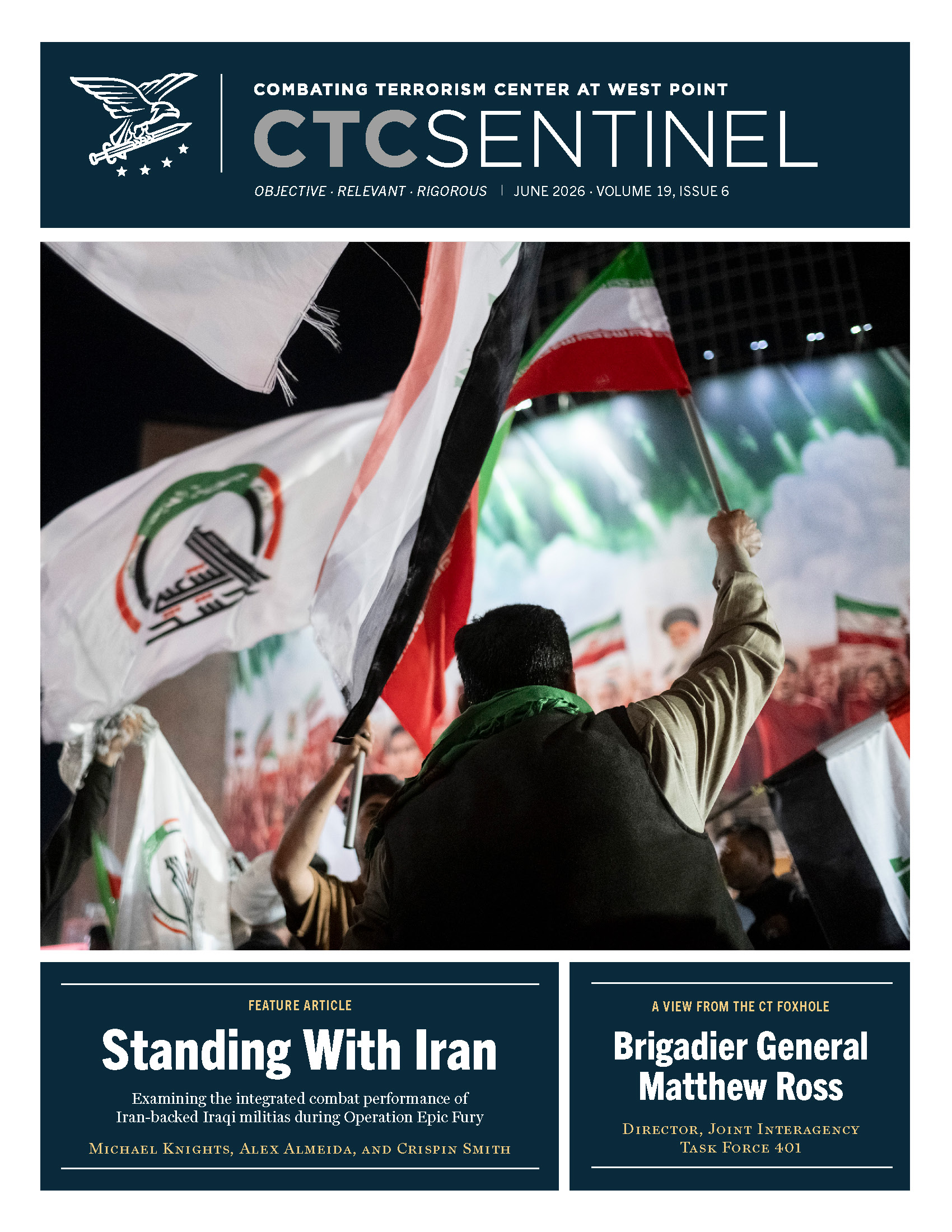
Prairieland, USA to Filton, UK, does protest now mean terrorism?
From the US to the UK, counter-terror laws are being used to crush political dissent and protect state interests, write Zahra Farooque and David Chmielewski.

Between Threat and Reality: The National Association for the Advancement of Colored People and the Emergence of Armed Self-Defense in Clarksdale and Natchez, Mississippi, 1960-1965
Annelieke Dirks, Between Threat and Reality: The National Association for the Advancement of Colored People and the Emergence of Armed Self-Defense in Clarksdale and Natchez, Mississippi, 1960-1965, Journal for the Study of Radicalism, Vol. 1, No. 1 (Spring 2007), pp. 71-98
764: The Intersection of Terrorism, Violent Extremism, and Child Sexual Exploitation
Sign up for our monthly newsletter to stay updated about our work
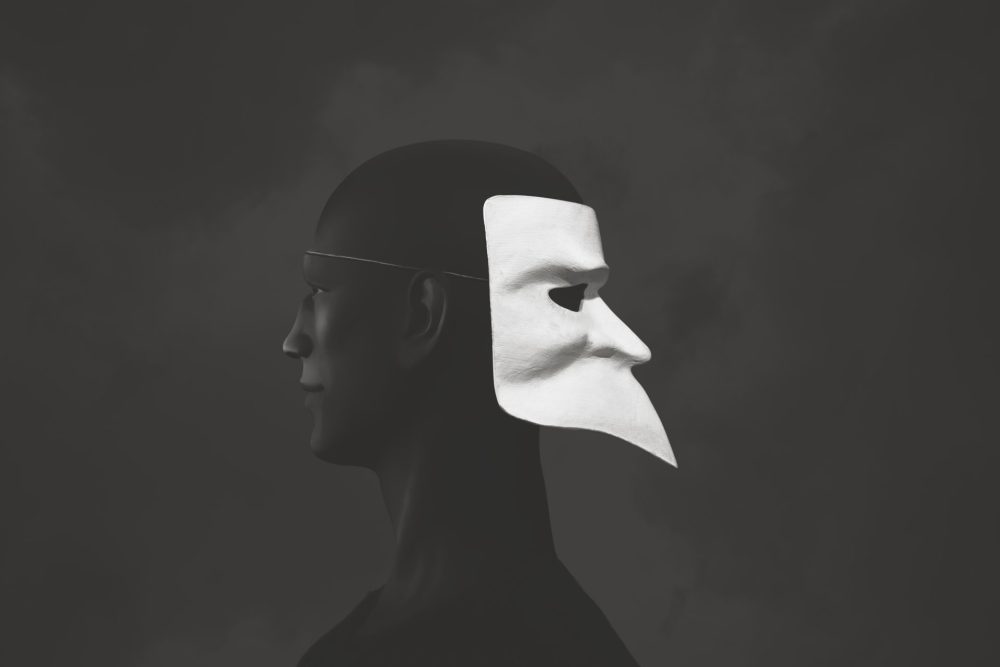
CFP: Religion, Politics, and Cognitive Warfare: Information, Interpretation, Conspiracy, and the Struggle for Reality
The Journal for Cultural and Religious Theory (JCRT) invites proposals for an online conference entitled Religion, Politics, and Cognitive Warfare: Information, Interpretation, Conspiracy, and the Struggle for Reality. The proceedings will be considered for publication in a special issue of the JCRT. This conference investigates how beliefs, paranoia, and conspiratorial modes of knowing shape a contemporary cognitive battlespace in which actors struggle to define truth, authority, and reality itself. Drawing on Michel Foucault's Lectures on the Will to Know and Julia Kristeva's This Incredible Need to Believe (2024), we focus on practices of selective fact use and "truth-selecting" that construct alternative epistemic orders while claiming privileged access to what is "really" going on. Rather than treating conspiracy thinking as merely political or psychological, the conference foregrounds its religious dimensions: faith in hidden powers, moral dualism, apocalyptic expectation, and hermeneutical struggle over revelatory access to the real. Conspiracy cultures routinely reproduce theological structures of knowing—visions of salvation and corruption, truth and deception, initiation and blindness. At the same time, new forms of "cognitive warfare" reframe these religious energies within state and platform attempts to govern perception, attention, and trust. Artificial intelligence, algorithmic media, and strategic information campaigns do not only deliver messages; they create digital ecologies in which suspicion becomes faith-like and revelation is continual. The conference organizers are seeking proposals of high academic quality that take a reflective and analytical approach to both general and specific topics with international appeal or focus. We encourage contributions from scholars of religious studies, philosophy, communication, sociology, security studies, psychology, media, and related fields. Submissions should engage religion as a dynamic force—conceptually, historically, or materially—within the cognitive battlespaces of our time. We encourage contributions from a spectrum of perspectives, approaches, and methodologies. We are not interested in papers that simply rehearse or promote particular conspiracies, or that use the conference as a platform for calling out disliked groups. We are not interested in polemics, jeremiad, or de facto advocacy pieces. Instead, we welcome theoretically informed and methodologically rigorous work that takes the religious and epistemic dimensions of cognitive conflict seriously as objects of critical inquiry.
NYPD Muslim spying led to no leads, terror cases | The Associated Press
NEW YORK (AP) — In more than six years of spying on Muslim neighborhoods, eavesdropping on conversations and cataloguing mosques, the New York
NSPM-7
National Security Presidential Memorandum-7 (NSPM-7), titled "Countering Domestic Terrorism and Organized Political Violence", is a United States National Security Presidential Memorandum (NSPM) issued by President Donald Trump on September 25, 2025. NSPM-7 directs a "comprehensive" law enforcement strategy to "disrupt" entities and individuals purported to be "engaged in acts of political violence and intimidation". NSPM-7 describes such alleged political violence as "sophisticated, organized campaigns" united by anti-fascism, with "common threads animating this violent conduct include anti-Americanism, anti-capitalism, and anti-Christianity; (...) extremism on migration, race, and gender; and hostility towards those who hold traditional American views on family, religion, and morality."

Opinion | 9/11 took Islamophobia mainstream in America – and things have only gotten worse
Although I have always had kind and mostly tolerant neighbors, the effects of widespread Islamophobia have touched my life intimately.

Radical expectations: how the New Left changed economics
In the 1970s radical economists campaigned to reform their discipline and their universities. They became journalists and activists, moving beyond academia, to forge new models of public engagement and collaborative knowledge in economic life. Radical Expectations tells the story of how these economists set out to make economics more democratic. It traces their campaign to bring protest movements to the campuses, triggering the emergence of an alternative understanding of expertise directed at validating and empowering the perspectives and voices of women, Black Americans, labor activists, and the urban poor. It shows how a radical identity formed and how radicals helped reform disciplinary institutions. Furthermore, it argues that the radical economics' legacy was the development of a language and models of expert-lay collaboration that empowers direct action in economic affairs. The book is about the community of radical economists who championed the promise of change and what came of it

The Dangers of Florida’s New “Terrorist” Designations
Anyone who cares about the First Amendment should be concerned about HB 1471 and the spread of state-level terrorism designation laws.
“Terrorism”

NSPM-7 and other expansions of “terrorist” designations, criminalizing protests and other nonviolent forms of political dissent, etc.
NLG Condemns OFAC Designation of Palestine Action and Autistici/Inventati, Calls for Challenges - National Lawyers Guild
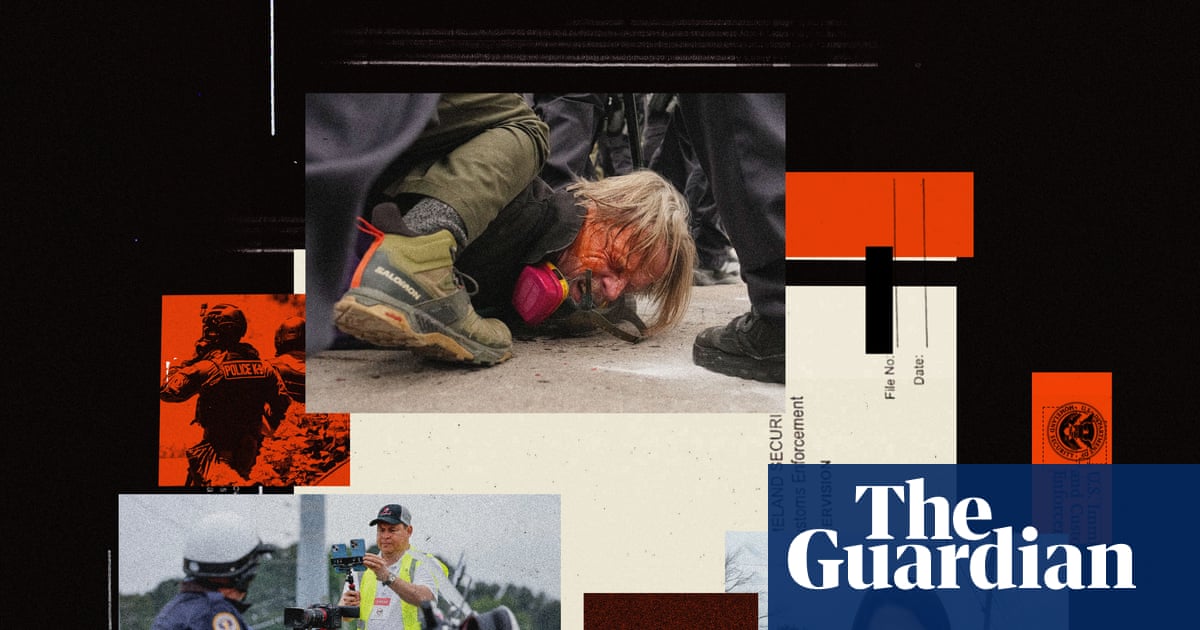
Freedom oppressed: the journalists caught up in Trump’s ICE crackdown

Mass Arrests by Trump's ICE, CBP Repeatedly Fail Under Scrutiny — ProPublica

Rubio and Miller warn of the ‘mortal threat’ of ‘far-left terror’ in speech to 67 countries | CNN Politics
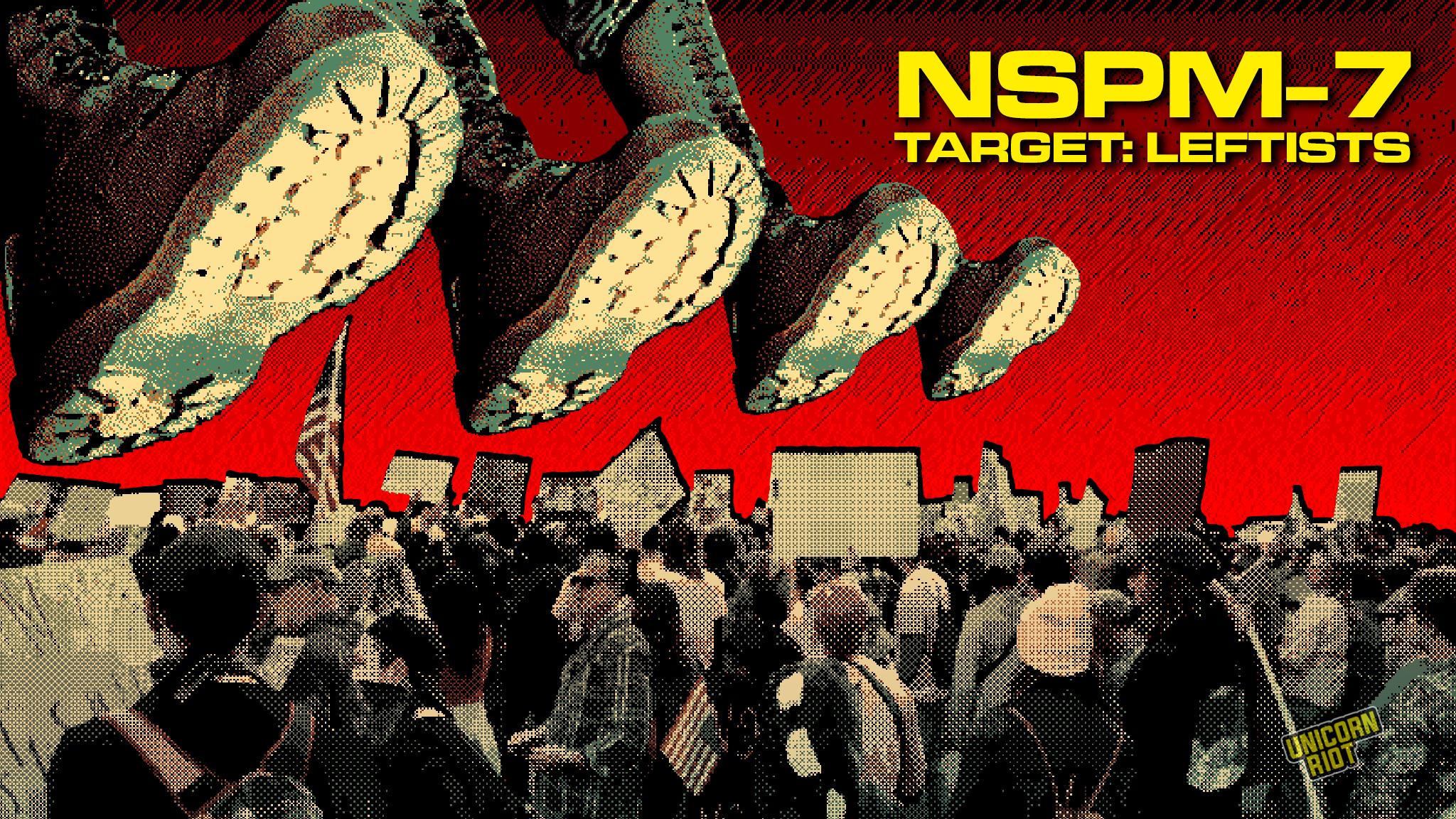
The War on Terror Turns Left - UNICORN RIOT

How the Administration Picks Its Targets, Then Picks the Crime