

I’ve been thinking about and working with personas for nearly 25 years. My early work focused on the Persona Lifecycle: how to prepare for, create, introduce, use, and then measure the impact of data-driven personas. In 2005, I realized that while creating personas from data should work, data alone can’t change deeply-held opinions. This is when I stopped using data to create personas and started developing a tool that I now call “alignment personas.” Through my Executive Alignment Workshops, I can help you and your team gain alignment, develop strong personas and use them effectively to create great products.
Persona (identity verification service)
Persona Identities, Inc. is an American identity verification company headquartered in San Francisco. The company develops infrastructure for businesses to verify individuals and organizations, manage user onboarding, and comply with know your customer (KYC), anti–money laundering (AML), or age verification regulations.
Persona
A user-memory system for AI agents. 2022–2026. Memory is going beyond schemas, ontologies, Graph RAG, and vector DBs — computers can talk now.
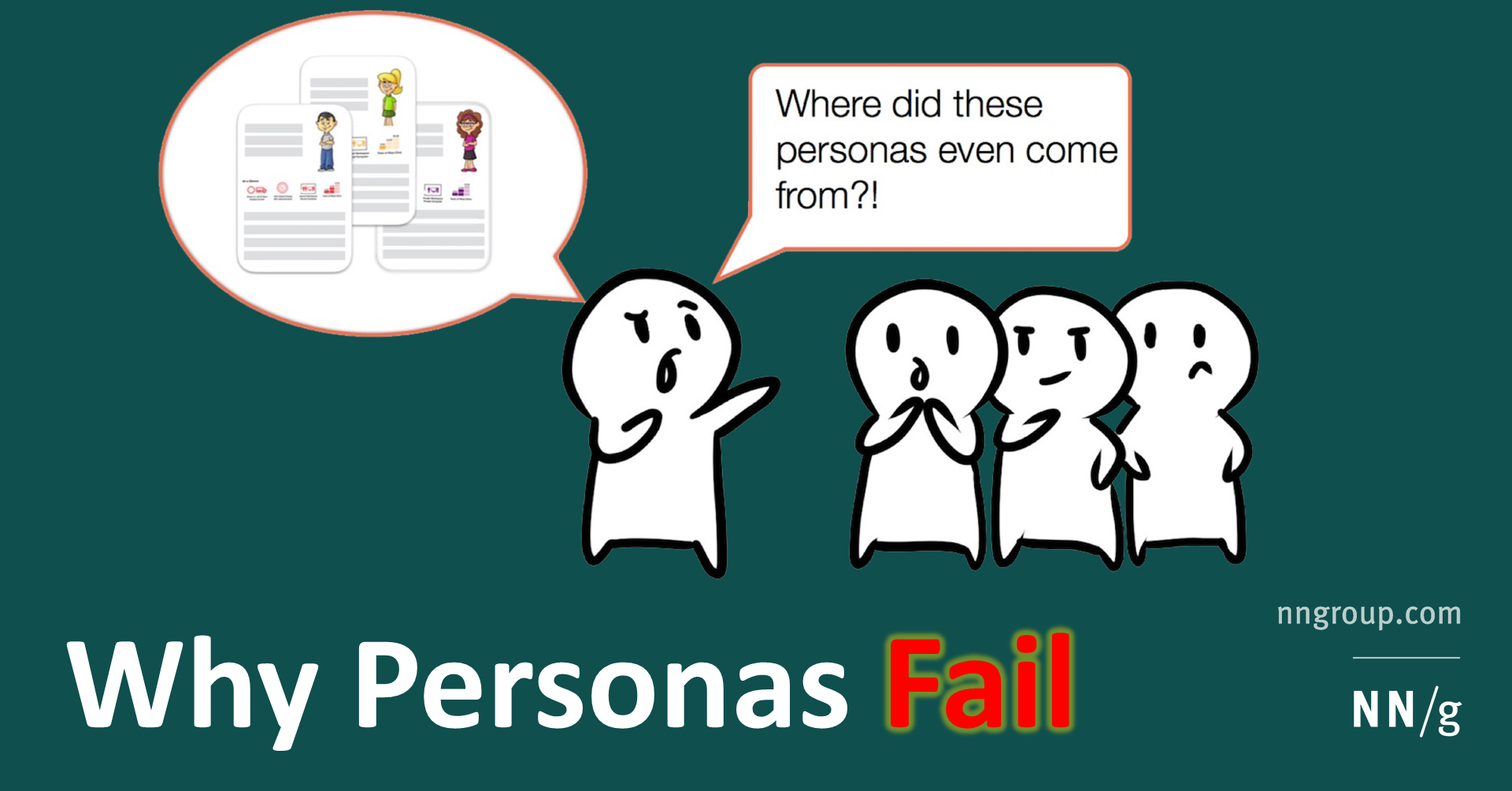
Why Personas Fail
Personas are useful tools for UX work, so why do they often fail? Find out what pitfalls cause personas to fail, and how to avoid and overcome them.
Personas - USABLE Tools
Personas, or profiles of end users, play an important role in the design process and allow developers to better understand community needs and facilitate the creation of user stories and more concrete use-cases for their products. In some of the most challenging security environments in the world, understanding the users capacity, threats, risks, and strengths can be difficult. The USABLE project has harnessed the knowledge of the digital security training community to build personas of high-risk users from around the globe. Learn more about USABLE Personas here.
Poster Alignment Chart
A 3×3 Bluesky poster-persona quiz: take ten posting scenarios to find who you think you are, then read your last 100 posts to find who your posts say you are — both plotted on one alignment chart.

High-Tech Anthropology® Process Tour
Come learn about the benefits of observing end users, creating and mapping personas, and assessing iterative designs. Additionally, see the other tools we use and visuals we create to capture and distill information that will help us mitigate the risk of a failed end product. These steps build the foundation for user-friendly designs tailored to target persona(s) – for products that are actually adopted (and even enJOYed!) rather than tossed to the side or treated like paperweights.

Position: Towards Bidirectional Human-AI Alignment
Recent advances in general-purpose AI underscore the urgent need to align AI systems with human goals and values. Yet, the lack of a clear, shared understanding of what constitutes "alignment" limits meaningful progress and cross-disciplinary collaboration. In this position paper, we argue that the research community should explicitly define and critically reflect on "alignment" to account for the bidirectional and dynamic relationship between humans and AI. Through a systematic review of over 400 papers spanning HCI, NLP, ML, and more, we examine how alignment is currently defined and operationalized. Building on this analysis, we introduce the Bidirectional Human-AI Alignment framework, which not only incorporates traditional efforts to align AI with human values but also introduces the critical, underexplored dimension of aligning humans with AI – supporting cognitive, behavioral, and societal adaptation to rapidly advancing AI technologies. Our findings reveal significant gaps in current literature, especially in long-term interaction design, human value modeling, and mutual understanding. We conclude with three central challenges and actionable recommendations to guide future research toward more nuanced, reciprocal, and human-AI alignment approaches.
[updated] Age verification vendor Persona left frontend exposed, researchers say
Behind a basic age check, researchers say Persona’s system runs extensive identity, watchlist, and adverse-media screening.
Position: Synthetic Persona Needs Explicit Grounding and Standardized Reporting
This position paper argues that synthetic personas used in Large Language Models (LLM) social simulations need explicit grounding. By grounding, we mean that researchers should state where persona information comes from, what social actor or population it is meant to represent, what evidence supports it, and what kinds of simulation claims it can justify. Without such grounding, persona-based simulations risk treating appearance of plausible descriptions or vivid narratives as evidence of realism. We identify several recurring failure modes that explicit grounding can help expose, and argue that these failures should not be diagnosed only after simulation results are produced; they should be addressed at the level of persona construction and reporting. We conclude by proposing lightweight reporting standards for persona provenance, construction process, selection or sampling logic, internal consistency checks, model enactment checks, and intended inference.
The Customer Discovery Handbook
This is a practioner's guide to conducting design research on personas, needfinding, value, and usability.
Positive Alignment: Artificial Intelligence for Human Flourishing
Existing alignment research is dominated by concerns about safety and preventing harm: safeguards, controllability, and compliance. This paradigm of alignment parallels early psychology's focus on...

Synonymix: Unified Group Personas for Generative Simulations
Generative agent simulations operate at two scales: individual personas for character interaction, and population models for collective behavior analysis and intervention testing. We propose a third scale: meso-level simulation - interaction with group-level representations that retain grounding in rich individual experience. To enable this, we present Synonymix, a pipeline that constructs a "unigraph" from multiple life story personas via graph-based abstraction and merging, producing a queryable collective representation that can be explored for sensemaking or sampled for synthetic persona generation. Evaluating synthetic agents on General Social Survey items, we demonstrate behavioral signal preservation beyond demographic baselines (p<0.001, r=0.59) with demonstrable privacy guarantee (max source contribution <13%). We invite discussion on interaction modalities enabled by meso-level simulations, and whether "high-fidelity" personas can ever capture the texture of lived experience.
Eventual Interoperability – Pieter Colpaert
A pragmatic approach to interoperability: model your data richly for your own needs, then allow the eventual creation of one‑to‑many alignments.

Quit Persona

Another one where I’m just following my arbitrary naming convention for the series. More like “avoid Persona (if possible)” or “watch out for Persona,” I guess

Persona

Privacy.com uses identity verification service Persona, which will keep biometric information for "up to" 3 years

Privacy company called Privacy.com uses Persona for identity verification You can't make this shit up
[updated] Age verification vendor Persona left frontend exposed, researchers say

Anthropic says Claude may want to see your ID | TechCrunch

In a new privacy policy, Anthropic says Claude will soon require you to upload your driver's license or passport for a variety of reasons…