

Artificial Intelligence - AI Ethics - AIethicist.org Bookshop
The books recommended here (and in www.AIethicist.org) cover topics of AI ethics, big data & social impact, biased algorithms, privacy, lack of regulation or ethics around automated decision making.There are also books that provide background on what cause these areas (and hence the data) to be historically unequal and what are the root causes of social and structural injustices in these areas - like policing, mass incarceration, welfare, housing, financial markets, communication, just to name a few.

AI Ethics Class
Friends with no previous interest in AI ethics have been asking me about it recently, so I want to share several underlying concepts about AI & power that are important to understand. 🧵 1/
Friends with no previous interest in AI ethics have been asking me about it recently, so I want to share several underlying concepts about AI & power that are important to understand. 🧵 1/— Rachel Thomas (@math_rachel) May 16, 2023
AI & Ethics Workgroup | Lincoln Center for Applied Ethics
Artificial Intelligence (AI) is a term with an array of contingent and shifting meanings, unified only by a general aspiration to use mathematical computation to emulate human cognition, language and problem-solving. Rather than a technical term, “AI” can be thought of as a sociotechnical system and assemblage, consisting of technical objects and social imaginaries, practices and ideologies. How we characterize and conceptualize AI shapes how, why and when we use it and when we may constrain or refuse its use. This paper provides a primer on various technologies that often fall under the rubric of “AI” and outlines the various discursive and cultural meanings carried by the term.
The Future of AI
The Parents’ Paradox: AI, Ethics, and the Limits of Machine Morality This post is based on a talk I gave at The AI & Automation Conference in London on February 25, 2026, and my slides. A…
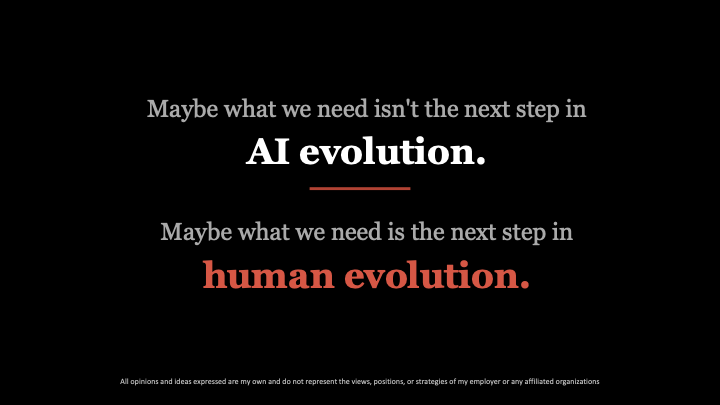
From Impoverished Intelligence to Abundant Intelligences
The artificial intelligence (AI) industry-academic complex does not have an ethics problem. It has an epistemology problem.

Inescapable AI — TechTonic Justice
The use of artificial intelligence, or AI, by governments, landlords, employers, and other powerful private interests restricts the opportunities of low-income people in every basic aspect of life: at home, at work, in school, at government offices, and within families. AI technologies derive from a lineage of automation and algorithms that have been in use for decades with established patterns of harm to low-income communities. As such, now is a critical moment to take stock and correct course before AI of any level of technical sophistication becomes entrenched as a legitimate way to make key decisions about the people society marginalizes.

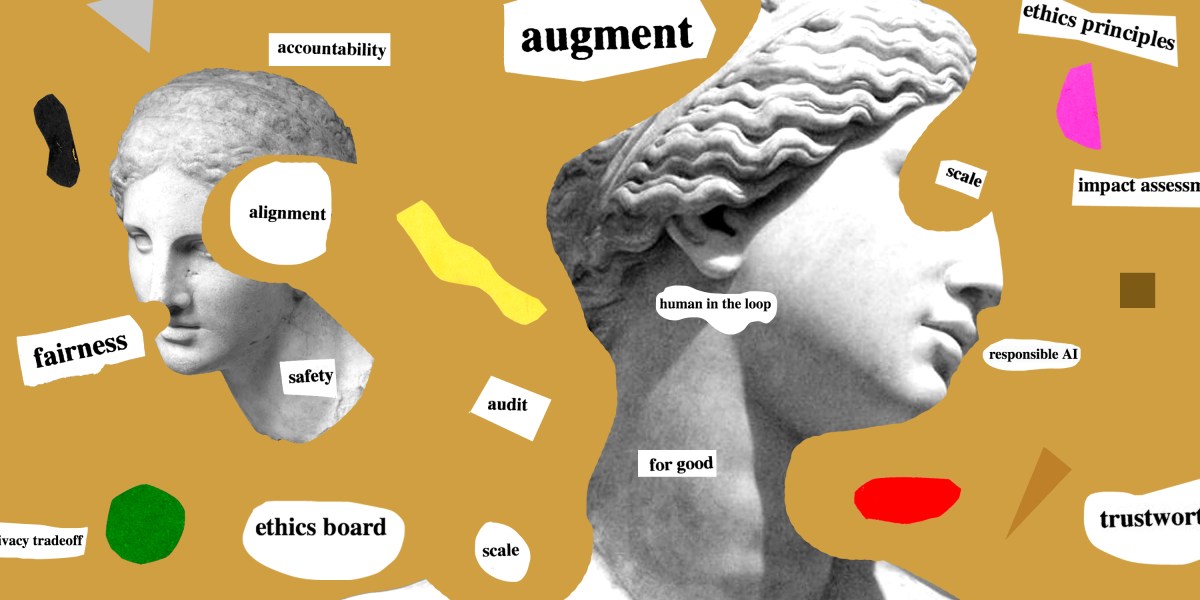
Big Tech’s guide to talking about AI ethics
50-ish words you can use to show that you care without incriminating yourself.
The tech industry hijacking of the AI ethics research agenda and why we should reclaim it
This paper reflects on the tech industry’s colonization of the AI ethics research field and addresses conflicts of interest in public policymaking concerning AI. The AI ethics research community faces two intertwined challenges: In the first place, we have a tech industry heavily influencing the AI ethics research agenda. Secondly, cleaning up after the tech industry has implied that we have turned to value-driven design methods to bring ethics to AI design. But by framing research questions relevant to a technical practice, we have facilitated the technological solutionism behind the tech industry’s business model. Therefore, this paper takes the first steps to reshape the AI ethics research agenda by suggesting moving toward an emancipatory framework that brings politics to design while, at the same time, bearing in mind that AI is not to be treated as an inevitability. As a research community, we must focus on the repressive power dynamics exacerbated by AI and address challenges facing the vulnerable groups seldom heard, despite the fact that they are the ones most negatively affected by AI initiatives.

The Impact of Artificial Intelligence on Human Thought
This research paper examines, from a multidimensional perspective (cognitive, social, ethical, and philosophical), how AI is transforming human thought. It highlights a cognitive offloading effect: the externalization of mental functions to AI can reduce intellectual engagement and weaken critical thinking. On the social level, algorithmic personalization creates filter bubbles that limit the diversity of opinions and can lead to the homogenization of thought and polarization. This research also describes the mechanisms of algorithmic manipulation (exploitation of cognitive biases, automated disinformation, etc.) that amplify AI's power of influence. Finally, the question of potential artificial consciousness is discussed, along with its ethical implications. The report as a whole underscores the risks that AI poses to human intellectual autonomy and creativity, while proposing avenues (education, transparency, governance) to align AI development with the interests of humanity.

The AI series: AI and Surveillance Capitalism
AI experts Camille Francois and Meredith Whittaker discuss how to break up Big Tech and build a safe and ethical AI.

A shared agenda for responsible AI progress
AI can be hugely beneficial to society if citizens, educators, academics, civil society and governments unite to shape it responsibly.

UNESCO AI Ethics "Recommendation" – Let's do this!
artificial and natural intelligence, including politics, policy, ethics and security

Timnit Gebru: Ethical AI Requires Institutional and Structural Change | Stanford HAI
The computer scientist discusses breaking down the power structures that use AI to exploit communities.

AI FOR EPISTEMICS & COORDINATION
Civilization and technology have radically improved the human condition. Nonetheless, the world sometimes goes in directions which essentially nobody would prefer — e.g., nuclear arms races, unexpected financial crashes, predatory marketing, or ubiquitous political misinformation.

