

General Theory of Natural Equivalences
Samuel Eilenberg, Saunders MacLane, General Theory of Natural Equivalences, Transactions of the American Mathematical Society, Vol. 58, No. 2 (Sep., 1945), pp. 231-294
How physics at the roots of reality point to a grand unified theory | Aeon Essays
Physics displays an uncanny alignment at its very deepest levels. Is a grand theory of everything finally within reach?
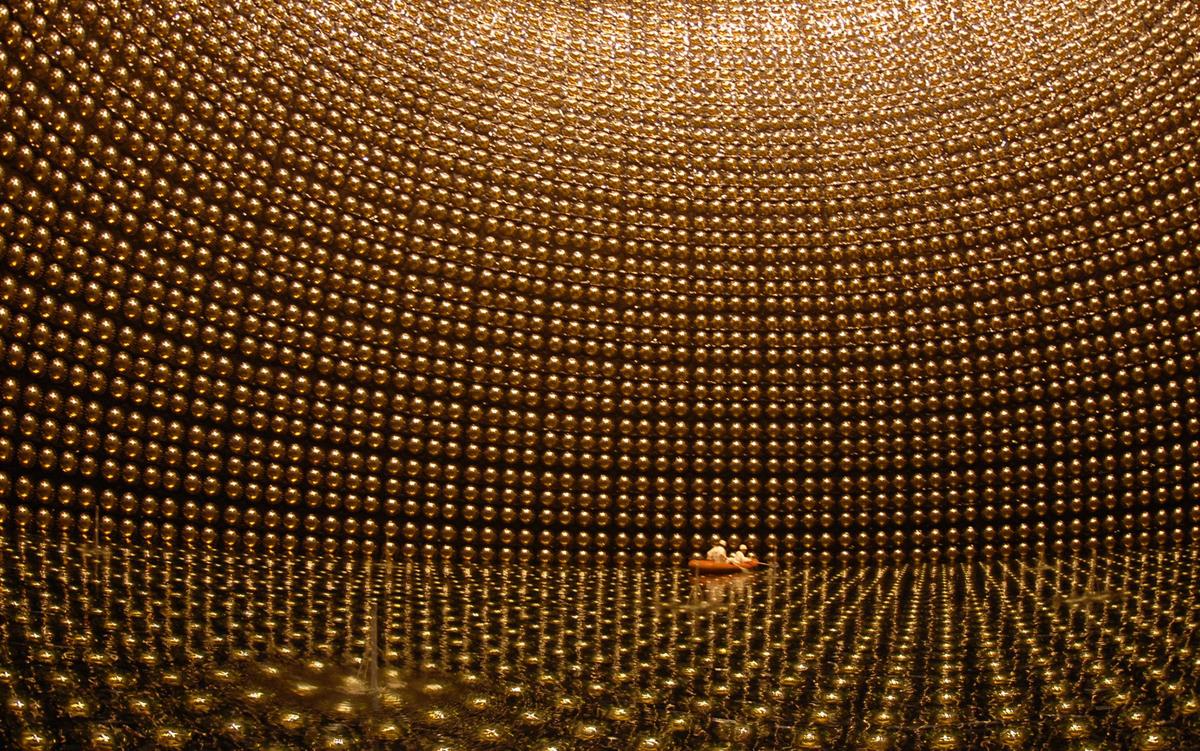
The Third Web
(This text is very long. Maybe too long. You can find a PDF and an EPUB of it below.The current version of this text will always live at https://web3.tante.ccSatya has created an audio version of this essay. Eine deutsche Version findet sich hier. Una versione italiana di questo testo è qui – grazie Nebbia! En […]
Meditations on Machinic Desire
The philosopher and accelerationist Nick Land writes, in his 1993 essay Machinic Desire, three of the most insight-dense paragraphs I’ve ever encountered:
Theory Beyond Theorems and Proofs: A Guest Post
Scott’s foreword: I’m extremely grateful to my brilliant colleagues, Pravesh Kothari, Raghu Meka, and Prasad Raghavendra, for sharing the guest post below about how theoretical computer…

Matt Darling (@besttrousers)
“Darling’s thesis is the first compelling explanation I’ve seen for the vibecession…What surprises me, though, is how comparatively little attention this theory has gotten”. I am being silenced.
Gödel, Escher, Bach: An Interesting Triad and an incredibly Complex Book
Book Review


The Philosophical Implications of the Second Scientific Revolution
Notes from my history of philosophy course lecture on Darwin, Maxwell, Einstein, and Bohr

Pappus of Alexandria Book 7 of the Collection
The seventh book of Pappus's Collection, his commentary on the Domain (or Treasury) of Analysis, figures prominently in the history of both ancient and modern mathematics: as our chief source of information concerning several lost works of the Greek geometers Euclid and Apollonius, and as a book that inspired later mathematicians, among them Viete, Newton, and Chasles, to original discoveries in their pursuit of the lost science of antiquity. This presentation of it is concerned solely with recovering what can be learned from Pappus about Greek mathematics. The main part of it comprises a new edition of Book 7; a literal translation; and a commentary on textual, historical, and mathematical aspects of the book. It proved to be convenient to divide the commentary into two parts, the notes to the text and translation, and essays about the lost works that Pappus discusses. The first function of an edition of this kind is, not to expose new discoveries, but to present a reliable text and organize the accumulated knowledge about it for the reader's convenience. Nevertheless there are novelties here. The text is based on a fresh transcription of Vat. gr. 218, the archetype of all extant manuscripts, and in it I have adopted numerous readings, on manuscript authority or by emendation, that differ from those of the old edition of Hultsch. Moreover, many difficult parts of the work have received little or no commentary hitherto.

research infra

What AI Really Does for Us

Atmosphere

Agentic AI Stuff

AI/FutureOfEng

Semble - motivations

atforge

MOSAIC — Modular Open Science, AI & Collective Intelligence
waow.tech
ATmentions
pds.zat.dev
ATSMS — end-to-end encrypted group messaging
SmythOS
pguso/ai-agents-from-scratch
Agentation
Gas Town’s Agent Patterns, Design Bottlenecks, and Vibecoding at Scale
Cognitive Integrity Framework: Formal Foundations for Multiagent Security
Rowboat - Let AI build your agents for you
The downside of robot solutionism
The machines are fine. I'm worried about us.

Crossmark - Crossref
SemRepo.org

Where Should Science Go Next

Dr. Casey Fiesler (@cfiesler.bsky.social)

How employment is changing at Anthropic
When "technically true" becomes "actually misleading"
The Tower Keeps Rising
Domain Expertise Has Always Been the Real Moat

The Economic Benefit of Refactoring

The New Software Lifecycle