In Fall 2015, I took CS 276, a graduate level introduction to theoretical cryptography. For the final project, I gave a short presentation on secure computation.
HEIR: Homomorphic Encryption Intermediate Representation
HEIR is a compiler toolchain for fully homomorphic encryption (FHE). We aim to be the industry-standard compiler for FHE. Application developers, compiler engineers, hardware designers, and cryptography researchers can build upon HEIR to accelerate the research and development of production-strength privacy-first software systems.
In Search of Hardness
Protocol studies, the next crypto cycle, and the next age of the world

037 HEIR: A foundation for FHE compilers
Lessons From The History Of Attacks On Secure Hash Functions
This document is a work-in-progress. Please contact the author if you see errors or omissions. Most of the secure hash functions ever designed have turned out to be vulnerable to collision attacks.

zama-ai/concrete-ml
Concrete ML: Privacy Preserving ML framework using Fully Homomorphic Encryption (FHE), built on top of Concrete, with bindings to traditional ML frameworks.
Automated Verification of Proofs in the Universal Composability Framework with Markov Decision Processes
Designing cryptographic protocols and proving these rigorously secure is an arduous and challenging task. Among the methods commonly used to prove security of cryptographic protocols, formalizing it in Canneti's Universal Composability (UC) Framework offers several benefits: (1) Modular design, (2) demonstrating that security remains under arbitrary composition and concurrent execution, (3) the security against any computationally polynomially bound adversary. However, working within the UC Framework can be cumbersome, requires a long time commitment by the prover, and it is prone to errors. While utilization of proof assistants in Cryptography and IT Security is a prominent research area, proof assistants for UC are still in their infancy. Here we show our ongoing work to utilize model checking for verification of proofs in the UC Framework, which to the best of our knowledge is the first attempt to do so. In this work we (1) formally create a Markov Decision Process (MDP) encoding a given proof in the UC Framework, (2) define and proof notions of soundness and completeness for the constructed MDP, (3) implement a proof of concept and (4) demonstrate practical feasibility through experimental evaluation. In summary, in this work we lay out the formal foundations for model checking UC proofs and create a tool that can not only be used for proof verification but also as an assistant for developing proofs in the UC Framework.

Crypto 101
Crypto 101 is an introductory course on cryptography, freely available for programmers of all ages and skill levels.
Tutorial: Introduction to Formal Verification with Lean (Part 1) - HashCloak
A tutorial Formal Verification using Lean for cryptographic engineers. Implement and prove correctness of the One-Time pad following a cryptography book.
Encrypted Spaces — Research preview
An architecture for collaborative applications where data is encrypted and operations are cryptographically verifiable.

The Latecomer’s Guide to Crypto (Published 2022)
Crypto is a lot of things – including terribly explained. We’re here to clear things up.

Hash-based Signatures: An illustrated Primer
Over the past several years I’ve been privileged to observe two contradictory and fascinating trends. The first is that we’re finally starting to use the cryptography that researchers h…

Theory Beyond Theorems and Proofs: A Guest Post
Scott’s foreword: I’m extremely grateful to my brilliant colleagues, Pravesh Kothari, Raghu Meka, and Prasad Raghavendra, for sharing the guest post below about how theoretical computer…

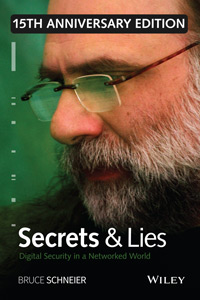
Preface - Schneier on Security
I have written this book partly to correct a mistake. Seven years ago I wrote another book: Applied Cryptography. In it I described a mathematical utopia: algorithms that would keep your deepest secrets safe for millennia, protocols that could perform the most fantastical electronic interactions-unregulated gambling, undetectable authentication, anonymous cash-safely and securely. In my vision cryptography was the great technological equalizer; anyone with a cheap (and getting cheaper every year) computer could have the same security as the largest government. In the second edition of the same book, written two years later, I went so far as to write: “It is insufficient to protect ourselves with laws; we need to protect ourselves with mathematics.”...