

APM is a home for a collection of R&D efforts into the future of software, HCI, and personal workstations. While computing has a long way to go before it fullfils its potential, these experiments are designed to embrace and enhance existing, pervasive, well-understood technologies rather than reinvent the wheel. Research projects include:

Stuart K. Card and Thomas P. Moran, "User Technology—From Pointing to Pondering"
Basic | The Personal Computing Platform
We build products, tools, and standards to make computers more personal.

Permacomputing
Permacomputing is a computing design philosophy which aims to improve resilience by using regenerative design in computer and network technology. It is inspired by permaculture.[1] Permacomputing approaches to computing often involve paying more attention to the life-cycle of hardware (including re-use and designing for older hardware),[1] using low-level languages such as FORTH that have greater operability with older hardware, and fostering a more mindful relationship with technology.[2]
Andrej Karpathy on Twitter / X
The race for LLM "cognitive core" - a few billion param model that maximally sacrifices encyclopedic knowledge for capability. It lives always-on and by default on every computer as the kernel of LLM personal computing.Its features are slowly crystalizing:- Natively multimodal… https://t.co/2jsVevkTSJ— Andrej Karpathy (@karpathy) June 27, 2025
Welcome to Commons Computer
Commons Computer is an experiment in sharing compute resources and admin & management support across multiple people and projects.
Infinite APM? Artosis on DeepMind and StarCraft - Part 2
Dan "Artosis" Stemkoski wraps up his thoughts on Google's AI taking on a StarCraft pro in the legendary esport.

AGENDA: A Personal Information Manager (PIM)
The interactive, single-user format of personal computers has spawned applications quite different in character from mainframe applications. Like mainframes, personal computers can serve the needs of an organization in areas such as accounting, billing, or inventory. Unlike typical mainframes, however, they also serve personal needs, such as preparing memos, developing financial projections, and planning projects.
The Ma of a New Machine – Scott Jenson
The current Silicon Valley flex is trading notes on your favorite new AI tools over lunch. Each week brings another one to explore. Some of these tools are very impressive; I’ve been able to reply to someone with an alternative UI design in less than a minute, and they were dumbfounded: “How did you do that so fast?”

Memory system - Please Leave here your opinions (if you have any) · Issue #74 · code-yeongyu/oh-my-openagent
I heard many people wants that memory system- but it's really easy to be redundant from my experiences. Projects like claude-mem or many others have memory system. Want to hear your opinions re...
P-code machine
In computer programming, a P-code machine (portable code machine[1]) is a virtual machine designed to execute P-code, the assembly language or machine code of a hypothetical central processing unit (CPU). The term P-code machine is applied generically to all such machines (such as the Java virtual machine (JVM) and MATLAB pre-compiled code), as well as specific implementations using those machines. One of the most notable uses of P-Code machines is the P-Machine of the Pascal-P system. The developers of the UCSD Pascal implementation within this system construed the P in P-code to mean pseudo more often than portable; they adopted a unique label for pseudo-code meaning instructions for a pseudo-machine.
Solving a Million-Step LLM Task with Zero Errors
LLMs have achieved remarkable breakthroughs in reasoning, insights, and tool use, but chaining these abilities into extended processes at the scale of those routinely executed by humans,...

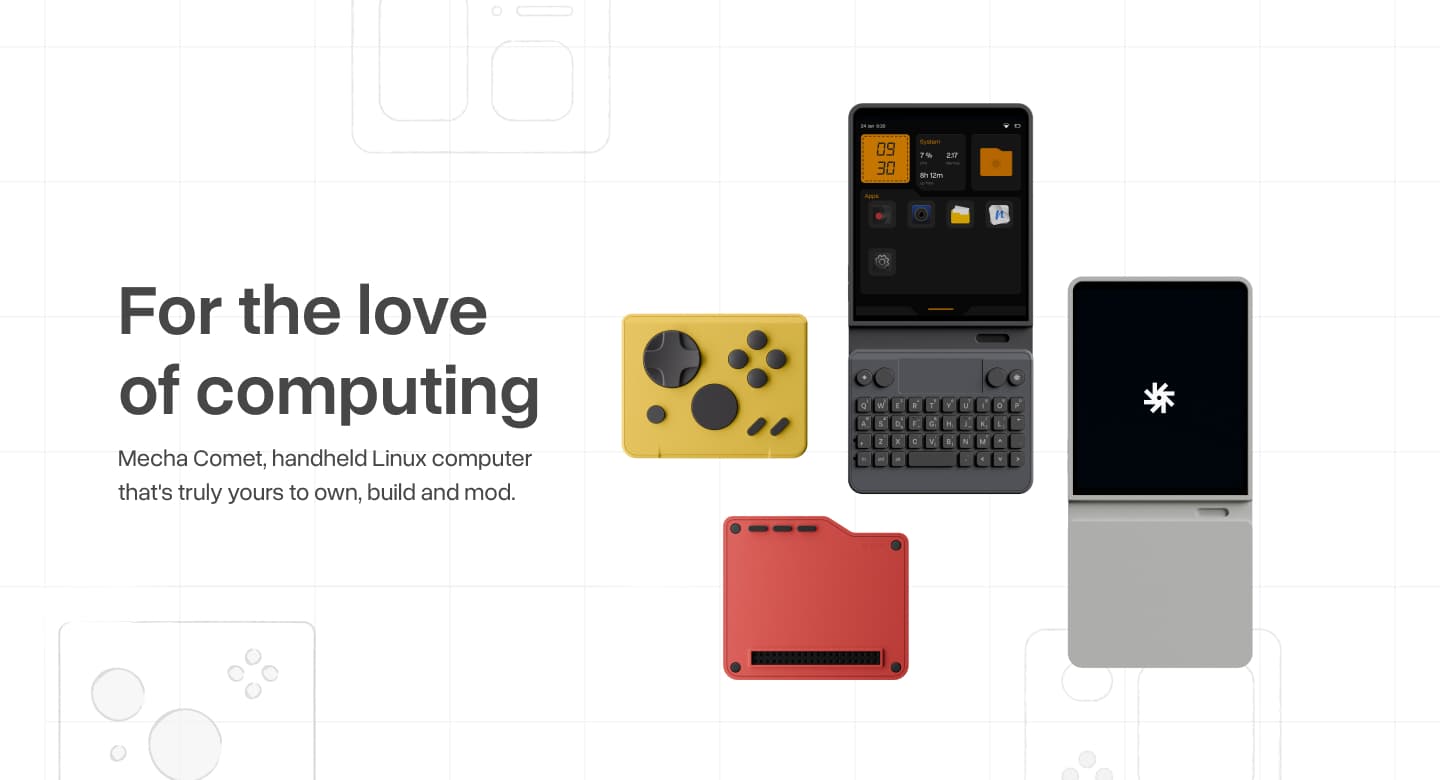
Mecha - For the love of computing
Mecha introduces Comet, a handheld Linux computer that's truly yours to own, build and mod!
Speaker Session | Ankesh Bharti | OSDHack'25