

View recent discussion. Abstract: Neural networks are often represented as graphs of connections between neurons. However, despite their wide use, there is currently little understanding of the relationship between the graph structure of the neural network and its predictive performance. Here we systematically investigate how does the graph structure of neural networks affect their predictive performance. To this end, we develop a novel graph-based representation of neural networks called relational graph, where layers of neural network computation correspond to rounds of message exchange along the graph structure. Using this representation we show that: (1) a "sweet spot" of relational graphs leads to neural networks with significantly improved predictive performance; (2) neural network's performance is approximately a smooth function of the clustering coefficient and average path length of its relational graph; (3) our findings are consistent across many different tasks and datasets; (4) the sweet spot can be identified efficiently; (5) top-performing neural networks have graph structure surprisingly similar to those of real biological neural networks. Our work opens new directions for the design of neural architectures and the understanding on neural networks in general.
Scalable Training of Artificial Neural Networks with Adaptive Sparse Connectivity inspired by Network Science
View recent discussion. Abstract: Through the success of deep learning in various domains, artificial neural networks are currently among the most used artificial intelligence methods. Taking inspiration from the network properties of biological neural networks (e.g. sparsity, scale-freeness), we argue that (contrary to general practice) artificial neural networks, too, should not have fully-connected layers. Here we propose sparse evolutionary training of artificial neural networks, an algorithm which evolves an initial sparse topology (Erdős-Rényi random graph) of two consecutive layers of neurons into a scale-free topology, during learning. Our method replaces artificial neural networks fully-connected layers with sparse ones before training, reducing quadratically the number of parameters, with no decrease in accuracy. We demonstrate our claims on restricted Boltzmann machines, multi-layer perceptrons, and convolutional neural networks for unsupervised and supervised learning on 15 datasets. Our approach has the potential to enable artificial neural networks to scale up beyond what is currently possible.
Representer Point Selection for Explaining Deep Neural Networks
We propose to explain the predictions of a deep neural network, by pointing to the set of what we call representer points in the training set, for a given test point prediction. Specifically, we show that we can decompose the pre-activation prediction of a neural network into a linear combination of activations of training points, with the weights corresponding to what we call representer values, which thus capture the importance of that training point on the learned parameters of the network. But it provides a deeper understanding of the network than simply training point influence: with positive representer values corresponding to excitatory training points, and negative values corresponding to inhibitory points, which as we show provides considerably more insight. Our method is also much more scalable, allowing for real-time feedback in a manner not feasible with influence functions.
AEGNN: Asynchronous Event-based Graph Neural Networks
The best performing learning algorithms devised for event cameras work by first converting events into dense representations that are then processed using standard CNNs. However, these steps discard both the sparsity and high temporal resolution of events, leading to high computational burden and latency. For this reason, recent works have adopted Graph Neural Networks (GNNs), which process events as ``static" spatio-temporal graphs, which are inherently "sparse". We take this trend one step further by introducing Asynchronous, Event-based Graph Neural Networks (AEGNNs), a novel event-processing paradigm that generalizes standard GNNs to process events as ``evolving" spatio-temporal graphs. AEGNNs follow efficient update rules that restrict recomputation of network activations only to the nodes affected by each new event, thereby significantly reducing both computation and latency for event-by-event processing. AEGNNs are easily trained on synchronous inputs and can be converted to efficient, "asynchronous" networks at test time. We thoroughly validate our method on object classification and detection tasks, where we show an up to a 11-fold reduction in computational complexity (FLOPs), with similar or even better performance than state-of-the-art asynchronous methods. This reduction in computation directly translates to an 8-fold reduction in computational latency when compared to standard GNNs, which opens the door to low-latency event-based processing.

tinygrad: A simple and powerful neural network framework
We write and maintain tinygrad, the fastest growing neural network framework
Distilling the Knowledge in a Neural Network
Our teams advance the state of the art through research, systems engineering, and collaboration across Google.

Data Valuation Without Training of a Model
Many recent works on understanding deep learning try to quantify how much individual data instances influence the optimization and generalization of a model. Such attempts reveal characteristics and importance of individual instances, which may provide useful information in diagnosing and improving deep learning. However, most of the existing works on data valuation require actual training of a model, which often demands high-computational cost. In this paper, we provide a training-free data valuation score, called complexity-gap score, which is a data-centric score to quantify the influence of individual instances in generalization of two-layer overparameterized neural networks. The proposed score can quantify irregularity of the instances and measure how much each data instance contributes in the total movement of the network parameters during training. We theoretically analyze and empirically demonstrate the effectiveness of the complexity-gap score in finding `irregular or mislabeled' data instances, and also provide applications of the score in analyzing datasets and diagnosing training dynamics. Our code is publicly available at https://github.com/JJchy/CG_score.
On Network Science and Mutual Information for Explaining Deep Neural Networks
View recent discussion. Abstract: In this paper, we present a new approach to interpret deep learning models. By coupling mutual information with network science, we explore how information flows through feedforward networks. We show that efficiently approximating mutual information allows us to create an information measure that quantifies how much information flows between any two neurons of a deep learning model. To that end, we propose NIF, Neural Information Flow, a technique for codifying information flow that exposes deep learning model internals and provides feature attributions.
GLEE: Geometric Laplacian Eigenmap Embedding
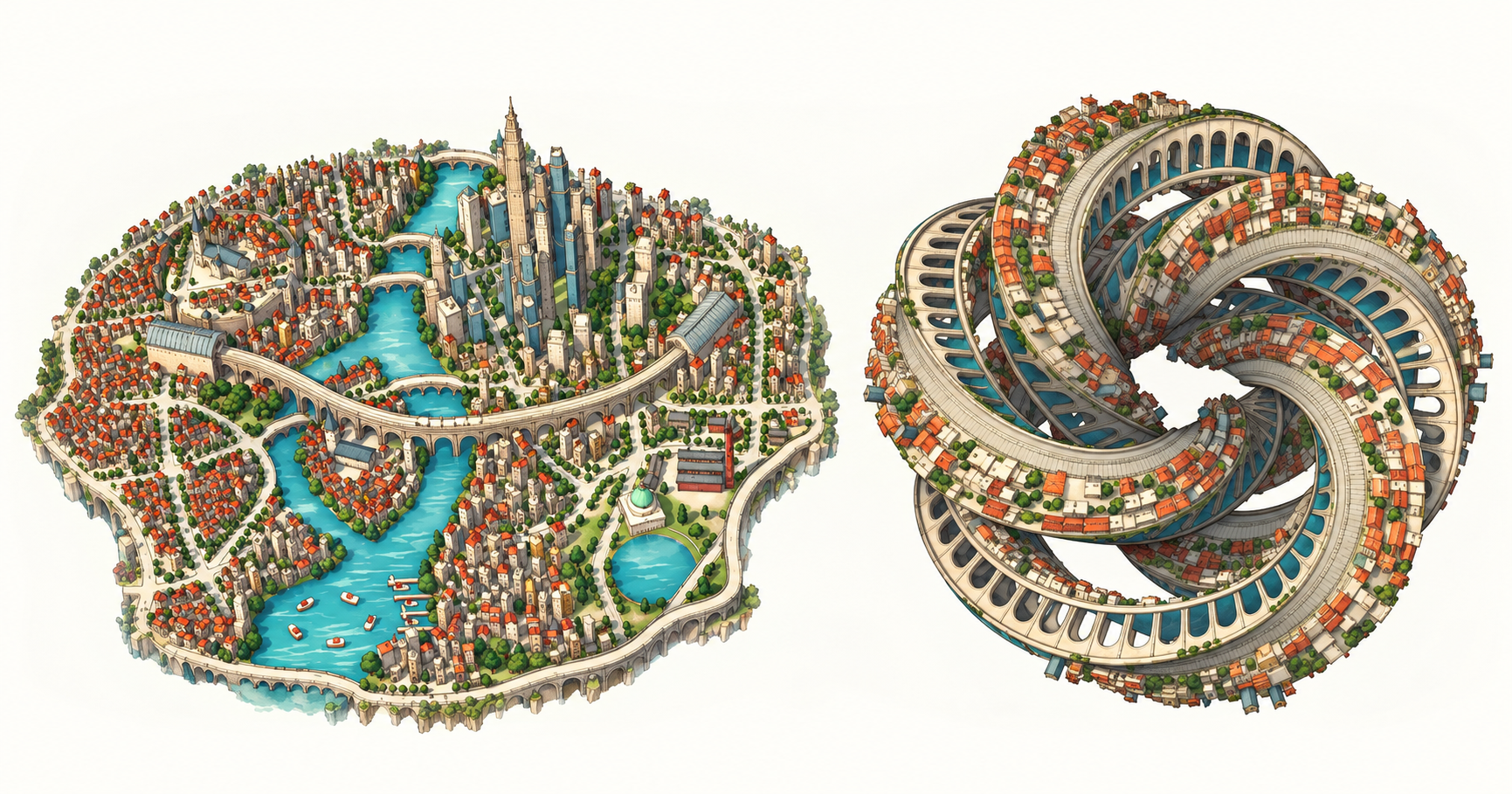
Graph embedding seeks to build a low-dimensional representation of a graph G. This low-dimensional representation is then used for various downstream tasks. One popular approach is Laplacian Eigenmaps (LE), which constructs a graph embedding based on the spectral properties of the Laplacian matrix of G. The intuition behind it, and many other embedding techniques, is that the embedding of a graph must respect node similarity: similar nodes must have embeddings that are close to one another. Here, we dispose of this distance-minimization assumption. Instead, we use the Laplacian matrix to find an embedding with geometric properties instead of spectral ones, by leveraging the so-called simplex geometry of G. We introduce a new approach, Geometric Laplacian Eigenmap Embedding, and demonstrate that it outperforms various other techniques (including LE) in the tasks of graph reconstruction and link prediction.
Neural Turing Machines
We extend the capabilities of neural networks by coupling them to external memory resources, which they can interact with by attentional processes. The combined system is analogous to a Turing Machine or Von Neumann architecture but is differentiable end-to-end, allowing it to be efficiently trained with gradient descent. Preliminary results demonstrate that Neural Turing Machines can infer simple algorithms such as copying, sorting, and associative recall from input and output examples.
Neural Networks Are Already Clean
A working hypothesis about neurons, generalization, and the ecology of circuits.
Neural Computer: A New Machine Form Is Emerging
A research essay on Neural Computer: how it differs from agents, world models, and conventional computers; what runtime and CNC would mean; what current prototypes already show; and how software and hardware might change.
Efficient compilation of expressive problem space specifications...
Recent work has described the presence of the embedding gap in neural network verification. On one side of the gap is a high-level specification about the network's behaviour, written by a domain...
History of Neuroscience and AI: From neurons to the first artificial neural networks
LayerMerge: Neural Network Depth Compression through Layer Pruning and Merging
Recent works show that reducing the number of layers in a convolutional neural network can enhance efficiency while maintaining the performance of the network. Existing depth compression methods remove redundant non-linear activation functions and merge the consecutive convolution layers into a single layer. However, these methods suffer from a critical drawback; the kernel size of the merged layers becomes larger, significantly undermining the latency reduction gained from reducing the depth of the network. We show that this problem can be addressed by jointly pruning convolution layers and activation functions. To this end, we propose LayerMerge, a novel depth compression method that selects which activation layers and convolution layers to remove, to achieve a desired inference speed-up while minimizing performance loss. Since the corresponding selection problem involves an exponential search space, we formulate a novel surrogate optimization problem and efficiently solve it via dynamic programming. Empirical results demonstrate that our method consistently outperforms existing depth compression and layer pruning methods on various network architectures, both on image classification and generation tasks. We release the code at https://github.com/snu-mllab/LayerMerge.
We Don't Understand Neural Networks At The Algorithmic Level
The largest ongoing debate about AI is “Are Large Language Models (LLMs) intelligent?” That makes sense, at least: the evidence is ambiguous and the stakes a...
Less is More: Recursive Reasoning with Tiny Networks
Hierarchical Reasoning Model (HRM) is a novel approach using two small neural networks recursing at different frequencies. This biologically inspired method beats Large Language models (LLMs) on hard puzzle tasks such as Sudoku, Maze, and ARC-AGI while trained with small models (27M parameters) on small data (around 1000 examples). HRM holds great promise for solving hard problems with small networks, but it is not yet well understood and may be suboptimal. We propose Tiny Recursive Model (TRM), a much simpler recursive reasoning approach that achieves significantly higher generalization than HRM, while using a single tiny network with only 2 layers. With only 7M parameters, TRM obtains 45% test-accuracy on ARC-AGI-1 and 8% on ARC-AGI-2, higher than most LLMs (e.g., Deepseek R1, o3-mini, Gemini 2.5 Pro) with less than 0.01% of the parameters.