View recent discussion. Abstract: AI for software engineering has made remarkable progress recently, becoming a notable success within generative AI. Despite this, there are still many challenges that need to be addressed before automated software engineering reaches its full potential. It should be possible to reach high levels of automation where humans can focus on the critical decisions of what to build and how to balance difficult tradeoffs while most routine development effort is automated away. Reaching this level of automation will require substantial research and engineering efforts across academia and industry. In this paper, we aim to discuss progress towards this in a threefold manner. First, we provide a structured taxonomy of concrete tasks in AI for software engineering, emphasizing the many other tasks in software engineering beyond code generation and completion. Second, we outline several key bottlenecks that limit current approaches. Finally, we provide an opinionated list of promising research directions toward making progress on these bottlenecks, hoping to inspire future research in this rapidly maturing field.
How to fully automate software engineering
Current AI coding tools assist but don't fully automate software engineering. Better RL environments are what's missing.

Towards End-to-End Automation of AI Research
The automation of science is a long-standing ambition in the field of AI. While the community has made significant progress in automating individual components of the scientific process, a system that autonomously navigates the entire research lifecycle -- from conception to publication -- has remained out of reach. Here, we present the strongest demonstration to date toward automating the entire process end-to-end. We present The AI Scientist, which creates research ideas, writes code, runs experiments, plots and analyzes data, writes the entire scientific manuscript and performs its own peer review. Its ideas, execution, and presentation are of sufficient quality to produce a manuscript generated by an AI system that passes the first round of peer review at a major machine learning conference workshop. The workshop has an acceptance rate of 70 percent. Our system leverages modern foundation models within a complex agentic system. We evaluate The AI Scientist in two settings: a focused mode using human-provided code templates as an initial scaffold to conduct research on a specific topic, and a template-free, open-ended mode that leverages agentic search for wider scientific exploration. Both settings produce diverse ideas and automatically test, report on, and evaluate them. This achievement demonstrates AI's growing capacity for scientific contribution and signifies a potential paradigm shift in how research is conducted. As with any impactful new technology, there could be significant risks, including taxing overwhelmed review systems and adding noise to scientific literature. However, if developed responsibly, such autonomous systems could greatly accelerate scientific discovery.

What do professional software developers need to know to succeed in an age of Artificial Intelligence?
Generative AI is showing early evidence of productivity gains for software developers, but concerns persist regarding workforce disruption and deskilling. We describe our research with 21 developers at the cutting edge of using AI, summarizing 12 of their work goals we uncovered, together with 75 associated tasks and the skills & knowledge for each, illustrating how developers use AI at work. From all of these, we distilled our findings in the form of 5 insights. We found that the skills & knowledge to be a successful AI-enhanced developer are organized into four domains (using Generative AI effectively, core software engineering, adjacent engineering, and adjacent non-engineering) deployed at critical junctures throughout a 6-step task workflow. In order to "future proof" developers for this age of AI, on-the-job learning initiatives and computer science degree programs will need to target both "soft" skills and the technical skills & knowledge in all four domains to reskill, upskill and safeguard against deskilling.
SWE-Bench Pro: Can AI Agents Solve Long-Horizon Software Engineering Tasks?
Large Language Model (LLM) agents have been widely adopted in modern software development workflows. SWE-bench [13] and related works [23, 24, 22, 25, 15] establish the task of issue resolution as a de-facto standard for assessing their capability and usefulness. In this setting, an agent is given an entire codebase, a task description (e.g., a bug report or feature request) in natural language and is instructed to produce a code patch that resolves the issue and passes the repository’s test suite. These benchmarks have been instrumental in demonstrating both the substantial potential and the persistent limitations of current models as SWE agents.
Systems programming the model
This paper examines the status of the language model object in generative AI, arguing that what we call a ‘model’ is inseparable from the systems deploying it. I first theorize how these objects emerge from systems-level interactions between trained artifacts, prompting mechanisms, and sampling methods, drawing on the philosophy of digital objects as well as software studies to show how models gain their objective character. Such interactions converge on programming, not prompting, language models, and I illustrate how critical code studies can therefore track these dynamics. In an overview of language model programming approaches, I discuss how prompt and program converge, demonstrating how this confluence tends toward the production of new feedback loops wherein models become models of and for themselves. Understanding these feedback loops is essential in view of recent efforts to infrastructuralize AI, in which multiple models cascade into compound systems that abstract toward a unified model of models. Thus the need, I argue, for a systems-level view that can address this new order of abstraction and complexity by identifying where and how the model emerges from the system.

Usage, Effects and Requirements for AI Coding Assistants in the Enterprise: An Empirical Study
The rise of large language models (LLMs) has accelerated the development of automated techniques and tools for supporting various software engineering tasks, e.g., program understanding, code generation, software testing, and program repair. As CodeLLMs are being employed toward automating these tasks, one question that arises, especially in enterprise settings, is whether these coding assistants and the code LLMs that power them are ready for real-world projects and enterprise use cases, and how do they impact the existing software engineering process and user experience. In this paper we survey 57 developers from different domains and with varying software engineering skill about their experience with AI coding assistants and CodeLLMs. We also reviewed 35 user surveys on the usage, experience and expectations of professionals and students using AI coding assistants and CodeLLMs. Based on our study findings and analysis of existing surveys, we discuss the requirements for AI-powered coding assistants.
How Do AI Coding Agents Contribute to Software Development? an Empirical Study of Agentic Pull Requests
Recent advances in large language models and their rapid adoption across software engineering tasks have made Artificial Intelligence (AI) coding agents an integral component of modern software development workflows. While developers increasingly benefit from these coding agents, their impact on software quality remains insufficiently understood. In particular, how agentic contributions evolve across the software development lifecycle has not been thoroughly investigated. This study aims to characterize agentic pull requests (PR) in comparison to human generated PRs and to examine how their properties change across different stages of the development lifecycle. Using the AIDev dataset, we first analyze how differences in merge rates between agentic and human generated PRs vary over time. We then identify the types of development tasks where AI coding agents are predominantly applied and investigate how these task distributions evolve across development quarters. Finally, we compare a set of key characteristics of agentic and human generated PRs, focusing on their implications for software quality and their temporal dynamics. Overall, our findings provide an empirical and longitudinal perspective on the role of AI coding agents in software development, offering a more nuanced understanding of their benefits and limitations in real-world practices.
How Do AI Coding Agents Contribute to Software Development? an Empirical Study of Agentic Pull Requests
Recent advances in large language models and their rapid adoption across software engineering tasks have made Artificial Intelligence (AI) coding agents an integral component of modern software development workflows. While developers increasingly benefit from these coding agents, their impact on software quality remains insufficiently understood. In particular, how agentic contributions evolve across the software development lifecycle has not been thoroughly investigated. This study aims to characterize agentic pull requests (PR) in comparison to human generated PRs and to examine how their properties change across different stages of the development lifecycle. Using the AIDev dataset, we first analyze how differences in merge rates between agentic and human generated PRs vary over time. We then identify the types of development tasks where AI coding agents are predominantly applied and investigate how these task distributions evolve across development quarters. Finally, we compare a set of key characteristics of agentic and human generated PRs, focusing on their implications for software quality and their temporal dynamics. Overall, our findings provide an empirical and longitudinal perspective on the role of AI coding agents in software development, offering a more nuanced understanding of their benefits and limitations in real-world practices.
Humans are Missing from AI Coding Agent Research
Recent progress in AI coding agent research has led to rapid improvements in agents' ability to autonomously perform complex software engineering tasks, from editing large codebases to executing long-horizon development workflows. As these systems make strides, however, the primary bottleneck to practical usefulness increasingly shifts away from pure task-solving capability, and toward challenges in how users communicate with, supervise, and trust agents. In this position paper, we argue for a reorientation from autonomous to human-centered coding agents: systems designed not only to complete tasks, but to collaborate effectively with people. We identify four core interaction-level dimensions that characterize the human-agent task-solving loop: task alignment, verifiability, steerability, and adaptability. Finally, we outline concrete research directions to advance these dimensions, including user-involved coding environments, comprehensive verification mechanisms, and principled measures of human-agent interaction quality.
No Vibes Allowed: Solving Hard Problems in Complex Codebases – Dex Horthy, HumanLayer
ARC-AGI-3: A New Challenge for Frontier Agentic Intelligence
We introduce ARC-AGI-3, an interactive benchmark for studying agentic intelligence through novel, abstract, turn-based environments in which agents must explore, infer goals, build internal models of environment dynamics, and plan effective action sequences without explicit instructions. Like its predecessors ARC-AGI-1 and 2, ARC-AGI-3 focuses entirely on evaluating fluid adaptive efficiency on novel tasks, while avoiding language and external knowledge. ARC-AGI-3 environments only leverage Core Knowledge priors and are difficulty-calibrated via extensive testing with human test-takers. Our testing shows humans can solve 100% of the environments, in contrast to frontier AI systems which, as of March 2026, score below 1%. In this paper, we present the benchmark design, its efficiency-based scoring framework grounded in human action baselines, and the methodology used to construct, validate, and calibrate the environments.
Meet Foundry: An AI Startup that Builds, Evaluates, and Improves AI Agents

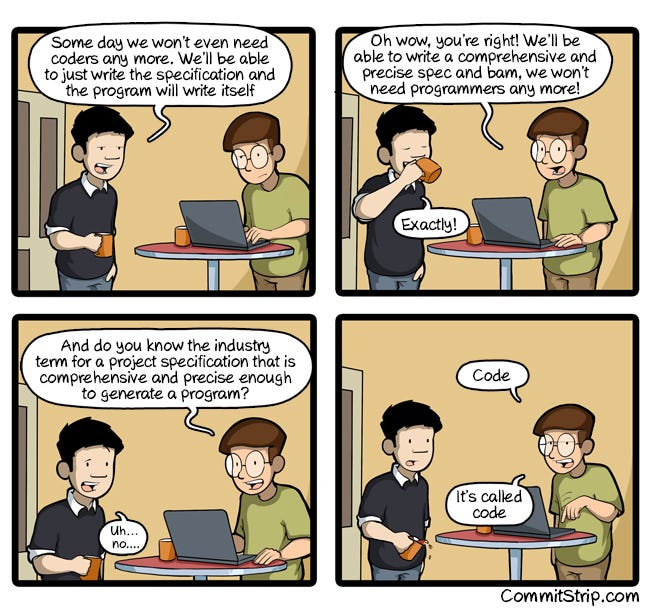
Why Software Engineering Is Indispensable in the Age of Coding Agents
Can AI make Software Engineering (SE) -- the discipline -- obsolete? And can it make software engineers -- the professionals -- redundant? This paper argues that the rise of capable AI coding...
Measuring the Impact of Early-2025 AI on Experienced Open-Source Developer Productivity
Despite widespread adoption, the impact of AI tools on software development in the wild remains understudied. We conduct a randomized controlled trial (RCT) to understand how AI tools at the February-June 2025 frontier affect the productivity of experienced open-source developers. 16 developers with moderate AI experience complete 246 tasks in mature projects on which they have an average of 5 years of prior experience. Each task is randomly assigned to allow or disallow usage of early 2025 AI tools. When AI tools are allowed, developers primarily use Cursor Pro, a popular code editor, and Claude 3.5/3.7 Sonnet. Before starting tasks, developers forecast that allowing AI will reduce completion time by 24%. After completing the study, developers estimate that allowing AI reduced completion time by 20%. Surprisingly, we find that allowing AI actually increases completion time by 19%--AI tooling slowed developers down. This slowdown also contradicts predictions from experts in economics (39% shorter) and ML (38% shorter). To understand this result, we collect and evaluate evidence for 20 properties of our setting that a priori could contribute to the observed slowdown effect--for example, the size and quality standards of projects, or prior developer experience with AI tooling. Although the influence of experimental artifacts cannot be entirely ruled out, the robustness of the slowdown effect across our analyses suggests it is unlikely to primarily be a function of our experimental design.
The antidote to AI fatigue — Answer.ai Solveit
The Real Reason We Still Need Software Developers in the World of AI
The dream of AI churning out perfect production-ready code doesn’t hold up against the reality of modern software development.