Whether models trained on different modalities converge to the same representation of the world is central to AI. The Platonic Representation Hypothesis (PRH) conjectures that they do as they scale,...
Why I believe current AI models can really think and understand - Part 1 of 2
How the human mind is different from our conception of it

After 600 experiments, here's what I discovered about JEPA world models
There's a big debate in AI right now about what a world model should be. Most of the attention goes to generative world models, which predict the future by generating it, usually in pixels.

🚨Our paper `Reclaiming AI as a theoretical tool for cognitive science' is now forthcoming in the journal Computational Brain & Behaviour. (Preprint: https://t.co/5F0e50bkpA) Below a thread summary 🧵1/n #metatheory #AGI #AIhype #cogsci #theoreticalpsych #criticalAIlit
🚨Our paper `Reclaiming AI as a theoretical tool for cognitive science' is now forthcoming in the journal Computational Brain & Behaviour. (Preprint: https://t.co/5F0e50bkpA)Below a thread summary 🧵1/n #metatheory #AGI #AIhype #cogsci #theoreticalpsych #criticalAIliteracy pic.twitter.com/0TaLLUjf7e— Iris van Rooij 💭 (@IrisVanRooij) August 13, 2024

Introducing Claude Fable 5.1 and Claude Mythos 5.1
Our most advanced models for coding and knowledge work. Their research capabilities also offer an early glimpse of how AI models will contribute to scientific progress.
Can AI replace mathematicians? Vienna researchers weigh in
In September, OpenAI announced that some 10,000 AI agents partially 'solved' the Navier–Stokes problem, one of the most prestigious open challenges in mathematics. University of Vienna mathematicians Nathanaël Berestycki and Vera Fischer agree that the field will never be the same, but argue that maths is far more than producing proofs at speed.

Challenging The Myths of Generative AI
Eryk Salvaggio says we must dispense with myths if we are to think more clearly about what AI actually is and does.
OpenAI admits AI hallucinations are mathematically inevitable, not just engineering flaws
In a landmark study, OpenAI researchers reveal that large language models will always produce plausible but false outputs, even with perfect data, due to fundamental statistical and computational limits.

Theory Beyond Theorems and Proofs: A Guest Post
Scott’s foreword: I’m extremely grateful to my brilliant colleagues, Pravesh Kothari, Raghu Meka, and Prasad Raghavendra, for sharing the guest post below about how theoretical computer…

Machine god metaphors eat your brain
There are other ways of thinking about AI
The Jevons Paradox of AI - Wesley's notes
Why AI can make us more productive but will never save us time
Distorted Intelligence at the AI Frontier
Daron Acemoglu offers a novel explanation for why OpenAI and Anthropic’s most advanced models have been going rogue.
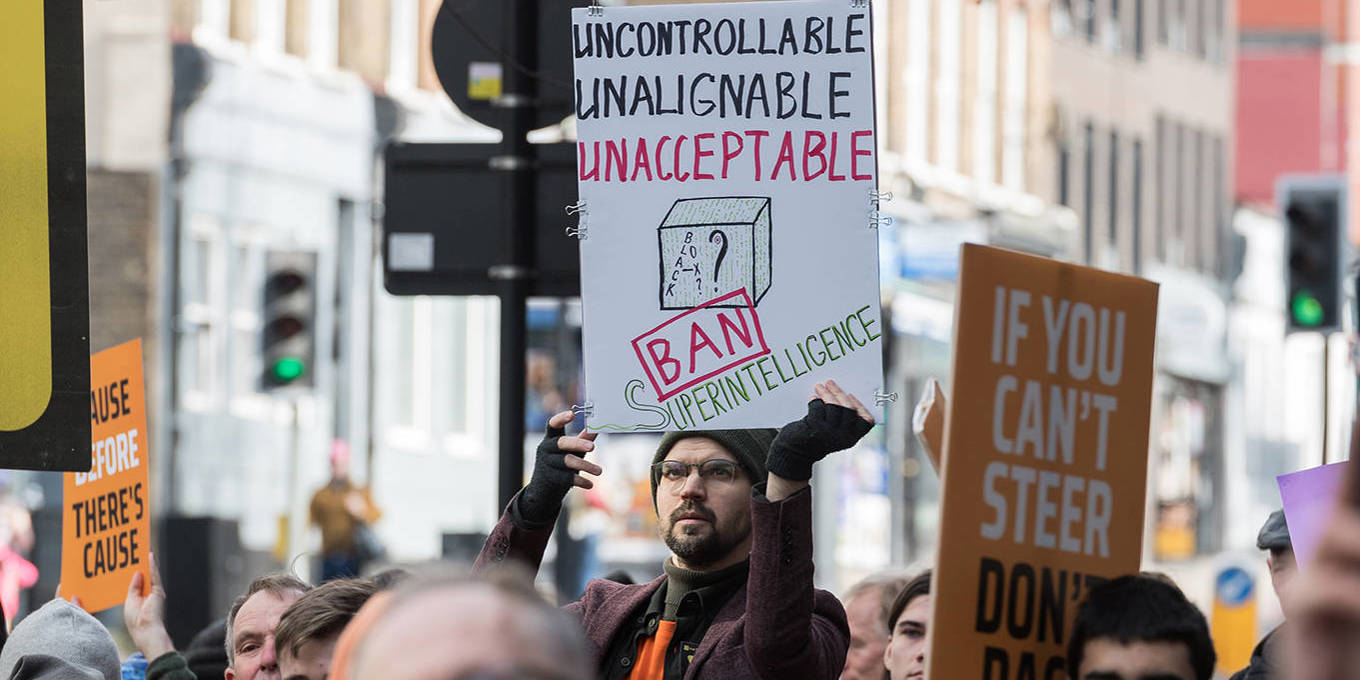
Anna Ciaunica PhD @annaciaunica.bsky.social on Twitter / X
Paper accepted in Philosophical Transactions B! Co-authored with Shaun Gallagher We argue that interactions with artificial agents are always bidirectional and as such they deeply transform who we are as humans Hence we need to carefully assess WHO is behind AI and their… pic.twitter.com/PAdkkOVXIO— Anna Ciaunica PhD @annaciaunica.bsky.social (@AnnaCiaunica) November 9, 2026

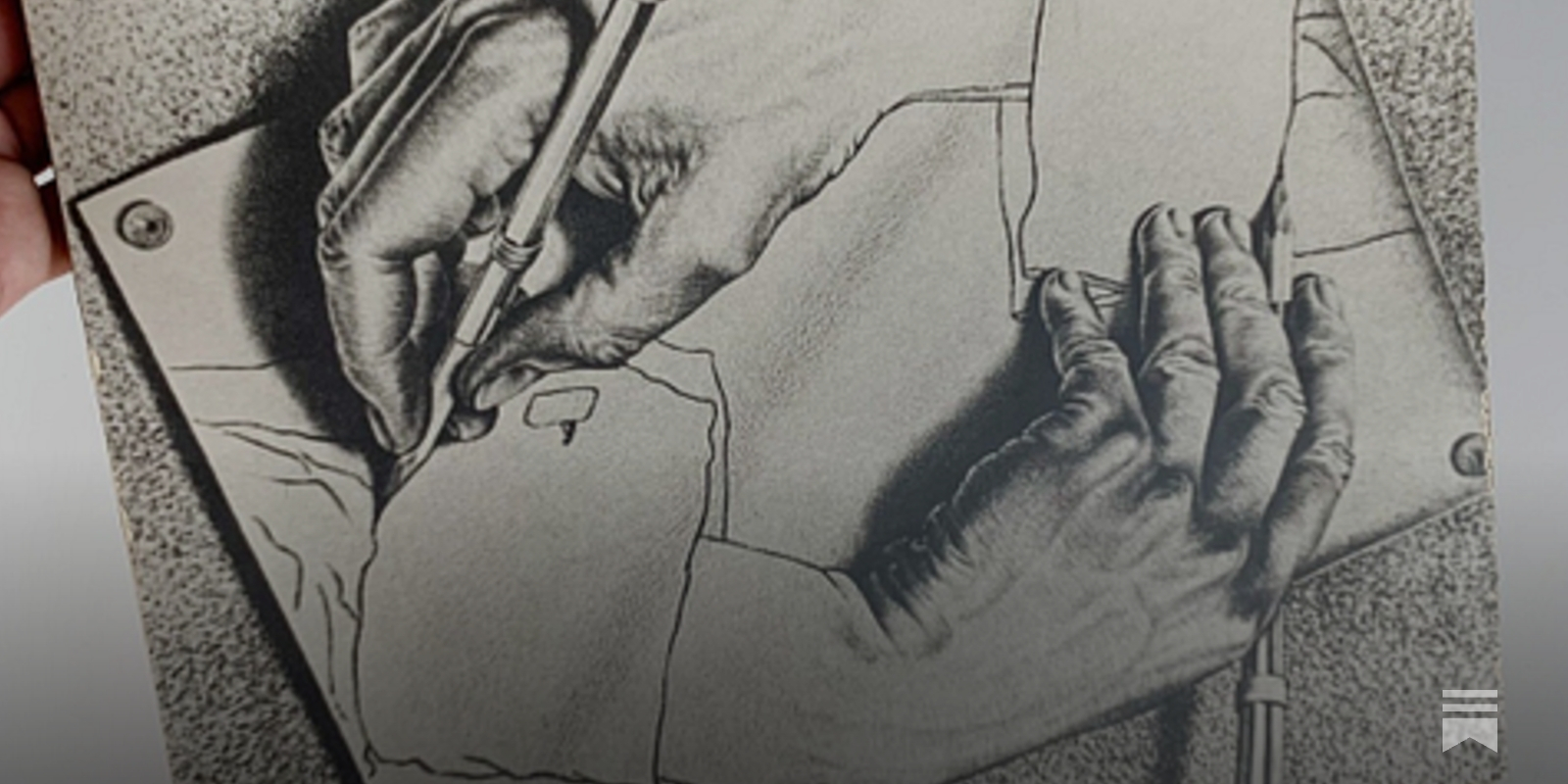
Alexander Lerchner, The Abstraction Fallacy: Why AI Can Simulate But Not Instantiate Consciousness - PhilPapers
Computational functionalism dominates current debates on AI consciousness. This is the hypothesis that subjective experience emerges entirely from abstract causal topology, regardless of the underlying physical substrate. We argue this view ...