


Mannermaa's revisionist work on justification inLuther's theology - a notable contribution from oneof the most influential Finnish scholars of Luther studies - is now available in English. His book opens up newinterpretive questions for historical theology with strikingimplications for ecumenism, ethics, and spirituality.He writes, "the idea of the divine life in Christ which ispresent in faith lies at the very center of the theology of theReformer." He argues that later Lutheran interpretation ofthis teaching has portrayed justification as more mechanicaland forensic than Luther did, underestimated the extentto which God's righteousness is also ours, and obscured theradical personal transformation that Luther attributed tojustification.
Luther’s Small Catechism by Dr. Martin Luther
Martin Luther addresses faithful and godly pastors and preachers in his Preface to the Small Catechism.

What We Believe | Lincoln Road Chapel
Read more about our statement of faith and what we believe.

Epistemic courage
"'Epistemic Courage' is a timely and thought-provoking exploration of the ethics of belief. Drawing on a wide range of examples, from conspiracy theories to medical misinformation, Ichikawa shows why epistemology is no mere academic abstraction - the question of what to believe couldn't be more urgent. And, he argues, many mainstream ideas about what to believe - those emphasizing the importance of ensuring that one doesn't believe with insufficient evidence - are incomplete and distorting in important and harmful ways. A skeptical, negative bias about belief is connected to a conservative bias that reinforces the status quo. Throughout the book, Ichikawa argues that we need to shift our focus from avoiding false beliefs to actively seeking out true ones. Throughout the book, Ichikawa uses engaging and timely examples to illustrate his points. He tackles important questions, such as how moral considerations interact with evidential ones in deciding what to believe, and how to navigate the complex ethical issues around testimony, rape culture, and epistemic injustice. Accessible and rigorous, 'Epistemic Courage' invites readers to consider the importance of belief, and how it shapes our lives and the world around us. With its insightful analysis and compelling case studies, this book is an essential read for philosophers and anyone else interested in belief, social justice, and the pursuit of truth."--

Theology and Literature Pathway
theology_and_literature.jpg Theology and Literature Pathway Cambridge has a long tradition of fostering dialogue between literature and theology, ranging from the influence of figures such as T.S. Eliot, C.S.
The Word of Life A Theology of Johns Gospel (Craig R. Koester) (z-lib.org).pdf
The Experience of God: Being, Consciousness, Bliss
The Experience of God: Being, Consciousness, Bliss is a 2013 book by philosopher and religious studies scholar David Bentley Hart published by Yale University Press. The book lays out a statement and defense of classical theism and attempts to provide an explanation of how the word "God" functions in the theistic faiths, drawing particularly from Christianity, Islam and Hinduism.

An atheist's and agnostic's guide to God: towards more truthful, enlightened and useful concepts of God, religion and morality
Restorative Justice in the Bible | The Paper Pilot
The Paper Pilot's digital garden of thoughts on philosophy, politics, and sociology
Christian Theology as Foundation of Western Philosophy
Do you know how the fundamentals of the Christian faith relate to your thinking?
The King of Kings
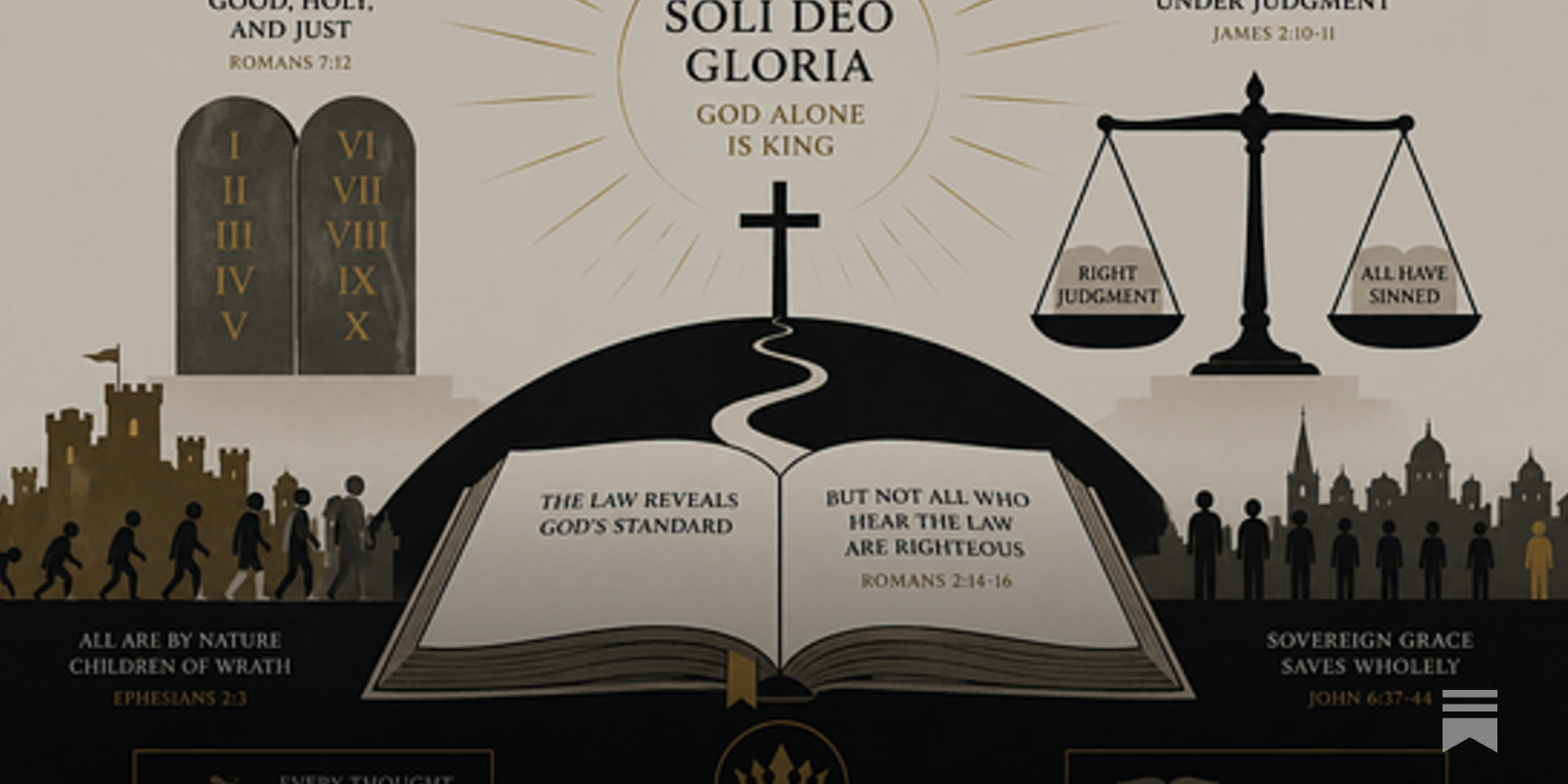
Evolutionary Morality, the Judgment of Law, and the Necessity of God
On Those Undefeatable Arguments for AI Doom
<h1>Part 1</h1> <p>Suppose you're a student at the Catholic Franciscan University of Steubenville, who is -- somehow -- unfamiliar with the contents of Catholicism.</p> <p>One day over lunch, it comes out that you basically have no idea what the Church of Rome is.</p> <p>"I don't know why I should bother learning more," you say. "The idea that there's this person who created the world, sent intermittent imperious messages to one tribe in the Middle East for millenia, then eventually decided to visit and started the Catholic Church? It sounds like a Brandon Sanderson fantasy novel -- it's just not reasonable."</p> <p>"Yeah, I get why you would say that," says your interlocutor, Francis, patiently. "But people in the Church actually care very much about reason. John Paul II called faith and reason the <a href="https://www.vatican.va/content/john-paul-ii/en/encyclicals/documents/hf_jp-ii_enc_14091998_fides-et-ratio.html">two wings</a> by which man rises to God."</p> <p>"There are actually," Francis continues, "really good, reasonable arguments showing that God exists."</p> <p>He hands you a <a href="https://www.gutenberg.org/files/3296/3296-h/3296-h.htm">book</a> by St. Augustine, and points out a specific argument in it. You say that you'll read it.</p> <p>When you meet up next week he asks you what you thought of Augustine.</p> <p>"Uh," you say. "It didn't seem like a very good argument? Like Augustine seemed to have somewhat-self contradictory beliefs about the immutability of God and the Incarnation?" You spell out your objections in a little more detail.</p> <p>"Hrrm," says your interlocutor. "Well, not everyone thinks that Augustine's argument works, even all Catholics. How about instead you read the <a href="https://en.wikipedia.org/wiki/Five_Ways_(Aquinas)">Five Ways</a> by Aquinas?"</p> <p>You sigh, and agree to read it.</p> <p>Once again, next week, you meet up. Francis asks what you thought of Aquinas.</p> <p>"Uh," you say. "He also seemed pretty bad. Like, it took me a few more hours to figure out why, but I think pretty much all his reasoning involves these -- <a href="https://plato.stanford.edu/entries/category-mistakes/">fake categories</a>?" You try to spell out your objections in a little more detail.</p> <p>"Hrm," says your interlocutor. "Well, not everyone thinks that Aquinas' argument works, not even all Catholics. How about instead you read one of C.S. Lewis' arguments --"</p> <p>"Wait wait wait," you say. "People have been thinking up arguments for God's existence for a thousand years. Even if every single one of these arguments is unsound and invalid, if I keep reading them I'll probably find one whose flaw I cannot locate, because I'll eventually just run into my own blind spot."</p> <p>"But," you continue, "it would be unreasonable to convert to Catholicism just because my attention inevitably lapses at some point."</p> <p>"Instead," you continue, "How about you just show me an argument that the Catholic Church has definitively judged to be good, instead? And I'll evaluate that argument, and just that argument."</p> <p>"Well," Francis says a little awkwardly. "The Catholic Church has <a href="https://en.wikipedia.org/wiki/Dei_Filius">ruled</a> that there is a valid argument for God's existence from natural reason alone. But it hasn't said any <em>particular</em> argument for God's existence is any good."</p> <p>"Really," I say. "So the Catholic Church has ruled that <em>some</em> argument for God is valid, but not that any particular argument is."</p> <p>"Yeah," he says.</p> <p>"Does that seem... problematic to you?"</p> <p>"Why... why would it be bad?"</p> <p>"Well," you say. "Let's back up. We have this belief, Catholicism, that is held by many millions of people. Let's say there are two different hypotheses for why these people hold it."</p> <p>"On one hand, lots of people could hold to Catholicism <em>because</em> it's true. The evidence in favor of Catholicism might be so good that lots of people investigated to find out if it was true -- and they all found that it was true! There were enough miracles that were definitely miracles, and not people misreporting the evidence. Or there were enough valid arguments for God's existence that really made sense, and were sound and valid. Catholicism might be the kind of thing that spreads <em>because</em> it is true, like belief in Newtonian physics or in evolution or in the existence of New Zealand."</p> <p>"On the other hand, lots of people might hold to Catholicism for reasons <em>unrelated</em> to the truth of Catholicism. The reason that people are Catholic might be because Catholicism does a good job turning other people into Catholics. Maybe the belief that you'll go to Hell if you don't spread Catholicism helps make other people be Catholic, independent of the truth of that belief. Or maybe the belief that you should have a dozen kids helps make more Catholics. Catholicism might be the kind of thing that spreads itself <em>entirely independent</em> of whether it is true, like belief in astrology or the belief that the greed of billionaires causes inflation."</p> <p>"So," you conclude, "this disagreement among Catholic philosophers about which arguments work seems like some degree of evidence in favor of the later position. Of course, Catholicism <em>could</em> still be true even if most people are Catholics for reasons independent of its truth. But it would be some level of evidence against the truth of Catholicism."</p> <p>"Would it be?" Francis says. "Maybe? I'm not sure. I have to go to class."</p> <h1>Part 2</h1> <p>Suppose you're a student at University of California Berkeley, who is -- somehow -- unfamiliar with the concern over AI safety.</p> <p>One day over lunch, it comes out that you basically have no idea what AI "notkilleveryoneism" is.</p> <p>"I don't know why I should bother learning more," you say. "The idea that there's going to be this superintelligence, who can outsmart all humanity put together, and who will be by-default omnicidal and want to kill everyone? It sounds like an Aladair Reynolds science-fiction novel -- it's just not reasonable."</p> <p>"Yeah, I get why you would say that," says your interlocutor, Sarah, quickly. "But the AI-risk people actually care a lot about reason," she says "The community really got going because Yudkowsky wrote <a href="https://www.lesswrong.com/rationality">essays</a> and a <a href="https://hpmor.com/">novel</a> specifically designed to help people reason well."</p> <p>"There are actually," she continues, "really good arguments showing that AI is going to be super hard to steer."</p> <p>She hands you a <a href="https://en.wikipedia.org/wiki/Superintelligence:_Paths,_Dangers,_Strategies">book</a> by Nick Bostrom, and points out a specific argument in it. You say that you'll read it.</p> <p>When you meet up next week she asks you what you thought of Bostrom.</p> <p>"Uh," you say. "It actually seemed really bad. Bostrom seems to be operating off mistaken notions of what reinforcement learning is? And a deeply pre-deep-learning notion of how these things would be trained." You go on to <a href="https://www.lesswrong.com/posts/pdaGN6pQyQarFHXF4/reward-is-not-the-optimization-target">spell out</a> some objections to what he says.</p> <p>"Hrrm," says Sarah, "Well, not everyone thinks that Bostrom's argument works, not even all AI-doom pessimists. How about instead you read the <a href="https://www.lesswrong.com/posts/uMQ3cqWDPHhjtiesc/agi-ruin-a-list-of-lethalities">List of Lethalities</a> from Yudkowsky?"</p> <p>You sigh, and agree to read it.</p> <p>Once again, next week, you meet up. She asks what you thought of Yudkowsky.</p> <p>"He... seemed pretty bad," you say quickly. "Like it seemed like he was <a href="https://www.lesswrong.com/posts/DhjcdzTyqHte2v6bu/deep-learning-is-function-approximation">working</a> with <a href="https://www.lesswrong.com/posts/gHefoxiznGfsbiAu9/inner-and-outer-alignment-decompose-one-hard-problem-into">fundamentally confused categories</a>." You spell out some objections in more detail.</p> <p>"Hrm," says your interlocutor. "Well, not everyone thinks that Yudkowky's perspective is right, not even all pessimists about alignment. How about instead you read one of Christiano's arguments -- "</p> <p>"Wait wait wait," you say. "Folks in California have been thinking up arguments that AI is going to kill us for decades. Even if all of their arguments are bad, if I keep reading them eventually I'll probably find one that I can't find the flaw in. I'm not obliged to run an adversarial attack on my own cognition."</p> <p>"Instead," you continue, "How about you just show me the argument that is universally-agreed-upon to be good -- or even mostly agreed-upon-to-be-good -- by people worried about AI risk? Like, you say that everyone cares about truth in this community -- wouldn't it be weird for them not to have worked out what kind of argument actually works? Or have at least some kind of a notion of which arguments were <em>most important</em>?"</p> <p>"Well," she says a little awkwardly. "You have to understand, this is a really hard thing to reason about. It's a pre-paradigmatic kind of a thing."</p> <p>"So there's no agreement about which arguments are valid, or what model is correct, or even which matter the most?" you ask. "A bunch of people in this community all think AI is super dangerous, but they cannot point to a particular line of reasoning they all agree with as to why?"</p> <p>"No... I mean... I think there is agreement about the <em>essentials</em> of the story." she says. "Just not agreement on the details of the sketch."</p> <p>"But isn't that some evidence that the belief in AI doom spreads for reasons unrelated to its truth?" you say.</p> <p>You continue: "Like -- of course -- we all think that some religions spread because they tell their members to spread the religion. Isn't disagreement among people worried about AI like this, at least some level of evidence that AI-worry spreads for similar reasons unrelated to its truth? In general, when one encounters <em>a compelling narrative of doom</em> with <em>obscure arguments</em> shouldn't a red flag go off in your mind somewhere?"</p> <p>"Frankly," Sarah says coldly, "I think that comparing it to religion is manipulative and bad-faith of you. Look, I have to go to class."</p> <h1>Part 3</h1> <p>A week later, you're walking down the street when you see a protest. Everyone is holding up signs saying things like:</p> <p>"STOP AI"</p> <p>"DON'T BUILT THE DOOMSDAY MACHINE"</p> <p>"SHUT DOWN TSMC NOW"</p> <p>And you notice Sarah. She's speaking into a microphone and saying things like this:</p> <p>"No one has any responses to the arguments for AI Doom! Yann Lecun just ignores them! They all just ignore them! They mock them, because they have no possible response!"</p> <p>Something about this strikes you as odd. So you wait until the protest is over.</p> <p>Afterwards, you approach Sarah and say: "Hey, during the protest, I heard you say no one has any response to the arguments for AI doom. Which arguments does no one have a response for?"</p> <p>"I mean, you know," she says. "The arguments."</p> <p>"Which arguments," you say. "I read some arguments! There seemed to be pretty good responses to them."</p> <p>"You know, <em>the basic arguments.</em>" she responds.</p> <p>"But there <em>aren't</em> any agreed-upon arguments for AI doom," you say. "If you talk to 10 different AI safety researchers, you'll get like 10 different stories of why AI alignment is hard. Which arguments do <em>you</em> find most convincing?"</p> <p>"Well..." says Sarah, in a somewhat different tone of voice, "I thought that... there was the argument about AI as a species... look, I'm more of an activist than a theoretician."</p> <p>She cuts off that line of thought. "Look," she says, "there's a consensus of experts that agree it is a risk. It's normal to simply defer to experts in such a case."</p> <p>"It's totally normal to defer to experts," you agree. "That's absolutely a wise thing to do under many circumstances. But it's important to notice when you're doing so, rather than pretend that one's own belief rests on understanding the matter."</p> <p>You continue: "So, you, personally, think AI is a risk because you trust the relevant experts, who have come to a consensus, rather than because of any particular argument?"</p> <p>"Well," Sarah returns hotly, "the relevant experts <em>do</em> understand the arguments, that's all you need to know."</p> <p>"Huh," you you say. You fold your arms.</p> <p>"So when I look into the 'experts' there appears to be no consensus among even those convinced of AI doom about what model -- what argument -- is correct."</p> <p>"So -- for example -- you can find people on <a href="https://forum.effectivealtruism.org/posts/DHybAfxPhqqYa3bQz/what-is-the-current-most-representative-ea-ai-x-risk">EA forum</a> who ask for the most representative arguments for AI doom. And the general response is that there is no unified perspective. There were maybe <a href="https://www.alignmentforum.org/posts/FuGfR3jL3sw6r8kB4/richard-ngo-s-shortform#C3sb2QZQAeHLZmz2T">5 different perspectives</a> people pointed to. And each of these are very loose clusters with lots of people in them with separate stories of their own."</p> <p>"Like you can read literally thousands of words of <a href="https://www.lesswrong.com/s/n945eovrA3oDueqtq">diffuse disagreement</a> between Yudkowsky or Christiano and others. Or you could try to like, follow the bread-crumb-trail of maybe two dozen winding and inconclusive blogposts on VNM consistency on LessWrong. But there's no central argument that everyone would sign onto about why AIs are likely to kill everyone. Stories about VNM consistency are enormously important to some, but don't matter all to others!"</p> <p>"So what!" says Sarah. "Just because there's disagreement, it doesn't mean we're not right."</p> <p>"Of course," you say patiently. "If you had a dozen bad arguments for the existence of Europe, Europe wouldn't therefore fall into the void."</p> <p>"So why are you on my case?" she returns.</p> <p>"Because," you respond, "You're blaming people for not <em>responding to your arguments.</em> You're acting like there's some determinate, specific argument that they <em>could respond to.</em> But there is -- very clearly -- is no such argument. There isn't even like, an agreed-upon <em>hierarchy</em> of the most important arguments."</p> <p>"Instead, it looks to me like there's this enormous cloud of vague arguments. You have giant Yudkowsky blog-posts, which are themselves pointers to other blog posts from ten years ago, which <a href="https://www.lesswrong.com/posts/gGSvwd62TJAxxhcGh/yudkowsky-vs-hanson-on-foom-whose-predictions-were-better">themselves made some dubious predictions</a>; you have big Open-Philanthropy-funded examinations from Carlsmith, which <a href="https://www.lesswrong.com/posts/YsFZF3K9tuzbfrLxo/counting-arguments-provide-no-evidence-for-ai-doom">might or might not</a> actually be the real reason that <em>anyone</em> believes anything; you have long 100-comment threads on LessWrong; you have a literal multi-million-word BDSM Pathfinder fanfic from Yudkowsky. The situation is so bad that people you can find blogposts about why it's <a href="https://www.lesswrong.com/posts/4Gcz3fGcYmmzhozxr/hashing-out-long-standing-disagreements-seems-low-value-to">pointless to try to hash out these disagreements</a>."</p> <p>"Asking someone to <em>respond to the arguments</em> under these circumstances is like -- hrm, an analogy."</p> <p>"Throughout the history of the Catholic Church, a lot of people have made arguments that God must exist or Catholicism. Anselm, Aquinas, Augustine; Bonaventure, Bossuet, Bloy; Chesterton, Cajetan, Christoph. But it's unreasonable to say, 'Please respond to <em>the arguments</em> for God's existence' without saying which ones you actually think are good. There are just too many, too spread out, with too vague lines between them."</p> <p>"Of course, saying 'RESPOND TO THE ARGUMENTS' might give you points in a debate, because it's unanswerable. But it's unanswerable for reasons entirely unrelated to the truth of the arguments. If you actually care about talking to someone, rather than about scoring points in a debate, you would say, 'Well, I think that God must exist because of Chesterton's argument in Heretics,' or something like that. And notably, this would be true even if God actually did exist."</p> <p>"The 'RESPOND TO THE ARGUMENTS' construction in your movement is also essentially trying to turn the disorganization and lack of clarity in your own movement into a virtue."</p> <p>"Look," says Sarah, "that doesn't mean you're right! I bet that people who <em>don't</em> think that AI is likely to kill everyone don't have agreement among <em>themselves</em> as to why it isn't likely to kill everyone."</p> <p>"I'm sure that's the case," you respond. "This 100% does not mean that the anti-doom side is right. Maybe AI will by default be omnicidal, and the only way to save is to start an <a href="https://www.conjecture.dev/research/multinational-agi-consortium-magic-a-proposal-for-international-coordination-on-ai">international consortium</a> that's the only group allowed to do AI research."</p> <p>You continue: "If you find someone who doesn't believe in AI doom repeatedly pestering someone with 'YOU CAN'T RESPOND TO OUR ARGUMENTS AGAINST AI DOOM' without specifying the argument, you're welcome to direct them to me. Such a construction would be equally propaganda -- that is, it's unanswerable regardless of the true state of affairs."</p> <p>"But so is your construction. My chief point is that this particular rhetorical construction is about propaganda rather than truthseeking -- although, to be fair, I tend to see it much, much more among people who believe in AI doom."</p>

Towards a Planetary Theology
Every political innovation requires, first of all, a corresponding transformation in the cosmos. To remake globalization from a gangster racket into a genuine political society, we must recognize theology’s foundational role in shaping political order.

On Enchanted Flatland: Iain McGilchrist & the Problem of Romantic Liberalism
A follow-up to my contribution to Rosy Cross: Question of Right & Truth of Christianity
The Ascendancy of the Scientific Dictatorship: An Examination of Epistemic Autocracy, from the 19th to the 21st Century
A. In the past, the elite manipulated the population through a more mystical belief system. In particular, there was the institution of Sun worship (typified by deities such as Osiris and Set). However, as antiquity gave way to modern history, this system of control began to lose its effectiveness. During the sixteenth century, the ruling class managed to co-opt a relatively new methodology of truth discernment...science. Over the years, they would contaminate this institution with their own virulent strains of thought...metaphysical naturalism, radical empiricism, Malthusianism, Darwinism, behaviorism, radical environmentalism, etc. Many of these paradigms were derivative of their own occult doctrines, thinly veiled to appear as objective science. All of these concepts correlate in some way and, at some point, coalesce. Together, they are gradually paving the way for the re-introduction of the hidden god of the Ancient Mysteries.
Evolution and the Meaning of Life
In an aside to his contribution to our recent discussion of same-sex marriage (my contribution is here), Big Think’s Peter Lawler wrote that Darwinists agree with many religiously observant people […]
