You can't look away.You see the climate destabilization, biodiversity loss, resource scarcity, toxic bioaccumulation, and climate injustice happening all around us. You aren't the type to bury your head in the sand or shrug it off and so you roll up your sleeves.But where to start? How to ensure your work doesn't inadvertently cause harm, a pattern as old as good intentions? How to ensure your efforts actually matter? You aren't interested in repair work on the post-iceberg Titanic.I threw myself at these questions for over a decade. I thrashed and hammered at the problem of building a life relevant to the challenges of the 21st century and, mostly, got nowhere. Those were years of intense effort with nothing to show for it. My despair grew year by year.Then, in a quiet moment late at night in early 2020, I found the foot of the path I'd been looking for in a place I never would have expected. What I learned would change the course of my life forever.This is the book I wish I'd had at the beginning of my journey.
Ecocivilization: making a world that works for all
""One of the greatest thinkers of our age" (The Guardian) presents a new way of living-one modeled on nature's design instead of capitalism's-for fans of Guns, Germs, and Steel and Doughnut Economics It has often been said that it is easier to imagine the end of the world than it is to imagine the end of capitalism-and yet that is what the historical moment urgently calls for. Climate change has reached an emergency state, inequality continues to grow, and, for many, the future has never seemed more bleak. Incremental policy improvements are no longer enough-we need a deep transformation of our current civilization to continue to survive. In Ecocivilization, leading thinker Jeremy Lent reimagines the basis of our civilization, and argues for a new global system of living, one based on life-affirming principles modeled after nature's own design. What enfolds is a robust framework incorporating Lent's own expertise, and the lived experiences of those on the ground already putting ecological civilization's core tenants into practice-justice, mutuality, diversity, and symbiosis. From the global economy to universal housing and income, from infrastructure to agriculture, every major aspect of our society could be redesigned to work together as a coherent whole, setting the conditions for all people to flourish. Ecocivilization shows how this future on a regenerated Earth is not only desirable, but entirely feasible"--

This is how we build the future: Teaching Regenerative Economics at all levels with Jennifer Brandsberg-Engelmann
How do we let go of the sense of scarcity, separation and powerlessness that defines the ways we live, care and do business together? How can we best equip our young people for the world that is coming - which is so, so different from the future we grew up believing was possible?

Seven Generations Principle: Healing the Past & Shaping the Future — The Indigenous Foundation
This is adapted from an Unrooted podcast episode by Breanne Smith @breazieboozhoo What if I told you that the choices we make today could shape the lives of those who come seven generations after us? And that we are the bridge between our ancestors’ resilience & our descendants’ future.

A Black Feminist Apocalypse/Dystopian Survival Resource Compilation
A Black Feminist Apocalypse/Dystopian Survival Resource Compilation With the awful realization that we are indeed in a fight for our very survival coming over me for the past few years, I’ve asked myself this question: what can I do right now, today? With my resources limited or tapped out, I’ve...

Sustainability is not enough: we need regenerative cultures
By Daniel C. Wahl

Eradicating Unhappiness
Is there a manual for living well? Where modern science, society, and psychology underserves, a philosophy nearly as old as time emerges. “Take a simple idea, and take it seriously.”—Charlie Munger…

Imagining your future projects is holding you back.
There is no book. There is only Idea Debt.

After the Deluge: What Future for Climate Fiction? - Public Books
Even in a world remade, the past defines the present.

We asked our climate reporters to highlight one idea for positive change. We got a chronicle of global transformation
There are countless initiatives around the world that can inspire people and spur them into action. Amid the devastation of the climate crisis, our journalists strive to highlight these stories of hope
Imagination: a manifesto
One of The Millions's Most-Anticipated Books of Winter 2024 In this revelatory work, Ruha Benjamin calls on us to take imagination seriously as a site of struggle and a place of possibility for reshaping the future

Museletter #353: Deadly Optimism, Useful Pessimism
What's really needed is a realistic sense of what's possible, and a dogged determination to heal division, protect nature and culture, and build sustainable alternatives.

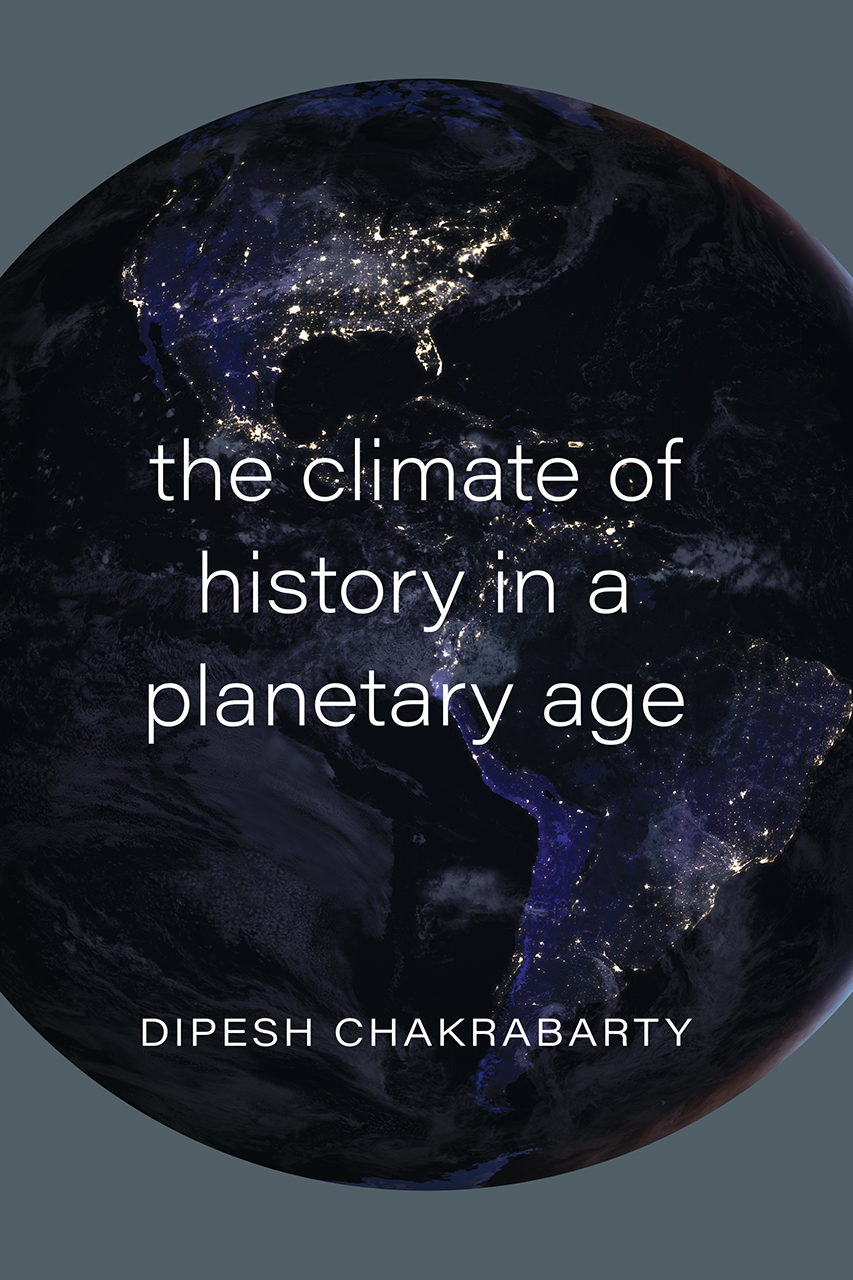
The Climate of History in a Planetary Age
For the past decade, historian Dipesh Chakrabarty has been one of the most influential scholars addressing the meaning of climate change. Climate change, he argues, upends long-standing ideas of history, modernity, and globalization. The burden of The Climate of History in a Planetary Age is to grapple with what this means and to confront humanities scholars with ideas they have been reluctant to reconsider—from the changed nature of human agency to a new acceptance of universals. Chakrabarty argues that we must see ourselves from two perspectives at once: the planetary and the global. This distinction is central to Chakrabarty’s work—the globe is a human-centric construction, while a planetary perspective intentionally decenters the human. Featuring wide-ranging excursions into historical and philosophical literatures, The Climate of History in a Planetary Age boldly considers how to frame the human condition in troubled times. As we open ourselves to the implications of the Anthropocene, few writers are as likely as Chakrabarty to shape our understanding of the best way forward.