


In recent times, relativist and constructivist conceptions of truth and knowledge have become orthodoxy in vast stretches of the academic world. In this unique volume, Paul Boghossian critically examines such views and exposes their fundamental flaws. This short, lucid, witty book shows that phil...
CFP: Religion, Politics, and Cognitive Warfare: Information, Interpretation, Conspiracy, and the Struggle for Reality
The Journal for Cultural and Religious Theory (JCRT) invites proposals for an online conference entitled Religion, Politics, and Cognitive Warfare: Information, Interpretation, Conspiracy, and the Struggle for Reality. The proceedings will be considered for publication in a special issue of the JCRT. This conference investigates how beliefs, paranoia, and conspiratorial modes of knowing shape a contemporary cognitive battlespace in which actors struggle to define truth, authority, and reality itself. Drawing on Michel Foucault's Lectures on the Will to Know and Julia Kristeva's This Incredible Need to Believe (2024), we focus on practices of selective fact use and "truth-selecting" that construct alternative epistemic orders while claiming privileged access to what is "really" going on. Rather than treating conspiracy thinking as merely political or psychological, the conference foregrounds its religious dimensions: faith in hidden powers, moral dualism, apocalyptic expectation, and hermeneutical struggle over revelatory access to the real. Conspiracy cultures routinely reproduce theological structures of knowing—visions of salvation and corruption, truth and deception, initiation and blindness. At the same time, new forms of "cognitive warfare" reframe these religious energies within state and platform attempts to govern perception, attention, and trust. Artificial intelligence, algorithmic media, and strategic information campaigns do not only deliver messages; they create digital ecologies in which suspicion becomes faith-like and revelation is continual. The conference organizers are seeking proposals of high academic quality that take a reflective and analytical approach to both general and specific topics with international appeal or focus. We encourage contributions from scholars of religious studies, philosophy, communication, sociology, security studies, psychology, media, and related fields. Submissions should engage religion as a dynamic force—conceptually, historically, or materially—within the cognitive battlespaces of our time. We encourage contributions from a spectrum of perspectives, approaches, and methodologies. We are not interested in papers that simply rehearse or promote particular conspiracies, or that use the conference as a platform for calling out disliked groups. We are not interested in polemics, jeremiad, or de facto advocacy pieces. Instead, we welcome theoretically informed and methodologically rigorous work that takes the religious and epistemic dimensions of cognitive conflict seriously as objects of critical inquiry.
Re-Engineering Wimsatt for Limited Beings
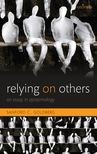
Science is the best way to produce facts about reality. The best, at least, that limited human beings have devised so far. Yet, not even scientists quite seem to understand how scientific knowledge is generated. This is not only a philosophical but also a practical problem, as our misunderstandings affect the quality of our research and limit the directions it can take. In light of this, it may be good if we reflected a bit more on how we do science — to become better researchers through philosophy. Here, I provide an accessible introduction to a philosophical approach that achieves precisely this: William Wimsatt’s multi-perspectival realism. It disabuses us of widespread but misleading myths and idealizations about science, such as the idea that everything in the world can be reduced to a fundamental level, or that we can approach a “view from nowhere” — complete and objectively detached knowledge of the world. Wismatt proposes an alternative view based on his thorough studies of actual research practice. It cuts deeply into the layered yet messy structure of reality, and the improvised but potent tools we have available, as limited and evolved beings, to explore it. Wimsatt reframes science as an irregular yet adaptive process rather than a cumulative repository of unalterable facts. His philosophy provides a workable and grounded middle way between radical skepticism and naïve belief in the objective truth of science. It explains how knowledge is conceptually constructed by humans, but still connects us to reality in a trustworthy way. We need such a new view of science, not only to improve our research practices and outcomes but, more generally, to gain a more realistic understanding of ourselves, the world, and our place and role within it.
Relying on Others: An Essay in Epistemology
Abstract. This book concerns the role others play in our attempts to acquire knowledge of the world. Two main forms of this reliance are examined: testimon
Scientific Constructivism | The Paper Pilot
The Paper Pilot's digital garden of thoughts on philosophy, politics, and sociology
Alfred Korzybski
Alfred Habdank Skarbek Korzybski was a Polish-American philosopher and independent scholar who developed a field called general semantics, which he viewed as both distinct from, and more encompassing than, the field of semantics. He argued that human knowledge of the world is limited both by the human nervous system and the languages humans have developed, and thus no one can have direct access to reality, given that the most we can know is that which is filtered through the brain's responses to reality. His best known dictum is "The map is not the territory". Many of his ideas were presented in his book Science and Sanity (1933).
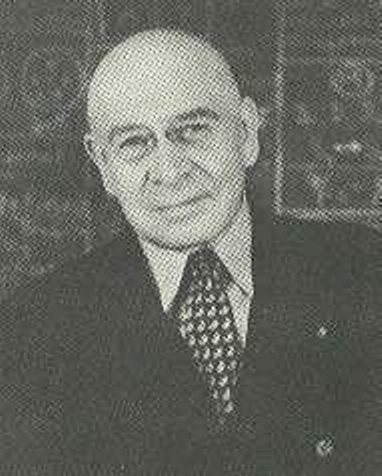
Alfred Korzybski
Alfred Habdank Skarbek Korzybski was a Polish-American philosopher and independent scholar who developed a field called general semantics, which he viewed as both distinct from, and more encompassing than, the field of semantics. He argued that human knowledge of the world is limited both by the human nervous system and the languages humans have developed, and thus no one can have direct access to reality, given that the most we can know is that which is filtered through the brain's responses to reality. His best known dictum is "The map is not the territory". Many of his ideas were presented in his book Science and Sanity (1933).
Power/knowledge : selected interviews and other writings, 1972-1977 : Foucault, Michel, 1926-1984
xi, 270 pages ; 22 cm

Simply Jekyll
A non-linear thread of important ideas weaved together to explore and understand the fabric of knowledge.
Weird Studies
Professor Phil Ford and writer J. F. Martel host a series of conversations on art and philosophy, dwelling on ideas that are hard to think and art that opens up rifts in what we are pleased to call "reality."
Epistemic courage
"'Epistemic Courage' is a timely and thought-provoking exploration of the ethics of belief. Drawing on a wide range of examples, from conspiracy theories to medical misinformation, Ichikawa shows why epistemology is no mere academic abstraction - the question of what to believe couldn't be more urgent. And, he argues, many mainstream ideas about what to believe - those emphasizing the importance of ensuring that one doesn't believe with insufficient evidence - are incomplete and distorting in important and harmful ways. A skeptical, negative bias about belief is connected to a conservative bias that reinforces the status quo. Throughout the book, Ichikawa argues that we need to shift our focus from avoiding false beliefs to actively seeking out true ones. Throughout the book, Ichikawa uses engaging and timely examples to illustrate his points. He tackles important questions, such as how moral considerations interact with evidential ones in deciding what to believe, and how to navigate the complex ethical issues around testimony, rape culture, and epistemic injustice. Accessible and rigorous, 'Epistemic Courage' invites readers to consider the importance of belief, and how it shapes our lives and the world around us. With its insightful analysis and compelling case studies, this book is an essential read for philosophers and anyone else interested in belief, social justice, and the pursuit of truth."--

Superintelligence: Paths, Dangers, Strategies
Superintelligence: Paths, Dangers, Strategies is a 2014 book by the philosopher Nick Bostrom. It explores how superintelligence could be created and what its features and motivations might be. It argues that superintelligence, if created, would be difficult to control, and that it could take over the world in order to accomplish its goals. The book also presents strategies to help make superintelligences whose goals benefit humanity. It was particularly influential for raising concerns about existential risk from artificial intelligence.

Free Speech on the Internet: The Crisis of Epistemic Authority
Abstract. Much of our knowledge of the world comes not from direct sensory experience, but from reliance on epistemic authorities: individuals or institutions that tell us what we ought to believe. For example, what most of us believe about natural selection, climate change, or the Holocaust comes from our reliance on epistemic authorities (scientists, historians). Sustaining epistemic authority depends, crucially, on social institutions that inculcate reliable second-order norms about whom to believe about what. The traditional media were crucial, in the age of mass democracy, with promulgating and sustaining such norms. The internet has obliterated the intermediaries who made that possible, and, in the process, undermined the epistemic standing of actual experts. This essay considers some possible changes to existing free speech doctrine to remedy the epistemological crisis brought about by the internet.
Reconciling truthfulness and relevance as epistemic and decision-theoretic utility.
A New Legibility: Theo Ellin Ballew
A New Legibility: Interactive Essay by Theo Ellin Ballew.
Education in a Time Between Worlds: Essays on the Futur…
Our world is currently undergoing major transformations…

Thoughtful and relevant outside math. A partial summary: Gowers thinks it’s important to sustain a human mathematical culture, but is unconvinced by the Leiden Declaration’s attempt to do that by reaffirming human ownership of specific *discoveries*.

tachikoma
an interesting blog post by Timothy Gowers on the Leiden declaration (on AI and Math), on why he didn't sign. it gets to a subtler aspect of control over AI and our future.
