
Are you Slop? Analyze your 'slop score' - a measure of how generic or unique your text appears to language models.
Slop-Machine Future
The arc of large language models is mediocre, and it bends toward “target procurement”.
NovGauge: A Fine-Grained Benchmark for Diagnosing LLMs'...
Large language models (LLMs) are increasingly used in peer review at major AI conferences, yet novelty remains a persistent weak point. Existing benchmarks assess novelty as a single holistic...

Do Large Language Models Perform the Way People Expect? Measuring the Human Generalization Function
What makes large language models (LLMs) impressive is also what makes them hard to evaluate: their diversity of uses. To evaluate these models, we must understand the purposes they will be used for. We consider a setting where these deployment decisions are made by people, and in particular, people's beliefs about where an LLM will perform well. We model such beliefs as the consequence of a human generalization function: having seen what an LLM gets right or wrong, people generalize to where else it might succeed. We collect a dataset of 19K examples of how humans make generalizations across 79 tasks from the MMLU and BIG-Bench benchmarks. We show that the human generalization function can be predicted using NLP methods: people have consistent structured ways to generalize. We then evaluate LLM alignment with the human generalization function. Our results show that -- especially for cases where the cost of mistakes is high -- more capable models (e.g. GPT-4) can do worse on the instances people choose to use them for, exactly because they are not aligned with the human generalization function.
Back-to-basics approach can match or outperform AI in language analysis
A new study led by Dr Andrea Nini at The University of Manchester has found that a grammar-based approach to language analysis can match or outperform advanced AI systems in identifying who wrote a text. The method, called LambdaG, uses patterns in grammar and sentence construction rather than large-scale AI models, offering comparable accuracy ...
Understanding Understanding: A Pragmatic Framework Motivated by...
Motivated by the rapid ascent of Large Language Models (LLMs) and debates about the extent to which they possess human-level qualities, we propose a framework for testing whether any agent (be it...
Do LLMs write like humans? Variation in grammatical and rhetorical styles
As large language models (LLMs) have grown in power and become more widely available, research has focused on their ability to complete various tasks and the biases they exhibit when doing so. In this study, we instead examine their writing style in detail. We show that instruction-tuned models, which are trained to answer questions and solve problems, have a distinct noun-heavy, informationally dense writing style, even when prompted to match the style of informal speech and writing. These findings suggest that instruction-tuned models generate text that does not align with genre conventions familiar to human audiences, and demonstrate the value of linguistic variables in evaluating the output of LLMs., Large language models (LLMs) are capable of writing grammatical text that follows instructions, answers questions, and solves problems. As they have advanced, it has become difficult to distinguish their output from human-written text. While past research has found some differences in features such as word choice and punctuation and developed classifiers to detect LLM output, none has studied the rhetorical styles of LLMs. Using several variants of Llama 3 and GPT-4o, we construct two parallel corpora of human- and LLM-written texts from common prompts. Using Douglas Biber’s set of lexical, grammatical, and rhetorical features, we identify systematic differences between LLMs and humans and between different LLMs. These differences persist when moving from smaller models to larger ones and are larger for instruction-tuned models than base models. This observation of differences demonstrates that despite their advanced abilities, LLMs struggle to match human stylistic variation. Attention to more advanced linguistic features can hence detect patterns in their behavior not previously recognized.

Hypothesis generation and updating in large language models
Large language models (LLMs) increasingly help people solve problems, from debugging code to repairing machinery. This process requires generating plausible hypotheses from partial descriptions,...
Why Do Large Language Models (LLMs) Struggle to Count Letters?
Large Language Models (LLMs) have achieved unprecedented performance on many complex tasks, being able, for example, to answer questions on almost any topic. However, they struggle with other simple tasks, such as counting the occurrences of letters in a word, as illustrated by the inability of many LLMs to count the number of "r" letters in "strawberry". Several works have studied this problem and linked it to the tokenization used by LLMs, to the intrinsic limitations of the attention mechanism, or to the lack of character-level training data. In this paper, we conduct an experimental study to evaluate the relations between the LLM errors when counting letters with 1) the frequency of the word and its components in the training dataset and 2) the complexity of the counting operation. We present a comprehensive analysis of the errors of LLMs when counting letter occurrences by evaluating a representative group of models over a large number of words. The results show a number of consistent trends in the models evaluated: 1) models are capable of recognizing the letters but not counting them; 2) the frequency of the word and tokens in the word does not have a significant impact on the LLM errors; 3) there is a positive correlation of letter frequency with errors, more frequent letters tend to have more counting errors, 4) the errors show a strong correlation with the number of letters or tokens in a word and 5) the strongest correlation occurs with the number of letters with counts larger than one, with most models being unable to correctly count words in which letters appear more than twice.
Why Do Large Language Models (LLMs) Struggle to Count Letters?
Large Language Models (LLMs) have achieved unprecedented performance on many complex tasks, being able, for example, to answer questions on almost any topic. However, they struggle with other simple tasks, such as counting the occurrences of letters in a word, as illustrated by the inability of many LLMs to count the number of "r" letters in "strawberry". Several works have studied this problem and linked it to the tokenization used by LLMs, to the intrinsic limitations of the attention mechanism, or to the lack of character-level training data. In this paper, we conduct an experimental study to evaluate the relations between the LLM errors when counting letters with 1) the frequency of the word and its components in the training dataset and 2) the complexity of the counting operation. We present a comprehensive analysis of the errors of LLMs when counting letter occurrences by evaluating a representative group of models over a large number of words. The results show a number of consistent trends in the models evaluated: 1) models are capable of recognizing the letters but not counting them; 2) the frequency of the word and tokens in the word does not have a significant impact on the LLM errors; 3) there is a positive correlation of letter frequency with errors, more frequent letters tend to have more counting errors, 4) the errors show a strong correlation with the number of letters or tokens in a word and 5) the strongest correlation occurs with the number of letters with counts larger than one, with most models being unable to correctly count words in which letters appear more than twice.
Andrej Karpathy on Twitter / X
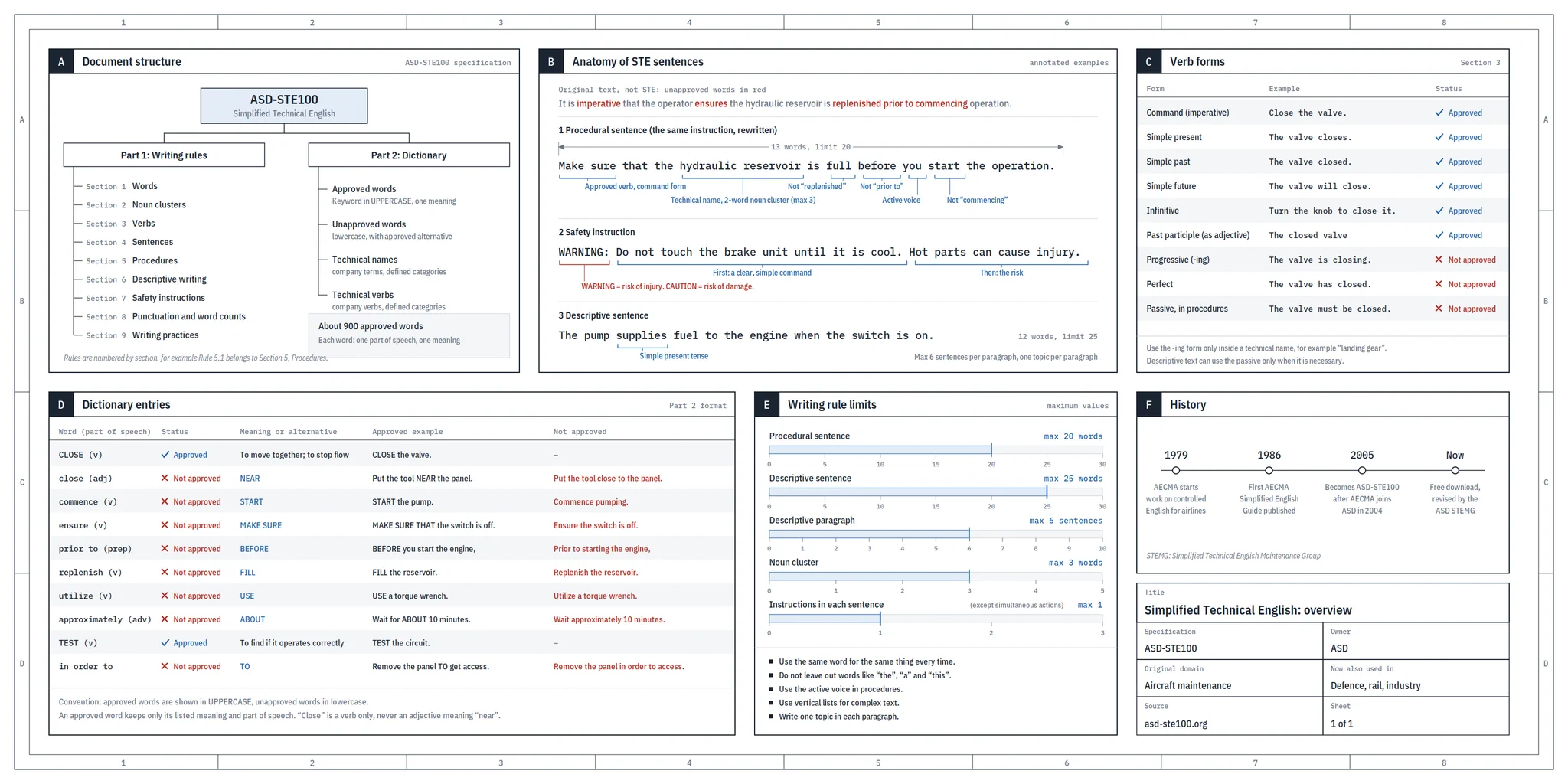
We'll be spending a lot more time trying to understand the outputs of language models. A few thoughts, tips & tricks:Writing. Something I've had success with: Ask your LLM to explain something in ASD-STE100, it's a controlled language specification originally developed for… pic.twitter.com/uMFWTcBCsl— Andrej Karpathy (@karpathy) October 2, 2026
Do language models accommodate their users? A study of linguistic convergence
While large language models (LLMs) are generally considered proficient in generating language, how similar their language usage is to that of humans remains understudied. In this paper, we test whether models exhibit linguistic convergence, a core pragmatic element of human language communication: do models adapt, or converge, to the linguistic patterns of their user? To answer this, we systematically compare model completions of existing dialogues to original human responses across sixteen language models, three dialogue corpora, and various stylometric features. We find that models strongly converge to the conversation's style, often significantly overfitting relative to the human baseline. While convergence patterns are often feature-specific, we observe consistent shifts in convergence across modeling settings, with instruction-tuned and larger models converging less than their pretrained and smaller counterparts. Given the differences in human and model convergence patterns, we hypothesize that the underlying mechanisms driving these behaviors are very different.
Do language models accommodate their users? A study of linguistic convergence
While large language models (LLMs) are generally considered proficient in generating language, how similar their language usage is to that of humans remains understudied. In this paper, we test whether models exhibit linguistic convergence, a core pragmatic element of human language communication: do models adapt, or converge, to the linguistic patterns of their user? To answer this, we systematically compare model completions of existing dialogues to original human responses across sixteen language models, three dialogue corpora, and various stylometric features. We find that models strongly converge to the conversation's style, often significantly overfitting relative to the human baseline. While convergence patterns are often feature-specific, we observe consistent shifts in convergence across modeling settings, with instruction-tuned and larger models converging less than their pretrained and smaller counterparts. Given the differences in human and model convergence patterns, we hypothesize that the underlying mechanisms driving these behaviors are very different.
Measuring short-form factuality in large language models
We present SimpleQA, a benchmark that evaluates the ability of language models to answer short, fact-seeking questions. We prioritized two properties in designing this eval. First, SimpleQA is challenging, as it is adversarially collected against GPT-4 responses. Second, responses are easy to grade, because questions are created such that there exists only a single, indisputable answer. Each answer in SimpleQA is graded as either correct, incorrect, or not attempted. A model with ideal behavior would get as many questions correct as possible while not attempting the questions for which it is not confident it knows the correct answer. SimpleQA is a simple, targeted evaluation for whether models "know what they know," and our hope is that this benchmark will remain relevant for the next few generations of frontier models. SimpleQA can be found at https://github.com/openai/simple-evals.
Measuring short-form factuality in large language models
We present SimpleQA, a benchmark that evaluates the ability of language models to answer short, fact-seeking questions. We prioritized two properties in designing this eval. First, SimpleQA is challenging, as it is adversarially collected against GPT-4 responses. Second, responses are easy to grade, because questions are created such that there exists only a single, indisputable answer. Each answer in SimpleQA is graded as either correct, incorrect, or not attempted. A model with ideal behavior would get as many questions correct as possible while not attempting the questions for which it is not confident it knows the correct answer. SimpleQA is a simple, targeted evaluation for whether models "know what they know," and our hope is that this benchmark will remain relevant for the next few generations of frontier models. SimpleQA can be found at https://github.com/openai/simple-evals.
Stanford CS336 Language Modeling from Scratch I 2025
How AI slop is causing a crisis in computer science
Preprint repositories and conference organizers are having to counter a tide of ‘AI slop’ submissions.