We review literature examining the effects of laws and regulations that require public disclosure of information. These requirements are most sensibly imposed in situations characterized by misaligned incentives and asymmetric information between, for example, a buyer and seller or an advisor and advisee. We review the economic literature relevant to such disclosure and then discuss how different psychological factors complicate, and in some cases radically change, the economic predictions. For example, limited attention, motivated attention, and biased assessments of probability on the part of information recipients can significantly diminish, or even reverse, the intended effects of disclosure requirements. In many cases, disclosure does not much affect the recipients of the information but does significantly affect the behavior of the providers, sometimes for the better and sometimes for the worse. We review research suggesting that simplified disclosure, standardized disclosure, vivid disclosure, and social comparison information can all be used to enhance the effectiveness of disclosure policies.
Are Information Disclosures Effective? Evidence from the Credit Card Market
Consumer protection in financial markets in the form of information disclosure is high on government agendas, even though there is little evidence of its effectiveness. We implement a randomized control trial in the credit card market for a large population of indebted cardholders and measure the impact of Truth-in-Lending-Act-type disclosures, de-biasing warning messages and social comparison information on default, indebtedness, account closings, and credit scores. We conduct extensive external validity exercises in several banks, with different disclosures, and with actual policy mandates. We find that providing salient interest rate disclosures had no effects, while comparisons and de-biasing messages had only modest effects at best.
Information Disclosure, Cognitive Biases, and Payday Borrowing
ABSTRACT Can psychology‐guided information disclosure induce borrowers to lower their use of high‐cost debt? In a field experiment at payday stores, we find that information that makes people think less narrowly (over time) about finance costs results in less borrowing. In particular, reinforcing the adding‐up dollar fees incurred when rolling over loans reduces the take‐up of future payday loans by 11% in the subsequent 4 months. Although we remain agnostic as to the overall sufficiency of better disclosure policy to “remedy” payday borrowing, we cast the 11% reduction in borrowing in light of the relative low cost of this policy.

Privacy and human behavior in the age of information
This Review summarizes and draws connections between diverse streams of empirical research on privacy behavior. We use three themes to connect insights from social and behavioral sciences: people's uncertainty about the consequences of privacy-related behaviors and their own preferences over those consequences; the context-dependence of people's concern, or lack thereof, about privacy; and the degree to which privacy concerns are malleable—manipulable by commercial and governmental interests. Organizing our discussion by these themes, we offer observations concerning the role of public policy in the protection of privacy in the information age.
Why Big Tech's Privacy Promises Are Lies
Explicit warnings reduce but do not eliminate the continued influence of misinformation
Information that initially is presumed to be correct, but that is later retracted or corrected, often continues to influence memory and reasoning. This occurs even if the retraction itself is well remembered. The present study investigated whether the continued influence of misinformation can be reduced by explicitly warning people at the outset that they may be misled. A specific warning— giving detailed information about the continued influence effect (CIE)—succeeded in reducing the continued reliance on outdated information but did not eliminate it. A more general warning—reminding people that facts are not always properly checked before information is disseminated—was even less effective. In an additional experiment, a specific warning was combined with the provision of a plausible alternative explanation for the retracted information. This combined manipulation further reduced the CIE but still failed to eliminate it altogether.

Information disclosure and credit card repayments: evidence from Malaysia
Purpose This study analyzes the role of information disclosure in influencing credit card repayments by focusing on three intervention methods for improving repayment decisions among credit cardholders. Design/methodology/approach This study uses the survey method to collect data. Four questionnaires are designed to identify which types of disclosure elicit better repayment decisions among credit cardholders. The participants were approached using the mall intercept method, and a total of 1,775 responses were obtained. Findings Estimations using means comparison tests show that not providing minimum payment information improves repayments. The expected benefits are not delivered by the provision of higher minimum payment information or additional information that highlights the negative effects of making the minimum repayment only. Further analysis using logit estimation reconfirms the benefit of not providing minimum payment information. However, when such information is given, low minimum payment information elicits better repayment decisions than high minimum payment information or additional information. Repayment worsens under the additional information condition compared to the high minimum payment condition. Research limitations/implications The findings of this study have a bearing on the decisions of policy makers, credit card issuers and consumers. Originality/value This paper clarifies the role of information in improving debt repayment decisions.
Unwillingness to pay for privacy: A field experiment
We measure willingness to pay for privacy in a field experiment. Participants bought at most one DVD from one of two competing online stores. One store consistently required more sensitive personal data than the other, but otherwise the stores were identical. In one treatment, DVDs were one Euro cheaper at the store requesting more personal information, and almost all buyers chose the cheaper store. Surprisingly, in the second treatment when prices were identical, participants bought from both shops equally often.
Information and Contract Design for Repeated Interactions between...
We study the consequences of information asymmetries and misaligned incentives in settings with multiple independent agents. We model an interaction between a Sender, who holds vital private...

Minimum Required Payment and Supplemental Information Disclosure Effects on Consumer Debt Repayment Decisions
Repayment decisions—how much of the loan to repay and when to make the payments—directly influence consumer debt levels. The authors examine how minimum required payment policy and loan information disclosed to consumers influence repayment decisions. They find that while presenting minimum required payment information has a negative impact on repayment decisions, increasing the minimum required level has a positive effect on repayment for most consumers. Experimental evidence from U.S. consumers shows that consumers’ propensity to pay the minimum required each month moderates these effects; U.K. credit card field data indicate that borrowers’ credit limit and balance due also moderate these effects. However, increasing the minimum level is unlikely to completely eliminate the negative effect of presenting minimum payment information. In addition, disclosing supplemental information, such as future interest cost and time needed to repay the loan, does not reduce the negative effects of including minimum payment information and has no substantial positive effect on repayments. This research offers new insights into the debt repayment process and has implications for consumers, lenders, and public policy.

Designing Information Provision Experiments
Information provision experiments allow researchers to test economic theories and answer policy-relevant questions by varying the information set available to respondents. We survey the emerging literature using information provision experiments in economics and discuss applications in macroeconomics, finance, political economy, public economics, labor economics, and health economics. We also discuss design considerations and provide best-practice recommendations on how to (i) measure beliefs; (ii) design the information intervention; (iii) measure belief updating; (iv) deal with potential confounds, such as experimenter demand effects; and (v) recruit respondents using online panels. We finally discuss typical effect sizes and provide sample size recommendations.
Improving Customer Compatibility with Tradeoff Transparency
Through a large-scale field experiment with 393,036 customers considering opening a credit card account with a nationwide retail bank, we investigate how providing transparency into an offering’s tradeoffs affects subsequent rates of customer acquisition and long-run engagement. Although we find tradeoff transparency to have an insignificant effect on acquisition rates, customers who were shown each offering’s tradeoffs selected different products than those who were not. Moreover, prospective customers who experienced transparency and subsequently chose to open an account went on to exhibit higher-quality service relationships over time. Monthly spending was 9.9% higher and cancellation rates were 20.5% lower among those who experienced transparency into each offering’s tradeoffs. Increased product use and retention accrued disproportionately to customers with prior category experience: more-experienced customers who were provided transparency spent 19.2% more on a monthly basis and were 33.7% less likely to defect after nine months. Importantly, we find that these gains in engagement and retention do not come at the expense of customers’ financial well-being: the probability of making late payments was reduced among customers who experienced transparency. We further find that the positive effects of tradeoff transparency on engagement and retention were attenuated in the presence of a promotion that provided financial incentives to choose particular offerings. Taken together, these results suggest that providing transparency into an offering’s tradeoffs may be an effective strategy for informing customer choices, leading to better outcomes for customers and firms alike. This paper was accepted by Vishal Gaur, operations management. Funding: Funding for this research, apart from the costs Commonwealth Bank of Australia internally incurred to support the experiment, was provided by Harvard Business School. R. W. Buell has received compensation from Commonwealth Bank of Australia in the past for executive education teaching. Supplemental Material: The online appendix and data files are available at https://doi.org/10.1287/mnsc.2024.4985 .

Reading the Fine Print: Information Disclosure in the Brazilian Credit Card Market
Consumer credit regulations usually require that lenders disclose interest rates. However, in the absence of specific prominence requirements, lenders can conceal the interest rate in the fine print while still complying with the law. I examine the effect of such a strategy using a field experiment in Brazil in which a credit card company offered their clients payment plans to pay off their balances. Using randomized contract interest rates and the degree of rate disclosure, I show that most clients are rate sensitive, whether or not rates are prominently disclosed. The elasticity of payment plan enrollment with respect to the interest rate ranges from −0.711 to −0.880. High-risk clients are an exception; these clients are rate sensitive only when disclosure is prominent. I also show that clients are influenced by nudges that favor longer-term contracts. Conditional on enrollment, the proportion of clients who choose a longer-term contract is 40 percentage points higher when a longer-term contract is featured in the advertisement layout. This effect, however, is weaker when stakes are higher. Data, as supplemental material, are available at http://dx.doi.org/10.1287/mnsc.2015.2281 . This paper was accepted by Wei Jiang, finance.
The Liar’s Dividend: Can Politicians Claim Misinformation to Evade Accountability?
This study addresses the phenomenon of misinformation about misinformation, or politicians "crying wolf"' over fake news. Strategic and false claims that stories are fake news or deepfakes may benefit politicians by helping them maintain support after a scandal. We posit that this benefit, known as the "liar's dividend," may be achieved through two politician strategies: by invoking informational uncertainty or by encouraging oppositional rallying of core supporters. We administer five survey experiments to over 15,000 American adults detailing hypothetical politician responses to stories describing real politician scandals. We find that claims of misinformation representing both strategies raise politician support across partisan subgroups. These strategies are effective against text-based reports of scandals, but are largely ineffective against video evidence and do not reduce general trust in media. Finally, these false claims produce greater dividends for politicians than alternative responses to scandal, such as remaining silent or apologizing.
Do people like financial nudges?
Do people like financial nudges? To answer that question we conducted a pre-registered survey presenting people with 36 hypothetical scenarios describing financial interventions. We varied levels of transparency (i.e., explaining how the interventions worked), framing (interventions framed in terms of spending, or saving), and ‘System’ (interventions could target either System 1 or System 2). Participants were a random sample of 2,100 people drawn from a representative Australian population. All financial interventions were tested across six dependent variables: approval, benefit, ethics, manipulation, the likelihood of use, as well as the likelihood of use if the intervention were to be proposed by a bank. Results indicate that people generally approve of financial interventions, rating them as neutral to positive across all dependent variables (except for manipulation, which was reverse coded). We find effects of framing and System. People have strong and significant preferences for System 2 interventions, and interventions framed in terms of savings. Transparency was not found to have a significant impact on how people rate financial interventions. Financial interventions continue to be rated positive, regardless of the messenger. Looking at demographics, we find that participants who were female, younger, living in metro areas and earning higher incomes were most likely to favor financial interventions, and this effect is especially strong for those aged under 45. We discuss the implications for these results as applied to the financial sector.

The Effects of Financial Incentives in Experiments: A Review and Capital-Labor-Production Framework
We review 74 experiments with no, low, or high performance-based financial incentives. The modal result has no effect on mean performance (though variance is usually reduced by higher payment). Higher incentive does improve performance often, typically judgment tasks that are responsive to better effort. Incentives also reduce “presentation” effects (e.g., generosity and risk-seeking). Incentive effects are comparable to effects of other variables, particularly “cognitive capital” and task “production” demands, and interact with those variables, so a narrow-minded focus on incentives alone is misguided. We also note that no replicated study has made rationality violations disappear purely by raising incentives.
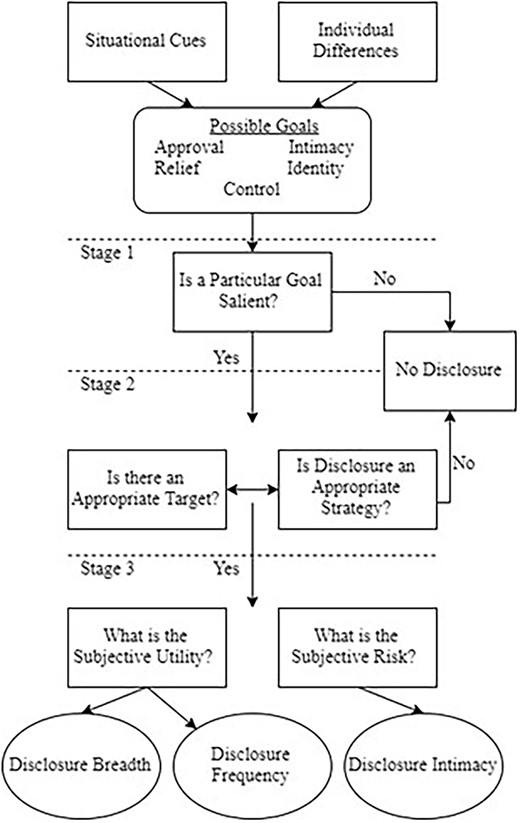
Digital Confessions: The Willingness to Disclose Intimate Information to a Chatbot and its Impact on Emotional Well-Being
Abstract Chatbots have several features that may stimulate self-disclosure, such as accessibility, anonymity, convenience and their perceived non-judgmental nature. The aim of this study is to investigate if people disclose (more) intimate information to a chatbot, compared to a human, and to what extent this enhances their emotional well-being through feelings of relief. An experiment with a 2 (human vs. chatbot) by 2 (low empathetic vs. high empathetic) design was conducted (N = 286). Results showed that there was no difference in the self-reported intimacy of self-disclosure between the human and chatbot conditions. Furthermore, people perceived less fear of judgment in the chatbot condition, but more trust in the human interactant compared to the chatbot interactant. Perceived anonymity was the only variable to directly impact self-disclosure intimacy. The finding that humans disclose equally intimate information to chatbots and humans is in line with the CASA paradigm, which states that people can react in a social manner to both computers and humans.