


Americans lead shorter and less healthy lives than do people in other high-income countries. We review the evidence and explanations for these variations in longevity and health. Our overview suggests that the US health disadvantage applies to multiple mortality and morbidity outcomes. The American health disadvantage begins at birth and extends across the life course, and it is particularly marked for American women and for regions in the US South and Midwest. Proposed explanations include differences in health care, individual behaviors, socioeconomic inequalities, and the built physical environment. Although these factors may contribute to poorer health in America, a focus on proximal causes fails to adequately account for the ubiquity of the US health disadvantage across the life course. We discuss the role of specific public policies and conclude that while multiple causes are implicated, crucial differences in social policy might underlie an important part of the US health disadvantage.
Associations of Sociodemographic and Neighborhood Vulnerability With Cardiovascular Health in Midlife Women in the United States
BACKGROUND: Many women have suboptimal cardiovascular health (CVH), which declines during midlife. Few studies have characterized CVH across the menopausal transition or identified its sociodemographic and neighborhood determinants. METHODS: We analyzed a prospective cohort of women in eastern Massachusetts enrolled during pregnancy (1999–2002) and followed to midlife (2019–2024). Exposures included household income, education, race and ethnicity, and neighborhood Social Vulnerability Index (categorized from very low [<20th percentile] to very high [≥80th percentile]; higher categories=greater neighborhood vulnerability). Women self-reported their menopause status using questionnaires. Using Life’s Essential 8, we derived CVH scores (0–100 points; higher score=better CVH) at 3-, 8-, 13-, 18-, and 23-year follow-up visits. Linear spline mixed-effect models examined associations of sociodemographics and neighborhood Social Vulnerability Index with differences in CVH across different menopause stages (premenopause, perimenopause, and postmenopause). RESULTS: Among 1200 women (mean enrollment age, 32.1 years; 67.5% Non-Hispanic White), 15.4% had household incomes ≤$40 000/y, 8.8% had ≤high school education, and 17.4% resided in very high Social Vulnerability Index neighborhoods. After covariate adjustment, women with lower income, lower education, or identifying as Non-Hispanic Black exhibited lower CVH across follow-up. Independent of individual sociodemographics, continued residence in vulnerable neighborhoods over time was associated with lower CVH and unfavorable CVH trajectories across follow-up. For example, residence in very high (versus very low) Social Vulnerability Index neighborhoods from enrollment to 3-year follow-up corresponded to mean CVH differences of −6.7 (95% CI, −12.3 to −1.2) at 3-year, −9.8 (95% CI, −15.6 to −4.0) at 8-year, −8.9 (95% CI, −13.9 to −3.9) at 13-year, −6.7 (95% CI, −12.9 to −0.5) at 18-year, and −7.2 (95% CI, −12.5 to −1.9) at 23-year follow-up, and with faster CVH score decline during premenopause (−0.62 points/y; 95% CI, −1.22 to −0.02). CONCLUSIONS: Women from disadvantaged sociodemographic backgrounds or residing in vulnerable neighborhoods exhibit poorer CVH across the menopausal transition, highlighting opportunities to optimize long-term CVH and mitigate cardiovascular disease risk.

US Domestic Policy Dashboard - Impact Counter | Impact Counter
Explore US domestic policies and their impact on public health across all branches of government.

Homebound: The Long-Term Rise in Time Spent at Home Among U.S. Adults
The changes in daily life induced by the COVID-19 pandemic brought renewed attention to longstanding concerns about social isolation in the United States. Despite the links between the physical setting for individuals' daily lives and their connections with family, friends, and the various institutions of collective life, trends in where American adults spend their time have been largely overlooked as researchers have focused on how and with whom they spend their time. This article analyzes data from the American Time Use Survey over a timeframe spanning nineteen years and argues that the changes in Americans' daily routines induced by the COVID era should be seen as an acceleration of a longer-term trend: the rise of time spent at home. Results show that from 2003 to 2022, average time spent at home among American adults has risen by one hour and 39 minutes in a typical day. Time at home has risen for every subset of the population and for virtually all activities. Preliminary analysis indicates that time at home is associated with lower levels of happiness and less meaning, suggesting the need for enhanced empirical attention to this major shift in the setting of American life.

Homebound: The Long-Term Rise in Time Spent at Home Among U.S. Adults
The changes in daily life induced by the COVID-19 pandemic brought renewed attention to longstanding concerns about social isolation in the United States. Despite the links between the physical setting for individuals' daily lives and their connections with family, friends, and the various institutions of collective life, trends in where American adults spend their time have been largely overlooked as researchers have focused on how and with whom they spend their time. This article analyzes data from the American Time Use Survey over a timeframe spanning nineteen years and argues that the changes in Americans' daily routines induced by the COVID era should be seen as an acceleration of a longer-term trend: the rise of time spent at home. Results show that from 2003 to 2022, average time spent at home among American adults has risen by one hour and 39 minutes in a typical day. Time at home has risen for every subset of the population and for virtually all activities. Preliminary analysis indicates that time at home is associated with lower levels of happiness and less meaning, suggesting the need for enhanced empirical attention to this major shift in the setting of American life.
America has a loneliness epidemic. Here are 6 steps to address it
Lacking connection can increase the risk for premature death to levels comparable to smoking 15 cigarettes a day, according to a new advisory from the U.S. Surgeon General.

The Oregon Health Insurance Experiment: Evidence from the First Year*
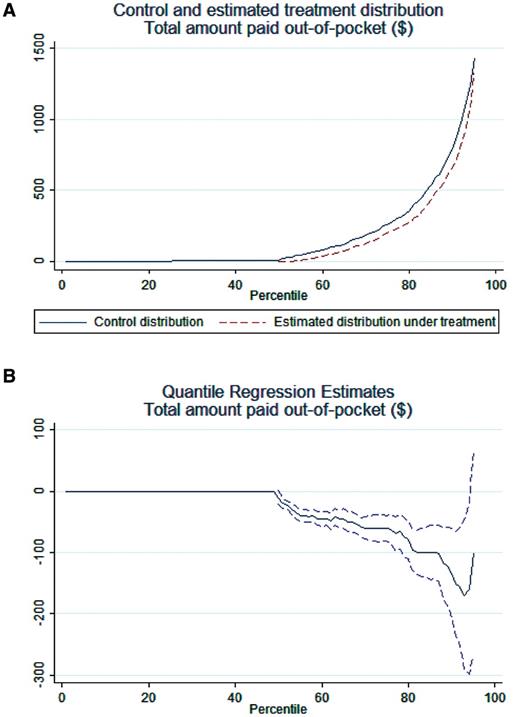
Abstract In 2008, a group of uninsured low-income adults in Oregon was selected by lottery to be given the chance to apply for Medicaid. This lottery provides an opportunity to gauge the effects of expanding access to public health insurance on the health care use, financial strain, and health of low-income adults using a randomized controlled design. In the year after random assignment, the treatment group selected by the lottery was about 25 percentage points more likely to have insurance than the control group that was not selected. We find that in this first year, the treatment group had substantively and statistically significantly higher health care utilization (including primary and preventive care as well as hospitalizations), lower out-of-pocket medical expenditures and medical debt (including fewer bills sent to collection), and better self-reported physical and mental health than the control group.
Review of <i>The Ethics of Public Health Paternalism</i>
Martin Wilkinson’s book The Ethics of Public Health Paternalism is a normative analysis of paternalistic governmental policies within liberal democracies that …

Choose to Lose: Health Plan Choices from a Menu with Dominated Option*
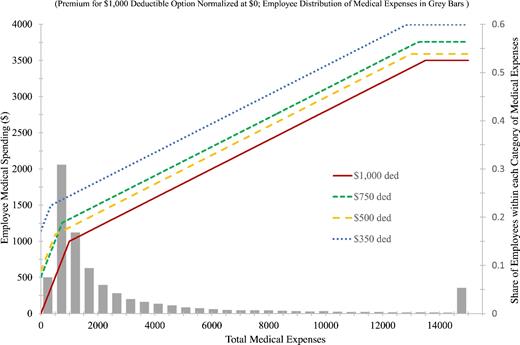
Abstract We examine the health plan choices that 23,894 employees at a U.S. firm made from a large menu of options that differed only in financial cost-sharing and premium. These decisions provide a clear test of the predictions of the standard economic model of insurance choice in the absence of choice frictions because plans were priced so that nearly every plan with a lower deductible was financially dominated by an otherwise identical plan with a high deductible. We document that the majority of employees chose dominated plans, which resulted in excess spending equivalent to 24% of chosen plan premiums. Low-income employees were significantly more likely to choose dominated plans, and most employees did not switch into more financially efficient plans in the subsequent year. We show that the choice of dominated plans cannot be rationalized by standard risk preference or any expectations about health risk. Testing alternative explanations with a series of hypothetical-choice experiments, we find that the popularity of dominated plans was not primarily driven by the size and complexity of the plan menu, nor informed preferences for avoiding high deductibles, but by employees’ lack of understanding of health insurance. Our findings challenge the standard practice of inferring risk preferences from insurance choices and raise doubts about the welfare benefits of health reforms that expand consumer choice.
Safeguarding human health in the Anthropocene epoch: report of The Rockefeller Foundation–Lancet Commission on planetary health
Far-reaching changes to the structure and function of the Earth's natural systems represent a growing threat to human health. And yet, global health has mainly improved as these changes have gathered pace. What is the explanation? As a Commission, we are deeply concerned that the explanation is straightforward and sobering: we have been mortgaging the health of future generations to realise economic and development gains in the present. By unsustainably exploiting nature's resources, human civilisation has flourished but now risks substantial health effects from the degradation of nature's life support systems in the future.

Effects of international sanctions on age-specific mortality: a cross-national panel data analysis
Background Previous research has shown a correlation between the imposition of sanctions and worsening health conditions in target countries. However, the direction of causality in this relationship remains unclear. No study has yet examined the effects of sanctions on age-specific mortality rates in cross-country panel data using methods designed to address causal identification in observational data. Methods In this cross-national panel data analysis, we analysed the effect on health of sanctions using a panel dataset of age-specific mortality rates and sanctions episodes for 152 countries between 1971 and 2021. We apply a range of methods designed to address causal questions using observational data, including entropy balancing, Granger causality, event-study representations, and instrumental variables. Findings Our findings showed a significant causal association between sanctions and increased mortality. We found the strongest effects for unilateral, economic, and US sanctions, whereas we found no statistical evidence of an effect for UN sanctions. Mortality effects ranged from 8·4 log points (95% CI 3·9–13·0) for children younger than 5 years to 2·4 log points (0·9–4·0) for individuals aged 60–80 years. We estimated that unilateral sanctions were associated with an annual toll of 564 258 deaths (95% CI 367 838–760 677), similar to the global mortality burden associated with armed conflict. Interpretation Sanctions have substantial adverse effects on public health, with a death toll similar to that of wars. Our findings underscore the need to rethink sanctions as a foreign-policy tool, highlighting the importance of exercising restraint in their use and seriously considering efforts to reform their design. Funding The Center for Economic and Policy Research.
Avoidable mortality, risk factors and policies for tackling noncommunicable diseases – leveraging data for impact: monitoring commitments in the WHO European Region ahead of the Fourth United Nations High-Level Meeting
The report notes that, in order to tackle NCDs and address the commercial, social, environmental and digital determinants of health, there is a need for accelerated multisectoral whole-of-government and whole-of-society action, integrated policies, enhanced preventive measures and strengthened health systems.

Can Consumers Make Affordable Care Affordable? The Value of Choice Architecture
Tens of millions of people are currently choosing health coverage on a state or federal health insurance exchange as part of the Patient Protection and Affordable Care Act. We examine how well people make these choices, how well they think they do, and what can be done to improve these choices. We conducted 6 experiments asking people to choose the most cost-effective policy using websites modeled on current exchanges. Our results suggest there is significant room for improvement. Without interventions, respondents perform at near chance levels and show a significant bias, overweighting out-of-pocket expenses and deductibles. Financial incentives do not improve performance, and decision-makers do not realize that they are performing poorly. However, performance can be improved quite markedly by providing calculation aids, and by choosing a “smart” default. Implementing these psychologically based principles could save purchasers of policies and taxpayers approximately 10 billion dollars every year.
Digital inequality in communication during a time of physical distancing: The case of COVID-19
In times of physical distancing, such as during the COVID-19 pandemic, people are likely to turn to digital communication to replace in-person interactions. Yet, persisting digital inequality suggests that not everyone will be equally able or disposed to increasing digital communication during a public health crisis. Using survey data from a national sample of U.S. participants (N = 2,925) that we collected during the early months of the pandemic, we analyzed how sociodemographics, living arrangements, and Internet experiences and skills relate to increases and decreases in various digital communication methods. We find that people privileged in their socioeconomic status, their Internet skills and online experiences are more likely to increase and less likely to decrease digital communication during the pandemic. The findings illustrate how digital inequalities can put already disadvantaged groups at greater risk of diminished social contact during a public health crisis. We discuss the theoretical implications of our findings for digital inequality research, the practical implications for inclusive crisis responses, and directions for future research.

Statistical Modeling, Causal Inference, and Social Science
I saw in a recent issue of the Times Literary Supplement that you have been critical of the “chambermaid” study which purported to show that people were losing weight without changing their diet or exercise. I agree that this study did not show what it claimed.
The persistence of cognitive biases in financial decisions across economic groups
While economic inequality continues to rise within countries, efforts to address it have been largely ineffective, particularly those involving behavioral approaches. It is often implied but not tested that choice patterns among low-income individuals may be a factor impeding behavioral interventions aimed at improving upward economic mobility. To test this, we assessed rates of ten cognitive biases across nearly 5000 participants from 27 countries. Our analyses were primarily focused on 1458 individuals that were either low-income adults or individuals who grew up in disadvantaged households but had above-average financial well-being as adults, known as positive deviants. Using discrete and complex models, we find evidence of no differences within or between groups or countries. We therefore conclude that choices impeded by cognitive biases alone cannot explain why some individuals do not experience upward economic mobility. Policies must combine both behavioral and structural interventions to improve financial well-being across populations.

What is the impact of IMF structural adjustment on social outcomes in the global South? Our analysis in the BMJ Global Health compiles evidence from existing empirical studies with advanced methods. The record is devastating. Buckle up:🧵 gh.bmj.com/content/bmjgh/11/Suppl_1/e017…
