

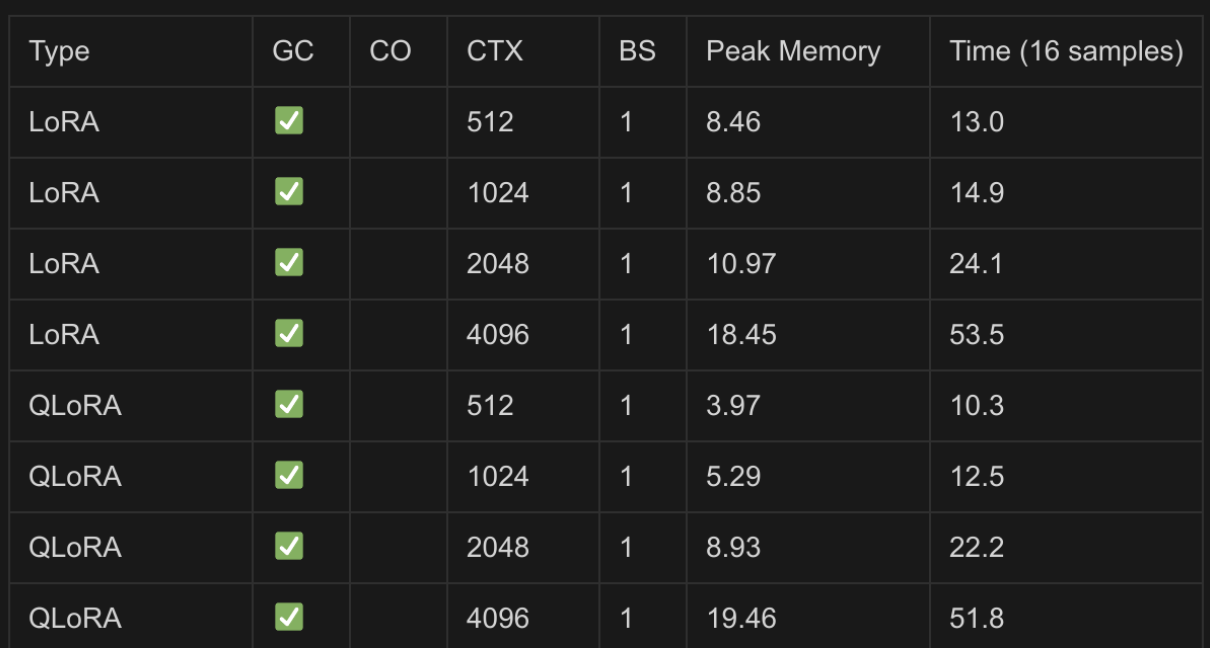
We’re releasing an open source system, based on FSDP and QLoRA, that can train a 70b model on two 24GB GPUs.
Georgi Gerganov on Twitter / X
gpt-oss is a great modelIMO OpenAI showed us the blueprint for winning local AI:- Interleaved SWA- Small head sizes in the attention- Attention sinks- Mixture of Experts FFN- 4-bit trainingAll of these parts combined together result in the best architecture suitable for…— Georgi Gerganov (@ggerganov) August 28, 2025
Edge0-145B: Open-Source On-Device AI with 145B Parameters
Meet Edge0-145B, an open-source 145B model for local coding, reasoning, and agent tasks, with no cloud-model token fees for local inference.

mudler/LocalAI
LocalAI is the open-source AI engine. Run any model - LLMs, vision, voice, image, video - on any hardware. No GPU required.
180B Parameters, 32GB of RAM: Pushing MoE Inference to the Limit with Transformers
We’re on a journey to advance and democratize artificial intelligence through open source and open science.

Liquid AI on Twitter / X
Today, we release LFM2.5-350M. Agentic loops at 350M parameters.A 350M model trained for reliable data extraction and tool use, where models at this scale typically struggle.<500MB when quantized, built for environments where compute, memory, and latency are constrained.🧵 pic.twitter.com/zZPKzcCwH9— Liquid AI (@liquidai) March 31, 2026

Build Bigger With Small Ai: Running Small Models Locally
6 months to live for open models
The most serious test to date of open source AI’s viability is happening right now.

OpenAI partners with Cerebras
OpenAI partners with Cerebras to add 750MW of high-speed AI compute, reducing inference latency and making ChatGPT faster for real-time AI workloads.
Open-Source AI & Open Models Reading List
How to get up to speed on open models and their implications.
Introducing LFM2: The Fastest On-Device Foundation Models on the Market | Liquid AI
Today, we release LFM2, a new class of Liquid Foundation Models (LFMs) that sets a new standard in quality, speed, and memory efficiency for on-device deployment. Built on a hybrid architecture, LFM2 delivers 200% faster decode and prefill performance than Qwen3 and Gemma 3 on CPU. It also significantly outperforms models in each size class on instruction-following and function calling—the core capabilities that make LLMs reliable for building AI agents.

google-ai-edge/LiteRT
LiteRT, successor to TensorFlow Lite. is Google's On-device framework for high-performance ML & GenAI deployment on edge platforms, via efficient conversion, runtime, and optimization
OpenAI News
Stay up to speed on the rapid advancement of AI technology and the benefits it offers to humanity.
OpenAI News
Stay up to speed on the rapid advancement of AI technology and the benefits it offers to humanity.
Mesh LLM: distributed AI computing on iroh
How Mesh LLM pools existing GPU resources across machines into a single OpenAI-compatible API, built on iroh.