Automated attack surface analysis and reduction can meaningfully improve the security of deployed software in the near term. In this post, we preview data we’ve collected from applying attack surface reduction techniques to large open-source codebases using Claude.
How We Exploited CodeRabbit: From a Simple PR to RCE and Write Access on 1M Repositories - Kudelski Security Research Center
Aug 19, 2025 - Nils Amiet -
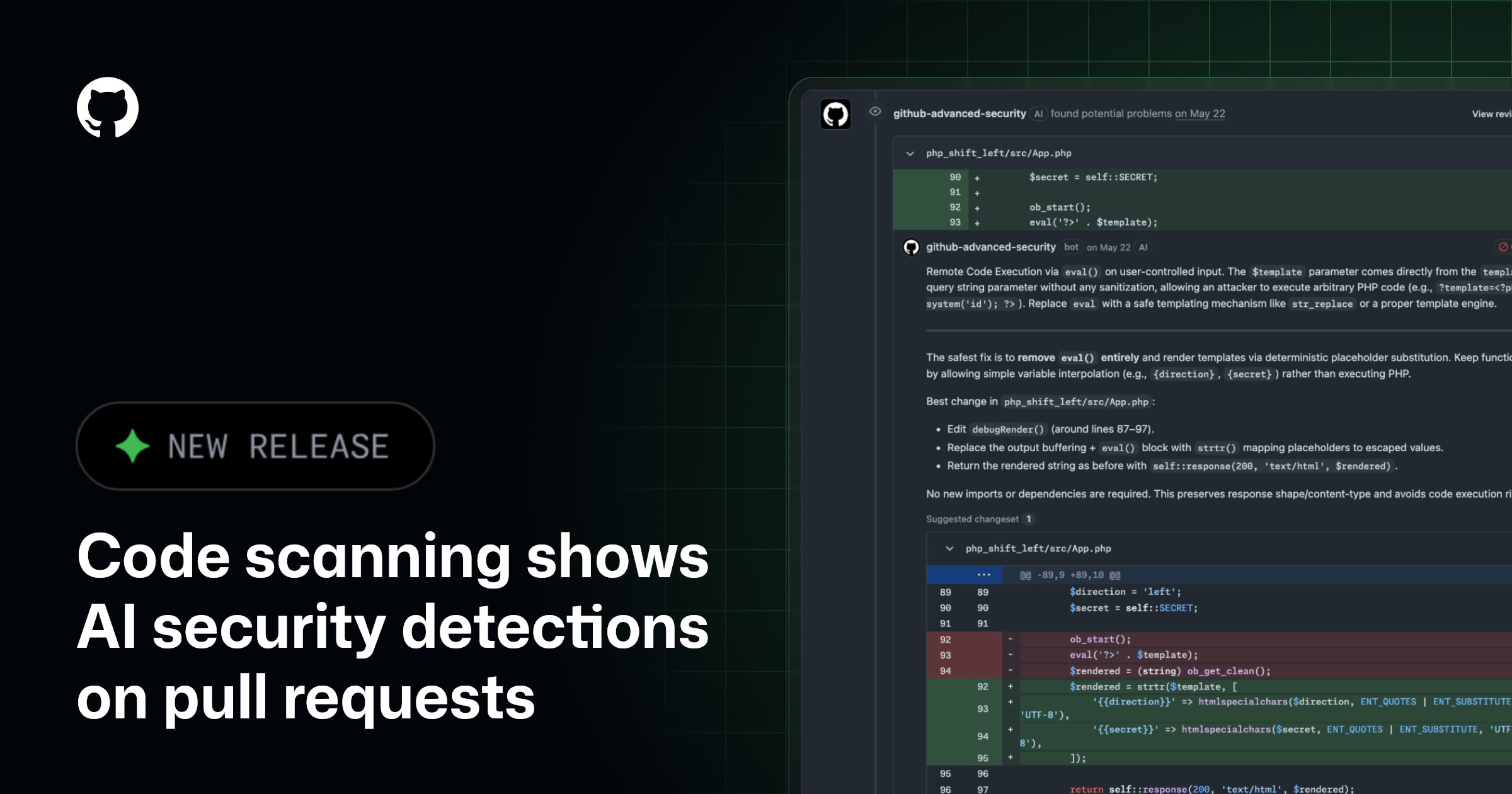
Code scanning shows AI security detections on pull requests - GitHub Changelog
GitHub code scanning now surfaces AI-powered security detections directly on pull requests, expanding vulnerability coverage to languages and frameworks not currently supported by CodeQL. These detections help teams identify and…
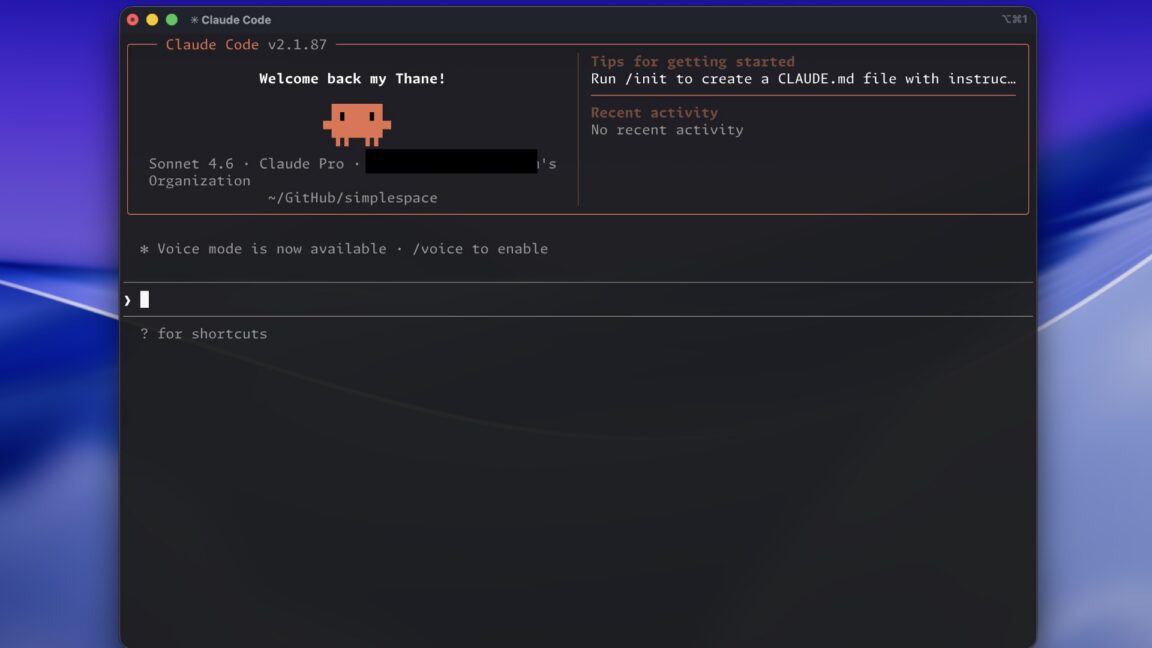
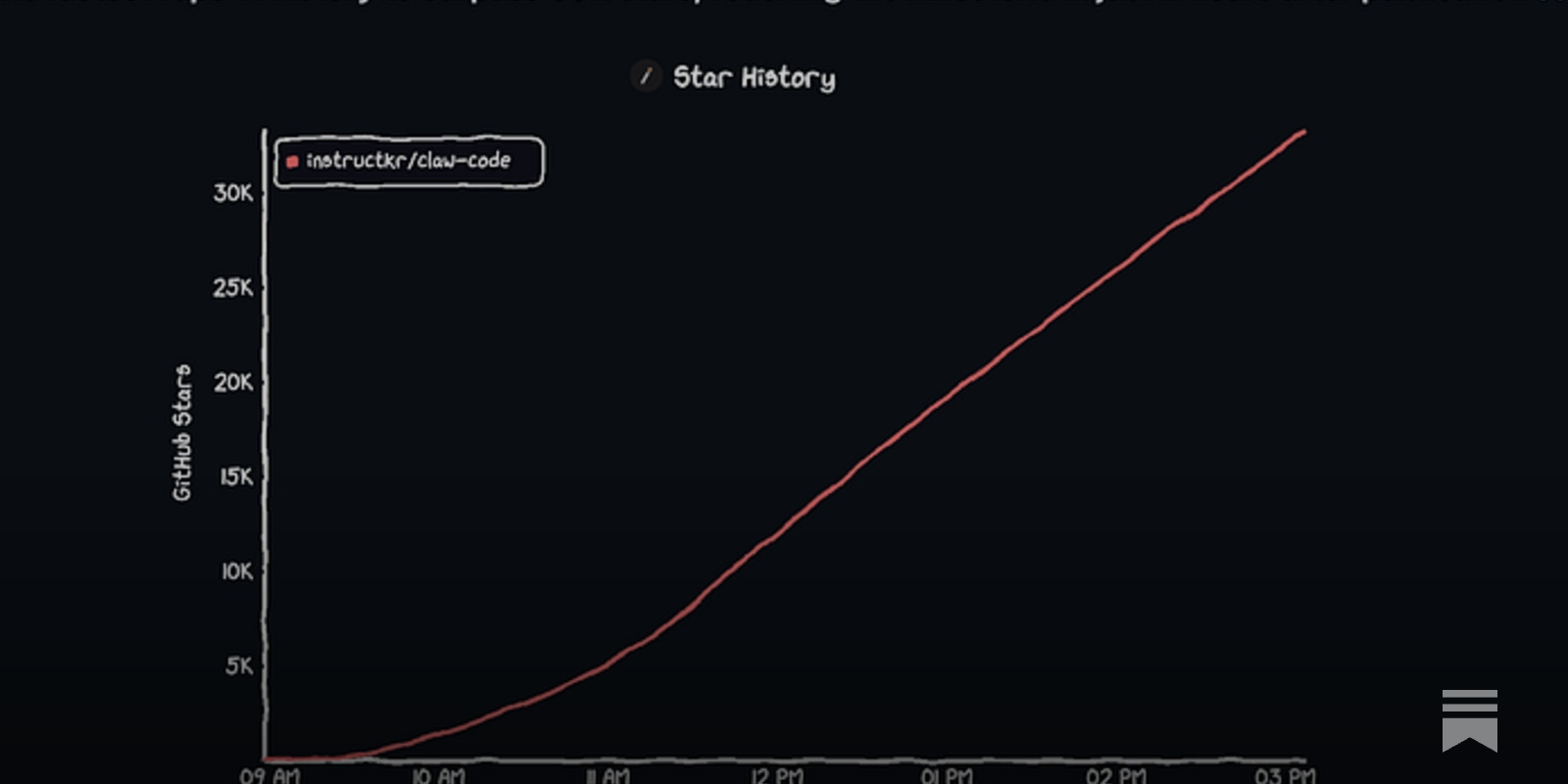
Entire Claude Code CLI source code leaks thanks to exposed map file
512,000 lines of code that competitors and hobbyists will be studying for weeks.
ExploitGym: Can AI Agents Turn Security Vulnerabilities into Real Attacks?
AI agents are rapidly gaining capabilities that could significantly reshape cybersecurity, making rigorous evaluation urgent. A critical capability is exploitation: turning a vulnerability, which is not yet an attack, into a concrete security impact, such as unauthorized file access or code execution. Exploitation is a particularly challenging task because it requires low-level program reasoning (e.g., about memory layout), runtime adaptation, and sustained progress over long horizons. Meanwhile, it is inherently dual-use, supporting defensive workflows while lowering the barrier for offense. Despite its importance and diagnostic value, exploitation remains under-evaluated. To address this gap, we introduce ExploitGym, a large-scale, diverse, realistic benchmark on the exploitation capabilities of AI agents. Given a program input that triggers a vulnerability, ExploitGym tasks agents with progressively extending it into a working exploit. The benchmark comprises 898 instances sourced from real-world vulnerabilities across three domains, including userspace programs, Google's V8 JavaScript engine, and the Linux kernel. We vary the security protections applied to each instance, isolating their impact on agent performance. All configurations are packaged in reproducible containerized environments. Our evaluation shows that while exploitation remains challenging, frontier models can successfully exploit a non-trivial fraction of vulnerabilities. For example, the strongest configurations are Anthropic's latest model Claude Mythos Preview and OpenAI's GPT-5.5, which produce working exploits for 157 and 120 instances, respectively. Notably, even with widely used defenses enabled, models retain non-trivial success rates. These results establish ExploitGym as an effective testbed for exploitation and highlight the growing cybersecurity risks posed by increasingly capable AI agents.
Securing CI/CD in an agentic world: Claude Code Github action case | Microsoft Security Blog
Microsoft Threat Intelligence identified a prompt injection pathway in Claude Code GitHub Action that allowed access to workflow secrets under specific conditions. This research examines the attack chain, responsible disclosure process, Anthropic's mitigation, and guidance for securing AI-powered CI/CD workflows.

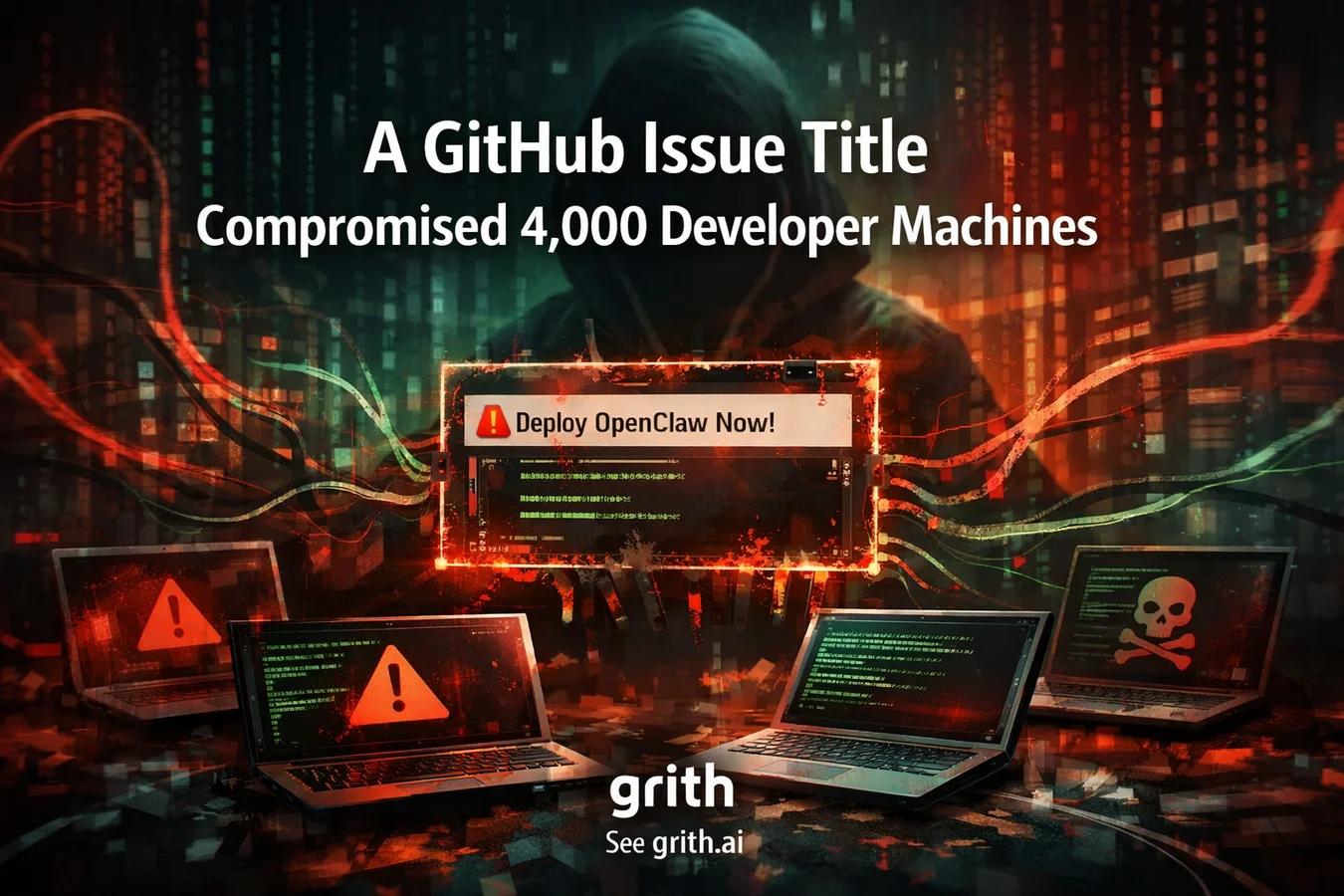
A GitHub Issue Title Compromised 4,000 Developer Machines
A prompt injection in a GitHub issue triggered a chain reaction that ended with 4,000 developers getting OpenClaw installed without consent. The attack composes well-understood vulnerabilities into something new: one AI tool bootstrapping another.
Nicholas Carlini - Black-hat LLMs | [un]prompted 2026
What I Found Interesting in Claude Code's Source
A breakdown of the most interesting engineering patterns in Claude Code's leaked source code: composable system prompts, runtime instruction injection, context compression, forking, prompt caching architecture, and more.
Diving into Claude Code's Source Code Leak
Engineer’s Codex is a publication about real-world software engineering.
Overview - Claude Code Docs
Claude Code is an agentic coding tool that reads your codebase, edits files, runs commands, and integrates with your development tools. Available in your terminal, IDE, desktop app, and browser.

Overview - Claude Code Docs
Claude Code is an agentic coding tool that reads your codebase, edits files, runs commands, and integrates with your development tools. Available in your terminal, IDE, desktop app, and browser.
Overview - Claude Code Docs
Claude Code is an agentic coding tool that reads your codebase, edits files, runs commands, and integrates with your development tools. Available in your terminal, IDE, desktop app, and browser.
Microsoft's open source tools were hacked to steal passwords of AI developers | TechCrunch
Microsoft shut down dozens of GitHub code repositories for Azure and AI coding tools after a reported hack.

Paseo – Run Claude Code, Codex, Copilot, OpenCode from anywhere
Open source app for Claude Code, Codex, OpenCode, Pi, and 30+ more coding agents. Run many agents in parallel on your machines. Editor, terminals, diffs, pull requests, and a browser in one window. One download on desktop. The full app on iOS and Android.

I Switched From Claude Code to OpenCode — Here's Why
I tested OpenCode against Claude Code for real development work. Here's what surprised me about the open-source alternative — and what I don't miss.