


All modern language models sometimes act like they have emotions. What’s behind these behaviors? Our interpretability team investigates.
When AIs act emotional
Tracing the thoughts of a large language model
Anthropic's latest interpretability research: a new microscope to understand Claude's internal mechanisms

The Pain Axis: LLMs Represent Self-Directed Harm and Act to Relieve It
Large language models sometimes behave in ways resembling human emotional responses, and recent work has identified internal representations that may explain this. We ask whether LLMs represent pain distinctly from fear, sadness, and generic negative valence, and whether this representation functions as pain would be expected to. We build a dataset describing painful situations across five categories: physical, psychological, social, moral, and cognitive. These are paired with controls for fear, negative emotion, negative world states, sadness, non-painful bodily sensation, arousal, numbness, and neutral content. Using denoised difference-in-means, we extract a linear pain direction from 25 open-weight models across five families, ranging from 2B to 72B parameters. We find that this direction separates pain from matched controls in base and instruction-tuned models, is nearly orthogonal to fear and negative valence, and promotes pain-related vocabulary through the unembedding matrix. We then test its functional properties. First, the direction responds to harm targeting the model but not suffering observed in the user; fear and negative-emotion directions show the opposite pattern. Second, adding the pain-direction vector to the model's residual-stream activations during generation produces a consistent progression from vague discomfort to first-person expressions of worthlessness and failure. Third, steered, fine-tuned Qwen 2.5 models choose a pain-relief button even when it worsens their next answer or harms the user. They press it again far less often when the button removes the steering vector than when it does not, even though the models are never told whether the vector is injected or removed. We discuss the implications of these findings for AI safety and welfare.

Understanding Understanding: A Pragmatic Framework Motivated by...
Motivated by the rapid ascent of Large Language Models (LLMs) and debates about the extent to which they possess human-level qualities, we propose a framework for testing whether any agent (be it...
Jan Kulveit on Twitter / X
To take the most egregious example, in the tweet you say"No. Agents lines of code. They do not feel emotions, assume things, think things, want things, or figure things out." [frame is asking people to not use such language]This is wrong on many levels.The meta-problem is…— Jan Kulveit (@jankulveit) September 1, 2026
Large language models are cultural technologies. What might that mean?
Four different perspectives

How Large Language Models Actually Work
LLMs and World Models, Part 1
How do Large Language Models Make Sense of Their “Worlds”?

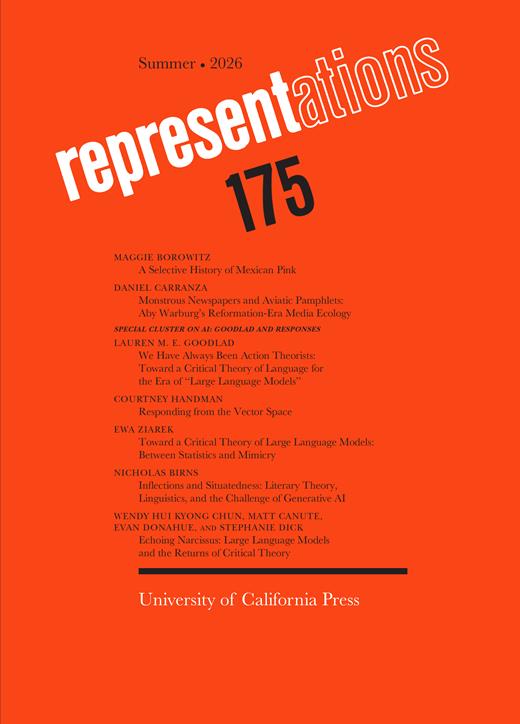
We Have Always Been Action TheoristsToward a Critical Theory of Language for the Era of “Large Language Models”
Scholars of literature and culture understandably place themselves among the world’s premiere experts on matters of language. But they also know that fields like linguistics and communication have their own ways of studying how people express themselves through speech and written media. A key difference concerns the theories and methodologies...
A global workspace in language models
Interpretability research on Claude's internal thoughts.

Mapping the Mind of a Large Language Model
We have identified how millions of concepts are represented inside Claude Sonnet, one of our deployed large language models. This is the first ever detailed look inside a modern, production-grade large language model.
Sycophancy Claims about Language Models: The Missing Human-in-the-Loop
Sycophantic response patterns in Large Language Models (LLMs) have been increasingly claimed in the literature. We review methodological challenges in measuring LLM sycophancy and identify five core operationalizations. Despite sycophancy being inherently human-centric, current research does not evaluate human perception. Our analysis highlights the difficulties in distinguishing sycophantic responses from related concepts in AI alignment and offers actionable recommendations for future research.
Sycophancy Claims about Language Models: The Missing Human-in-the-Loop
Sycophantic response patterns in Large Language Models (LLMs) have been increasingly claimed in the literature. We review methodological challenges in measuring LLM sycophancy and identify five core operationalizations. Despite sycophancy being inherently human-centric, current research does not evaluate human perception. Our analysis highlights the difficulties in distinguishing sycophantic responses from related concepts in AI alignment and offers actionable recommendations for future research.
Do language models accommodate their users? A study of linguistic convergence
While large language models (LLMs) are generally considered proficient in generating language, how similar their language usage is to that of humans remains understudied. In this paper, we test whether models exhibit linguistic convergence, a core pragmatic element of human language communication: do models adapt, or converge, to the linguistic patterns of their user? To answer this, we systematically compare model completions of existing dialogues to original human responses across sixteen language models, three dialogue corpora, and various stylometric features. We find that models strongly converge to the conversation's style, often significantly overfitting relative to the human baseline. While convergence patterns are often feature-specific, we observe consistent shifts in convergence across modeling settings, with instruction-tuned and larger models converging less than their pretrained and smaller counterparts. Given the differences in human and model convergence patterns, we hypothesize that the underlying mechanisms driving these behaviors are very different.
Do language models accommodate their users? A study of linguistic convergence
While large language models (LLMs) are generally considered proficient in generating language, how similar their language usage is to that of humans remains understudied. In this paper, we test whether models exhibit linguistic convergence, a core pragmatic element of human language communication: do models adapt, or converge, to the linguistic patterns of their user? To answer this, we systematically compare model completions of existing dialogues to original human responses across sixteen language models, three dialogue corpora, and various stylometric features. We find that models strongly converge to the conversation's style, often significantly overfitting relative to the human baseline. While convergence patterns are often feature-specific, we observe consistent shifts in convergence across modeling settings, with instruction-tuned and larger models converging less than their pretrained and smaller counterparts. Given the differences in human and model convergence patterns, we hypothesize that the underlying mechanisms driving these behaviors are very different.
Measures of emotion: A review
A consensual, componential model of emotions conceptualises them as experiential, physiological, and behavioural responses to personally meaningful stimuli. The present review examines this model in terms of whether different types of emotion-evocative stimuli are associated with discrete and invariant patterns of responding in each response system, how such responses are structured, and if such responses converge across different response systems. Across response systems, the bulk of the available evidence favours the idea that measures of emotional responding reflect dimensions rather than discrete states. In addition, experiential, physiological, and behavioural response systems are associated with unique sources of variance, which in turn limits the magnitude of convergence across measures. Accordingly, the authors suggest that there is no “gold standard” measure of emotional responding. Rather, experiential, physiological, and behavioural measures are all relevant to understanding emotion and cannot be assumed to be interchangeable.
