


How has AI restructured work and employment at Anthropic? As a company at the frontier of AI adoption, Anthropic could be a leading indicator of how AI will shift work organization, hiring, and labor demand across the economy.
How building software is changing at Anthropic
A deepdive on what’s changed in how the leading AI lab makes software. Ever more code review and testing is done by AI, two-pizza teams very much alive, and more. Details from inside of Anthropic

The Anthropic Economic Index
The Anthropic Economic Index reveals the shape of AI adoption across the world. Here, you can explore the data behind our research to understand how people are using Claude across every US state and hundreds of occupations. Track the topics that are trending where you live, and see how people are using AI to augment or automate their work—that is, whether they prefer to collaborate with, or delegate to, Claude.
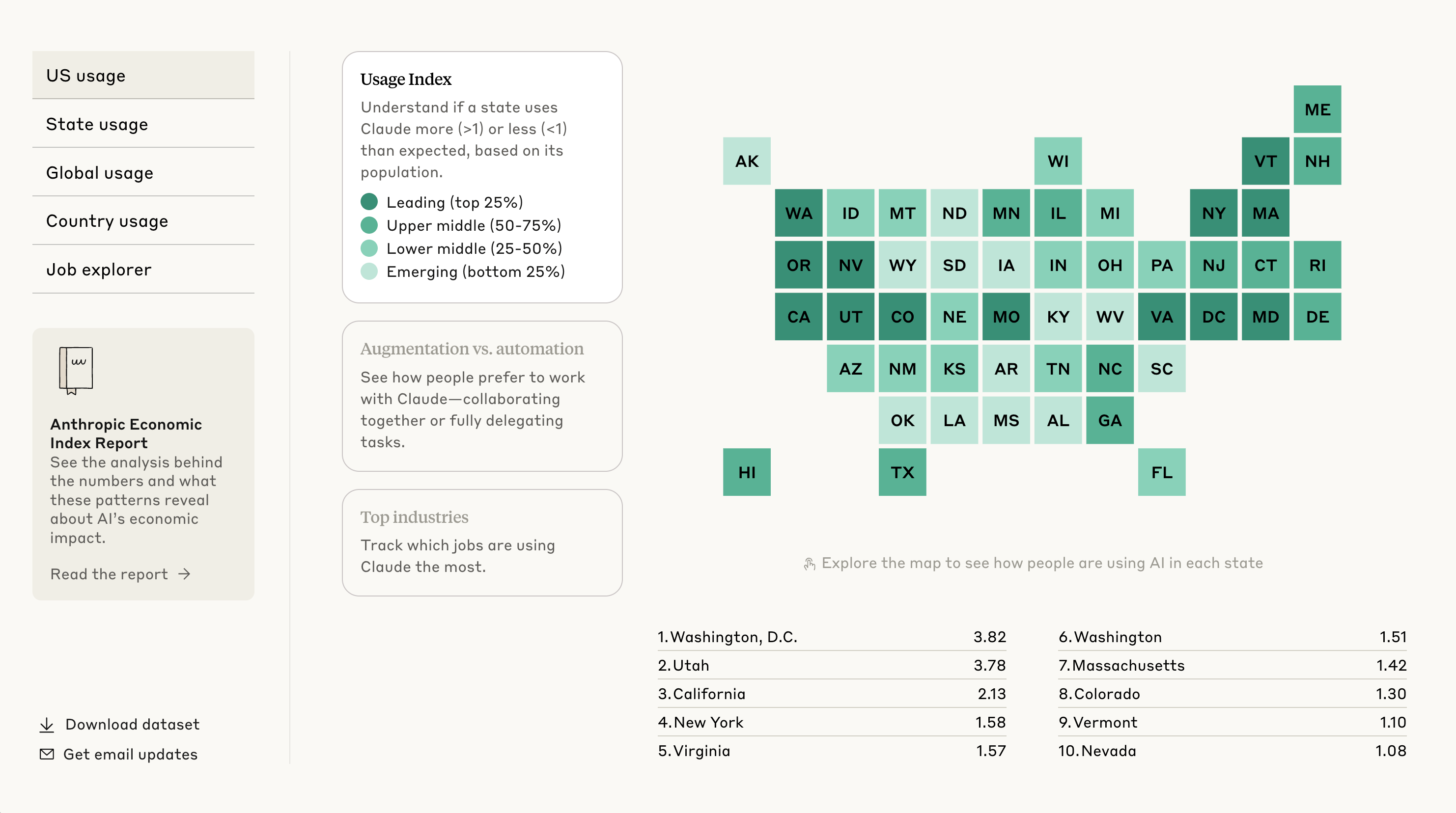
The real AI economy is being built by ordinary people
Far from Silicon Valley pitch decks, workers across Asia and Africa are bypassing tech industry hype to quietly rewire their daily jobs — one prompt, workflow, and local problem at a time.

Technological Disruption in the US Labor Market • The Aspen Institute Economic Strategy Group
DAVID DEMING, CHRISTOPHER ONG, LAWRENCE H. SUMMERS This paper explores past episodes of technological disruption in the US labor market, with the goal of learning lessons about the likely future impact of artificial intelligence (AI). The authors measure changes in the structure of the US labor market going back over a century in two ways. ...

What Workers Want from AI Automation
Companies Are Being Torn Apart by AI "Workslop," Stanford Research Finds
Not only is AI hampering productivity, but it's also blowing up collaboration and souring employee dynamics.

Still Waters, Rapid Currents: Early Labor Market Transformation under Generative AI
We study the early labor market impacts of AI chatbots by linking large-scale adoption surveys to administrative labor market records in Denmark. We document rapid currents: most employers in exposed occupations have adopted chatbot initiatives, workers report productivity benefits, and new AI-related tasks are widespread. Yet these currents have not broken the surface: using difference-indifferences, we estimate precise null effects on earnings and recorded hours at both the worker and workplace levels, ruling out effects larger than 2% two years after the launch of ChatGPT. What moves is the structure of work: employers absorb AI through task reorganization—including new tasks in content generation, AI oversight, and AI integration—and adopters transition into higher-paying occupations where AI chatbots are more relevant, though still too few to move average earnings. Technological change reshapes work well before it surfaces in earnings or hours.

Companies rushed in on AI. Now some are pulling back
Rapid AI adoption left workers cleaning up a flood of errors and low-quality work
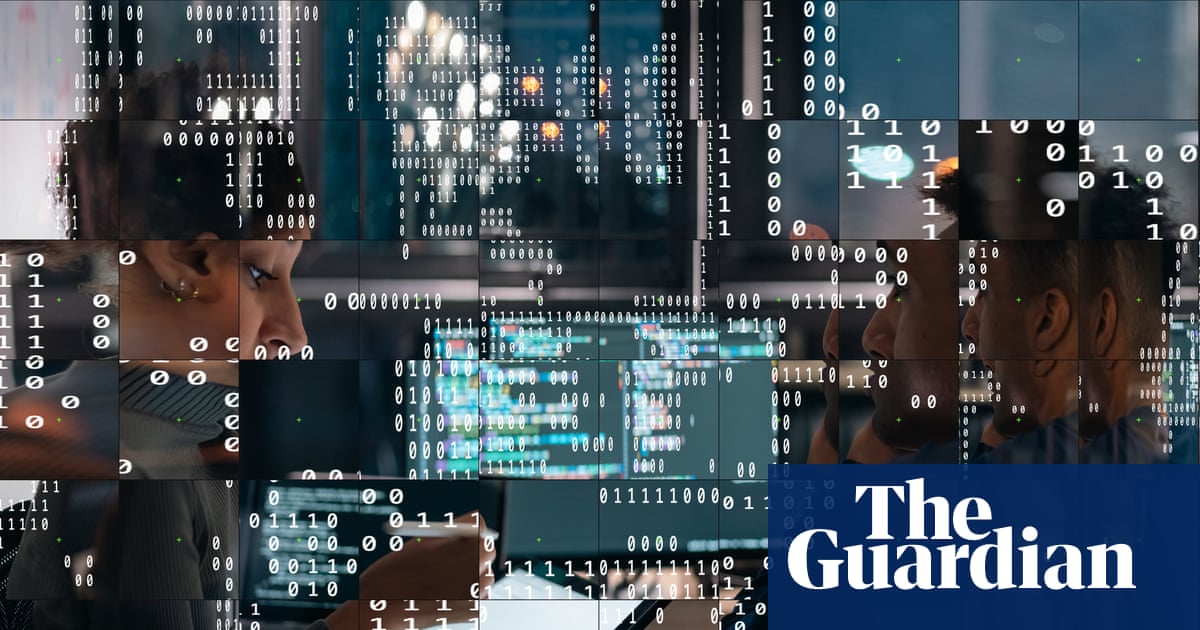
AI Doesn’t Reduce Work—It Intensifies It
Aruna Ranganathan and Xingqi Maggie Ye from Berkeley Haas School of Business report initial findings in the HBR from their April to December 2025 study of 200 employees at a …
How agents are transforming work
A new OpenAI research paper shows how AI agents are transforming work, enabling longer, more complex tasks and expanding productivity across roles.

Scenarios for our Economic Future
The Anthropic Economics Team models the effects of AI on the economy of 2030.
Home \ Anthropic
Anthropic is an AI safety and research company that's working to build reliable, interpretable, and steerable AI systems.

Do AI-enabled companies need fewer people? | Seldo.com
AI-native startups are doing more with less — 40% smaller teams, 6x higher revenue per employee — and the data confirms it's not just hype. But the wave of new jobs I predicted hasn't materialized so far. Compute is replacing labor. Will that change?
A Growing Gender Divide in the AI Economy — The Honest Economist
The article argues that AI is reshaping gender inequality even before the pay gap visibly widens. Women are more concentrated in clerical and administrative roles where AI can restructure work, while men are more concentrated in technical, AI-complementary roles. Among college graduates, the exposur

Labor Market Adaptation | Windfall Policy Atlas
How can workers, firms, and education systems adapt to an AI-transformed economy?
New from us: Anthropic just published scenarios for AI’s possible economic impacts, which range from minimal, to explosive GDP growth of 15% by 2030 as knowledge-worker unemployment hits 18%. I sat down with their co-founder Jack Clark to pick his brains on how they’re thinking about all of this.
