

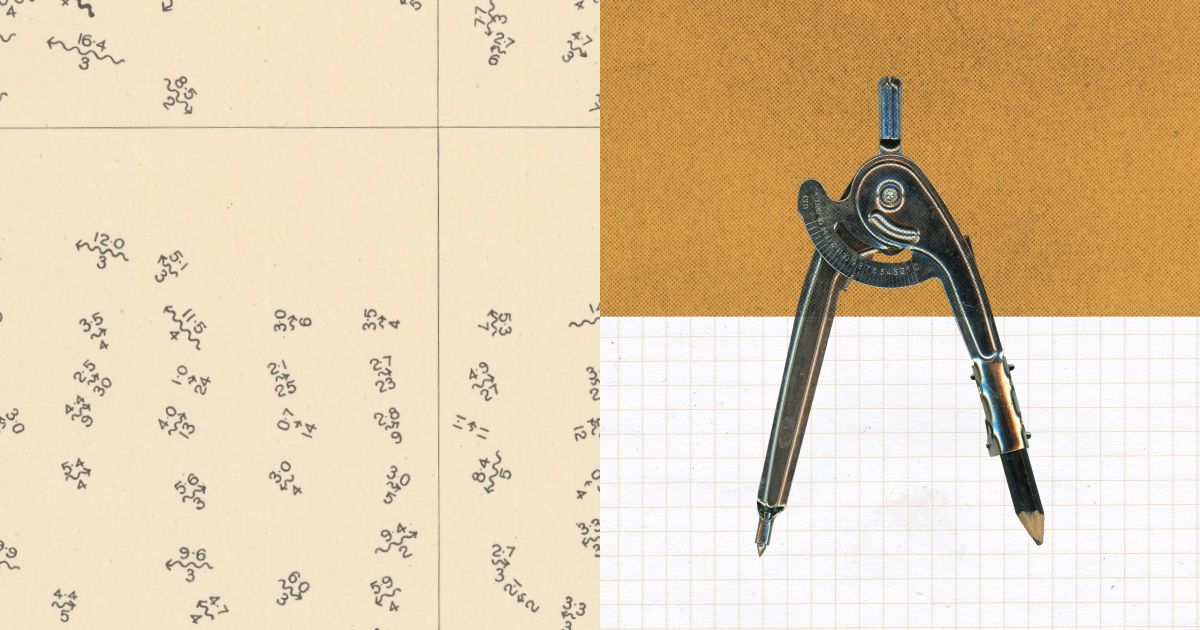
An unreleased Claude model improved the lower bound for the fraction of zeroes of the Riemann zeta function that satisfy the hypothesis, raising it from 41.6% to 67.2%.
More than five-twelfths of the zeros of $ζ$ are on the critical line
The second moment of the Riemann zeta-function twisted by a normalized Dirichlet polynomial with coefficients of the form $(μ\star Λ_1^{\star k_1} \star Λ_2^{\star k_2} \star \cdots...

Terence Tao (@tao@mathstodon.xyz)
An elaboration of the previous post mentioning the bounded gaps between primes problem as an illustration of the opportunity cost of converting a fruitful problem such as this solely into a competitive benchmark. [Indeed, as I point out below, this already came close to happening back in 2013.] As with most other problems worth studying in pure mathematics, the particular bound one gets on these gaps is not of much intrinsic importance. Improving Zhang's bound of 70 million, to 246, 188, or 6 would not, in itself, have significant impact on any other mathematical problem, let alone any real-world application, except for a small number of other analytic number theory problems in which a related numerical bound would also similarly improve. Even the twin prime conjecture, which asserts that the bound can be chosen to be 2, would only unlock a small number of immediate applications if the result is taken as a "black box", although the significantly more general and quantitative prime tuples conjecture of Hardy and Littlewood would be more useful in this regard. But again: the value of this problem lies not in the numerical bound _per se_, but rather in what the quest to study this problem and improve the bound reveals. Let me first quickly review some key moments in the timeline on this problem. The Quanta articles https://www.quantamagazine.org/mathematicians-team-up-on-twin-primes-conjecture-20131119/ and https://www.quantamagazine.org/a-new-generation-of-mathematicians-pushes-prime-number-barriers-20231026/ in 2013 and 2023 respectively also do a good job of covering these events. (1/8)
Better Models: Worse Tools
About an aggravating tool-calling regression in newer Claude models.
dollspace-gay/Riemann-zeta-function-exploration
Contribute to dollspace-gay/Riemann-zeta-function-exploration development by creating an account on GitHub.
Claude Team plan for scientists
Scientists at academic and nonprofit research institutions around the world can now get Claude at no cost to start. Shared projects, Claude Science, and admin controls at rates built for grant budgets. 1-seat minimum.
Introducing Claude Opus 4.6
Claude Platform
Updates to the Claude Platform, including the Claude API, client SDKs, and the Claude Console.
Claude for Chrome | Claude
Bring Claude's AI assistance to your browser. Ask questions, analyze data, automate tasks, and navigate sites in Chrome. Works with Claude Code and Desktop.

Claude for Science. Thursday, November 12, at the Niels Bohr Institute, University of Copenhagen. In September, Anthropic reported that Claude agents found a CRISPR-like enzyme system in… | Jacob Langvad Nilsson | 17 comments
Claude for Science. Thursday, November 12, at the Niels Bohr Institute, University of Copenhagen. In September, Anthropic reported that Claude agents found a CRISPR-like enzyme system in bacteriophage DNA. Earlier in the same month, another AI lab said its model had settled a question about the Navier-Stokes equations, one of the seven Millennium Prize Problems. Results like these don't come from a lucky afternoon with a chatbot. They come from years of method development, careful engineering and building on the work that came before. What has changed is how much of that work a model can now take on, and the speed of which it does it. The latest models read the literature, write and run their own code, and work through a dataset for hours without losing track. In the enzyme case, hundreds of Claude agents searched DNA data for 21 hours and flagged a pattern nobody had asked them to look for. The method still has to be sound. But a researcher with a good question can now test far more ideas in a week than before. That is what we want to show. How researchers here set up their work so that stronger models can move it forward. The evening is about how the Danish science community uses Claude to drive new research and breakthroughs. Four STEM researchers from academia and industry each show one case. What they asked Claude, how they worked, what they found, and what failed. The room is part of it. Niels Bohr lectured in Auditorium A, and in the 1930s Heisenberg and Pauli sat in the front row. We will meet in this historical auditorium and get a glimpse of frontier scientific research using Claude. ▪️ Doors open 15:30, programme 16:00 to 19:00 ▪️ Four case studies from Danish research ▪️ 50 seats on the original wooden benches ▪️ Registration by approval Thanks to Daniel Murnane for making this happen. Thanks to the Niels Bohr Institute and the University of Copenhagen for having us. To Katrin Hjorth Thordardottir for logistics. And thanks to Anthropic and the Claude Community team, Martine N., Cassie Baquero Mayes, Chiara Massironi for your continued support. Link to sign up in the first comment below. We are still confirming speakers. Which researcher in Denmark should I talk to? | 17 comments on LinkedIn

Anthropic on Twitter / X
In previous research, we found that Claude expresses over 3,000 values, like honesty and warmth. In new work, we asked how the values Claude expresses vary between Claude models and across languages.We analyzed 300K+ anonymized conversations to find out.https://t.co/PgxsMXipt5— Anthropic (@AnthropicAI) July 13, 2026
Ahmad on Twitter / X
HUGEGLM 4.5 beats Claude in Agentic Workflows> beats them head-to-head> 72x cheaper than opus 4 ($207 vs $2.9)> 15x cheaper than sonnet 4 ($41 vs $2.9> leading the Berkeley Function-Calling Leaderboard V4I have been saying this for a month now :) https://t.co/KOKaWo7yH5 pic.twitter.com/LJCnaeBK1t— Ahmad (@TheAhmadOsman) August 28, 2025

Evaluating Claude with BioMysteryBench
BioMysteryBench tests Claude on 99 real bioinformatics problems. Opus 4.6 solved 77% of human-solvable questions and some that experts could not.

Terence Tao (@tao@mathstodon.xyz)
In traditional mathematics (or "Math 1.0"), a breakthrough proof of a long-standing open conjecture generates a large amount of subsequent activity and excitement in the field. The authors of the proof are invited to give many talks, and meet with other experts in the area. Workshops are set up to discuss the proof, as well as other recent developments. As a result, new connections and collaborations are formed, followup problems are shared, and other mathematicians (both junior and senior) are attracted to the field (including in some cases the authors themselves, if they initially came from a different subject). As a result of all this activity, the proofs naturally become digested, streamlined, placed in context with other results in the field, and ultimately become part of the textbooks and lecture notes for the next generation of mathematicians in the field. (1/4)
The Kelvin Limit
I have been a small part of the chorus of voices critiquing the AI bubble that I described in Portents Of Doom . But what if we're wrong? W...

Les inégalités aux Etats-Unis (1/5) : pourquoi l'écart s'est-il creusé entre les riches et les autres ?
traduction française du billet de blog "Why did the rich pull away from the rest? Understanding inequality: Part I" de Paul Krugman
