

56× faster than FlashAttention-2 at 1M tokens. Independent efficiency, retrieval, and SWE-Bench benchmark of sparse self-attention. Download the full report.
Model Performance Evaluation to SubQ 1.1 Small Preview Performance Evaluation | Appen
A third-party benchmark assessment of Subquadratic's preview models, conducted by Appen across long-context retrieval, code generation, business-workflow automation, and graduate-level reasoning benchmarks.
Cross-Harness Agentic Memory
Supermemory built a ~99% benchmark ensemble to prove the benchmarks are gameable.Letta scored 74% on LoCoMo with just a filesystem. No vector DB, no graph.

milla-jovovich/mempalace
The highest-scoring AI memory system ever benchmarked. And it's free.
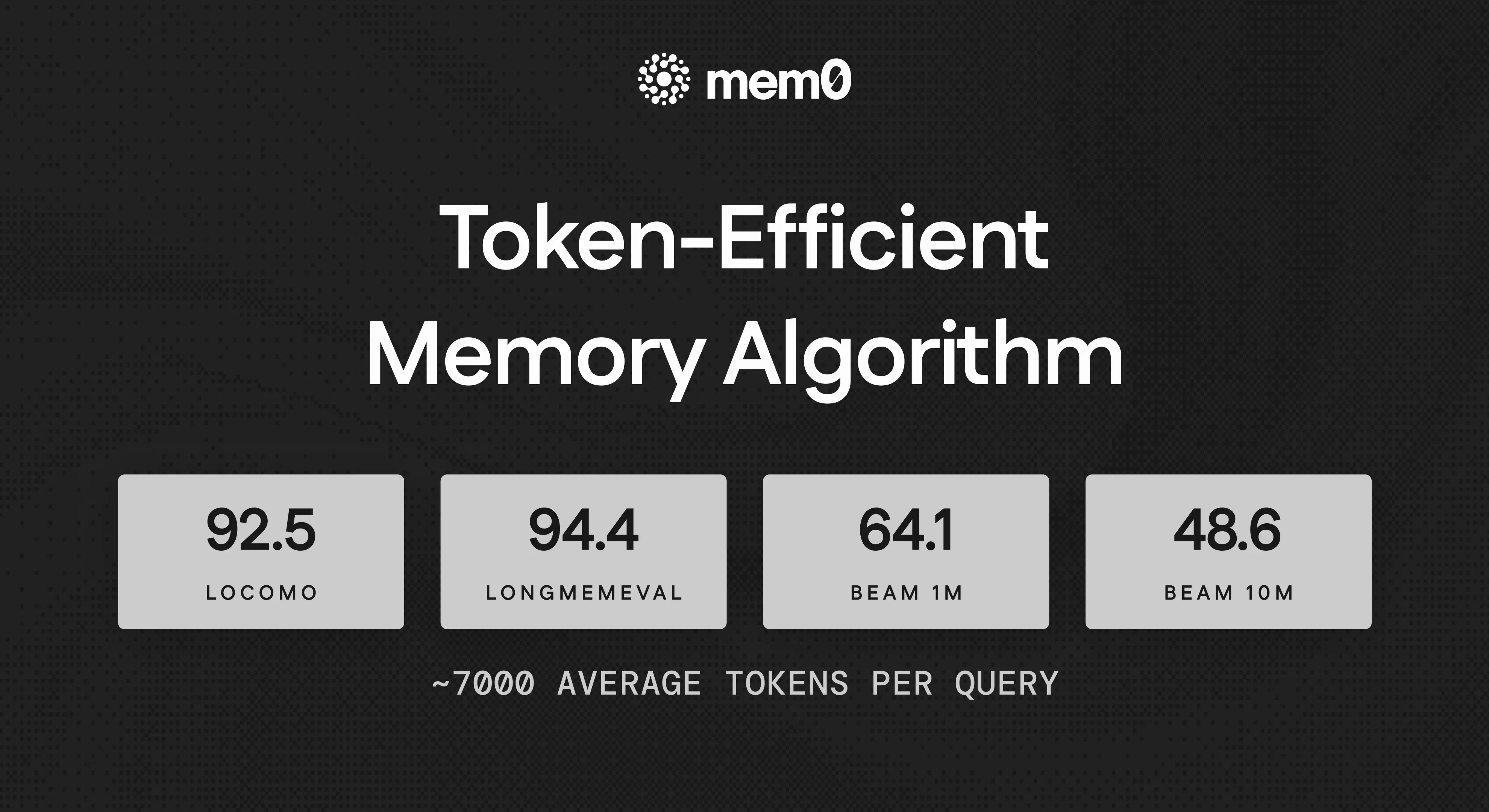
Mem0 Research Paper: Token-Efficient Memory Algorithm
Benchmarked across LoCoMo, LongMemEval, and BEAM, achieves competitive accuracy while using under 7,000 tokens per retrieval call. For comparison, full-context approaches on these benchmarks routinely consume 25,000+ tokens per query.
Luminal
We automatically generate complex kernels, like Flash Attention, with zero hand engineering
turbopuffer: fast search on object storage
Inaugural blog post about the development of turbopuffer, a search engine that uses object storage and SSD caching for cost-effective, low latency search. This post describes into the motivation behind its creation, its unique architecture, and how it significantly reduces costs for large-scale vector searches. Discover how turbopuffer is transforming search infrastructure for companies like Cursor and Suno, offering a scalable and reliable solution.

Accelerating GPT-5.6 Sol Ultrafast with OpenAI
Cerebras powers OpenAI’s GPT-5.6 Sol Ultrafast in the OpenAI API, delivering frontier intelligence at real-time speeds for critical AI work.

Alex MacCaw on Twitter / X
I suspect generalized reasoning was solved just a few weeks ago and it flew completely under the radar.HRM, a new arch, reportedly has SOTA results on ARC-AGI 1 & 2 benchmarks with only 27 million parameters and ~1k training examples.— Alex MacCaw (@maccaw) July 25, 2025
Hyperfast AI: Rethinking Design for 1000 tokens/s
I recently spoke at AI Tinkerers Raleigh about hyperfast inference systems and how they’re fundamentally changing AI application design. If you haven’t heard of Cerebras (or however they pronounce it), you’re in for a treat—this is one of the most exciting areas of research in AI right now.

OpenAI’s Jalapeño chip is built for fast inference at scale, benchmarks show | TechCrunch
Tested on SemiAnalysis’ InferenceX benchmark, Jalapeño registered both more tokens per user and more throughput per kilowatt than the currently available state-of-the art.

Fast Embeddings on GPUs
Fast and accurate search is vital to all of Perplexity, from Search and Computer to our API Platform. Behind the scenes, the heavy lifting is done by embedding

LLM in a flash: Efficient Large Language Model Inference with Limited Memory
Large language models (LLMs) are central to modern natural language processing, delivering exceptional performance in various tasks. However, their substantial computational and memory requirements present challenges, especially for devices with limited DRAM capacity. This paper tackles the challenge of efficiently running LLMs that exceed the available DRAM capacity by storing the model parameters in flash memory, but bringing them on demand to DRAM. Our method involves constructing an inference cost model that takes into account the characteristics of flash memory, guiding us to optimize in two critical areas: reducing the volume of data transferred from flash and reading data in larger, more contiguous chunks. Within this hardware-informed framework, we introduce two principal techniques. First, "windowing" strategically reduces data transfer by reusing previously activated neurons, and second, "row-column bundling", tailored to the sequential data access strengths of flash memory, increases the size of data chunks read from flash memory. These methods collectively enable running models up to twice the size of the available DRAM, with a 4-5x and 20-25x increase in inference speed compared to naive loading approaches in CPU and GPU, respectively. Our integration of sparsity awareness, context-adaptive loading, and a hardware-oriented design paves the way for effective inference of LLMs on devices with limited memory.
