

Explore the ARENA curriculum for AI safety education, covering fundamentals, transformers, reinforcement learning, and evaluations, with resources for educators and learners.
How to Deploy AI Agents for Safety
Trust & Safety Curriculum - Trust & Safety Professional Association
The Trust & Safety Curriculum defines core concepts, terms, & standard practices of body of knowledge we call “trust and safety.”

Trust & Safety Curriculum - Trust & Safety Professional Association
The Trust & Safety Curriculum defines core concepts, terms, & standard practices of body of knowledge we call “trust and safety.”
An End-to-End View of AI Safety
In this blog, Rachel Coldicutt OBE, Executive Director, Careful Industries discusses our newly published literature review on the safe adoption of artificial intelligence in engineered systems.

The Program
AI-powered curriculum focused on engagement, personalized mastery learning, and life skills workshops
A new direction for students in an AI world: Prosper, prepare, protect | Brookings
This report explores the potential risks generative AI poses to students and outlines what we can do now to minimize them.

A Safe Path to Open Weights
Strategic openness can strengthen AI safety and support broader access as defenses and safety science mature.

Safety and alignment in an era of long-horizon models
OpenAI shares lessons from deploying long-running AI models, highlighting new safety risks, observed failures, and improved safeguards through iterative deployment.
What Parents Need to Know About AI in the Classroom | Stanford HAI
From immersive learning and personalized tutors to lesson plans and grading, AI is everywhere in K-12 education.

AI safety and the data center backlash
Planting a flag for AI safety as a place where we won’t abjectly bullshit you

Human-Centered Artificial Intelligence: Three Fresh Ideas
Human-Centered AI (HCAI) is a promising direction for designing AI systems that support human self-efficacy, promote creativity, clarify responsibility, and facilitate social participation. These human aspirations also encourage consideration of privacy, security, environmental protection, social justice, and human rights. This commentary reverses the current emphasis on algorithms and AI methods, by putting humans at the center of systems design thinking, in effect, a second Copernican Revolution. It offers three ideas: (1) a two-dimensional HCAI framework, which shows how it is possible to have both high levels of human control AND high levels of automation, (2) a shift from emulating humans to empowering people with a plea to shift language, imagery, and metaphors away from portrayals of intelligent autonomous teammates towards descriptions of powerful tool-like appliances and tele-operated devices, and (3) a three-level governance structure that describes how software engineering teams can develop more reliable systems, how managers can emphasize a safety culture across an organization, and how industry-wide certification can promote trustworthy HCAI systems. These ideas will be challenged by some, refined by others, extended to accommodate new technologies, and validated with quantitative and qualitative research. They offer a reframe -- a chance to restart design discussions for products and services -- which could bring greater benefits to individuals, families, communities, businesses, and society.
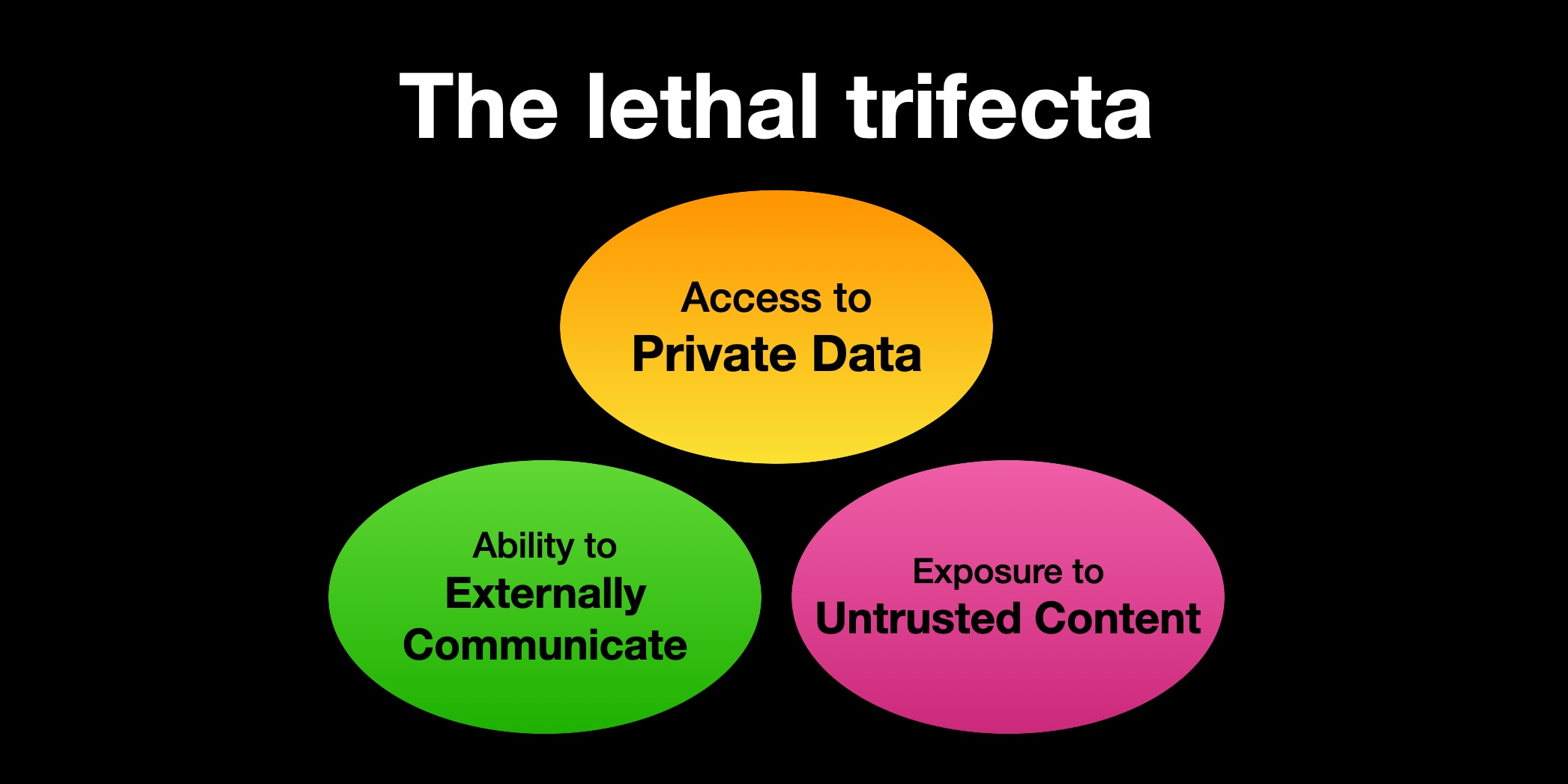
The lethal trifecta for AI agents: private data, untrusted content, and external communication
If you are a user of LLM systems that use tools (you can call them “AI agents” if you like) it is critically important that you understand the risk of …
How AI assistance impacts the formation of coding skills
Anthropic is an AI safety and research company that's working to build reliable, interpretable, and steerable AI systems.

OpenAI releases its framework for AI child safety policies.
The blueprint — created with the help of NCMEC and the Attorney General Alliance — is aimed at “modernizing laws” to address AI-generated CSAM, improving the reporting process, and building systems that interrupt exploitation attempts. [Link: Introducing the Child Safety Blueprint | https://openai.com/index/introducing-child-safety-blueprint/ | OpenAI]

Humanitarian aid turns to AI as crises outpace capacity
Purpose-designed AI agents with a focus on safety can provide critical assistance to vulnerable populations.
