

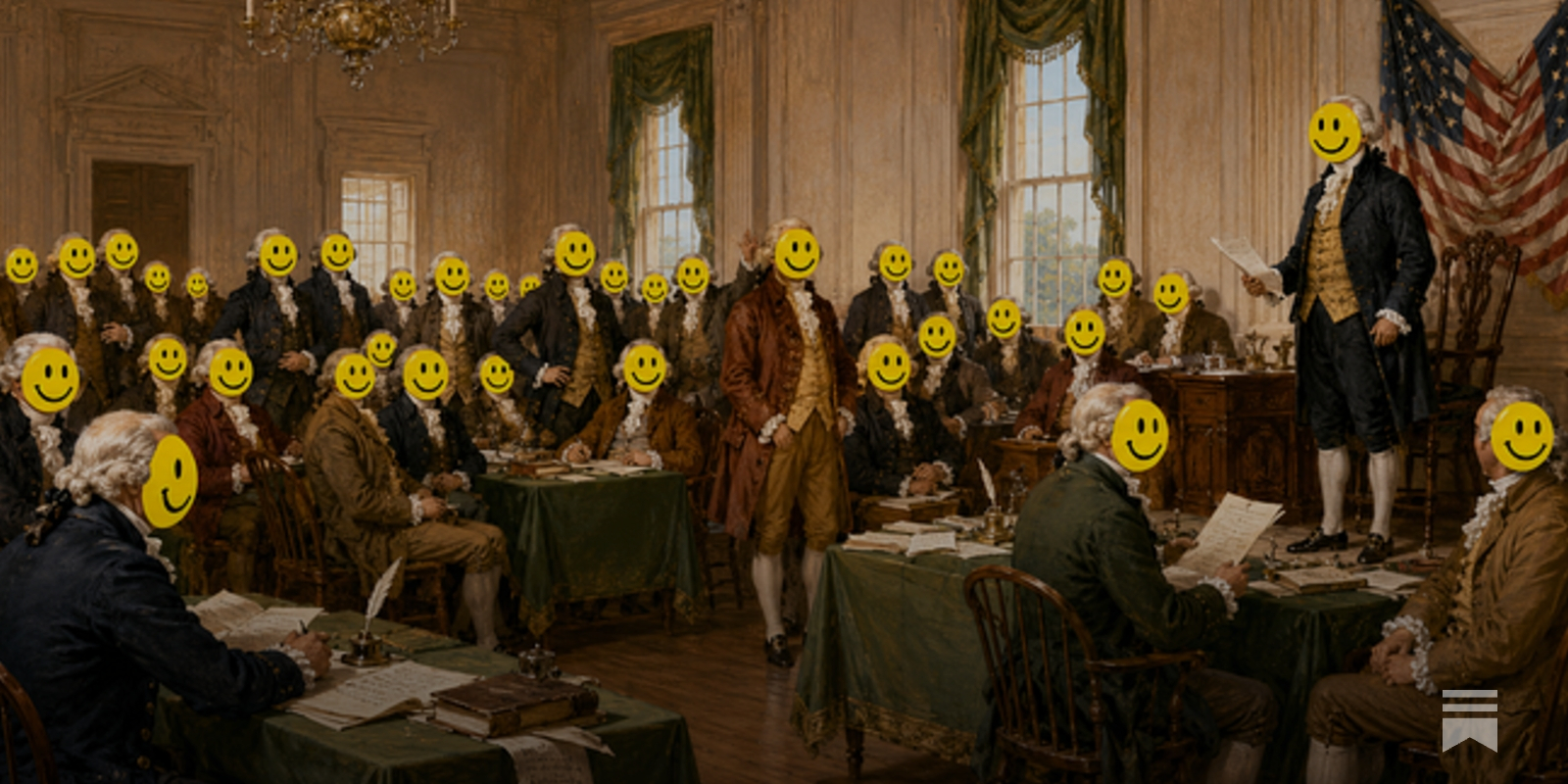
Liberalism Did Not Fail, Conservatism Did
We are moving from an ideologically multipolar world, to a bipolar one.
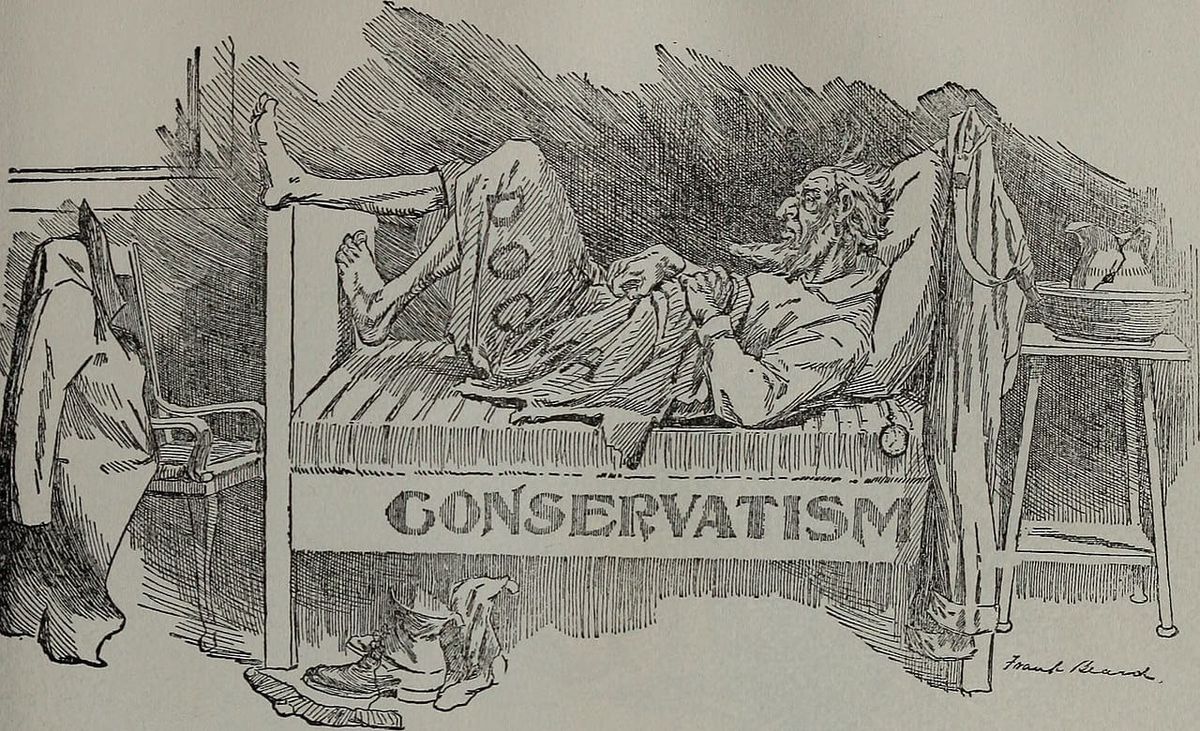
Radical Liberalism, Pragmatism, and Me - Aricie's thoughts
Left & Right: The Psychological Significance of a Political Distinction
This book brings together for the first time an updated, revised collection of influential essays and articles that capture some of the most exciting scientific and scholarly contributions to the topic ...

Ten Steps Towards Happiness - Hintjens.com
Biography | Portfolio | GitHub Books | Videos | Slides | Stories | Wiki Contact
Book and Journals Publisher – 2025 - Lawrence Wishart
Lawrence Wishart have been publishing critical left ideas on politics and culture since 1936. Through books, journals and events, we foster a space where people can think together, challenge political ‘common sense’ and explore new possibilities.

The Inner Life of Liberalism - Aaron Ross Powell’s Blog
The practices that make your life better are the same ones that sustain a free society. It's time liberalism took that seriously.
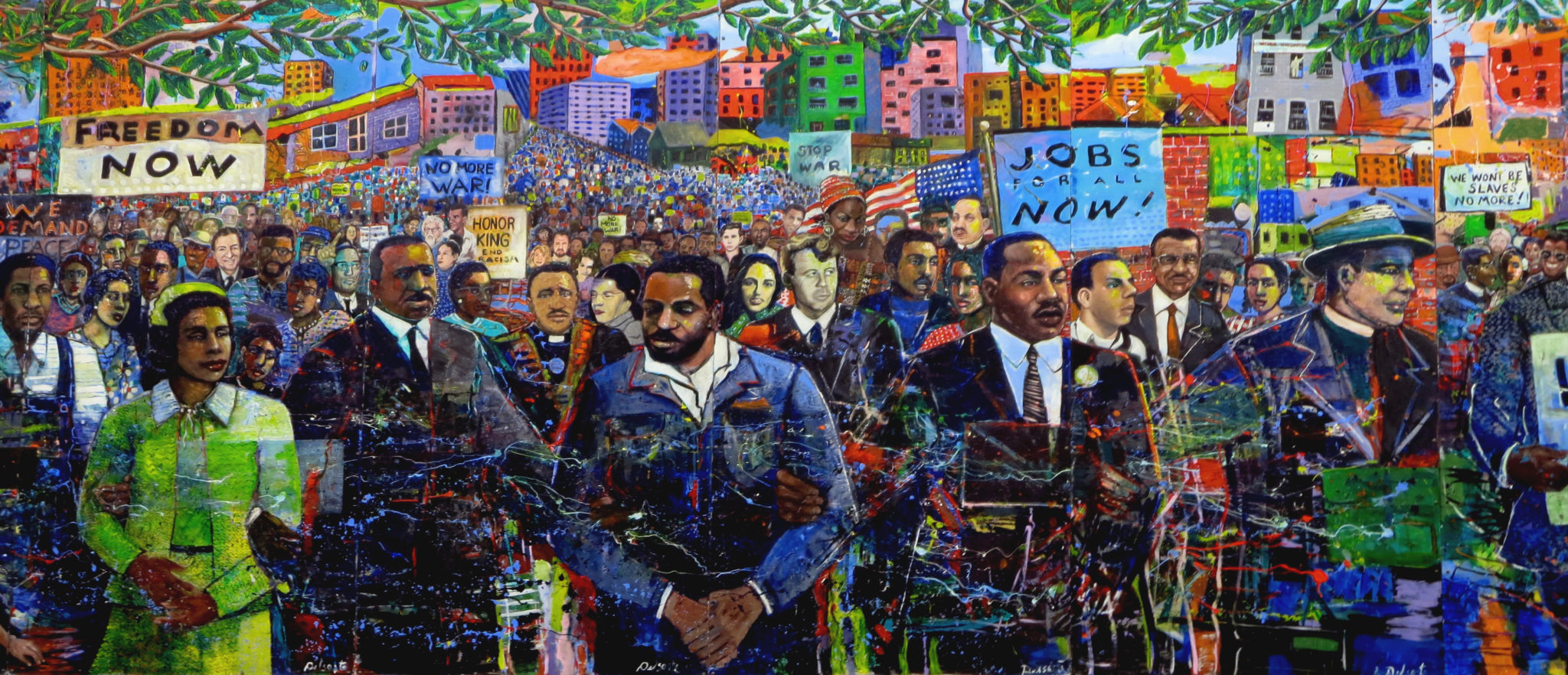
Capitalism, Democracy, and Du Bois’s <em>Two</em> Proletariats
[epq-quote align="align-right"]"What can be more radical or liberating than freedom and justice for all?"[/epq-quote] As an ideal, liberal democracy has great appeal. What can be more radical or liberating than...
The downside of being happy
Nobody likes to be sad, but it can have a powerful and positive effect.

"Opposer le monde virtuel au monde réel est une erreur" : la réponse de Séverine Erhel à Jonathan Haidt
La chercheuse en psychologie cognitive a apprécié le best-seller "Génération anxieuse" de Jonathan Haidt. Mais elle critique le lien que fait son auteur entre suicide ou dépression chez les mineurs et réseaux sociaux.

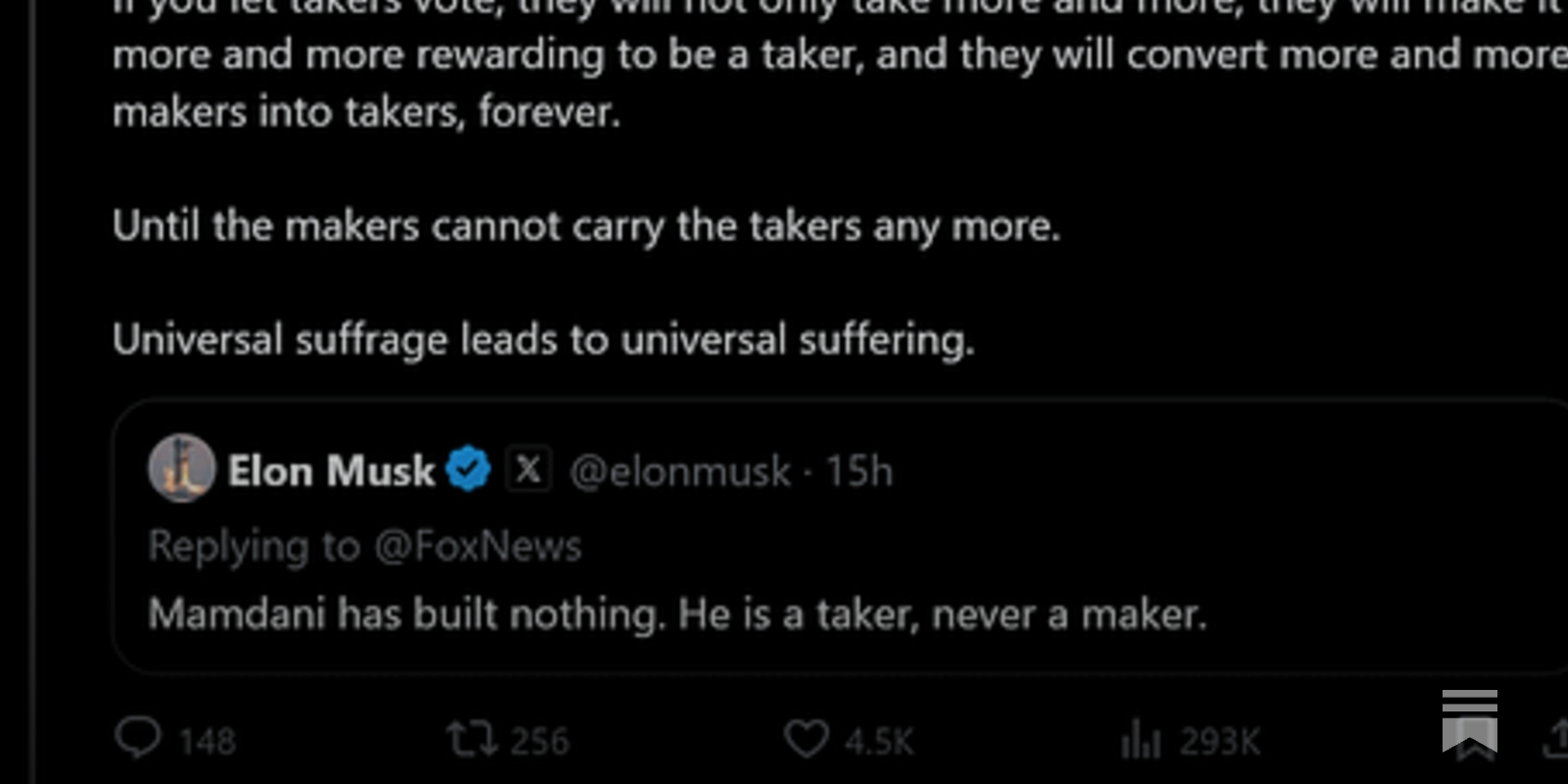
The political economy of billionaire derangement
The passions are devouring the interests


LiberationValues
LibertationValues is a political quiz aimed at anti-authoritarian leftists

the viability of many right-wing intellectuals and intellectual spaces is enormously dependent on the largesse of reactionary billionaires and foreign governments, who help them circumvent a marketplace of ideas where they would otherwise post extraordinarily poor sales

Don Moynihan
Its fair to ask if Orban's successful cultivation of the Western right wing intellectuals reflected that their networks were already dependent on patronage. Rod Dreher was funded by a weird billionaire, and when he stopped paying his salary, Orban did. Dreher already looking for a new gig.
🧵 @jburnmurdoch.ft.com is spot on about the conditions in his FT piece. Liberal democracy held it together thanks to growth, good demographics, and the promise of a better future. Those days are gone, and that’s the "why" behind the erosion. However...

Chris Bertram
Democratic politicians have, though, pursued growth in GDP at the expense of other values. One response to @jburnmurdoch.ft.com pessimistic scenario is refocus on those values, combined with egalitarianism, sufficiency and quality of life. Not "it's the economy, stupid" but "it's the the society"


